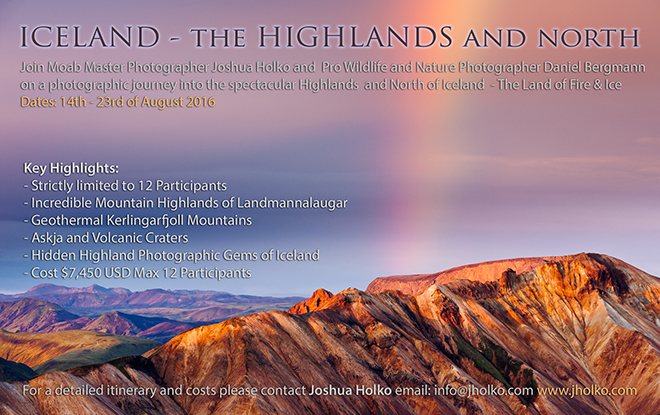
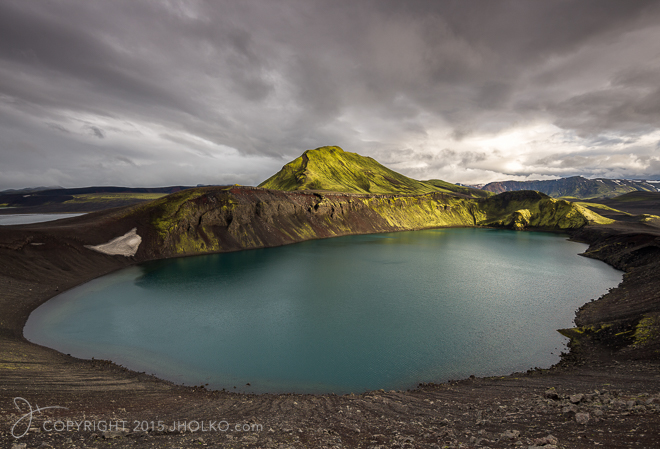
I am not exactly sure where the time has gone since I returned home to Australia from New Zealand a month or so ago, but tomorrow I will make the long journey back to Svalbard in the Arctic for my 2015 Wild Polar Bear expedition. I have been looking forward to this expedition for quite some time now and have been eager to get back to Svalbard and the land of the Polar Bear since my winter expedition earlier this year. Svalbard is an incredible place and one of the best places in the world to see and photograph wild Polar Bears living and hunting at the edge of the permanent pack ice. On this expedition we are using a small ice hardened vessel that will enable us to get in nice and close to drift ice around Svalbard. Importantly, it has nice low decks so we can get down to eye level with our subjects. With this expedition being limited to just twelve participants we will have plenty of room for everyone to photograph at once from both ship and zodiac and I am super excited to share this experience with all aboard. As well as Polar Bears, we will also likely photograph Walrus, Arctic Fox and a great many Arctic sea birds during our expedition.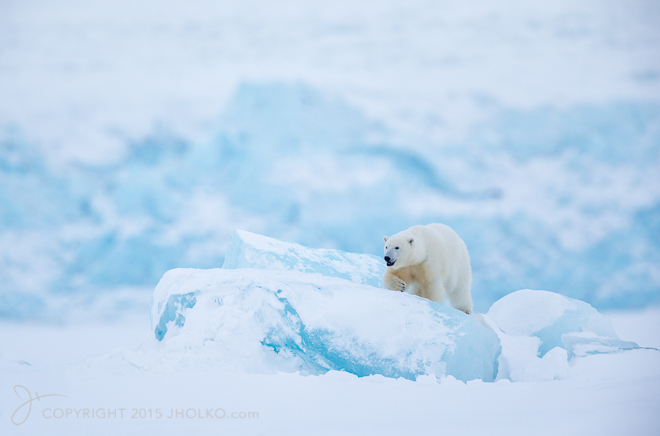 After we finish up our Polar Bear Expedition I am heading to Iceland for my 2015 Highlands workshop. The Highlands of Iceland are the heart of the country and the jewel in the crown of Iceland’s landscapes. I am really looking forward to the opportunity to photograph in the highlands again with a passionate group of photographers and to be able to put the new Canon EOS 5DSR 50 mega pixel camera through its paces in this active landscape of colour and light. It has been just over a year since I was last in the Highlands and although I have visited this area many times it remains my absolute favourite place in Iceland to Photograph. The only thing better than actually photographing in this incredible location is getting to share it with other passionate photographers! The 2015 Highlands workshop has long been sold out – but if you are interested in photographing in this incredible part of Iceland I will be leading two workshops to the Highlands next year in late August and September with Daniel Bergmann and there are still a few places available. Just drop me an email to register your interest.
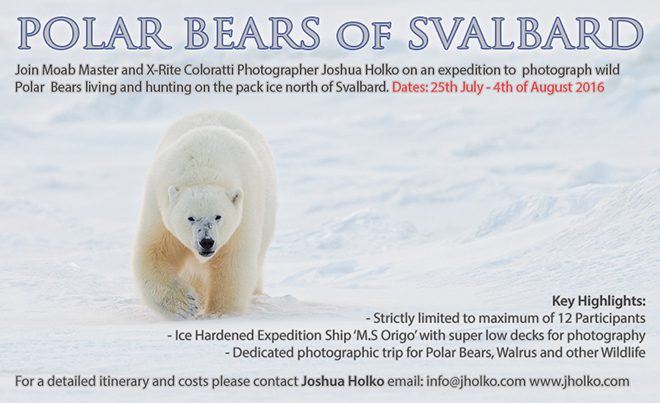
 Once we finish up our Highlands workshop I am heading back to Svalbard with Daniel Bergmann for our Kingdom of the Ice Bear expedition. Also accompanying us on this expedition will be a two person film crew from Untitled Film Works and we hope to produce a short film of our experiences during the expedition similar to what we produced in Greenland and Svalbard two years ago – Watch the previous video HERE. Both the Polar Bear expeditions have been sold out for many months, but there is a single place remaining on the 2016 expedition and details are on my website at www.jholko.com The ice conditions in Svalbard this year have been better than the previous ten years and I am hopeful we will have some really fabulous photographic encounters with Polar Bears during both expeditions.
 In terms of equipment for these expeditions I am taking everything from 11mm (Canon’s new 11-24mm) to 600mm lenses as well as two Canon EOS 1DX cameras (specifically for wildlife) and the new EOS 5DSR camera (specifically for landscape).
Just as an aside: Over the last twenty four months of international travel the airlines have managed to destroy two of the expensive North Face Rolling Thunder duffles; which I had been using for my checked luggage. These are some of the toughest and largest rolling bags I have come across and come with a lifetime warranty (and to North Face’s credit they have replaced the bag both times). It amazes me that the airlines can actually be rough enough to destroy these bags (it really would take some pretty serious effort). Rather than risk a third bag I have switched back to the normal North Face Expedition Duffle (lets see how they go with this one). Whilst these duffles don’t have rollers, they are slightly larger and significantly lighter than the rolling version; which is always a bonus. I will carry both a Gura Gear Bataflae 32L and a Gura Gear Chobe for my camera bags as well as a large Ortlieb waterproof duffle for zodiac excursions. See you in Svalbard.
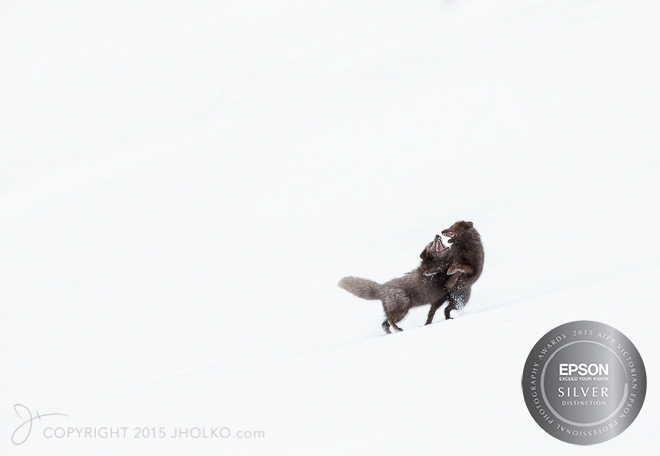 The other thing you can do in addition to researching and reading about your subject is to enlist the help of someone studying the animal you want to photograph. A scientist or even a PHD student working with a particular species is likely to posses a lot more knowledge on your subject than you can probably otherwise acquire in a short period of time. Their assistance can be invaluable in the field in locating hard to find wildlife and in understanding wildlife behaviour.
 What was really fascinating for me (and it has taken me a few days to come to this realisation) is that during the course of the two one and half hour seminars I presented there were almost no questions about which cameras I had used to make the photographs. This was an incredibly refreshing revelation and has in many ways re-envigorated my enthusiasm for sharing my photography. Instead, questions ranged from how to expose in these extreme environments to what sort of clothing I wear and how to prepare for this sort of photography as well as what I look for when I press the shutter. In this era of gear fascination that dominates all things photography (particularly in social media and forum circles) this was quite honestly an incredibly refreshing revelation. I feel as photographers (be it professional or amateur) we tend to get far to focused on equipment in the pursuit of better photographs. We constantly chase the next new thing in the belief it will improve our photography when the reality is it likely will do little for our photography other than drain our wallets.
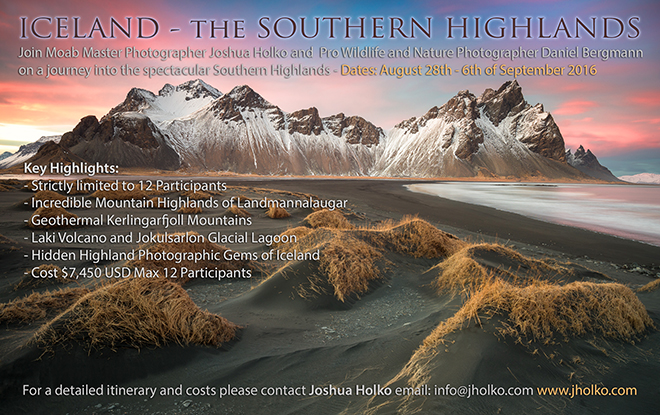 The second workshop will run from the 28th of August until the 6th of September 2016 and will focus on the Southern Highlands and eastern coastal regions of Iceland. Our intention on this workshop is to focus on some of the lesser known highland areas in the southern part of Iceland. We will also visit the precipitous ocean lined mountains at Stokksnes as well as vising the spectacular Laki Volcano and the world famous Jokulsarlon glacial lagoon. You can download a detailed itinerary and information PDF form for the second workshop
 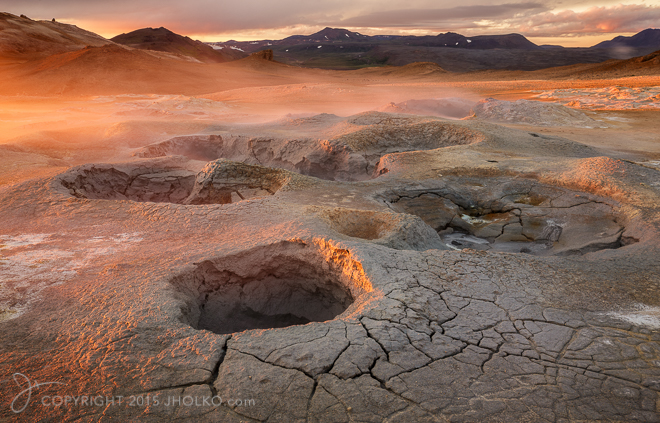 We have chosen August and early September for these workshops as this is an ideal time to visit Iceland for photography. The days are still long with Sunrise around 5 a.m. and sunset just before 10 p.m. The best light for landscape photography is therefore during the evening and early morning. This means that we may have an early dinner and then head out to photograph and sometimes be out before breakfast for a morning shoot. On cloudy days we’ll have a more normal routine. What we’ll do exactly on any given day will be decided around the weather and other conditions and there will be small changes to our original plan to make the most of our time in each area.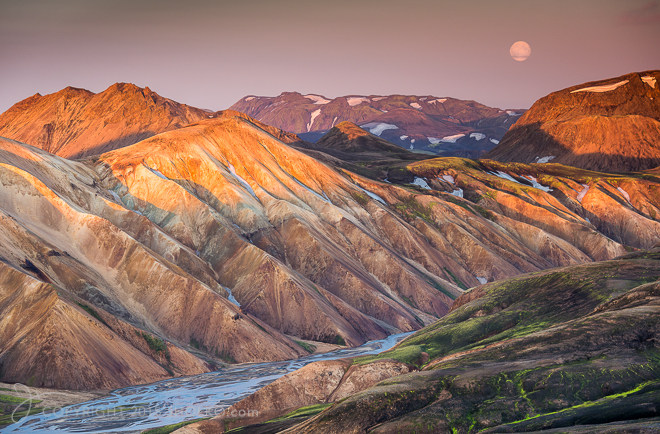
 Cost: The cost for each workshop is $7,450 USD. There is no single supplement and single rooms will be provided wherever possible.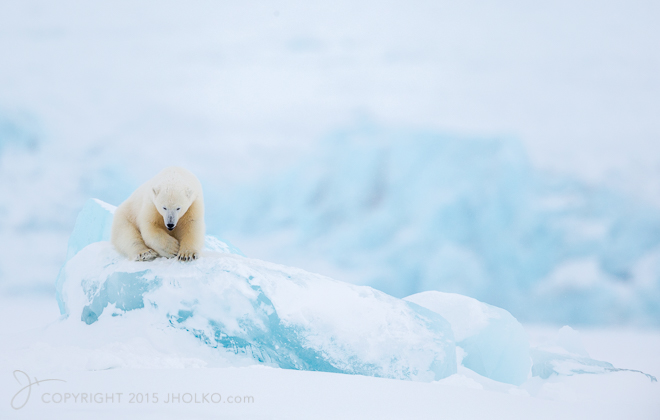
 www.WILDNATUREPHOTOTRAVEL.com