I have just published episode #77 of my Wild Nature Photography Podcast. In this podcast episode, I compare and review two very different solutions by two competing companies to protect expensive telephoto lenses when out in the field – Lens Coat and AlphaGVRD. Lens Coat offers its traditional neoprene cover solution, and AlphaGVRD provides a more contemporary 3M Wrap. Which is best and why? Listen in for my thoughts and impressions on fitment, durability, ease of use, investment price and ultimately, my thoughts and impressions on which is best and why.
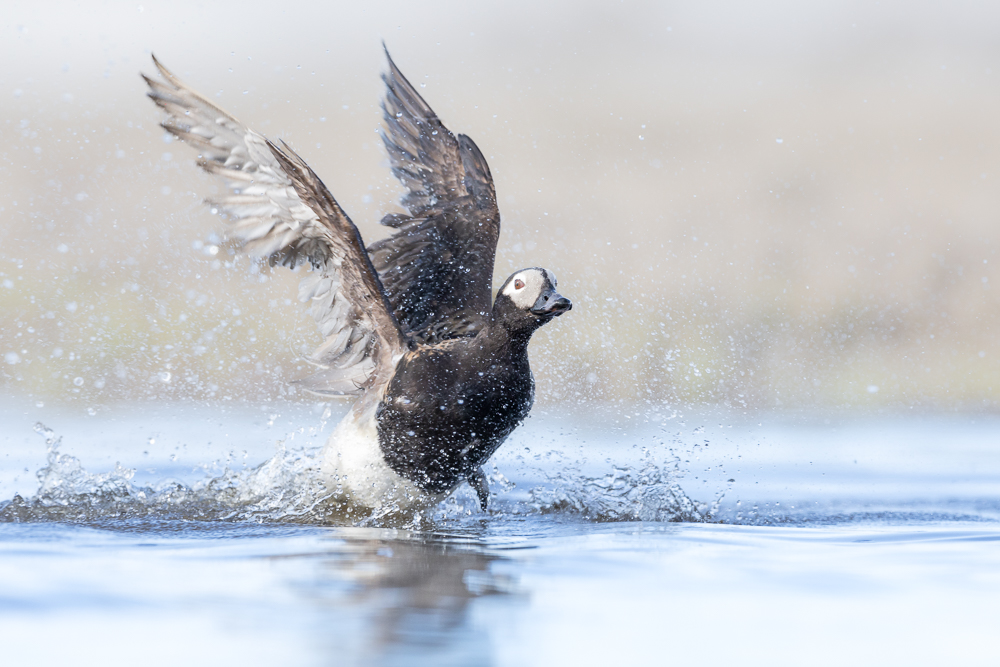
In June of 2023, I ran a private scouting trip for Arctic birds to the far northern slope of Alaska. For the duration of this scouting trip, we (the two of us) were based in the small Inuit town of Barrow and made nightly excursions via a 4-wheel drive vehicle to the surrounding Arctic tundra in search of birds to photograph. Barrow is far enough North that by June, it is illuminated by the midnight sun, and it is possible to photograph twenty-four hours a day. Working at night provides much softer light than traditional daylight hours, often further softened by sea fog rolling off the nearby pack ice. For the ten days we were in Barrow, we stayed in the King Eider Inn, which is basic but functional and conveniently located about a hundred metres from the airport.
Why Barrow for birds? Barrow, Alaska, is home to many highly sought specialty bird species for both bird watchers and wildlife photographers. It is the best place in North America to photograph many high arctic nesting birds. There are few places in North America where one could expect to see all four species of eiders (Common, King, Spectacled and Stellar), all three species of Jaeger (Pomaraine, Long Tailed and Arctic) or three species of loons (Red-Throated, Pacific and Yellow-billed) without tallying a Common Loon. In Barrow, you have a good chance of doing all three! We came very close to this goal ourselves! During this scouting trip, we saw and photographed all of the above, with the exception of the Yellow-billed loon and the Common Eider. We also saw and photographed approximately a dozen Snowy Owls (although none of them allowed us to approach close enough for anything more than distant record shots).
In addition to the above specialty species, Barrow is home to a wide array of nesting shorebirds, many of which exhibit fascinating breeding displays. If that were not enough, throw in the possibility of photographing Sabine’s Gulls and magnificent Snowy Owls, and it makes for a pretty engaging proposition for any birder or wildlife photographer. Despite the challenges of photographing in relatively harsh conditions, you will likely encounter many opportunities in this land of the midnight sun. Those opportunities are not necessarily easy, but they do exist.
Barrow is the largest city in the North Slope Borough, home to roughly 4000 people. Like many native communities, the town of Barrow is dry; no alcoholic beverages can be sold or brought into Barrow. The village of Barrow is perhaps most accurately described as a living garbage dump (sorry – but it’s true). It is a depressing place of broken down decrepit houses set amidst almost endless squalor of abandoned rusting vehicles. There are no pretty words to describe this town, and it, unfortunately, epitomises my experience in many native towns worldwide. Without overstating the squalid nature of Barrow, it is perhaps sufficient to say that it is a sad inditement of Western society.
All of that said, most photographers visiting Barrow will not be there for cultural sightseeing but rather to photograph many of the Arctic birds that transit through the surrounding Arctic tundra. The most notable species diversity occurs during the brief arctic summer that begins in early June; hence this scouting trip took place from the 6th until the 16th of June. Most birds generally arrive during the first week of June, with snow melting and tundra ponds thawing. We found our first couple of days to offer the best opportunities for Eiders, which mysteriously vanished in the following days. We saw and photographed the Stellars, King, and Spectacled Eiders in our first two days, after which we only encountered Kings and the occasional Spectacled Eider. If you were in Barrow in 2023 to photograph Eiders and you were not there on the 6th, 7th or 8th of June, you certainly missed the best opportunities.
During this scouting trip, we experienced temperatures that fluctuated between zero Celsius and approximately +10º degrees Celsius. We had some wind in our first few days that, thankfully, died away to still calm, rain-free evenings (except for our last evening when it absolutely poured).
Personally, I found the experience of photographing birds around Barrow to be extraordinarily challenging and frequently quite frustrating. With the exception of the many Phalaropes and Golden Plovers, the Eider and Loon species are extremely shy and difficult to approach if you want to make anything more than a record photograph. I chose to photograph with a 600mm F4 lens and a 1.4 Teleconverter for a total focal length of 840mm, which frequently proved inadequate for anything more than distant record shots. I discussed this problem extensively in Podcast number #76, Thoughts and Impressions of Barrow, Alaska. If you are planning a future trip to Barrow, I encourage you to listen to this episode.
Typically, and in my experience, most Eiders, Loons and Owls will swim and fly away before you can get close enough to make anything more than a distant record photograph. This situation occurred repeatedly, despite extremely slow and careful approaches. The birds often moved away from us before we exited the vehicle. I had to work extremely hard to get close enough for all of the photographs in this report. As I discussed in the above podcast, it is less than ideal to employ hides in Barrow due to the low density of birds. Not to belabour the point, but if you plan a trip to Barrow to photograph birds, I encourage you to temper your expectations accordingly. If you are just going to spot and watch birds, then I believe it will be just fine.
Although I enjoyed my time in Barrow photographing many Arctic birds, I will not be planning or running a future workshop at this location. The birds’ low density and shy nature make for challenging photography when working solo. Trying to work in a group of even four or five will significantly compound the problem and result in far too few opportunities for all participants. If you are only interested in sightings and record shots, then Barrow might be just your cup of tea, but it is highly challenging and frequently problematic for those looking to do more than make record shots.
Addendum – I will continue to update this post with more photographs as I get time to process them.
In August of this year, I will present to the Canberra Photo Connect Association via Zoom. The presentation will focus on ‘Improving Your Wildlife Photography’ and will be free and open to all who pre-register for the event (You do not need to be a member of Canberra Photo Connect). The presentation will be held on August 19th and will include many examples of wildlife photography from around the world as well as details on my approach and philosophy on both wildlife photography in the field, as well as post-production of RAW images in the studio. To register for your place, please contact Canberra Photo Connect via email. Places for the presentation are limited.
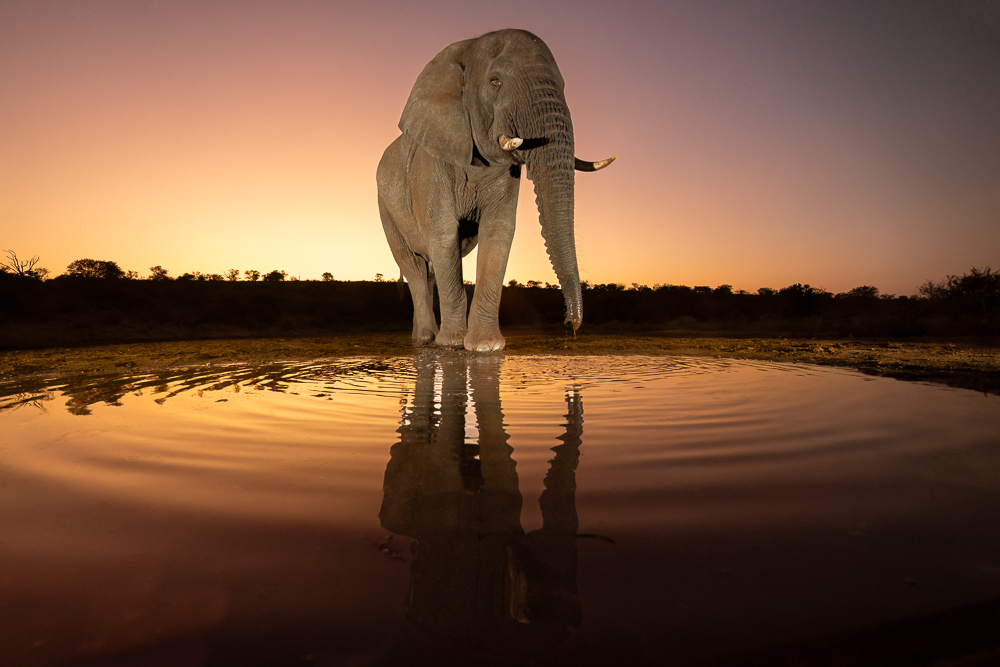
In May of 2023, I ran what has become an annual ground-level wildlife masterclass workshop in Zululand, South Africa. African Safaris and even African Photographic Safaris are nothing new, but the ability to work at ground level with wildlife in Africa is unique and incredibly special. Working at ground level provides opportunities for emotive and powerful photographs simply not possible from traditional safari vehicles. Whilst we have all seen endless pictures of Cheetah high up from safari vehicles, how many have seen or experienced Cheetahs while walking on the ground? How many have walked with and photographed wild Cheetah on the hunt?
Located in Zululand, the private game reserve for this workshop spans more than 70 square kilometres and includes many species above the African big five. Additionally, the game reserve consists of several dedicated state-of-the-art hides offering the ability to photograph wildlife at ground level and at night, when many of the species come to drink at the water holes. The overnight hides provide opportunities for dramatic and unique photographs simply not possible in any other way.
This workshop was a complete camp takeover, meaning there was no one else in the game reserve for the entire workshop. The whole camp takeover meant we had many more opportunities in the overnight hides than would typically be possible. It also meant a great degree of flexibility in terms of daily activities. Overnight hide sessions, day hide sessions, game drives, and walk with Cheetahs were all available on demand. This flexibility meant we could custom-tailor each day and each session to each participant’s needs and wants. Complete camp takeovers such as this are uncommon and make all the difference in the final image portfolios of participants.
As a complete camp takeover, we broke into small groups for each daily activity. Typically there is an early morning activity and an afternoon / overnight activity. For those going into one of the overnight hides, the evening and morning activities are combined. You never know when the wildlife will turn up at a hide!
The ability to get out of a safari vehicle and walk with and photograph wild hunting Cheetahs at ground level is game-changing for photographers looking to capture incredibly dramatic images that rise well above the ordinary safari vehicle photograph; during the making of these photographs, I was able to walk alongside the Cheetah and put myself in the best possible place for both the subject and the background.
Photography from the overnight hides in the game reserve offers opportunities to create unique and evocative photographs during the African night. Each overnight hide is equipped with a kitchen, a flushing toilet, and sleeping beds, meaning you can be comfortable and ready when the action happens.
In the day hides, we photographed many African bird species, including the incredible Malachite Kingfisher. This small bird has stunningly beautiful colours and can be photographed with lenses as short as 70-200mm.
During the ten-day workshop, I kept a list of all the bird species I could identify positively. There were approximately a dozen or so more birds I could not reliably identify. All of the birds on this list were photographed, and their species were confirmed with Merlin Bird ID. If you have even a passing interest in birds, I thoroughly recommend this application for assistance with bird identification—our complete bird list for the trip across all participants is included below. Personally, my count was slightly lower at 50 species.
African spoonbill
Reed cormorant
Hadeda ibis
Black-headed heron
Western cattle egret
Green backed heron
Woolly necked stork
Saddle billed stork
Hamerkop
Egyptian goose
White backed culture
Hooded vulture
African fish eagle
Bateleur
Martial eagle
Black Chesttd snake eagle
Black shouldered kite
Lanner Falcon
Helmeted guineafowl
Crested francolin
Natal spur fowl
Black crake
Secretary bird
Black bellied bustard
African jacana
Water Knick-knee
Blacksmith lapwing
Crowned lapwing
Three banded plover
Cape turtle dove
Emerald spotted wood dove
Burchell’s coucal
Verreaux’s eagle owl
Freckled nightjar
Speckled mousebird
Giant kingfisher
Pied kingfisher
Malachite kingfisher
Brown hooded kingfisher
White fronted bee eater
Lilac breasted roller
Southern yellow-billed hornbill
African hoopoe
Crested barbet
Forktailed drongo
Pied crow
Dark capped bulbul
African stonechat
Southern black flycatchers
Cape wagtail
Pied wagtail
African pipit
Magpie shrike
Cape glossy starling
Red billed oxpecker
Amethyst sunbird
White bellied sunbird
House sparrow
Yellow weaver
Spectacled weaver
Blue waxbill
Common waxbill
Green winged pytilia
Red-billed fire finch
Yellow fronted canary
Sabota Lark
Whether it is your first visit to Africa or if you are a veteran of multiple African safaris and have always wanted to photograph wildlife in the dark continent at eye level, this is the workshop for you. Not only is the 2024 Zululand ground-level wildlife masterclass an incredible opportunity to photograph African wildlife at eye level, but importantly, it is also a full camp takeover, meaning we have the entire game reserve to ourselves. We will have exclusive use of the entire reserve and all its facilities for the duration of this workshop. There will be many opportunities for overnight and day hides, walking with cheetahs and game drives. Game drives also include the new low-level safari vehicle that enables photography from a much lower angle than traditional safari vehicles. Due to the initial registrations, only two places remain before the workshop is sold out. Don’t hesitate to get in touch with me to register your interest.
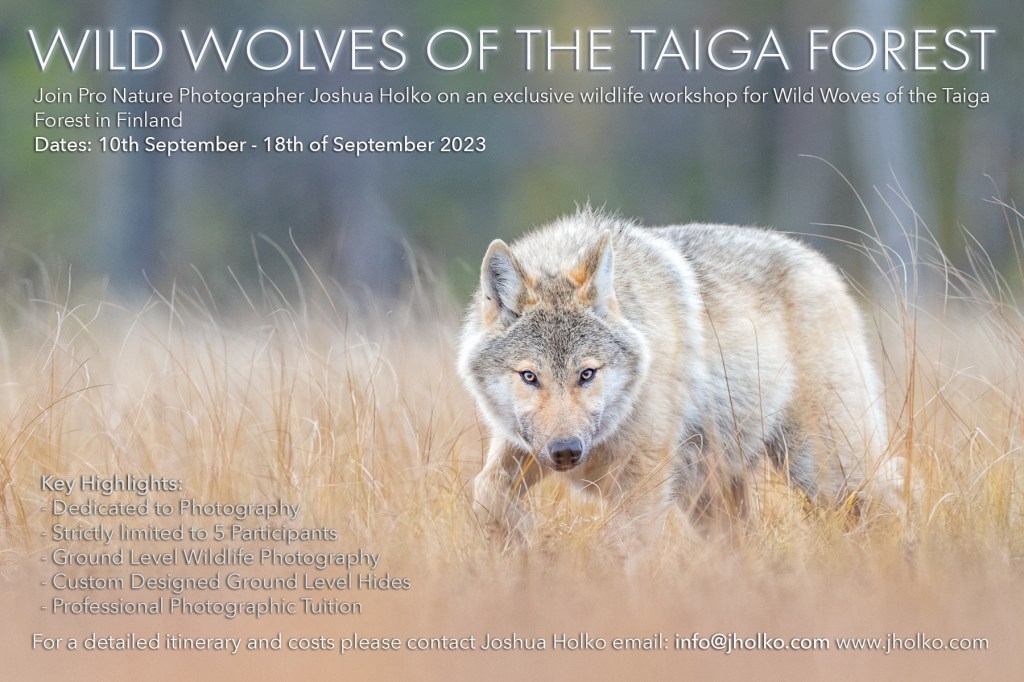
There are just three places available now on my workshop to northern Finland this September to photograph the wild wolves of the Taiga forest. The workshop will run from September 10th – September 18th and is fully inclusive of all accommodation, food, transport and tuition for the duration of the workshop. Northern Finland is likely the best place in the world to reliably photograph wild wolves in their natural environment. In addition to the wolves, we will also likely have opportunities with Brown Bears, Wolverine, Golden Eagles, White-tailed eagles and more. To get an idea of the photographs you can make on this workshop, please visit the Finland portfolio on my website or check ou the trip report from the 2022 workshop. Please contact me if you would like further details or if you would like to secure one of the remaining places.





 www.WILDNATUREPHOTOTRAVEL.com