A few days ago I was interviewed by two journalists from the Kuusamo Newspaper whilst I was out photographing Dippers and Hooper Swans in the far north of Finland (less than 50km from the Russian border). The interview covered my polar photography, thoughts on climate change and global warming as well as what is involved to work full time as a professional Nature photographer. The interview made the front page of todays paper with a full page feature. Just click on the image below to Download the full PDF. Might be time to brush on your Finnish!
Category: News and Updates
JHolko Photography Latest News and Updates
Luminous Landscape Website Reviews Melrakki Limited Edition Book
The Luminous Landscape Website has just published a review of my new book on the Arctic Fox ‘Melrakki‘. Read the Review.
Melrakki is just such a project. The name is Icelandic for Arctic fox. The beauty in the name Melrakki shines through this beautiful book, illustrating the harsh life of the Arctic fox in the winter. There is no harsher place in the winter than Iceland, nor is there a place more beautiful in the winter than Iceland. This book project took Josh three years to complete. Over those three years, I got to peek at some of the images that he captured, as well as hear some of his stories about what it took to accomplish those images. Trust me, it takes a hearty soul to sit in a hole dug from the snow and wait in blinding blizzards to capture this elusive creature.
What I enjoyed most about Josh’s book is not only the fabulous photography but also the story that he weaves throughout the book about what it took to capture these images. At times, you feel like you are there next to him as he captures these images. A number of these images will send chills through you, not only because of the implied cold and harshness of the environment but because they are so well captured and technically perfect.
The culmination of three years of winter photography in the extreme north-west of Iceland, Melrakki is available now for pre-order exclusively as a Limited Edition hard bound fine-art book. Limited to just 100 copies, each edition is hand numbered and signed and includes an original 11″ x 09″ inch fine-art pigment on paper print.
With foreword by pre-eminent scientist and Arctic fox expert Dr. Ester Rut Unnsteinsdóttir, Melrakki includes over fifty photographs and field notes from the three years spent photographing this remarkable predator in the extreme north-west of Iceland.
Melrakki Limited Edition is printed using the highest possible quality Canon Dreamlabo inkjet printer system and is printed on beautiful 250gsm High Definition Lustre paper that fully captures all of the incredible colour and tones of the original photographs. The Canon Dreamlabo represents the current state of the art in book printing and was chosen for this project after extensive testing and proofing as it yielded the highest quality that most closely resembles the original fine-art pigment on paper prints. I am extremely proud to stand behind the print quality in this Limited Edition book.
The included fine-art pigment-on-paper print is printed on Moab Somerset Museum Rag 300gsm paper and is hand signed.
Melrakki Limited Edition is $245 AUD plus shipping and can be ordered online exclusively through my websiteHERE.
I hope that you enjoy the photographs, insights and field notes from this project into the frozen world of Melrakki – the Arctic fox.
Photographs and Text by Joshua Holko
Approximate Dimensions: 22cm x 30 cm
96 pages (over 50 photographs + field notes)
The photo book & the print are together in a protective cloth sleeve
ISBN: 978-0-646-95781-4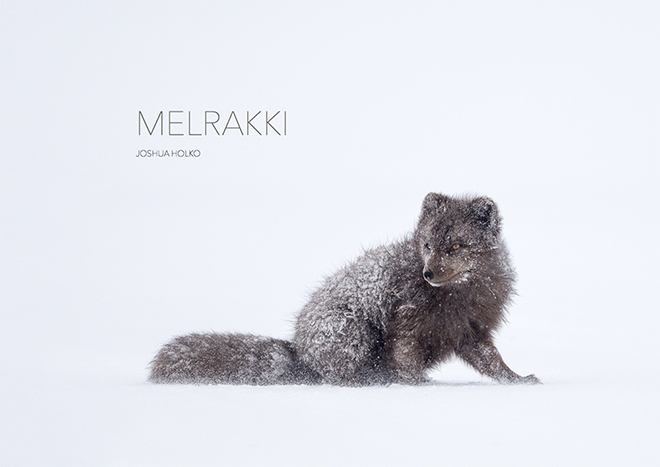
Outdoor Photography Magazine Interview March 2017
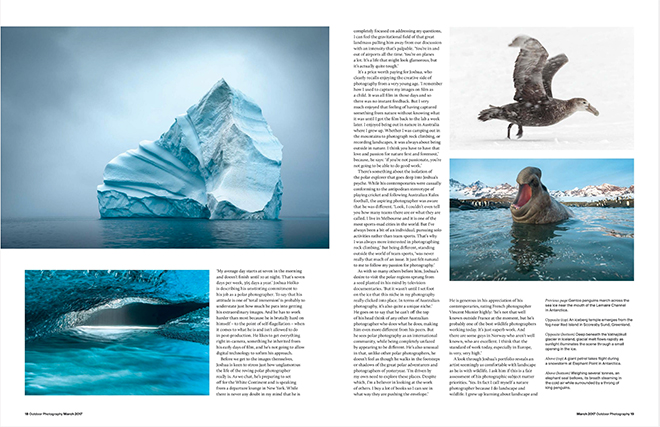
The latest March 2017 issue of Outdoor Photography magazine features a new interview and article on my passion for Polar Photography. You can download the full interview by single issue purchase or subscription.


Kingdom of the Ice Bear Wins First Place Commercial / Illustrative Film
In some very exciting news I just learned that my short film by Untitled Film Works ‘Kingdom of the Ice Bear‘ has just won first place at the 2017 WPPI Awards for film making in the Commercial / Illustrative short film category. Congratulations to Abraham Joffe and Untitled Film Works – Well Done.  I am very much looking forward to working with Untitled Film Works on a new short film project in a few weeks time in Svalbard in the Arctic Winter.
How to Get the Best Shot on Your Next Shoot
Recently I finished reading Paul Nicklen’s new e-book Photographing Wild (well worth the $15 price tag) in which he discusses something he calls the 20/60/20 rule. The 20/60/20 rule is something I have long adopted and practised in my own photography; although I never thought to describe it or write about it. In fact, I have been doing it so long now that it has become instinctive for me and I find myself moving subconsciously through this principle as I photograph my subjects.
The principe of the 20/60/20 rule is that you should spend roughly the first 20% of your time on a shoot getting the safe shots. Compose the image as best you can, make it sharp, in focus and get the shot. Thats the first 20% of your time on the shoot invested. The next 60% is where you push yourself creatively and where you are likely to make your best images. Go beyond the safe shot you already have in the can and push yourself both creatively and technically to go beyond the obvious. This is when you can make truly great photographs that really stand out. Its a time to zoom with your feet, to change composition, try different angles, move higher or lower and to take a different approach to vary your captures. The last 20% of your time is about experimentation and doing things you might not normally do (such as a multi-second hand held exposures, or an in camera composite or such like). This last 20% is a time to experiment and to go a bit crazy to see what you can produce when the standard limitations and rules are removed. Images from this last 20% often don’t work, but occasionally they do, and something truly unique and powerful can be produced. The important aspect to this last 20% is that its free time to experiment and to learn from the results. Its a great way to ensure you continue to grow as a photographer.
Paul describes the process in some detail in his book as he implements it in his workflow (a short excerpt of which is included below).
When I’m working, I want to give my editor something that National Geographic will be guaranteed to publish. So if I see a bear coming out of the forest, I make sure it’s sharp and in focus, and do the best job I can on the composition, light, and mood. That’s the first 20%. If it’s sharp and in focus, it’s still a good image, but I don’t want good: I want great. And then I go to the 60%. This biggest chunk of time is where I sit and push my own artistic ability and technical skills as a photographer; this is how I force myself to come back with something that’s truly special. Once I’ve got that and I’m satiated, satisfied, and really happy with what I’m creating, then I’ll say, “Let’s try something different; let’s do a multi-second exposure just to see what happens.” This is the last 20% of the 20-60-20 rule, and it’s there for my growth as a photographer.
I think this is excellent advice that many photographers would do very well to take note of and try and implement in their photography. I often see photographers standing around on workshops wondering what to do next after they have captured the obvious photograph (the first 20%). If you take Paul’s (and my) advice and move into the next 60% and final 20% you will never be standing around wondering what to do next. Your photography will improve and you will learn more about what works and what does not work when composing your photographs. Perhaps best of all implementing this advice in your workflow costs you absolutely nothing.
I do highly recommend you invest $15 in Paul’s e-book ‘Photographing Wild‘. As well as containing some fantastic advice, and wonderful photographs its also inspirational material for your next photography shoot.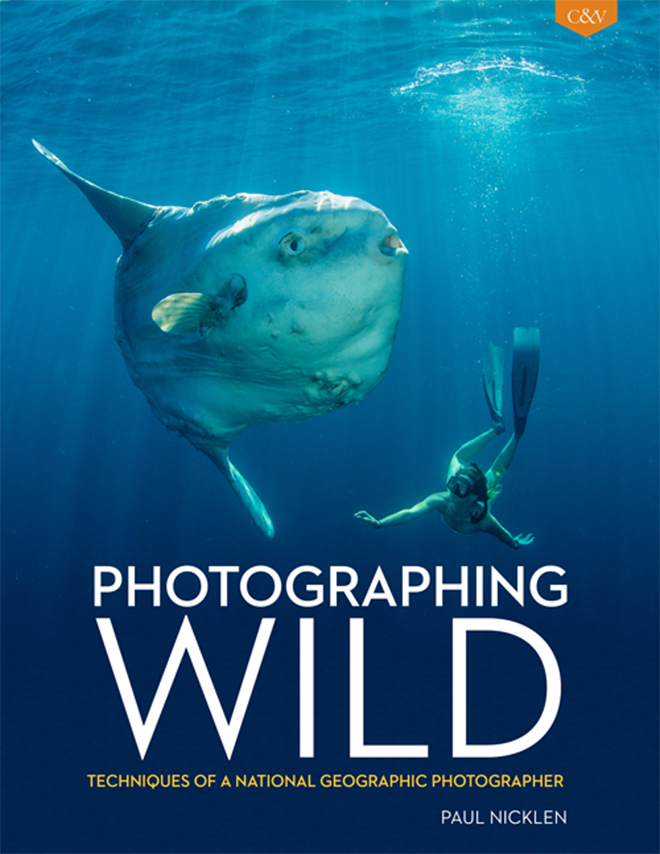
 www.WILDNATUREPHOTOTRAVEL.com