Antarctic Photography Presentation Sydney Australia FULLY BOOKED

UPDATE: The presentation I will be giving in Sydney next week on Antarctic Photography is now fully booked and oversubscribed. If you are one of those who was quick enough to secure a place I look forward to seeing you in Sydney next week.

Antarctic Photography with Joshua Holko – FULLY BOOKED

Aurora Expeditions and Joshua Holko invite you to join us for a night of Antarctic photography!

Professional polar photographer Joshua Holko will lead this special Antarctic Photography ‘Polarclass’, designed to help you understand the basic principles of photographing in the Polar Regions. Josh will discuss the key aspects of technical and artistic considerations when shooting in the poles.

Ideal for all levels of photographers, the ‘Polarclass’ is perfect for anyone interested in learning more about photographing in Antarctica.

The evening will include:

  • Technical aspects about shooting in Antarctica
  • Creative and artistic advice
  • Equipment requirements
  • What you’ll see, do and photograph!

About Joshua Holko

Joshua is an award-winning professional photographer and photography guide, who specialises in the remote polar regions of Antarctica and the Arctic. Josh was named the Global Arctic Photographer of the Year in 2015, and has won many other awards for his amazing work. Read Josh’s full profile here.

EVENT DETAILS

When: Thursday, 7 July 2016

Time: 6.30pm – 8pm

Location: Aurora Expeditions offices: Suite 12, Level 2, 35 Buckingham St, Surry Hills

View location on google maps hereAntarctica-3198-Edit


Antarctic Photography Presentation Sydney Australia

Next week, Thursday the 7th of July, I will be giving a presentation on Antarctic Photography at the Aurora Expeditions offices in Sydney.

Antarctic Photography with Joshua Holko

Aurora Expeditions and Joshua Holko invite you to join us for a night of Antarctic photography!

Professional polar photographer Joshua Holko will lead this special Antarctic Photography ‘Polarclass’, designed to help you understand the basic principles of photographing in the Polar Regions. Josh will discuss the key aspects of technical and artistic considerations when shooting in the poles.

Ideal for all levels of photographers, the ‘Polarclass’ is perfect for anyone interested in learning more about photographing in Antarctica.

The evening will include:

  • Technical aspects about shooting in Antarctica
  • Creative and artistic advice
  • Equipment requirements
  • What you’ll see, do and photograph!

About Joshua Holko

Joshua is an award-winning professional photographer and photography guide, who specialises in the remote polar regions of Antarctica and the Arctic. Josh was named the Global Arctic Photographer of the Year in 2015, and has won many other awards for his amazing work. Read Josh’s full profile here.

EVENT DETAILS

When: Thursday, 7 July 2016

Time: 6.30pm – 8pm

Location: Aurora Expeditions offices: Suite 12, Level 2, 35 Buckingham St, Surry Hills

View location on google maps here
The event is free, however places are limited. Book your place NOW.Antarctica-6927


Extraordinary Vision Magazine Returns

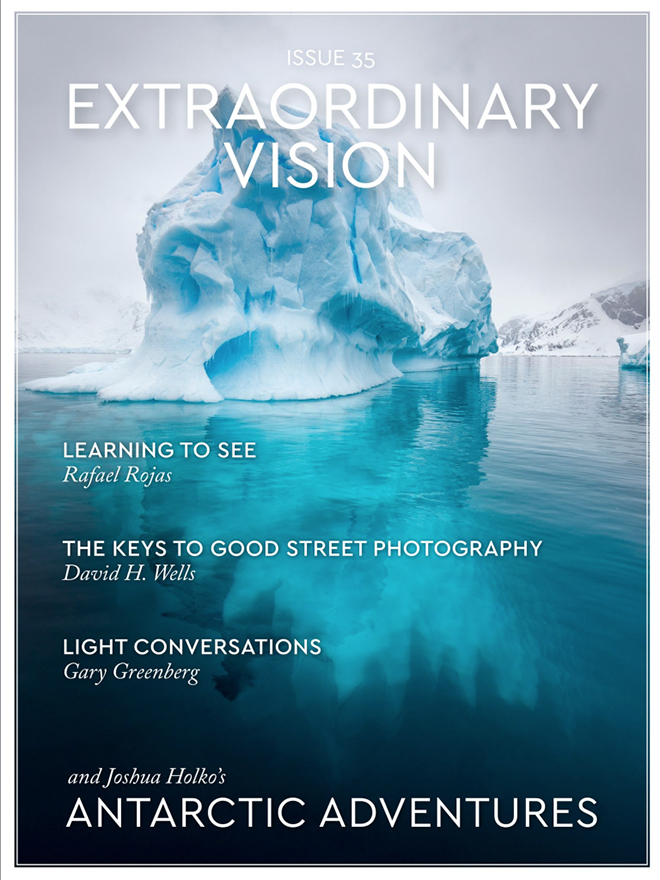
After a brief hiatus one of my favourite online photography magazines has returned  – Extraordinary Vision : The Outdoor Photographer’s Source of Inspiration. I am extremely pleased and honoured to own the cover of the latest issue and to have a portfolio of my photography from Antarctica included.

Extraordinary Vision magazine is now available fortnightly (instead of monthly) with a kick start free trial. Best of all its only $1.99 to subscribe per month – less than a cup of coffee. You can download the current issue + the next two new issues + 10 back issues absolutely free by taking up the free 30 Day Trial Subscription. Do yourself and your creativity a favour and check it out. Available exclusively though the iTunes App store or Google Play.ExtraodinaryVision2016

What goes into a Canon 200-400mm Lens?

Convincing yourself that an $11,000 USD camera lens is a worthy investment sometimes requires more than just a list of specifications. So Canon created a short stop-motion video of its EF 200-400mm f/4L IS USM lens disassembling itself and revealing all of its wonderfully complicated internal components. If you already own this fabulous lens, then this is your chance to peer inside at all of the electronics, motors, gears, and lenses that make it tick. The last thing you want to do is crack it open yourself. Taking it apart might be easy, but putting it all back together? Not so much….Time to get your geek on and enjoy.200-400VideoAssemlby

Canons Auto Lighting Optimiser Demystified

One of the more obscure camera questions I occasionally field on my workshops from participants who shoot Canon is ‘what is Canons Auto Lighting Optimiser and should I be using it?’ I received this exact question this morning via email from a Canon user who just received their new camera and wanted to understand how this feature works.

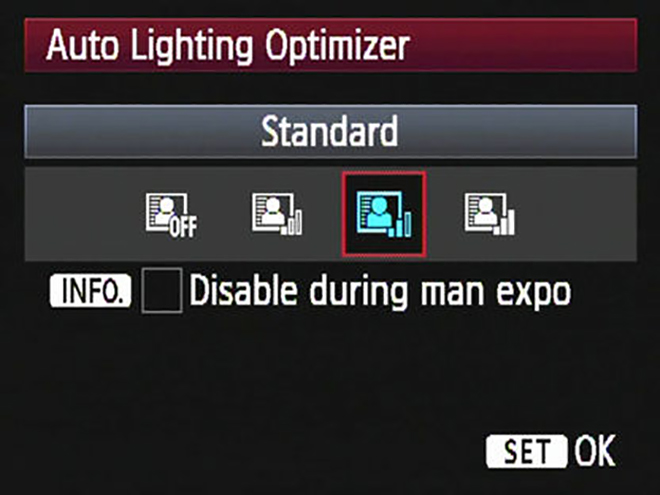
First, some history on the Auto Lighting Optimiser (ALO). ALO was originally introduced as a feature on the EOS 450D DSLR in 2008. It has since found its way onto all current Canon EOS DSLR cameras, from Canon’s most basic  entry-level DSLR to the professional EOS-1D X MKII (it was never included in the 1DS MKIII).Canon ALOALO is designed to even out contrast by selectively adjusting areas of the image. It is by definition most useful when using flash or with backlit subjects as it can detect faces in the frame and brighten those areas to achieve a better result. In a nutshell, the aim of ALO is to provide in-camera processing that will improve the look of your images. Those of you paying attention will have already figured out that it applies to jpeg files because it is working on in camera processing.

ALO analyses contrast in captured images and modifies both shadows and highlights via tone curve adjustments to minimise loss of detail in high contrast light conditions. There are three levels of setting strength in the current EOS 1DX MKII (low, medium and high) as well as the ability to turn the setting off. The levels can be used at any ISO speed setting.

The first thing you should know about ALO is where it is located in your cameras menu. ALO is found in the jpeg quality menu. This tells us that this setting applies to jpegs (not RAW files). If you shoot RAW then you can pretty much ignore ALO; with the caveat that it can be applied in post-production if you implement Canon’s Digital Photo Professional Software. If you are using Canon’s Digital Photo Professional workflow software (I honestly don’t know anyone who does), ALO can be applied to RAW images taken on compatible cameras during the post-processing workflow. This cannot be accomplished in Adobe Lightroom. Is this worth doing? Personally, I don’t think the benefit is worth the extra step (I would rather use a filter to tame the scene contrast in camera), but your mileage might vary.

When you select a Quality setting that results in a JPEG image file (have I mentioned you really should be shooting RAW?), ALO tries to enhance your photo while it’s processing the picture in camera. Unlike Highlight Tone Priority, which concentrates on preserving highlight detail only, Auto Lighting Optimizer adjusts both shadows and highlights to try and improve the final image tonality. This ‘could’ be useful if you are shooting jpegs in high contrast lighting and have no intention of doing post production work at a later date.

To sum up: If you shoot RAW (as I do) then you can ignore the ALO setting and just leave it off. If you insist on shooting jpeg then you should experiment with ALO to see what benefit it can yield to your jpeg files in certain high contrast lighting situations.