In part one, part two and part three of this series on choosing a photographic expedition to Antarctica we looked at the option of flying or sailing to Antarctica, how to choose an expedition ship (as well as the importance of the expedition leader and photographic guide) and when you should choose to travel in the short Antarctic season. In this final part four of the series we are going to look at what equipment you should take with you to optimise your opportunities to capture the best possible photographs. Despite outward appearances, the best photographic opportunities are fleeting and momentary in Antarctica. Therefore the most important thing you should keep in mind when choosing your photographic equipment is the ability to work quickly when shooting from ship, when cruising on zodiacs and when you are ashore. Familiarity with your equipment is absolutely critical if you are going to give yourself the best possible chance to capture stunning images during your expedition experience. I cannot stress the importance of this next point enough. Under no circumstances should you even consider taking a brand new camera that you are unfamiliar with. Such a tool will ensure you miss opportunities as you fumble with unfamiliar controls and settings. Be sure to take camera equipment that you are intimately familiar with and can use with a high degree of confidence. The more familiar you are with your camera the more likely you are to capture amazing photographs. Your knowledge of your cameras controls is going to have far greater bearing on the quality of your photography you produce than what brand and model of camera you might use. I believe this point is so important I am going to restate it in its own paragraph.
Your knowledge of your cameras controls is going to have far greater bearing on the quality of your photography than what brand and model of camera you might use.
Quite honestly, the biggest problem I see in Antarctica amongst participant photographers is missed opportunities. These missed opportunities are the net result of the photographer being incapable of reacting in time to capture the decisive moment. They cant react in time because they are fumbling with unfamiliar equipment. You should be using muscle memory to manipulate the controls of your camera. It should be intuitive and it should be fast. If you have to stop and think about changing aperture or shutter speed then you have already missed the moment. You have to free up your brain to be creative and not to function as a technician. What is really wonderful about becoming intimately familiar with your cameras controls is it costs you absolutely nothing outside of an investment in time. And I promise you it is the best investment you can make to improve your photography in Antarctica (in fact, anywhere). Antarctica is a very demanding place to photograph. It is one of the coldest, windiest and driest places on the planet and as a result it can be very hard on photographic equipment (and photographers!). You will be forced to contend with corrosive salt sea spray during zodiac operations, shore landings and when photographing from the deck of the ship. If you are at all concerned about the ability of your camera to withstand these sort of elements then rain and spray covers for your equipment are a very good idea. You wont need to use them all the time, but there will likely be days when the salt spray is flying and you will want to protect your expensive equipment.
You should plan to take a minimum of two camera bodies with you for any expedition to Antarctica (irrespective of wether you shoot a DSLR, mirrorless system or a point and shoot). As well as providing you with a level of redundancy the second body allows you to shoot with two cameras simultaneously with different lenses. This level of flexibility gives you a lot of options in the field that are immediately available to hand when there is lots of wildlife action or when you need to change focal length quickly. If possible, I recommend travelling with two identical bodies so that you don’t have to worry about different menus between cameras and different ergonomics. When shooting from zodiacs I will always have two cameras with two different zoom lenses at the ready.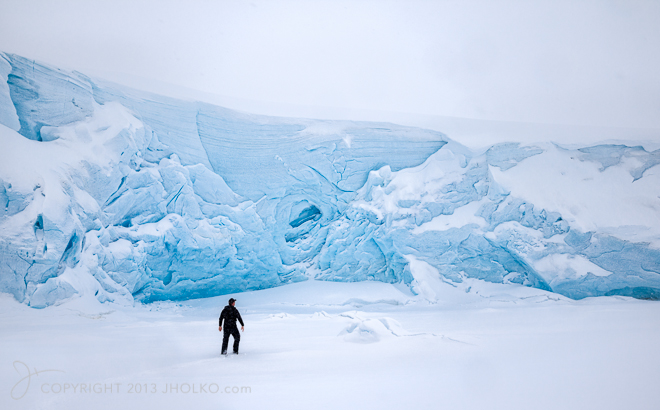 During zodiac operations it is reasonable to expect some salt spray to get into the boat and onto your equipment. Therefore I absolutely recommend you bring a large dry bag with you that you can work out of when shooting from zodiacs and when travelling to and from the ship for shore landings. A dry bag will give you some much needed protection for your equipment and provide you a place to store equipment when there is spray in the air or to store extra equipment when you go ashore. Personally, I use a large 120 litre dry duffle bag that I can put my whole camera bag inside and find this works extremely well in the field. It might sound obvious but when choosing a dry bag try and find one that is a nice bright colour. A black or blue dry bag is going to be virtually invisible if it were to fall in the water.
Clothing is a very personal requirement and how much you need to stay warm really comes down to the individual in question. In terms of temperature you can expect everything from a few degrees above zero Celsius to temperatures as low as -10 Celsius plus wind chill on a standard Antarctic Peninsula expedition. Such a temperature range is difficult to work in and difficult to prepare for. You should start with a base layer of thermals made from marino wool and then build up additional layers of wool, and down to suit your bodies needs The key is to layer you’re clothing and then on top of everything else you wear an outer layer of waterproof / windproof breathable material such as Goretex. Denim and cotton should never be worn. If you are prone to feeling the cold then you might want to consider some chemical hand warmers. I am not really a fan of these use once and dispose warmers as there are some environment issues surrounding them. However, they are very effective and will keep your hands warm on cold days. One in each pocket is usually sufficient and you can then put your hands into warm pockets whenever you feel cold. The alternative is battery headed clothing (which is even more effective) and which is readily available from companies such as Gyde.
When it comes to camera batteries I suggest you plan to bring enough batteries for a heavy days shooting (around 1000 – 3000 images per day). The cold does have an affect on battery life but much depends on the size and type of the battery as well the ambient air temperature. I always have enough batteries with me for each camera that I can have one in the camera, one spare in a warm pocket and one on charge in my cabin on the ship. You should also ensure you have sufficient digital storage as well as a reliable means to back up your images in the field. Each individual will have different storage requirements but I like to travel with two external SandDisk 2TB SSD drives onto which I back up my images. One of the items I really like to travel with for Antarctic expeditions is my own life jacket. It is mandatory to wear a life jacket during all zodiac operations and the expedition ship will provide you with a lifejacket so you don’t have to bring your own. However, the life jackets provided are generally quite bulky and restrictive and I personally find them a hindrance when photographing. Light weight self inflating life jackets are relatively inexpensive and take up little space in checked luggage so I prefer to travel with my own.
Lens selection is a critical decision process for any photographic expedition to Antarctica and flexibility is the key to your success. A great deal of your photography will be done from ship and zodiac where you have only limited ability to approach your subject by zooming with your feet. Therefore zoom lenses are going to provide you the best opportunities to frame your shots in camera. At the wide end lenses like 16-35mm, 11-24, or 14-24mm are absolutely ideal. I also like to travel with a mid range zoom such as a 24-70 or 24-105mm and then a medium telephoto such as a 70-200mm or a 100-400mm. These three lenses are all you really need for any expedition to Antarctica unless you have very specific requirements for a certain look or certain focal length. Super telephoto lenses are generally not really required in Antarctica as it is possible to get very close to almost all of the wildlife. If you are a dedicated bird photographer then something like a 400mm F4DO or 300mm F2.8 with a 1.4 extender is generally a better choice than a 500 or 600mm lens as its much easier to handhold from the deck of a moving ship. I personally like to shoot wildlife at very fast apertures for narrow depth of field so I tend to choose F2.8 lenses where possible. I often add a 300mm F2.8L IS lens to my arsenal specifically for the narrow depth of field and the telephoto compression that this lens offers. Of course, much depends on your personal preference and style of subject engagement. The key thing to keep in mind is flexibility. Frankly there is little need for a tripod in Antarctica unless you wish to try some long exposures during shore landings or you wish to use it to support a long / heavy lens. In all the expeditions I have done to Antarctica I can recall only one instance where I used a tripod for a long exposure (although I do use a tripod a lot to support heavy telephoto lenses). Generally tripods slow down the pace at which you can work and although this can be a real positive in contemplative landscape photography it is more often a hindrance in Antarctica where working quickly is one of they keys to success.
Another item I really like to travel with is a pair of knee pads. As a wildlife photographer I spend a huge amount of time lying and kneeling on the ground in order to ensure I am at eye level with my subject (so I can create more intimate images).The cold metal deck of the ship and zodiac is far from comfortable to kneel on so I recommend you add knee pads to you’re packing list. A good set of knee pads costs almost nothing, weighs almost nothing and is guaranteed to ensure you don’t end the day with sore knees. They also provide you a degree of protection as you move about the deck of the ship.
If you are keen birder or have an interest in whales then a good pair of binoculars is absolutely mandatory. Most expedition ships have a few pairs lying around to be shared amongst the passengers but you are going to want the highest quality optics you can so I recommend investing in your own binoculars. I personally carry a pair of Leica Ultra Vid HD 10 x 42 and find this a good compromise between power, size and weight.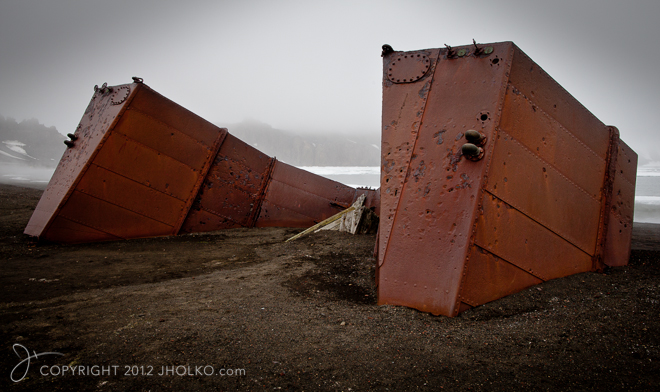 Despite what you might think Antarctica is actually an incredibly dusty environment and you will end up with dust spots on your sensor at some point during the expedition. If you are comfortable cleaning your own sensor then I do recommend you travel with whatever you usually use to clean your sensors. It is not uncommon to have to clean the sensor a few times during an expedition if you change lenses frequently.
In general a polariser is not required in Antarctica. The light at the Poles is already heavily polarised and the use of a polariser can cause the corners of the image to be overly and unnaturally darkened if care is not taken. A polariser can be useful for removing the sheen from water and as it is small and weighs almost nothing I usually have one in my bag just in case. In reality, I have probably used it only a handful of times across all of the expeditions I have completed in Antarctica.
Graduated Neutral density filters are not required in Antarctica. The dynamic range is on the whole quite narrow on all but the brightest of days. I have not found a situation where I desperately needed a graduated ND filter to capture a specific image and as such I don’t bother packing filters. The overall key concepts to keep in mind in terms of equipment for any photographic expedition to Antarctica is flexibility and familiarity. The more flexible you can be with your camera equipment and the more familiar you are with its operation the better your chances for producing an extremely strong body of work from your expedition. The best investment you can make before your expedition is to ensure you become intimately familiar with the operation of all your camera equipment (irrespective of brand or model). If you embark on your expedition with equipment you are intimately familiar and confident with you will absolutely produce your best work. Have a wonderful and prosperous expedition!
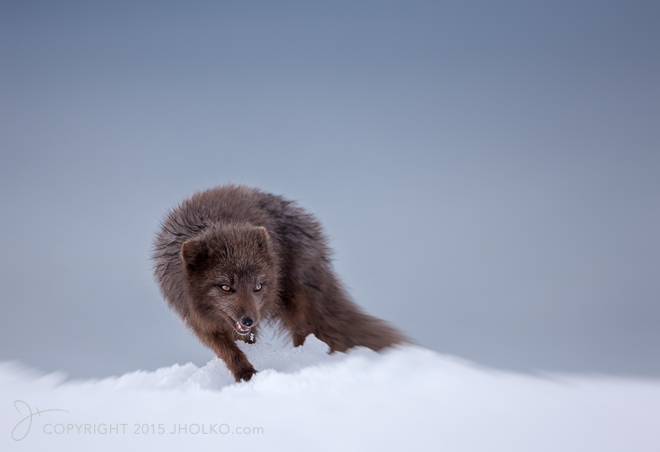 After I finish in Iceland I am heading to Svalbard for a sold out winter expedition to photograph Polar Bears and the landscape of Svalbard in a winter setting. The 2017 expedition has also been long sold out, but I will be repeating this expedition again in 2018 and you can download a complete PDF itinerary of the expedition HERE. Places are already very limited.
 In May this year Daniel and I still have a couple of places available on our Ultimate Puffins workshop. The workshop is dedicated to photography of the Atlantic Puffin and other birds of Iceland including Fulmars, Kittiwakes, Guillemots (Murres), Arctic Terns and Razorbills. Iceland is one of the best places in the world to photograph Puffins and other Arctic birds in their natural environment. We will visit a number of different locations during this workshop where we will have outstanding access to the Puffins living in burrows on the edge of sea cliffs. We have timed our 2017 workshop to ensure we are in the best locations at the best times to photograph these wonderful birds. We will have hours of golden light under the spectacular midnight sun – ideal conditions for photography of the Atlantic Puffin. We are also heading out to the remote northern Grimsey Island so this workshop promises to be unique and very special. We are now down to the last few places on this workshop before it will be sold out. If you are interested in photographing Arctic Birds this is not to be missed. You can download a complete PDF itinerary HERE.
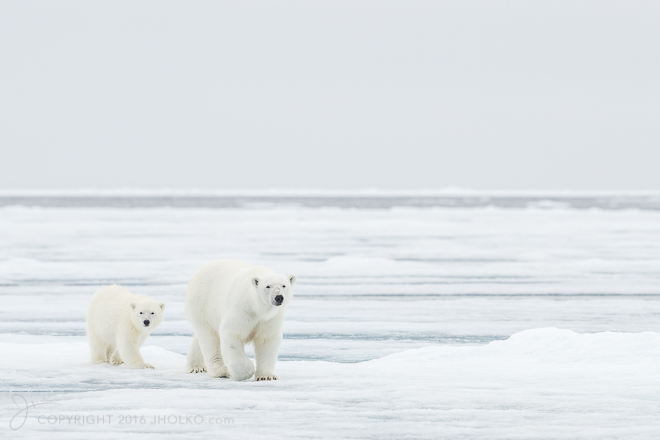
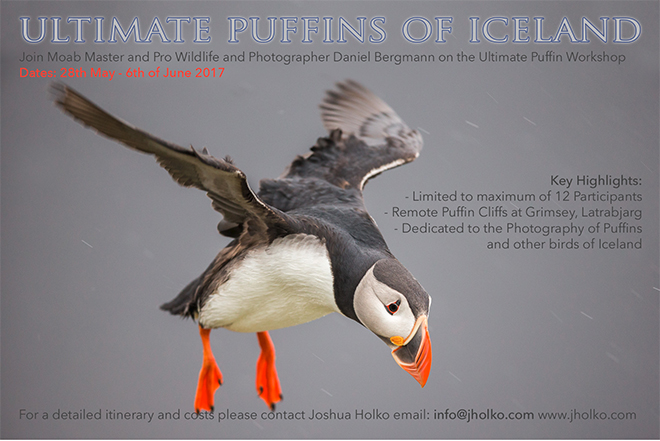 In July I will be heading back to Svalbard for my annual summer expedition to photograph Polar Bears and other wildlife of the Svalbard archipelago. You can download a complete PDF itinerary of the expedition HERE. There is now only one place remaining on this expedition before it will be sold out.
 In September Daniel Bergmann and I are leading two back to back expeditions to the Scoresby-Sund fjord system on the remote north west coast of Greenland. Both expeditions are sold out but Daniel and I have just committed to repeat the expedition again in 2019. We will be announcing dates for the expeditions very soon but you can register your interest to be first on the list by dropping me an email.
  In November I will be leading a new expedition to Antarctica – Antarctica White Nature. This fully dedicated expedition is now almost sold out with only two places remaining. This expedition has been specially timed to be the first of the season to ensure the best possible ice conditions. Be sure to read my recent series of articles on how to choose an expedition to Antarctica. You can download a complete PDF itinerary of the expedition HERE.
 As some of you are aware I also recently completed a new winter scouting trip to Kuusamo in the north of Finland (I hope to publish some images from this trip soon). This trip was a great success with some fantastic Golden Eagle and Hawk Owl activity in a wonderful winter setting. I hope to have details on a future January Winter workshop to Finland over the coming months. If you would like to be notified once details are finalised you can drop me an email to register your interest – there is no obligation at this point.


 Most expedition ships will provide you with a pair of rubber boots (Wellingtons) for zodiac cruises and shore landings. However, these boots are generally not insulated and provide poor warmth and support (even if you bring inner sheep skin liners). They are also frankly pretty disgusting having been used and abused by countless participants over many years. I recommend you plan to bring your own boots and that you purchase a pair of Arctic Sport Muck Boots. These insulated waterproof boots are absolutely ideal for expeditions to Antarctica and will keep your feet both warm and dry. They are also relatively inexpensive and useful to have around the house for occasions such as washing cars once you get home. Hiking boots and similar type boots are not suitable for zodiac operations and shore landings in Antarctica. You absolutely must have a boot that comes up to just below the knee and that is warm and completely waterproof. A pair of Arctic Sport Muck Boots will last you many years and will keep you warm, dry and clean. I actually also use my Arctic Sport Muck Boots on board whenever I am photographing from the deck of the ship.
 On the question or sunglasses or snow goggles for zodiac operations I tend to prefer sunglasses in all but the heaviest of blizzards. Sunglasses are easy to photograph with where as it is necessary to remove goggles to actually see through the cameras viewfinder. Personally I like and use sunglasses from Maui Jim as they have no colour tint and are heavily polarized. For goggles I like and use Zeal.
 Although I briefly touched on clothing in
  I strongly recommend you purchase and download SanDisks Rescue Pro software to recover any images from damaged or accidentally formatted CF, SD and CFAST cards. I have used this software on several occasions to recover images from cards that clients have accidentally formatted or from cards that are proving otherwise unreadable. This useful piece of software is absolutely worth investing in when you weigh the importance of your photographs against the cost of the expedition.
 www.WILDNATUREPHOTOTRAVEL.com