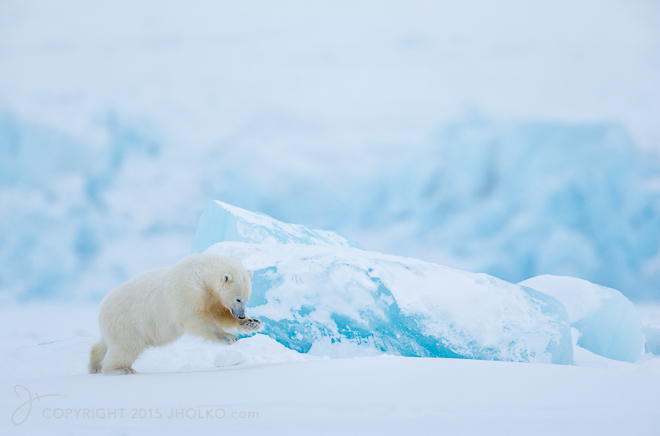
I am excited to officially announce today a brand new winter expedition to Svalbard in March next year, 2017. The result of several scouting and test trips this new and unique expedition offers a first time opportunity to photograph in Svalbard in winter from expedition ship. The Arctic in Winter is a place to inspire the imagination. It is a white landscape bathed in golden light. This brand new expedition is the first of its type to venture north of Longyearbyen by ship in winter. If you want to make unique and powerful Arctic photographs this is the expedition for you. The main focus of this expedition will be Arctic winter light, landscape and wildlife. In March and April the light conditions in Svalbard are magical. Usually winter trips to Svalbard are limited to day trips on snow mobiles quite close to the town of Longyearbyen. With our expedition ship we will explore a much bigger area including the western and northern areas of Spitzbergen.
 This expedition has been more than 18 months in the planning and has been designed to provide the very best possible opportunities to experience and photograph Svalbard in winter light. We expect to meet wildlife such as Polar Bears, Walruses, Seals, Arctic Foxes and Reindeer. At this time of year the sea birds will also be returning to their breeding grounds.
 This exclusive expedition is for a strictly limited number of just 12 participants plus leader and is dedicated to winter photography in Svalbard.
We will be using the ice hardened expedition ship M.S Origo that will enable us to skirt the edge of the pack ice searching for and photographing landscapes and wildlife. M.S Origo is widely regarded as the best ship in the Arctic for Photography. Our expedition ship is also equipped with suf cient zodiacs (2 x Zodiac MKV models) and crew for all photographers to be shooting simultaneously with plenty of room to spare for camera equipment – So bring what you need!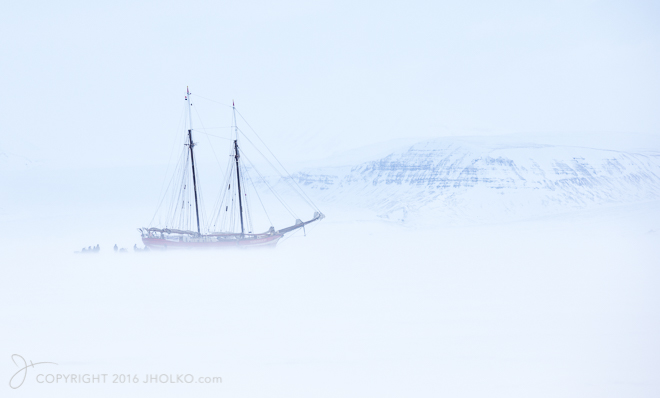 If you are excited by the idea of traveling to Svalbard in winter with a small group of dedicated photographers now is the time to secure your place. You can download a detailed itinerary and PDF HERE. Places are extremely limited and once they are spoken for that’s it.
EXPEDITION AT A GLANCE
Dates: 26-03-2017 until the 03-04-2017
Duration: 8 Nights / 9 Days
Participants: Maximum 12 Photographers plus leader Investment: $9,950 USD
Start and Finish: Town of Longyearbyen in Svalbard Norway
Trip Highlights: Winter Landscapes, Polar Bears, Walrus and other Arctic Wildlife, Incredible Arctic Landscapes, Pack Ice and small group size
Why a Winter trip?
Winter in Svalbard provides an opportunity for a snow covered landscape and hours of golden light. In March and April the sun never gets high in the sky and we will have approximately 8-10 hours of daylight with which to photograph. If conditions are good we may get spectacular golden sunset and sunrises.
How cold will it be in Winter in Svalbard?
The average temperature in Svalbard in winter is -2oº Celsius. However, temperatures can plummet below -30º Celsius and with wind chill it can feel even colder, so it is important to be prepared with warm clothing. Survival suits are mandatory for all zodiac excursions in winter and will be provided for you.
Is the ship heated?
Yes. The ship is heated 24/7 and the temperature on board and in the cabins is warm and comfortable.
Due to initial expressions of interest and bookings there are only a few places remaining before this new and unique expedition will be sold out. If you would like to register your interest for one of the remaining places you can do so by sending me an email. Places are strictly filled on a first come, first served basis.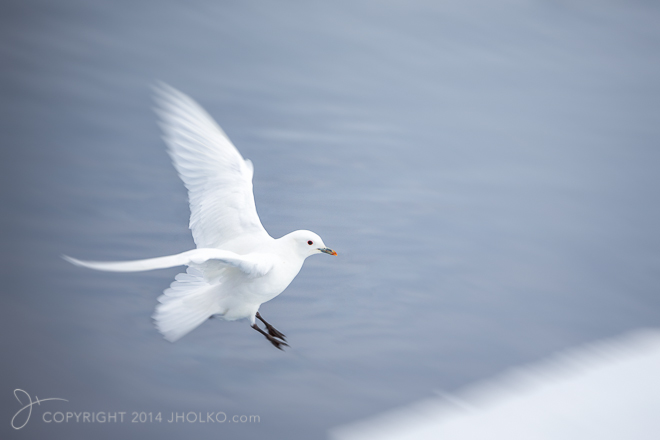
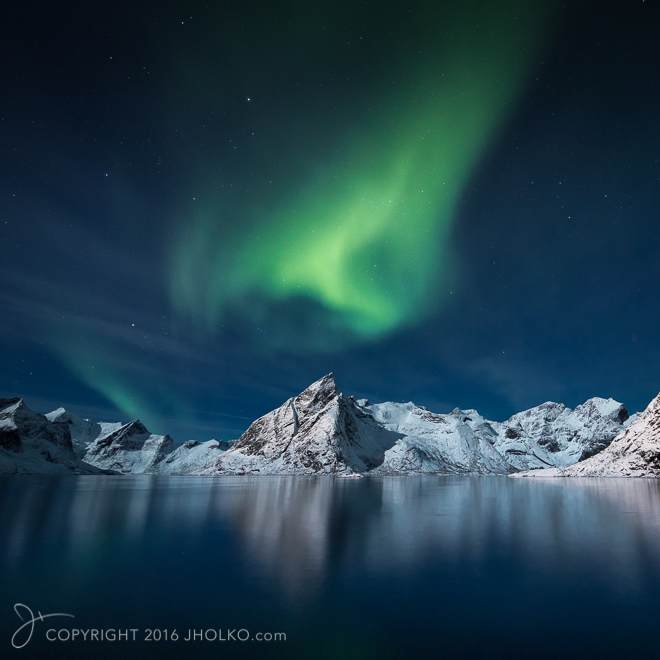
 This masterclass landscape workshop was about maximising our time photographing in some of the most spectacular parts of New Zealand. Our small group size of just six photographers provided us a really small intimate group that enabled us to put in some long hours in the field in some of the most spectacular parts of the South Island. The workshop ran for 12 days (11 nights) with an optional four day extension and we stayed in good hotels which were functional and clean. We travelled by private 4-wheel drive vehicles. We utilised several primary locations as bases from which we travelled to each shooting location. We had a good mix of weather and light during the workshop and although we encountered some rain in the Fox Glacier area we were still able to maximise our opportunities with some extraordinary light and conditions. We also managed all three of our planned aerial shoots from helicopter, despite some touch and go weather. Helicopters and aerial photography really add an extra dimension to photography in New Zealand’s South Island. The ability to quickly get up into the mountains to take advantage of weather and light is a significant advantage.
 I wrote quite an extensive report on our South Island masterclass workshop last year (read the
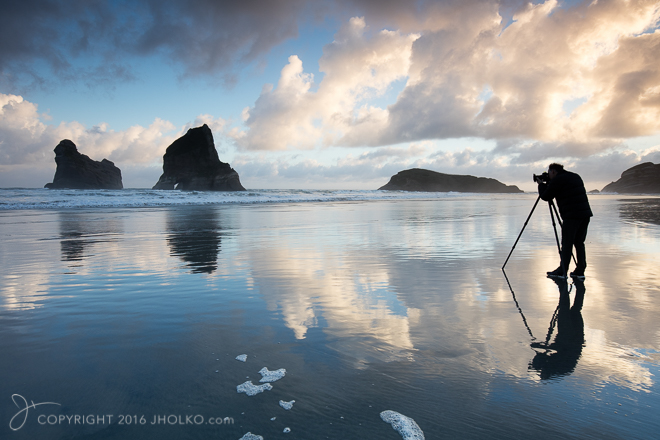 Another early start as we made for the North-west coast, which is completely different to the coastal scenery we had been photographing. Characterised by dramatic sea cliffs and imposing rock formations, there are also intimate lake and tidal inlet scenes so we were kept busy for the whole day in this unique location. We returned to our lodge in the evening.
 We departed early this morning for the drive back to Christchurch. This was a full day on the road and we stopped along the way to photograph forest, country and mountain scenery as we took the Lewis Pass route south. We arrived into Christchurch in the early evening and enjoy a relaxed dinner to conclude our workshop.

 www.WILDNATUREPHOTOTRAVEL.com