If you are fortunate to find yourself in or around Aspen in the USA over the next few weeks for the Summer season then be sure to stop into the Source Photographica gallery where I have a selection of my Iceland and Antarctica photographs on display. The gallery is open from 11am – 9pm Sunday – Monday (closed Tuesdays) and by appointment. 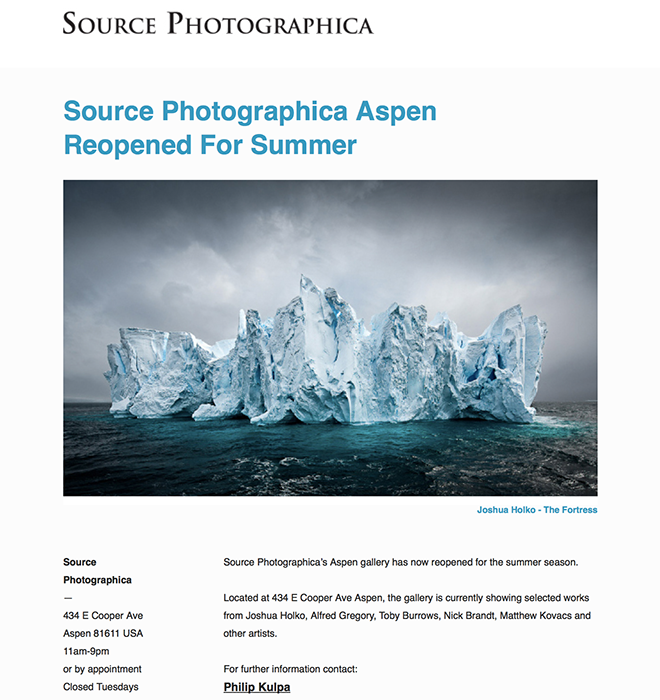
Category: Landscape Photographs
Landscape Photographs from around the World
Iceland – The Highlands 2015 Workshop
Daniel Bergmann and I are very pleased to announce a brand new workshop for Iceland next year that focuses exclusively on the interior and highland regions of this incredible country. The workshop will run from the 8th of August until the 18th of August 2015 and will take us from the capital city of Reykjavik into some of the most remote, spectacular and rarely visited highland areas of Iceland.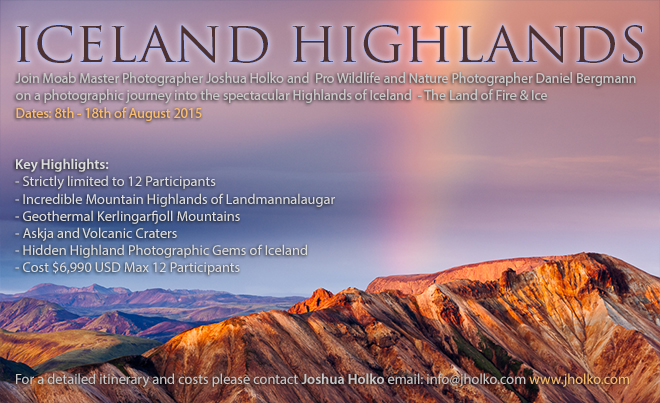 The Highlands of Iceland cover most of the island’s interior. Inaccessible in winter, they rise 400–500 meters above sea level and are an untamed mingling of uninhabitable volcanic desert, jagged mountains, glaciers and hot springs. A few oasis like areas, such as Herðubreiðarlindir near Askja, are found only in proximity to rivers.
Two mountain roads, Kjölur and Sprengisandur, cross the interior from south to north and open up the highlands for exploration. Those two roads are open from late June to early September and we’ll be travelling both on our journey, plus a number of lesser mountain roads and tracks. As there are unbridged rivers in many places that need to be crossed we’ll be using specially modified 4×4 vehicles.
Some of Iceland’s most interesting landscapes are in the highlands, especially where there is volcanic activity. This includes the Landmannalaugar area in the Fjallabak region, Kerlingarfjöll Mountains off Kjölur and Askja in the northeast. All will be on our itinerary, plus a number of other exciting locations. The highlands are a rugged area that can get wild storms coming through, even in summer. Therefore we are going to do this adventure in as much comfort as possible by staying in hotels rather than camping. We’ll be using four hotel bases and staying 1–3 nights in each.
Itinerary
Our first base will be in the Hrauneyjar Highland Center, which is located about 45 minutes away from Landmannalaugar. Accommodation there will be in en suite facilities but Hrauneyjar is a basic, expedition style motel. After three nights in Hrauneyjar we’ll travel north over the Sprengisandur route and reach Mývatn, which will be our next three-night base. At Mývatn we’ll stay at the four star Hotel Reynihlíð and do excursions from there, including into Askja. Once our stay at Mývatn comes to an end we’ll travel south the Kjölur route and spend a night in the cabins at Kerlingarfjöll Mountains. Accommodation there is in cabins (very nice ones) so we cannot offer single rooms in this location. Our last base, for two nights, will be in the town of Hvolsvöllur on the south coast. From there we’ll explore the southern part of the Fjallabak region. We plan to take advantage of weather and light as we travel and as such our itinerary may change due to weather and other conditions. As this expedition is first and foremost about photography we may sacrifice regular hotel dinners in order to be out in the best light of the evening. In such circumstances we’ll carry food with us into the field and in some cases we’ll leave our accommodation before breakfast and return after a morning shoot for late breakfast.
 This photography tour will last for 11 days (10 nights). Breakfast, lunch and dinner are all included and will generally be held at the accommodation where we are staying. However, this workshop is all about photography and we will be putting in long hours in the field in order to ensure we get the best possible light for photography. We may take food and drink with us into the field to ensure we are in the right locations at the ideal time. There will be some moderate hiking on uneven ground and a reasonable level of fitness is recommended. Should this be of concern please contact us to discuss. There is no obligation to participate in any hikes and every effort will be made to accommodate any requests.
Conditions
The days are still long in the middle of August. Sunrise is at around 5 a.m. and sunset just before 10 p.m. The best light for landscape photography is therefore during the evening and early morning. This means that we may have an early dinner and then head out to photograph and sometimes be out before breakfast for a morning shoot. On cloudy days we’ll have a more normal routine. What we’ll do exactly on any given day will be decided around the weather and other conditions and there will be small changes to our original plan to make the most of our time.
This workshop is about photography and lots of it. There will be no formal classroom sessions or lectures and no formal instruction. Rather, participants and the group leaders will work side by side, sharing their knowledge, vision, philosophy and experience together in the field. We want you to make great photographs and therefore the emphasis is on being out in the field when the light is best. We are always on hand for any advice or instruction you may need and we will work together as a team. A small group of participants (maximum of 12 plus leaders) guarantees a more personal and intimate experience than bigger tours can provide. This is a unique opportunity to travel and photograph with two experienced professionals who have a combined total of more than 40 years of photographic experience and can take you to the best locations that are off the beaten track, and at the right time – when the light is best. We will be travelling in large off road ‘super jeep’ 4-wheel drives to give us plenty of space for camera equipment and gear. We will be travelling on some rough tracks in order to get to the best locations.
Cost: $6,990 US
Duration: 11 days/10 nights
Includes: Accommodation for ten nights in single rooms (except in Kerlingarfjöll which is on a shared basis). Food and beverages (excluding alcohol). All transport during the duration of the workshop in modified 4-wheel drive vehicles. All tuition and guiding services.
Excludes: International flights
Group size: 12
Due to initial bookings and expressions of interest this trip is already 50% sold out. If you would like to register your interest for one of the remaining places or would like additional information please contact me at info@jholko.com. You can download a detailed itinerary and information PDF form HERE.
Sunny Side Up at Goðafoss
It has been a while since I have posted a more intimate landscape photograph. This photograph of a small ‘sunny side up fried egg’ ice-flow at Goðafoss waterfall was taken on my winter Iceland workshop in March this year (You can read the full report online HERE). Goðafoss remains one of my favourite waterfalls for photography in Iceland and I am looking forward to returning there in a few weeks time for my Summer Workshops. Both the Summer workshops are sold out this year, but I will soon be announcing a new workshop for 2015 that focuses on the interior of Iceland and the spectacular Highlands. If you would like register your interest you can contact me to be added to the list of interested attendees. No obligation at this point.
Outdoor Photographer Magazine – Antarctica: The Edge of the World
Outdoor Photographer magazine are running a multi-issue (six + issues) feature on the expedition I am leading this November to South Georgia Island and Antarctica with Andy Biggs. This series of feature articles is sponsored by my good friends and manufactures of my preffered camera bags – Gura Gear. The first part of the new series is featured in the brand new July 2014 issue. Subsequent issues will include everything from what one can expect to see and photograph in Antarctica, what gear and equipment we are taking, what accessories, clothing and other items are required for this sort of expedition, how to pack and then at the conclusion of the expedition there will be an issue reporting on our experiences along with a number of photographs taken during the expedition. You can click on the image below to Download a PDF of the first article. Be sure to Subscribe to Outdoor Photographer magazine for the follow up issues. Subscriptions are available in single issue or multi-issue in Print, iPad, Zinio and more. Just choose your favourite reading medium, subscribe and enjoy. The South Georgia and Antarctica expedition is sold out, but if you are interested in being put on the waiting list please Contact Me with your expression of interest.
Namibia Overland Workshops April and May 2014 Report
In March and April 2014, I co-led back-to-back workshops with Andy Biggs to the Namibia desert in Namibia, Africa. The goal of these safaris was to photograph the breathtaking desert landscapes of Namibia in a different way than Andy has offered on his Namibia trips in the past: in an overland fashion. These were overland photographic journeys, and we had complete flexibility to stop to take photographs at any time along the way. We wanted to put these trips together that had a good balance between flexibility, photographic opportunities and comfortable accommodations – And we did indeed stay in some very swish camps! This approach also enabled us to carry more than enough camera gear, so we were able to bring everything we needed. Personally this meant I was travelling with lenses as long as 600mm as I had travelled directly from Iceland in winter where I had been photographing Arctic Foxes at the conclusion of my annual winter workshop (You can read the Iceland Winter Report HERE). On the South Western Coast of Africa, where the icy Atlantic ocean meets the world’s oldest desert lies a place that is known for its landscapes as much as the Serengeti is known for its abundant wildlife. The unique combination of desert, grassland and cold ocean current form a one-of-a-kind terrain found only here. For this reason landscape photographers from all over the world journey to the Namibia Desert to try and capture its ethereal beauty.
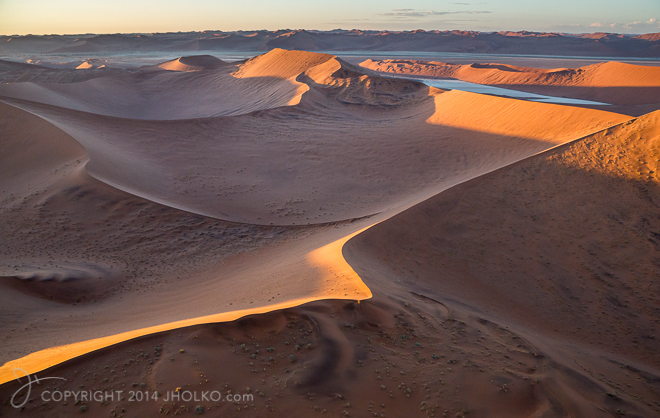 In this captivating region of Namibia lies a maze of mountainous valleys that look like they were carpeted from slope to slope by ivory coloured grass, criss-crossed by ancient riverbeds and dotted with a collection of photogenic acacia trees. The final unique touch is added by the large snake like dunes that rise from the grasslands like the roof of some subterranean world. These stark and compelling landscapes are something to behold with the human eye, but when it’s sweeping meadows, barren mountains and blood red dunes are captured and transformed into a two dimensional image, it becomes obvious why this place is so beautifully addictive to photographers.
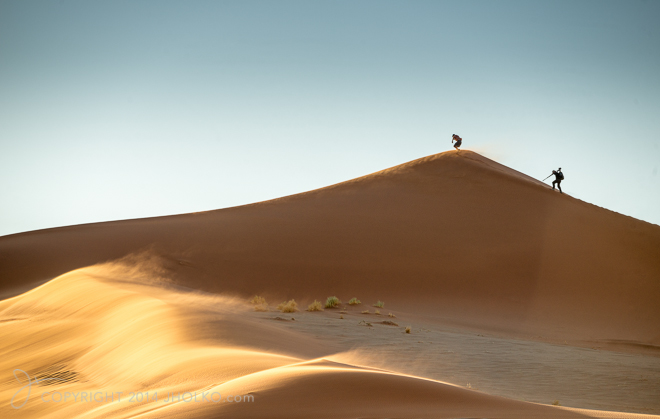 These new safaris were custom tailored to take in the very best of Namibia and included such iconic areas as the mystical Deadvlei, the ghost town of Kolmonskop and the Dune landscapes of Sossusvlei.
We began our adventures in Windhoek, the capital city of Namibia. From here we travelled to the abandoned ghost town of Kolmonskop with a detour along the way to the Quiver tree forest at Keetmanshoop.
I admit to struggling with my photographs at the Quiver tree forest. As the first stop on our Namibia workshop my shutter finger was not yet up to speed with my artistic vision and as such I felt my images from this location were really just snaps and not worthy of publication. On the second workshop I had more success but still felt my photographs did not do the area justice. The location itself is interesting, but challenging to make sense of photographically. There is some good potential if you are willing to put the work in but its one of those locations that you mot definitely have to think outside of the box to get the best from. My feeling is that the best images from this location are more about intimate detail of tree bark than grand landscape and I have seen several successful images from participants that adopted this approach. I would have preferred to have overcast conditions at this location as I found the blue skies counter productive to my style of photography. Circumstances did not permit, but I also felt that this would have been a good location for night time star trail photography. This location did however serve as a good warm up, chance to loosen the shutter finger and to break up the drive between Windhoek and Kolmonskop.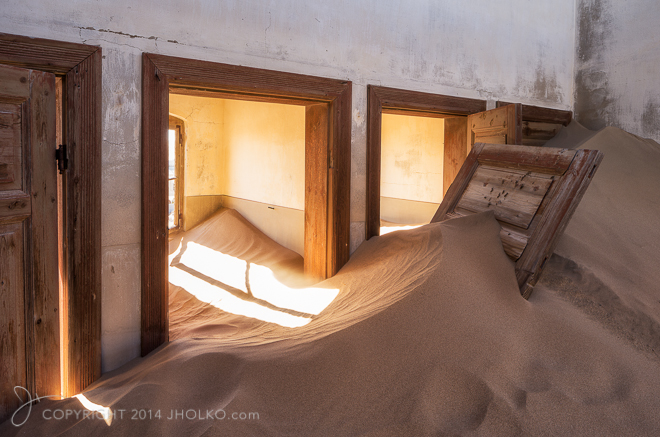 Kolmonskop has become an iconic Namibian location over the last decade or so and it was one of the locations I was really looking forward to visiting and photographing during these workshops. This abandoned diamond mining town offers limitless opportunities for photography and it was great fun to share this location with such passionate photographers on both workshops. One of the really beautiful things about Kolmonskop is its sheer size. With so many houses and so many rooms within those houses you rarely bump into other photographers and it very much feels like you have the place to yourself. We were fortunate during both workshops to experience strong winds which resulted in lots of sand and dust in the air to catch the light and make for dramatic images. I endeavoured to take advantage of this whenever I could as I felt Kolmonskop really needed these sort of atmospheric phenomena to help bring the images alive. The blowing sand made for tough working conditions but I really felt it added the missing element to complete the scene. I have seen images of Kolmonskop in fog and was hoping we might be lucky enough to experience this but it was not to be.
 One of the fascinating things about Kolmonskop that appeals to photographers is the weathered and peeling paint, worn wallpaper and pastel colours found inside many of the stone houses. All of us found this subject matter fantastic for photography and we spent many hours exploring and photographing in and around the old buildings. We photographed at both sunrise and sunset at this location across multiple days and I quickly figured out which houses and rooms were better at a given time of day. By 10am there are shafts of hot light coming through many of the slats in the roofs that provides for pretty dramatic light and shadow. This is fairly typical of much of the photography one sees from Kolmonskop but I preferred and opted for the first and last light of day when the light was softer.
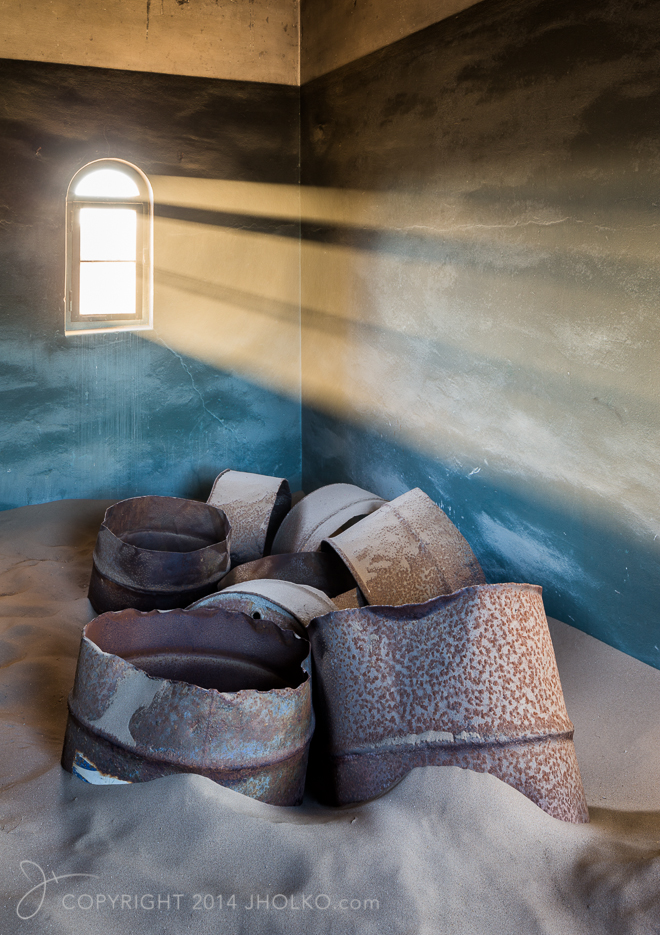 Kolmonskop is one of those locations that all of us felt we could repeatedly return to and continue to make new and interesting images.
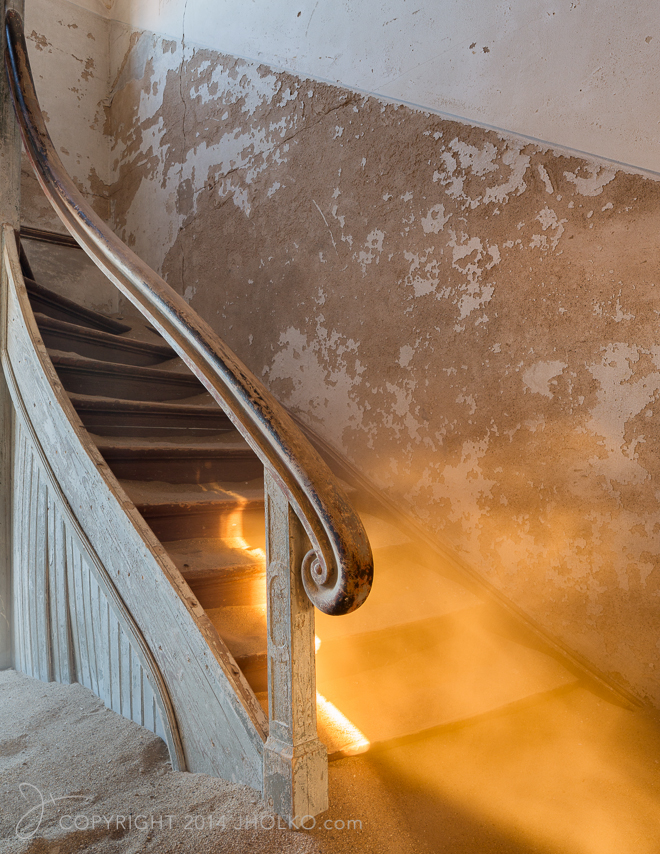 After Kolmonskop we travelled to Sossusvlei where we photographed a sea of gigantic red and golden sand dunes along with the well known salt pan of Deadvlei with its ancient fossilised dead trees. Sossusvlei and Deadvlei are without question the big two locations for landscape photography in Namibia and in many ways were the highlight of these two workshops.
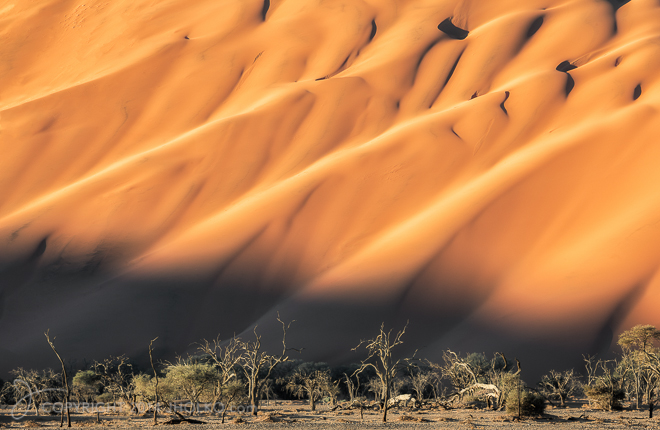 During our days in this area we chartered a small Robin helicopter during both workshops to take us up and over the dunes with the doors removed for both sunrise and sunset photography. This was in my opinion the real highlight of both workshops. An aerial view really helps give a sense of place, perspective and scale. The immensity of the dunes really cant be appreciated any other way and some really interesting photographs resulted from our helicopter flights. The helicopter is a recent addition to this area and it was extremely welcome. As nice as hot air balloons and light aircraft are for an aerial experience there is simply no substitute for a helicopter with the doors removed when it comes to aerial photography.
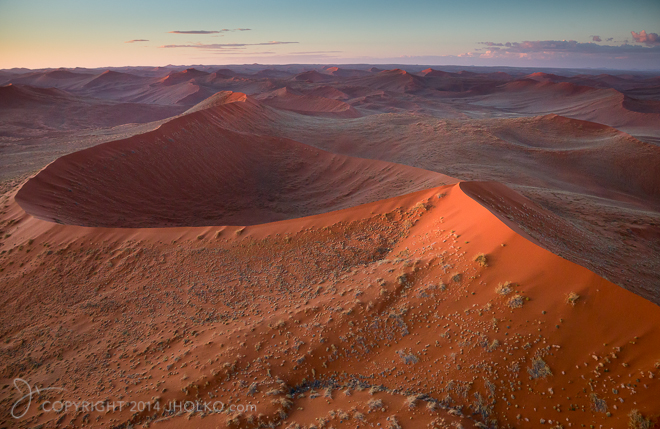 I personally found the journey out to the Skeleton Coast in the helicopter the most fruitful photographically. Near the coast the dunes turn a sinuous golden yellow and there are incredible patterns and textures which are wonderfully juxtaposed against the ocean waves.
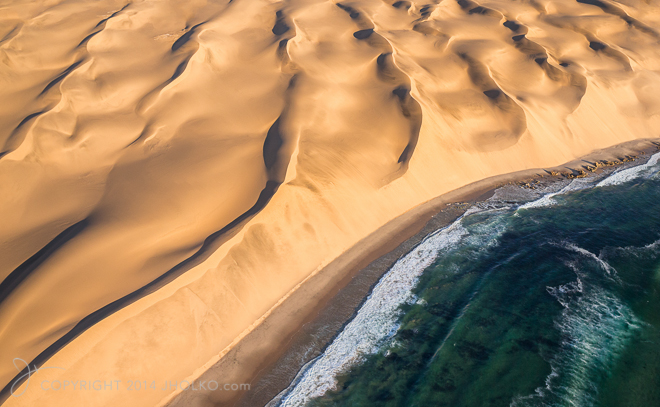 One of the things I tried personally very hard to do whilst shooting at Sossusvlei was to really focus on the light and to avoid getting sucked into the postcard scene. As a result I tended to avoid the grand vista and focus on more intimate landscapes where the sand was blowing and was often back lit from the setting sun. My intention was to capture more of the feeling and emotion of the landscape in my images and as such I made quite a number of images with the 200-400mm zoom lens to really hone in on the areas that I found most interesting. I found from experience the most interesting images resulted when I hiked up into the dunes into the blowing sand. This if course was also the most difficult conditions to shoot in and resulted in all of my camera gear needing some professional cleaning on return to Australia.
 Personally, I found Deadvlei quite a challenging location to photograph. Although we were staying inside the park on both our workshops and were able to be on location before sunrise and before the tourists arrived there is only so many different interpretations you can do of the ancient and fossilised dead trees on the salt pan before it starts to become somewhat cliche to me. I opted to use large amounts of empty space in my images in this location to try and give an impression of the sheer vastness of the pan, the desolation and the wonderful texture in the cracked earth. The challenge at Deadvlei in my view is to create a photograph that is both iconic and unique. I admit I would just about give up my first born to have a sunrise at Deadvlei in fog but such an atmospheric phenomena in the desert is rare at best.
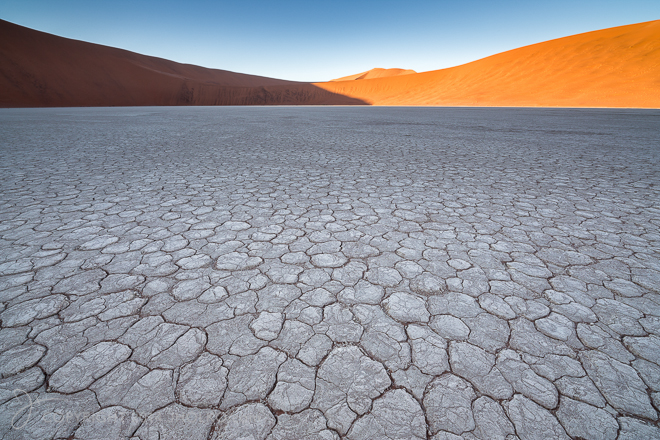 Andy and I had deliberately chosen April and May for our workshops as this is typically the best time of year for clouds at Sossusvlei. We did indeed have sporadic cloud cover for some of our time in this area and we even witnessed the rare collision of a sand storm and rain storm which resulted in some pretty spectacular light.
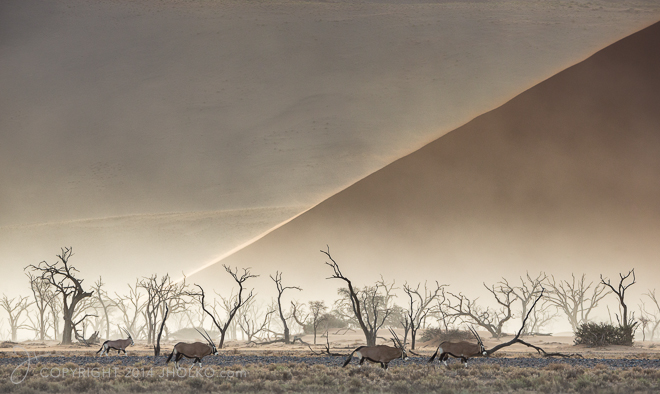
 After Sossusvlei and Deadvlei we journeyed further afield to the Wolvedans area and a location known as Drifters. This was a very subdued landscape in comparison to the mighty dunes of the desert and it offered an opportunity for more intimate landscapes in a relaxed environment. We also had several successful game drives in this location and many of the species sighted are in the attached Namibia species list. The Oryx in particular are an incredibly regal animal and we saw a great many in this area of Namibia.
 In terms of gear failure I can report that across both workshops of twenty people the only gear failure was my own and it was the result of sheer carelessness. I inadvertently swung my still open camera backpack across my shoulders at the Quiver tree forest on day one of the workshop which promptly saw three lenses fly out of the bag at fatal velocity into three strategically positioned boulders. Net result – three smashed lenses on day one (Canon 17mm TSE, 24-70mm F2.8L MKII and 1.4 TC MKIII). This was a careless mistake I have not made before (and will not make again!). Thankfully my camera insurance covered it and I was able make do without the lenses for the rest of the trip.
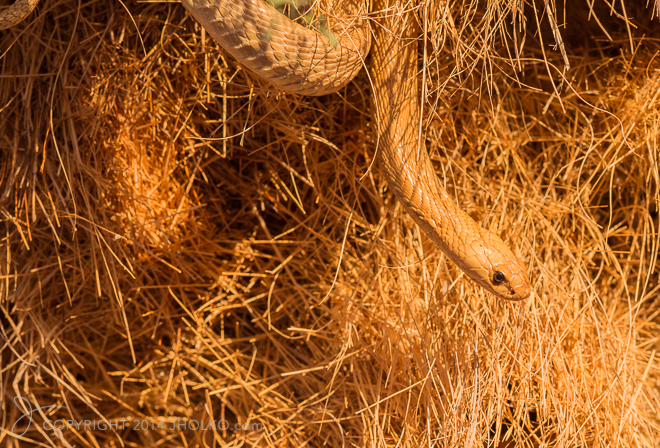
At the conclusion of the second overland workshop Andy and I ran a short extension for several of the group with an emphasis on wildlife photography at Erongo and Etendeka. This was my first taste of big Africa game driving and I was not disappointed – in fact, the experience was thrilling. The highlight of this extension was coming across three lionesses right on sunset as they were setting off on their evening hunt. We also encountered many other birds and mammals including the Pygmy Falcon (the world’s smallest Falcon) and the Hartman’s Mountain Zebra.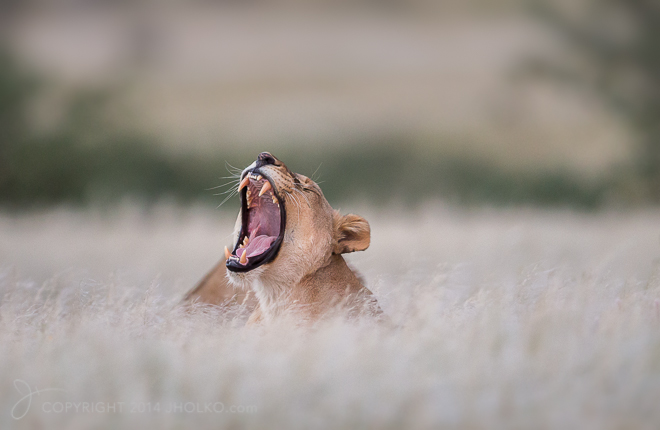 One of the most surprising elements of these two workshops for me was the sheer number of different species we encountered during our time in Namibia. I had not expected to see desert Lions, Elephants, Giraffe, African Wild Dogs and more. We even came across a Caped Cobra high in a tree raiding a Sociable Weaver nest. I spent a good hour photographing the Cobra as it went from chamber to chamber in search of prey. Finally, just after sunset the snake became exhausted and fell from the tree against the backdrop of a desert lightning storm. It was an incredible experience. You can download a complete list of species I personally sighted and confirmed during our time in Namibia.
 Camera equipment across these two workshops included everything from my own Canon system to Nikon, Hasselblad, Phase One (including technical camera systems from Alpa), Sony, Leica, Panasonic and just about every other major brand. This was the first chance I had to really play around with the Sony A7R and I have pretty mixed feelings about the viability of this camera in the field.
It is a testament to the quality of camera gear these days that there were no mechanical or electronic failures during these workshops. Namibia is one of the harshest environments I have encountered for photographic equipment. The blowing sand and dust is incredibly pervasive and it is a real trial to keep it out of cameras and lenses. I worked extensively with my 17mm and 24mm tilt shift lenses in Namibia and both required professional cleaning on return to Australia by CPS.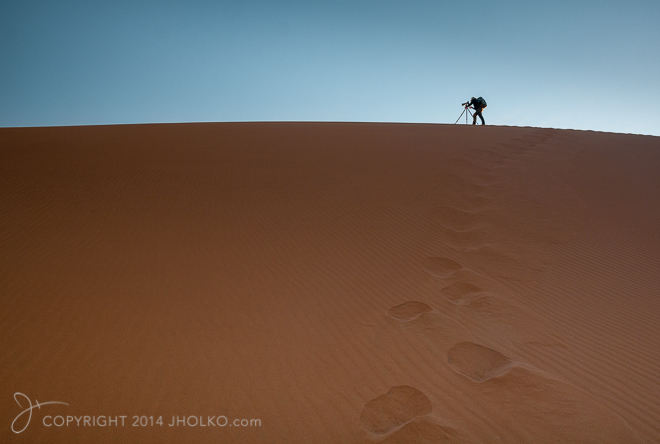 The deserts of Namibia have been high on my list for photography over the last few years. They are an incredible place for both landscape and wildlife photography. Although I personally struggled with the sweltering temperatures (I am after all a Polar photographer at heart) I look forward to returning again in the future. Namibia offers the intrepid photographer many opportunities for producing really fabulous landscape and wildlife photography. To those of you who have asked if I will be leading a future trip to this part of the world the answer is unfortunately not in the foreseeable future. I simply have too many other commitments that I wish to see through in the Arctic and Antarctic. I will have more to say about these over the coming months.
You can see the full portfolio of my photography from Namibia at www.jholko.com
 www.WILDNATUREPHOTOTRAVEL.com