CANON 1DX – MAKING THE IMPOSSIBLE POSSIBLE

Paris has been the first opportunity I have had to shoot with Canon’s new 1DX multi-media powerhouse camera. I had only limited opportunity to test the camera before I departed for Europe because the camera arrived only a couple of days before my flight departed. With all the delays since its announcement in September last year I was having serious doubts whether Canon were going to deliver. I managed some initial tests to ensure there was no immediate problem with the camera and these proved very promising, with excellent results.

After two days in Paris and around 500 frames I can now report that the Canon 1DX has exceeded my expectations for low light and autofocus performance in every respect. One of the real highlights in Paris for anyone interested in history and architecture is its incredibly impressive cathedrals and churches. The sheer scale, grandeur, and majesty of Notre Dame, and others, make them wonderfully impressive subjects for photography. They can be hard to capture in their entirety as there is a fine balance between placing the structure in context and the creation of a mere postcard. Nevertheless, I enjoyed the challenge and I could happily spend many days prowling the streets and cobblestone alleys for new and different angles.

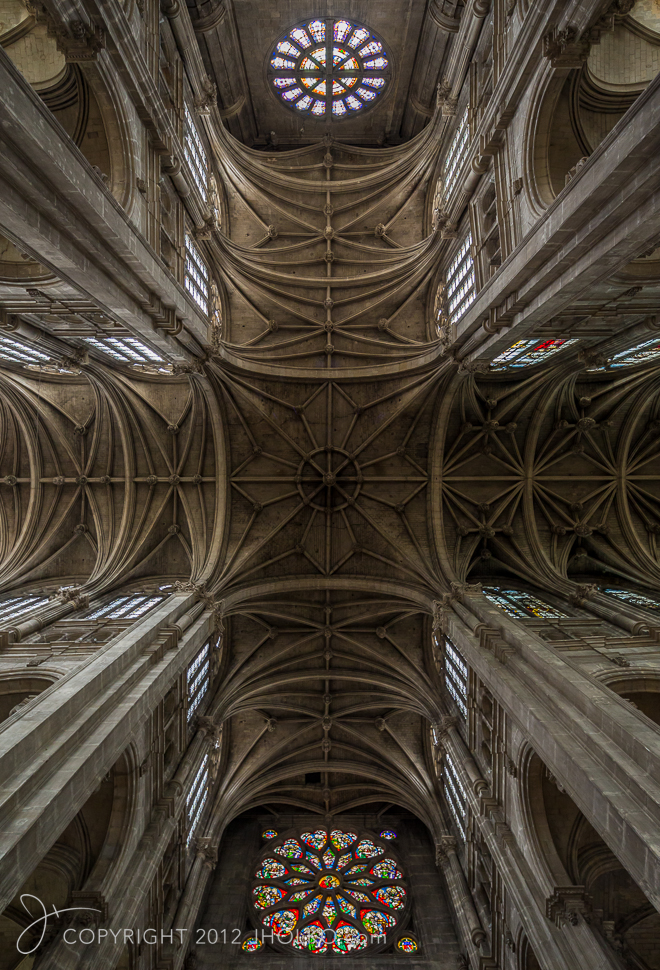
As impressive as the Cathedrals are externally, they are equally awe-inspiring on the inside. Unfortunately, all of them are extremely dark inside and tripod photography is forbidden (as is the use of flash – although, this last ‘law’ seems very poorly enforced) necessitating the use of high ISO photography to ensure sufficient shutter speeds and depth of field. It is not uncommon to have to push the ISO as high as 10,000 or even 25,600 in some cases to obtain 1/40th of a second at F4 in the darker areas.

This photograph was taken inside the Eglise Saint Eustache cathedral with the Canon 1DX and 17mm F4L TSE, handheld at ISO 6,400, 1/60thof a second, F 4.5. I want to emphasize that it was extremely dark inside the cathedral and that the light streaming through the stain glass windows was extremely hot. The dynamic range far exceeds the capabilities of any camera to record; yet the 1DX has managed to produce an excellent exposure without intervention from me. This photograph simply would not have been possible with such low noise with any previous camera I have owned or tested. The image has had only minimal post processing and noise reduction in Adobe Lightroom 4.1. There is virtually no appreciable noise of consequence in the RAW file, at least nothing that is not easily corrected with a small amount of noise reduction (a modest setting of 25 in Lightroom was used in this example to reduce the luminance noise grain – no color noise reduction was required). The results are simply astonishing and I am very much looking forward to the new opportunities created by the amazing capabilities of the 1DX. Although in this example I utilized the 17mm F4L TSE which is a manual focus lens I also shot several frames with the 24mm f1.4L MKII and 35mm F1.4L lenses, and in all cases the 1DX was able to immediately nail focus in near total darkness, center of frame. The era of shooting in the dark has truly arrived.Although street and city photography is not my preferred landscape, I have very much enjoyed my time in the city of romance and rate it as one of the most beautiful and charming cities I have visited.  There is a wavelength and ambience in Paris that I can immediately harmonize with. Its cobblestone streets are steeped in history and charm and this, combined with my love of the café culture, make it a city I could easily call home. I am looking forward to wandering its streets over the next few days before I head for Venice.
Au revoir for now…

GREAT OCEAN ROAD WORKSHOP OCTOBER 12th – 15th 2012 NOW OPEN FOR REGISTRATION

I am very excited to announce a brand new photographic workshop to the icons of the Great Ocean Road in Victoria Australia. Perhaps best known for its mighty sea stacks at the iconic 12-Apostles, the Great Ocean Road is one of the worlds leading tourist attractions and is packed with fantastic photographic opportunities. Perhaps nowhere else in the world is there coastline as unique and spectacular as that found along this stretch of Victorian coastline.  Location highlights for this tour include Gibson’s Steps, the Twelve Apostles, London Bridge, Lochard Gorge, and Hopetoun Falls. We will also visit quite a few lesser known locations including a Californian Red Wood forest plantation, the shipwreck coast and Cape Otway lighthouse. If you are interested in improving your photography along the spectacular Great Ocean Road then now is the time to register. This expedition is strictly limited to a maximum of ten participants, plus leaders and places are reserved on a first come, first served basis. A copy of the information, registration and booking form can be downloaded HERE. This workshop is CPD accredited and points are accrued for AIPP members attending this workshop.

JUNE PHOTO OF THE MONTH – ‘BLACK DAWN’

Time has really slipped away from me over the last few weeks and I realised this evening that I am already a week late updating my photo of the month for June. This photograph of the Andes Mountain range near Ushuaia in South America was taken from the deck of the Ocean Nova ship as we cruised up the Beagle Channel on our way to the Drake Passage and Antarctica. It is somewhat ironic for me that my favourite photograph of this mountain range should be taken from the deck of a rolling ship with a 300mm lens rather than the chartered helicopter I spent a dedicated hour shooting from with wide angle lenses. It just illustrates how you don’t have to use a wide angle lens from a helicopter to get an evocative shot of a mountain range. The Andes is a spectacular snow capped mountain range with precipitous and towering peaks with countless rugged and jagged ridges that is evocative of a more primordial earth. Being able to see it up close and personal from a helicopter with the door off was really a very special experience. Being able to photograph it from the deck of a ship as it cruised slowly past was equally satisfying. A higher resolution version of this photograph  can be seen on my portfolio website at www.jholko.com under South America. This photograph was awarded with a Silver award at the 2012 APPA Australian Professional Photography Awards.

2012 APPA AWARD WRAP-UP

Once  a year the annual APPA Australian Professional Photography Awards are held in Australia. This year they were conveniently held in my home state of Victoria. The event is sponsored by Canon Australia and is run by the AIPP Australian Institute of Professional Photography. Widely regarded by many as the toughest photographic competition in the world today APPA remains one of the few world wide competitions where the finished ‘print’ is judged (in the vast majority of categories) by a panel of professional photographers who are each considered experts in their chosen specialities. The five judges score each print out of 100 points under strictly controlled lighting conditions. The judges scores are then averaged to give a final overall score out of 100.  Prints of a professional standard that score between 75 and 79 points are not considered of award standard but are considered to be a good example of solid professional practice. Prints between 80 and 84 are considered examples of photographs above professional practice and worthy of recognition and are subsequently classed as a Silver Award. Prints between 85 and 89 are of exceptional standard and are awarded with a Silver with Distinction. Prints judged 90 – 94 and 95 – 100 are Gold and Gold with Distinction awards respectively that are reserved for prints that are considered to be of the highest calibre. Judges are often heard to wax lyrical about a Gold award print needing to be one that is never forgotten.   It takes a print of exceptional quality to be awarded with a Silver or Gold award.

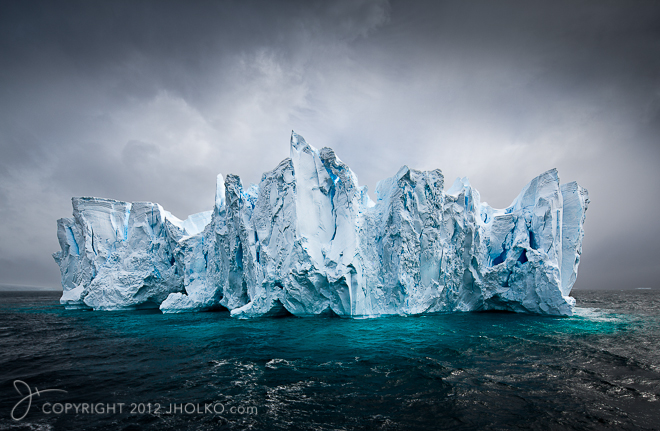
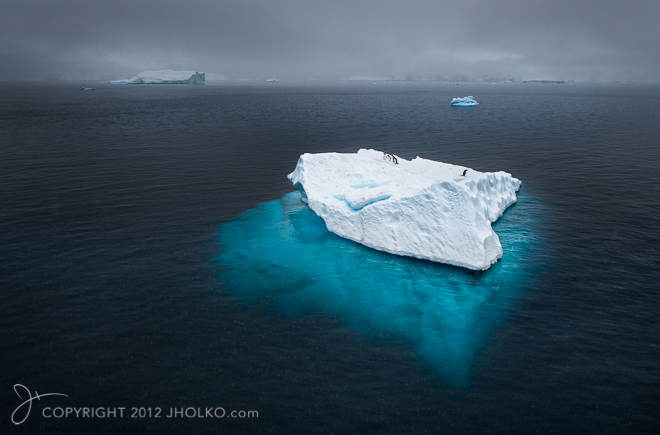
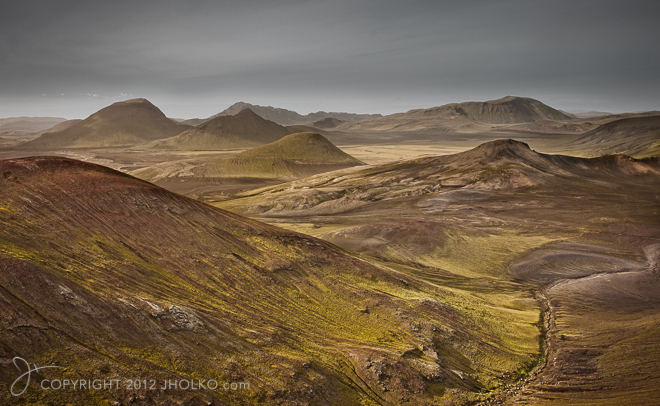
Last year (2011) was my first year entering the APPA awards as a full member of the AIPP. Full members of the AIPP are allowed to enter a maximum of four prints across any of the categories and I was thrilled to receive a Gold award with my very first print in the landscape category. My subsequent three prints in ‘landscape’ each scored Silver awards. This year I was equally thrilled to receive two Silver with Distinction awards and two Silver Awards for two photographs from Antarctica and two from Iceland respectively. Each of these prints was printed on my personal favourite paper – Moab Somerset Museum Rag, Higher resolution versions can be seen on my portfolio website at www.jholko.com and limited edition prints are available through Source Photographica in Brighton.The Fortress – Silver with Distinction APPA 2012Lone Penguin – Silver with Distinction APPA 2012Black Dawn – Silver APPA 2012Iceland Pastels – Silver APPA 2012

THE DIGITAL SHOW – GICLEE AND MOAB

If you are in Melbourne tomorrow and willing to brave the current spell of bad weather  I will be at the Digital Show at the Melbourne Exhibition Centre for the APPA (Australian Professional Photography Awards). I have a selection of some of my favourite prints on display on a range of  different Moab papers at the Giclee / Moab stand (right behind the Canon stand) . Please feel free to come and say hello and chat all things photography!

Moab Prints at The Digital Show