
Due to there being quite a few people who missed out on securing a place on the winter workshop I am leading to Iceland in early March next year with my friend Andy Biggs, we have decided to run a 2nd trip directly after the first sold out expedition. This will give those who missed out or that are currently on the waiting list another opportunity. I am therefore very pleased to announce a 2nd jointly led winter photographic expedition to Iceland with fellow Moab Master photographer Andy Biggs and pro nature photographer Daniel Bergmann. This expedition is from the 22nd of March until the 31st of March 2013. This trip will also focus on the southern coast and Snæfellsnes peninsula. Due to pre-registrations from the existing waiting list and bookings already received there are already only a few places remaining.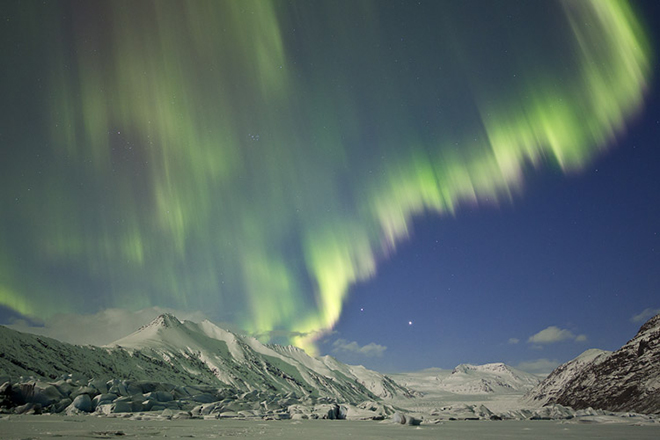 If you are interested in photographing in the amazingly geologically diverse country of Iceland then now is the time to register. At the beginning of March the darkness of the Icelandic winter is starting to lift and the days are becoming longer. We will have up to ten hours of good light during the day and with a little bit of luck the spectacular Northern Lights will increase our photographic opportunities well into the night. Winter conditions in Iceland can be stunningly beautiful: the glacial lagoons freeze, some of the waterfalls are partially frozen, the glaciers appear more blue with fresh snow on top and with fewer visitors, the black sand beaches of the south are more pristine. With true darkness in winter comes the possibility of seeing the awe inspiring Northern Lights (Aurora Borealis). We plan to make photographs of them whenever there are clear skies and intense Aurora activity.
 If you would like to join us then please contact either myself or Andy Biggs with your registration of interest. This expedition is strictly limited to a maximum of twelve participants, plus leaders and guide and places are reserved on a first come, first served basis – there are currently only a few places remaining. For members of the AIPP Australian Institute of Professional Photography this workshop is CPD accredited and accrues 15 points toward your annual target of 50 points. For further queries please contact me directly.
Category: Landscape Photographs
Landscape Photographs from around the World
ICELAND 2013 WINTER WORKSHOP – SOLD OUT: ‘WAITING LIST ONLY’
The 2013 winter expedition I am co-leading to Iceland with Andy Biggs is now SOLD OUT. If you are interested in photographing in the amazingly geologically diverse country of Iceland then you can still register your interest and be placed on the waiting list. The expedition is from the 9th of March until the 18th of March 2013 and will focus on the southern coast and Snæfellsnes peninsula. At the beginning of March the darkness of the Icelandic winter is starting to lift and the days are becoming longer. We will have up to ten hours of good light during the day and with a little bit of luck the spectacular Northern Lights will increase our photographic opportunities well into the night. Winter conditions in Iceland can be stunningly beautiful: the glacial lagoons freeze, some of the waterfalls are partially frozen, the glaciers appear more blue with fresh snow on top and with fewer visitors, the black sand beaches of the south are more pristine. With true darkness in winter comes the possibility of seeing the awe inspiring Northern Lights (Aurora Borealis). We plan to make photographs of them whenever there are clear skies and intense Aurora activity. Please just email me with your details if you would like to be added to the waiting list.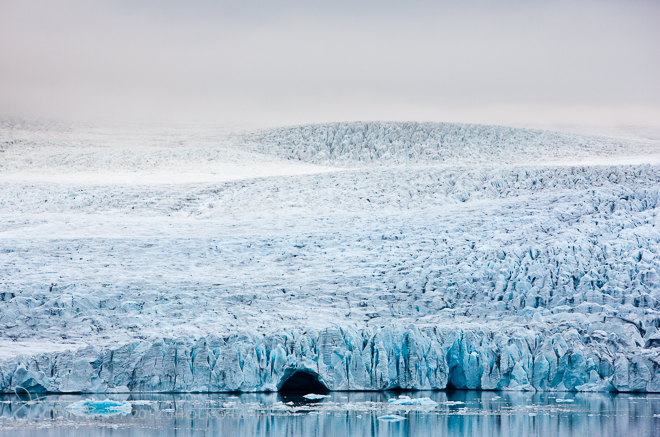
ICELAND 2013 WINTER WORKSHOP – OPEN FOR REGISTRATION: ‘LIMITED PLACES AVAILABLE’
I am very pleased to announce a jointly led winter photographic expedition to Iceland with fellow Moab Master photographer Andy Biggs and pro nature photographer Daniel Bergmann. The expedition is from the 9th of March until the 18th of March 2013 and will focus on the southern coast and Snæfellsnes peninsula . A copy of the information, registration and booking form can be downloaded HERE. Due to pre-registrations and bookings already received there are already only a few places remaining.
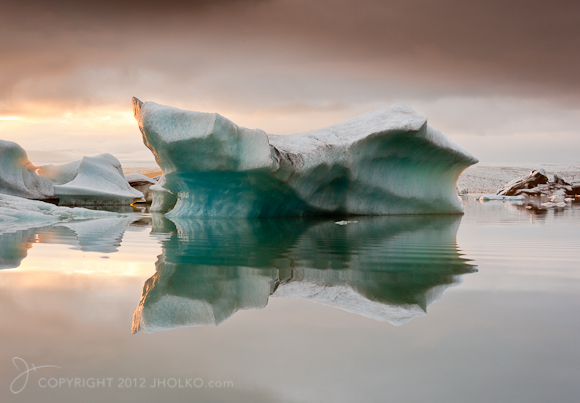
If you are interested in photographing in the amazingly geologically diverse country of Iceland then now is the time to register. At the beginning of March the darkness of the Icelandic winter is starting to lift and the days are becoming longer. We will have up to ten hours of good light during the day and with a little bit of luck the spectacular Northern Lights will increase our photographic opportunities well into the night. Winter conditions in Iceland can be stunningly beautiful: the glacial lagoons freeze, some of the waterfalls are partially frozen, the glaciers appear more blue with fresh snow on top and with fewer visitors, the black sand beaches of the south are more pristine. With true darkness in winter comes the possibility of seeing the awe inspiring Northern Lights (Aurora Borealis). We plan to make photographs of them whenever there are clear skies and intense Aurora activity.
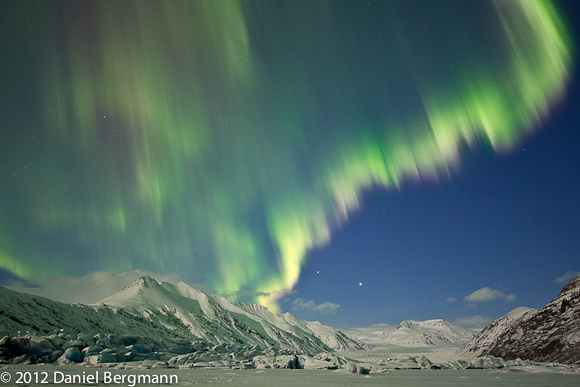
If you want to be able to take photographs like this then please contact either myself or Andy Biggs with your registration of interest. This expedition is strictly limited to a maximum of twelve participants, plus leaders and guide and places are reserved on a first come, first served basis – there are currently only a few places remaining. For members of the AIPP Australian Institute of Professional Photography this workshop is CPD accredited and accrues 15 points toward your annual target of 50 points. For further queries please contact me directly.
TASMANIA 40° SOUTH FEATURES ‘COLORS OF ICELAND’ EXHIBITION
Tasmania’s 40 ° South magazine – issue 64, features a multi-page spread on the Wilderness Gallery at Cradle Mountain in Tasmania and includes my current exhibition ‘Colors of Iceland‘. A high resolution PDF of the magazine excerpt can be downloaded HERE (download is around 40MB). The Wilderness Gallery is a ‘must see’ for the many visitors who travel to the world famous Cradle Mountain World Heritage park. The gallery is an important part of the Tasmanian Federal Group company; which has a long history of supporting the arts and is the largest wilderness gallery in the Southern Hemisphere.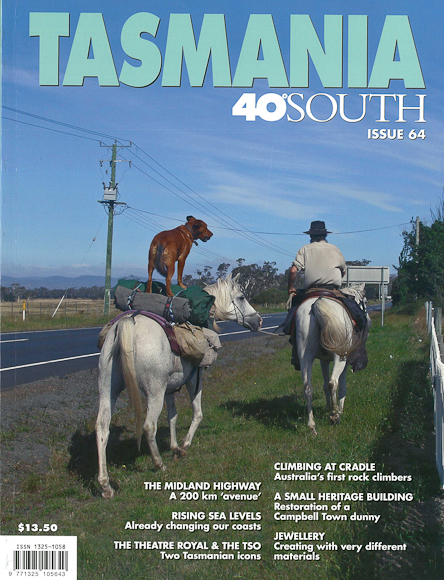
THE GREAT OCEAN ROAD DEBRIEF REPORT
A few days ago I returned home from a workshop trip down the Great Ocean Road and I have now sorted through the roughly 600 frames which I shot while travelling down the coast photographing some of the mightiest icons of Victoria. For those of you who may not be aware, the Great Ocean Road is still one of the leading tourist attractions in the world. As a result of the increasing tourism, the area is now quite busy over the weekends, with regular busloads of camera-toting tourists and back-packers scurrying over the usual tourist hot spots. Shooting at the iconic Twelve Apostles at sunset can be like rush-hour. And yet, for the intrepid and dedicated landscape photographer, there are many other rugged and beautiful locations to choose from that are just as spectacular and more secluded from the tourist throngs. We were fortunate during this trip to have some dramatic light on the evening of our arrival, as well as some truly beautiful pre-dawn glow on the final morning before our departure. As a landscape photographer, I am always chasing dramatic light in order to create photographs that are unique, powerful and expressive. Whether it is through curtains of rain or stormy clouds, I seek out that special light that usually lasts for only a few seconds. And, it is not often I am fortunate enough to experience dramatic storm-light in combination with sunset, a combination that is truly magical and quite rare.
The conditions under which this occurred last Friday evening were challenging, with pelting rain, hail and powerful winds all conspiring against the rigidity of my camera and tripod which were perched precariously on the edge of the limestone cliffs. Standing near the edge of a 35 metre cliff above the broiling ocean, with the winds threatening to toss me into the sea with each gust certainly gets the adrenalin flowing. I was very thankful for the weather sealing of my 1DS MK3 as it was exposed to several hours of intense rain and pervasive salt spray from the storm breakers smashing into the cliffs. The waves that were crashing against the coastline were 6-8 metres high, tossing spray over a hundred feet into the air as they slammed into the rugged cliffs – it was both awe- inspiring and intimidating to be on the edge of that precipitous cliff.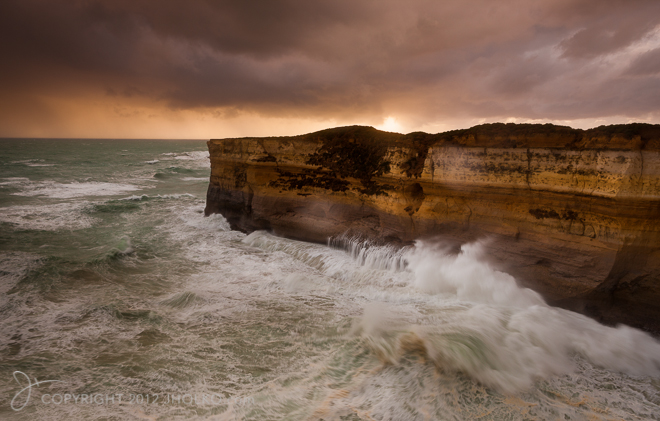 One of the joys of storm photography is how often and how quickly the light changes. You have to move quickly and instinctively in order to make the most of it if you are to capture the best light. Balancing composition with light in weather conditions that are conspiring against you can be a real challenge. Even keeping the camera lens free of rain spots can be problematic. Also, having an instinctive understanding of your camera controls is essential to being able to work quickly to make the most of the changing light and conditions. Likewise, understanding shutter speed and the effect it will have on moving water and waves is essential to creating photographs that are artistic and capture the feeling of motion and drama in the sea. Being able to combine your skills as a photographer whilst battling the elements takes some practice.
 The Great Ocean Road is an astonishing but challenging location to photograph. The coastline is truly spectacular between Apollo Bay and Warrnambool, but to convey a sense of scale, place and context is difficult. Most photographs I have seen of this part of Victoria fail to do justice to the rugged beauty and grandeur of this coastline – a lovely sunset just isn’t enough. Although calm seas and a perfect sunset will always result in a pretty picture of this Victorian coastline, the area offers so much more for photographers willing to put in the hard yards and exercise their patience in search of the right light and the best composition.
 Landscape photography in Australia is an exercise in patience and frustration followed by final fulfilment. Australia’s often harsh daytime light works against good art photography of the type I am pursuing, as does the flat light caused by overcast conditions. The golden hours of perfect light are fleeting. As I have said before, landscape photography in Australia is like a long-haul international flight – hours of boredom followed by a few seconds of sheer panic during landing, when the light is at its best. It is an exercise in patience, which, in the end, can be extremely rewarding. This is not known as the Shipwreck Coast for nothing.
Nearby, the dense and mysterious Otway forest offers many opportunities for daytime photography, including several waterfalls, a forest of giant Californian Redwoods, the Cape Otway Lighthouse, and countless coastline images, including a multitude of abstractions in the coastal cliffs, as well as the myriad of possibilities in the many rock pools.
I will shortly be offering another multi-day workshop down the Great Ocean Road designed specifically for photographers who are keen to work hard for their images and who want to take their photography to the next level. Like my international workshops, this trip will be strictly limited in numbers to ensure we can operate quickly and cohesively in the field. Bookings will be taken on a first come, first serve basis. Stay tuned for further details over the coming weeks.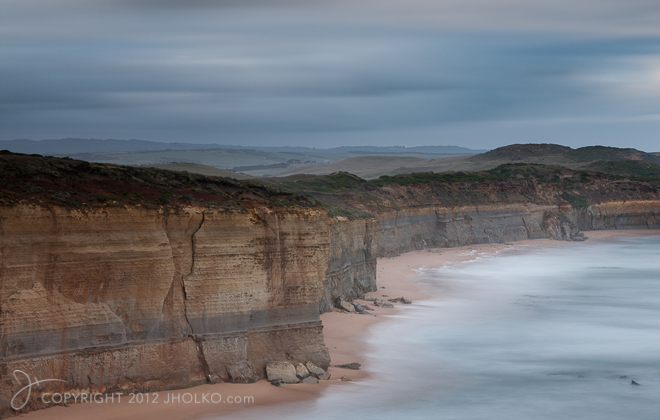 Higher resolution versions of these photographs can be seen on my primary portfolio website at www.jholko.com under Australia.

