CANON 1DX – MAKING THE IMPOSSIBLE POSSIBLE

Paris has been the first opportunity I have had to shoot with Canon’s new 1DX multi-media powerhouse camera. I had only limited opportunity to test the camera before I departed for Europe because the camera arrived only a couple of days before my flight departed. With all the delays since its announcement in September last year I was having serious doubts whether Canon were going to deliver. I managed some initial tests to ensure there was no immediate problem with the camera and these proved very promising, with excellent results.

After two days in Paris and around 500 frames I can now report that the Canon 1DX has exceeded my expectations for low light and autofocus performance in every respect. One of the real highlights in Paris for anyone interested in history and architecture is its incredibly impressive cathedrals and churches. The sheer scale, grandeur, and majesty of Notre Dame, and others, make them wonderfully impressive subjects for photography. They can be hard to capture in their entirety as there is a fine balance between placing the structure in context and the creation of a mere postcard. Nevertheless, I enjoyed the challenge and I could happily spend many days prowling the streets and cobblestone alleys for new and different angles.

As impressive as the Cathedrals are externally, they are equally awe-inspiring on the inside. Unfortunately, all of them are extremely dark inside and tripod photography is forbidden (as is the use of flash – although, this last ‘law’ seems very poorly enforced) necessitating the use of high ISO photography to ensure sufficient shutter speeds and depth of field. It is not uncommon to have to push the ISO as high as 10,000 or even 25,600 in some cases to obtain 1/40th of a second at F4 in the darker areas.

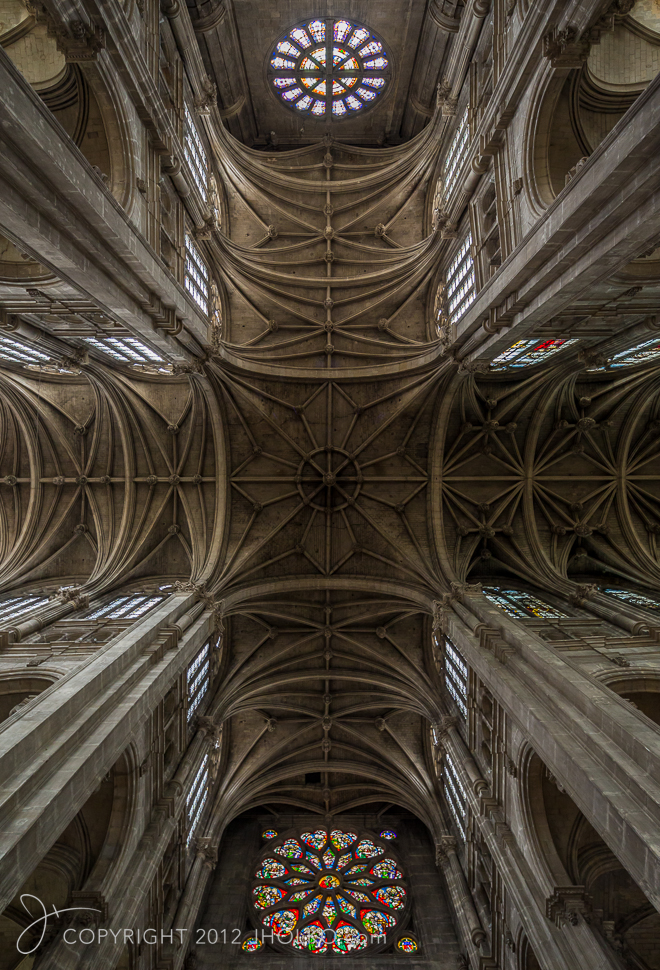
This photograph was taken inside the Eglise Saint Eustache cathedral with the Canon 1DX and 17mm F4L TSE, handheld at ISO 6,400, 1/60thof a second, F 4.5. I want to emphasize that it was extremely dark inside the cathedral and that the light streaming through the stain glass windows was extremely hot. The dynamic range far exceeds the capabilities of any camera to record; yet the 1DX has managed to produce an excellent exposure without intervention from me. This photograph simply would not have been possible with such low noise with any previous camera I have owned or tested. The image has had only minimal post processing and noise reduction in Adobe Lightroom 4.1. There is virtually no appreciable noise of consequence in the RAW file, at least nothing that is not easily corrected with a small amount of noise reduction (a modest setting of 25 in Lightroom was used in this example to reduce the luminance noise grain – no color noise reduction was required). The results are simply astonishing and I am very much looking forward to the new opportunities created by the amazing capabilities of the 1DX. Although in this example I utilized the 17mm F4L TSE which is a manual focus lens I also shot several frames with the 24mm f1.4L MKII and 35mm F1.4L lenses, and in all cases the 1DX was able to immediately nail focus in near total darkness, center of frame. The era of shooting in the dark has truly arrived.Although street and city photography is not my preferred landscape, I have very much enjoyed my time in the city of romance and rate it as one of the most beautiful and charming cities I have visited.  There is a wavelength and ambience in Paris that I can immediately harmonize with. Its cobblestone streets are steeped in history and charm and this, combined with my love of the café culture, make it a city I could easily call home. I am looking forward to wandering its streets over the next few days before I head for Venice.
Au revoir for now…

GREAT OCEAN ROAD WORKSHOP OCTOBER 12th – 15th 2012 NOW OPEN FOR REGISTRATION

I am very excited to announce a brand new photographic workshop to the icons of the Great Ocean Road in Victoria Australia. Perhaps best known for its mighty sea stacks at the iconic 12-Apostles, the Great Ocean Road is one of the worlds leading tourist attractions and is packed with fantastic photographic opportunities. Perhaps nowhere else in the world is there coastline as unique and spectacular as that found along this stretch of Victorian coastline.  Location highlights for this tour include Gibson’s Steps, the Twelve Apostles, London Bridge, Lochard Gorge, and Hopetoun Falls. We will also visit quite a few lesser known locations including a Californian Red Wood forest plantation, the shipwreck coast and Cape Otway lighthouse. If you are interested in improving your photography along the spectacular Great Ocean Road then now is the time to register. This expedition is strictly limited to a maximum of ten participants, plus leaders and places are reserved on a first come, first served basis. A copy of the information, registration and booking form can be downloaded HERE. This workshop is CPD accredited and points are accrued for AIPP members attending this workshop.

Battle of the Big Stoppers – LEE vs. HI-TECH Pro 10 Stop ND Filter Showdown

The LEE 10 Stop Neutral Density Filter, which is affectionately known as ‘The Big Stopper’, has been a staple part of my filter and photographic kit since it was released by LEE back in 2010. I was fortunate to receive one of the very first production units and have subsequently found ten stops of neutral density extremely useful in the creation of dramatic landscape photographs. The ability to slow shutter speeds down to minutes instead of seconds can really add a lot of drama to fast moving clouds and flowing water. It’s addition to a photograph can often be the difference between the recording of something otherwise banal and the creation of something truly extraordinary.There are a number of different options from which to choose for photographers looking to add ten stops of Neutral Density filtration to their filter kit. As well as the LEE ‘Big Stopper’, there are options available from B+W, Sing Ray, Hoya and Hi-Tech (and there may well be more I am not aware of). Each of these is designed to achieve the same thing – provide ten stops of ‘neutral’ density (emphasis on ‘neutral’).  It turns out however, that at least one of these filters (sample as tested) is anything but ‘neutral’.*

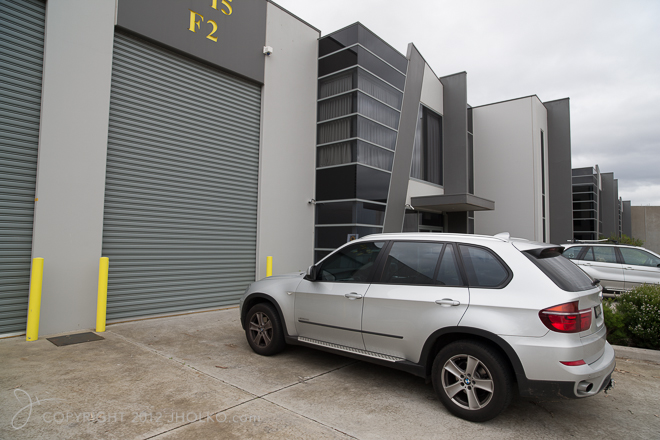
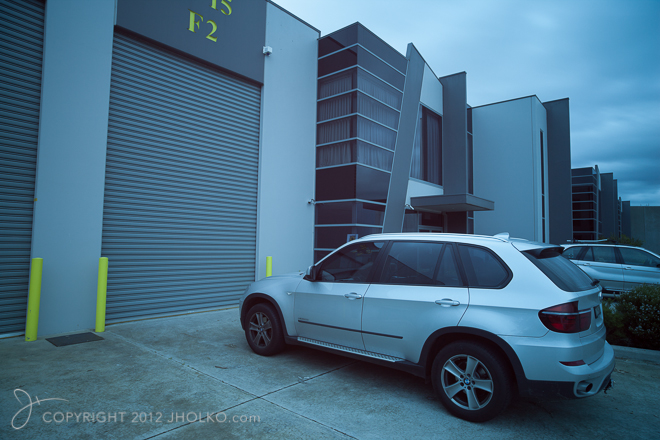
One of the participants on my upcoming expedition to Iceland in a few weeks time recently contacted me and asked if I would mind doing some testing with them of 10 Stop ND filters before we leave. They had been experiencing a severe (and virtually uncorrectable) colour caste with their brand new Hi-Tech Pro and were concerned that the filter may be faulty. Never one to shy away from an invitation to play with camera gear I quickly agreed and we set up a time to test the LEE Big Stopper against the Hi-Tech 10 Stop ND filter in a head to head comparison. We also had a B+W 10 Stop screw in filter for the Leica M9 and took the opportunity to also compare it. For our subject we had to hand a factory car park – crude, but nevertheless convenient. The day was overcast so no shenanigans were required to obtain acceptable exposures.Control – No Filter White Balance as shot: 5350 +4LEE Big Stopper White Balance as shot: 6450 -4HiTech 10 Stop PRO Filter White Balance as shot: 7800 +80

In order to make the comparison fair we used the same camera and lens (my Canon 1DS MK3 21.1 mega pixel camera with a Zeiss 21mm lens on my Gitzo GT3530 LSV tripod with a  RRSBH55 ball head) to test both filters. Although its somewhat irrelevant the photographs were taken with the mirror locked up with 2 second self timer at F5.6. We then proceeded to take three photographs. The first is our control without any filter. The second is with the LEE Big Stopper in place and the third is with the Hi-Tech 10 Stop filter. The results are inarguable and consistently repeatable regardless of the exposure time or aperture. The LEE Big Stopper provides outstanding performance in terms of neutrality as can be seen in a direct comparison with the ‘control’ image. The Hi-Tech on the other hand is nothing short of a complete disaster. It is in fact more ‘blue’ than an equivalent exposure with the LEE Sky Blue Graduated filter and its performance is simply unacceptable. Even on the LCD screen on the back of the camera I could immediately see that there was a major problem with this filter.

In order to ensure that we were not actually seeing things or that something went wrong during our test we repeated the test with both a Leica M9 and Nikon D800E (each with an equivalent lens) with the same results. In both cases we used the same camera and lens for comparison and only ever varied the filter. I suspect that the particular sample we tested may have come from a bad batch and that there may well be others out there with defective copies.  Hi-Tech have subsequently offered to replace the filter (which was actually brand new and purchased less than a month ago).

As a side note, the LEE filter is glass (sometimes referred to as Black Glass or BG) and the Hi-Tech is resin and the procedure for adding neutral density to these surfaces is very different. Resin filters are dipped in a dye bath where as glass filters (according to my understanding) use a glazing process. In the case of the sample Hi-Tech we tested I suspect that something has gone wrong during the dye process giving the filter a blue caste. It is worth noting that LEE’s Graduated Neutral Density filters are also resin (as are Hi-Techs) and effectively exhibit no colour caste.

I also took this opportunity to test the new LEE 3 Stop Pro Glass Neutral Density filter I purchased last week and its performance proved excellent. It is well worth taking the time to test any new piece of photographic equipment before an expedition. Time invested before hand can save many hours of work and frustration down the line. In this case it has saved this participant what would have been many hours of possibly uncorrectable post production work.

* Footnote: In my experience all ten stop filters have some degree of colour caste. The idea however is to be as close to neutral as possible.

HOW TO: USE LEE GRADUATED ND FILTERS ON THE CANON 17MM F4L TSE LENS

One of my favorite lenses is the Canon 17mm F4L Tilt and Shift, an optically superb lens and one of the sharpest in the Canon wide angle range (along with the 24mm Tilt and Shift). With stellar optical performance and perfect tilt and shift movements, it is the ideal tool for wide-angle landscape photography.

Except that there has been a problem: a big problem.

Because of its bulbous front element, it is more or less impossible to use filters with this lens. I use neutral density graduated filters extensively and frequently find I cannot use the 17mm F4L TSE effectively because of the inability to use a filter to tame the dynamic range of the scene. This has sometimes left me frustrated with this lens for landscape work.

LEE designed and developed a solution for a similar issue with the Nikon 14-24mm wide angle zoom lens (which also has a bulbous front element) and that solution has been widely available for some time now. Unfortunately, no such solution has been forthcoming for the Canon 17mm F4L TSE lens, leaving many of us who rely on filters left out in the cold.

I know many photographers who have abandoned their filter kits in favor of multiple exposure HDR (High Dynamic Range) composites and for those photographers there is no longer a requirement for an effective bracket for using Graduated filters. However, I dislike HDR photography and prefer to capture my images in a single exposure without the need for digital blending during postproduction in Photoshop.

Consequently, I have often had to reject the 17mm TSE lens because of the scene’s dynamic range and the inability to use filters, which has more or less relegated that lens to internal architectural photography or occasions such as Antarctica (where I shot with the 17mm Lens extensively). In Antarctica, dynamic range was simply not an issue and I was able to capture the scene without use of a graduated filter (thank goodness for overcast conditions!). I shot extensively with this lens both from the deck of the Ocean Nova and from Zodiacs and I really came to appreciate the benefits of the lens when shooting handheld from ships. What was particularly useful was the ability to shift the lens down to get closer to water level when shooting from the deck of a tall ship.

With my trips to Paris, Italy and Iceland looming, I have been agonizing over whether to pack the 17mm F4L TSE lens in my kit, as its weight is not inconsiderable. The thought of carrying this lens around Europe and not being able to use it effectively for a significant amount of my landscape photography work gave me serious cause to consider its usefulness. That was until I stumbled upon a possible solution to my problem.

It turns out an enterprising photographer from Germany has cleverly solved the ‘filter problem’ using regularly available off the shelf parts from both Canon and LEE. I subsequently discovered (thanks to a user on the Luminous Landscape forum) that Fred Miranda had also constructed one of these adapters and had posted in his forum about his own experiences. After some further reading and research, I acquired the necessary parts and began constructing my own custom adapter that would enable me to use filters with the 17mm F4L TSE lens. This custom adapter bracket allows for the standard LEE foundation kit to be used with this lens. And, unlike the LEE solution for the Nikon 14-24mm lens, you do not need to purchase a new set of larger filters.

I cannot take the credit for this ingenious solution, but I can report that construction is relatively straight forward and that the finished product looks for all intents and purposes like it was manufactured by Canon or LEE. I followed the clear instructions laid out on the German website and found them straight forward and easy to follow and as such have not re-documented the construction process.

There are limits to both the tilt and shift mechanism, due to vignetting with the custom adapter and LEE kit in place, but this does not pose a significant issue for me as I am usually only tilting the lens by a very small margin and rarely use the extreme shift functionality. In any case, the custom holder can be further modified to improve both tilt and shift by removal of the inside of the LEE adapter ring with a Dremel as documented in the Fred Miranda link.

Canon 17mm F4L TSE with Custom Bracket and LEE Foundation Kit

JUNE PHOTO OF THE MONTH – ‘BLACK DAWN’

Time has really slipped away from me over the last few weeks and I realised this evening that I am already a week late updating my photo of the month for June. This photograph of the Andes Mountain range near Ushuaia in South America was taken from the deck of the Ocean Nova ship as we cruised up the Beagle Channel on our way to the Drake Passage and Antarctica. It is somewhat ironic for me that my favourite photograph of this mountain range should be taken from the deck of a rolling ship with a 300mm lens rather than the chartered helicopter I spent a dedicated hour shooting from with wide angle lenses. It just illustrates how you don’t have to use a wide angle lens from a helicopter to get an evocative shot of a mountain range. The Andes is a spectacular snow capped mountain range with precipitous and towering peaks with countless rugged and jagged ridges that is evocative of a more primordial earth. Being able to see it up close and personal from a helicopter with the door off was really a very special experience. Being able to photograph it from the deck of a ship as it cruised slowly past was equally satisfying. A higher resolution version of this photograph  can be seen on my portfolio website at www.jholko.com under South America. This photograph was awarded with a Silver award at the 2012 APPA Australian Professional Photography Awards.