In September of 2019 I ran two back-to-back expeditions to Scoresby Sound and the East Coast of Greenland with long time friend and fellow pro-photographer (Or as he prefers – the ‘Bus Driver’) Daniel Bergmann. For these two expeditions we flew by private charter flight from Reykjavik in Iceland to Constable Point on the East Coast of Greenland where we boarded our sailing ship, the Donna Wood. Flying across the Denmark Strait (the body of water between Iceland and Greenland) saves at least two days of sailing in both directions and gave us more time for photography in the field.

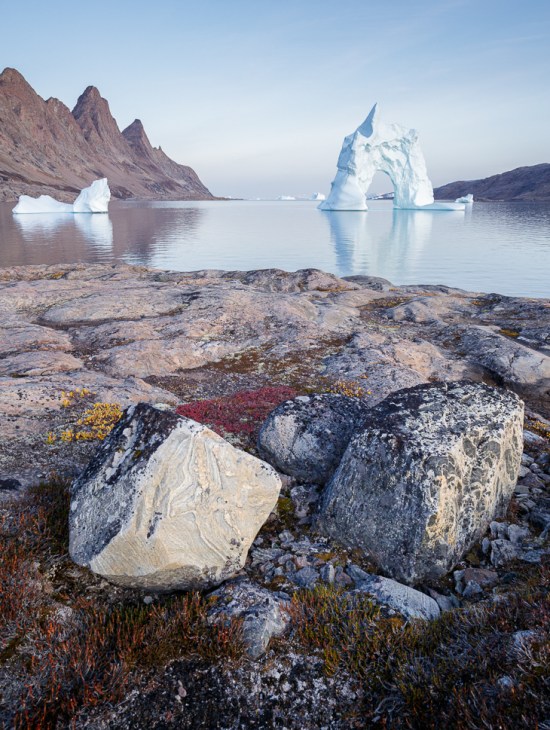
For both our expeditions we chose to sail north to the rugged and scenic Bjørneøer Islands (Bear Islands) where we made landings at both sunset and sunrise for contemplative landscape photography. Along the way we photographed many of the gigantic icebergs that drift as giant sentinels silently through the fjord system. For our landings in this area we were blessed with a magnificent iceberg with a full arch that was grounded against a stunning mountainous backdrop and we spent many hours in this location with the late afternoon and early evening light. The landscape topography in these islands is a landscape photographers paradise with beautiful boulders and stunning back drops in every direction.
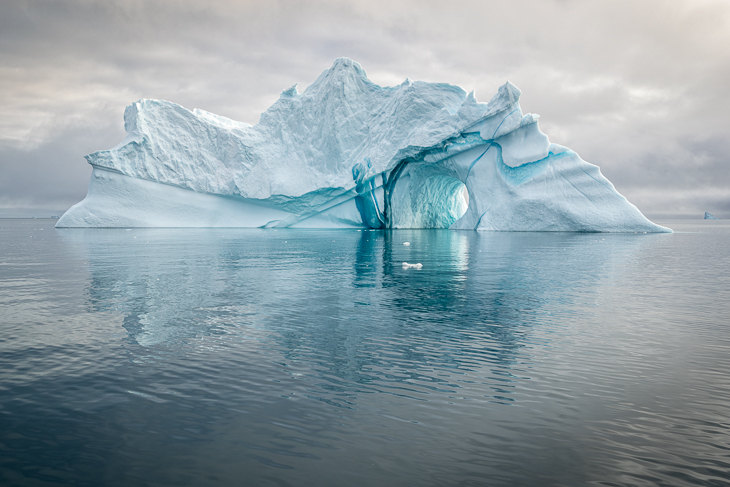
From Bear Islands we sailed west through Øfjord as we rounded Milne land. This region of Scoresby Sound offers stunning glacial scared mountains that were freshly dusted with late Autumn snow that serve as a majestic backdrop for the plethora of transient icebergs that drift through this system. We rounded Storø island into Rodefjord and made our way down to iceberg alley at Red Island. This iceberg graveyard offers up some of the most incredible iceberg photography I have ever experienced anywhere on the planet (I actually rate it as the worlds best iceberg graveyard for photography). With perfectly still conditions and heavily overcast skies (absolutely ideal conditions for iceberg photography) we photographed for hours amongst the gigantic icebergs on both expeditions as we drifted on our zodiacs through the ice maze.
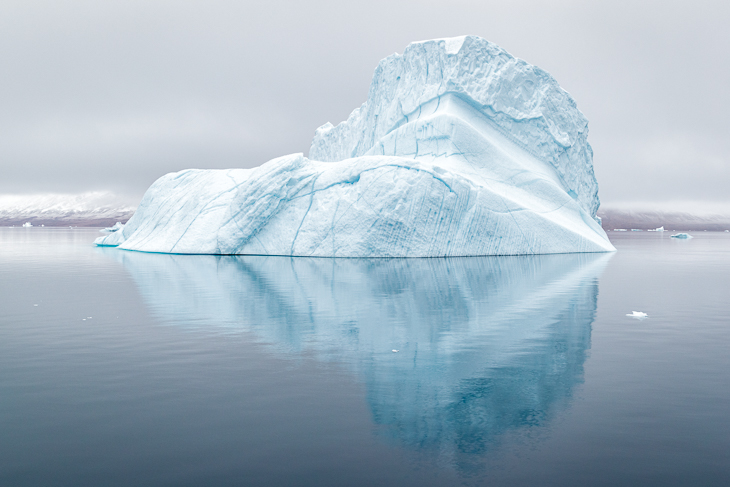
From Red Island we travelled east through Fønfjord for more gigantic iceberg photography as we made our way to the small Inuit village of Ittoqqortoørmit (first expedition only) where we did a short landing before making or way back to Constable Point to conclude our expedition.
The East coast of Greenland is one of the most spectacular locations on our planet. Speaking candidly, if I could only photograph one place for the rest of my life it would almost certainly be Scoresby Sund and the East Coast of Greenland. It is absolutely miraculous on every level.
Due to hunting pressure the wildlife is often skittish and hard to find in Greenland. Local inuit are unfortunately still allowed to hunt and shoot up to thirty six Polar Bears a year and Musk Ox and Arctic Hare are hunted relentlessly and without mercy. Despite the general lack of wildlife in the area we did encounter and photograph Musk Ox, Bearded and Ring Seals and quite a few Arctic bird species. We did not encounter or sight any Polar Bear during these expeditions (although we had a report of a mother and cub in our area)
If you missed out on a place on the 2019 expeditions but would like to travel to the East Coast of Greenland to photograph this amazing region then I will be repeating this very special ‘Winters Cusp’ expedition in September of 2021 (the 2020 expedition already sold out). Full details are now available for download from my website at www.jholko.com including a complete PDF itinerary. Drop me an email for further information.
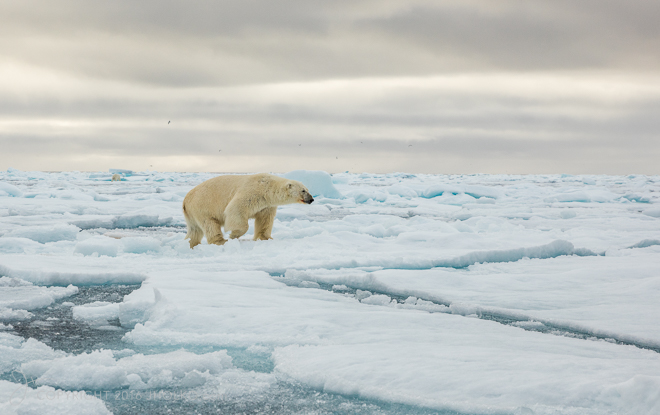
 Our intention is to sail directly north from the small town of Longyearbyen in Svalbard to approximately 80o degrees north, to the very edge of the permanent pack ice. At our northerly most point we will likely be less than 600 miles from the North Pole and depending on the sea ice we may get even closer. We will be using the ice hardened expedition ship M.S Freya that will enable us to skirt the edge of the pack ice searching for and photographing Polar Bears. M.S Freya is widely regarded as the best ship in the Arctic for Polar Bear Photography. With low-lying decks we can photograph at eye level with wild Polar Bears. Our expedition ship has private cabins (no need to share unless you wish) and is also equipped with sufficient zodiacs (2 x Zodiac MKV models) and crew for all photographers to be shooting simultaneously with plenty of room to spare for camera equipment – So bring what you need!
  Watch the expedition video ‘Kingdom of the Ice Bear’ to get an idea of what this expedition entails.


 www.WILDNATUREPHOTOTRAVEL.com