
The photograph of the month for December (and the last for the 2017 year!) is from my winter snowmobile expedition to Svalbard earlier this year. Taken on the sea ice on the East coast, this large male Polar Bear was climbing this wonderful blue ice to get to the female bear (out of sight behind the ice). I was extremely fortunate to encounter this bear in some absolutely wonderful soft light right at the very end of the day. This was one of many photographs I made during a period of just a few minutes as the bear climbed across the ice. I am looking forward to heading back to Svalbard in March next year for a month of winter photography.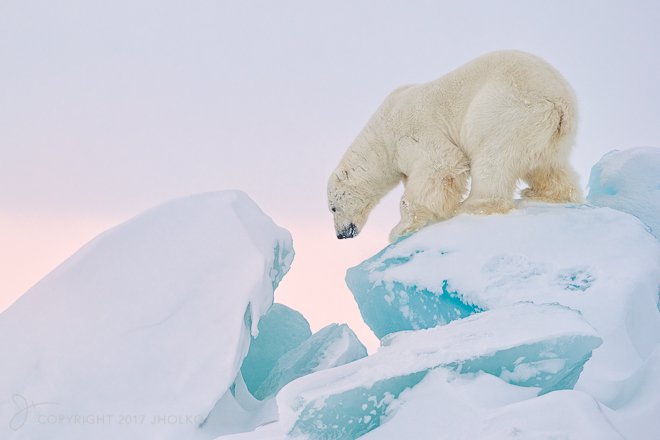
Category: Photographs
Photographs
Getting the Best from Ice and Snow with Canon’s Highlight Tone Priority
You never stop learning in the photographic industry and every now and again I learn something that I wish I had known a little earlier. And this is exactly what occurred on my recent Antarctica White Nature expedition (full trip report coming soon). I should have tested this a long time ago, but never did and I think thats because I had mentally written off this setting (Highlight Tone Priority) as just a camera gimmick. If memory serves me correctly I may have even read a test on this feature some years ago on a review site that had more or less written off the feature as being superfluous. The reality is though that Highlight Tone Priority offers some significant advantages for photographers working with ice and snow and that engaging this setting can net you a better file with increased texture and tone in your ice and snow than you might have otherwise have been able to achieve.

Those who have travelled and photographed with me before know I am constantly harping on about the importance of having both texture and tone in ice and snow (I have written on my blog about this before as well as produced a short video on how to process images with ice and snow). Without texture and tone in your ice and snow you have nothing but flat white areas that are devoid of any depth or life. In fact, short of a major technical error there isn’t much else that will ruin a photograph of ice and snow than a lack of definition (texture and tone) in the snow. So the key to a great file with ice and snow is that you have to have both texture and tone. Well, as it turns out Canon cameras with the Highlight Tone Priority setting have an advantage in this regard.
On my recent Antarctica expedition I was going through the menu system of my Canon EOS 1DX MKII cameras looking for an adjustment for auto focus when I came across the Highlight Tone Priority setting. We were heading out to photograph icebergs on a zodiac cruise in just a few minutes so I decided to actually turn it on and test it. The opportunity was perfect with lots of wonderful icebergs in soft overcast light and I wanted to see if engaging the setting actually had any real effect on the visible texture and tone in the ice and snow. As it turned out, I ended up testing this feature extensively over a period of three weeks.
The Highlight Tone Priority setting is located in the jpeg menu area of the Canon EOS 1DX MKII so you would be forgiven for thinking that perhaps this setting only applied to jpegs and not RAW files. However, Highlight Tone Priority does indeed benefit RAW files and in the case of ice and snow by a not insignificant amount.
From the research I have done and from what I understand Highlight Tone Priority works by trying to optimise contrast and detail in the brightest part of the file by altering the sensor response curve. All cameras have a fixed dynamic range, from shadow to highlight, that they can capture so its important to understand that its not possible to simply increase the dynamic range. Instead, Highlight Tone Priority shifts some of the available dynamic range from the mid-tones to the highlights to produce smoother tones, with more detail in bright areas. Canon describe Highlight Tone Priority in the following way in the Canon EOS 1DX MKII user manual:
Highlight details are improved. The dynamic range is expanded from the standard 18% grey to bright highlights. The gradation between the greys and highlights becomes smoother.
The Highlight Tone Priority setting will be indicated by a D+ symbol in the LCD display when it is engaged. According to Canon you should avoid using Highlight Tone Priority in low light or when shooting subjects with heavy shadows because it may cause more noise to appear in those areas (In my own testing to date I have not encountered this).
Incidentally, the reason you cannot set an ISO lower than 200 with the Highlight Tone Priority setting engaged appears to be because the camera is in effect underexposing the photograph by shifting the ISO under the hood (probably to ISO160 or even ISO100). The net result is better preservation of highlight detail when the Highlight Tone Priority setting is engaged. You could argue you could achieve the same effect by under exposing your photograph without turning on the Highlight Tone Priority. However, underexposing the photograph means you are also increasing the noise to signal ratio and thats never a good idea.
In my own experience and as a result of direct testing over a period of more than three weeks in Antarctica with ice and snow in various light and conditions I have found that enabling Highlight Tone Priority increases the perceptible tone and texture (fine detail) in ice and snow and that there is no negative side effect of engaging this setting (provided you expose correctly). In fact, I noticed a difference immediately when looking at the jpeg preview generated on the back of the camera magnified at 100%. Once I got the files onto my laptop and was able to look carefully at them I was convinced of the benefit and once I got the files home and onto my high end graphics workstation I was a complete convert. Enabling this setting does produce a file with increased texture and tone in snow and ice than might otherwise have been achieved. I am not advocating that you engage Highlight Tone Priority on your camera for all subjects and that you simply turn it on and forget about it. But I am advocating that you think seriously about trying it the next time you are photographing ice and snow (wedding photographers might also find this extremely useful for brides dresses). For me, Highlight Tone Priority is now a mandatory setting and I have added it to the ‘My Menu’ area on both my EOS 1DX MKII cameras. I will certainly turn it on whenever I am shooting ice and snow in the future.
Loaded Landscapes Feature Interview
Loaded Landscapes recently published a new feature interview about my polar photography. Just click the link to read the FULL INTERVIEW.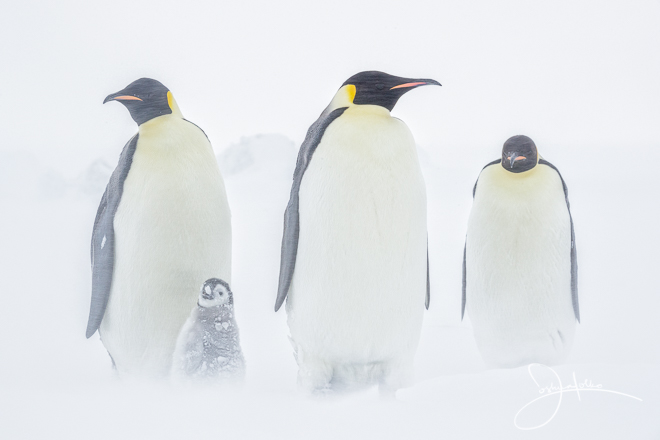 Joshua Holko is a landscape and wildlife photographer who specialises in the Arctic and Antarctic areas. He spends most of his time in remote destinations (or traveling to and from), photographing wild scenes that most people will never experience firsthand. I reached out to Joshua about an interview, and he graciously agreed to answer some questions for our audience. I’m sure you’ll find this interview to be insightful and inspiring.
Golden Emperor Penguin
Recently I was reviewing my photographs from my Emperor Penguin expedition to Gould Bay in Antarctica last year (Read the Trip Report) and came across this image; which really captures for me the experience of what it was like to photograph these incredible animals on the remote sea ice at Gould Bay. This was our first evening out with the penguins and although we probably did not realise it at the time, we were extremely fortunate to have absolutely superb conditions with hours and hours of golden light and plenty of blowing snow.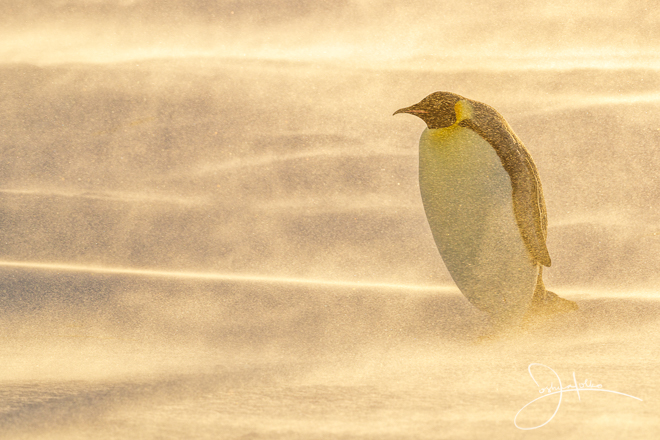 I will be returning to Gould Bay in November 2018 for one final expedition to photograph the mighty Emperor Penguin and will have all of the final details for this expedition early January 2018. Due to the initial registrations of interest there are only two places remaining before the expedition will be sold out.
New Zealand South Island Masterclass 2018 – Final Year
In late April / early May next year I will be running my final Masterclass workshop in the South Island of New Zealand for the foreseeable future. The workshop runs from the 30th of April until the 11th of May and is fully inclusive of all in country transport (private 4WD’s), food, helicopter flights (lots of them), tuition and more. Strictly limited to just six participants this masterclass is really designed to capture the best of the South Island. If you are interested in travelling to New Zealand and photographing in the spectacular South Island you can register you interest in one of the last available places by dropping me an email. Like the 2015, 2016 and 2017 workshops, the 2018 Masterclass workshop also includes extensive use of helicopters for accessing some of the most remote and spectacular country as well as aerial photography of the spectacular Southern Alps and glaciers. If you want to get an idea of the sort of photographs you can make on this masterclass be sure to check out the New Zealand portfolio on my website at www.jholko.com. Full details of the workshop are available on my website as a PDF HERE. You can read a trip report from the 2017 Masterclass HERE and client feedback HERE.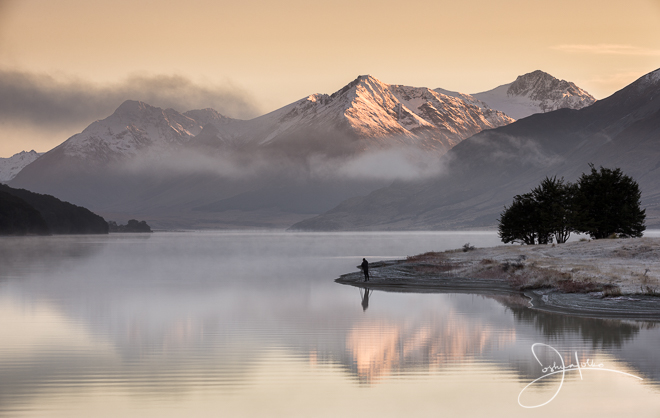 The South Island of New Zealand is home to some of the most spectacular scenery and landscapes in the world. Perhaps nowhere else in the world can one see and photograph precipitous mountains plunging into temperate rainforest and wild ocean beaches in so short a space. New Zealand is home to an unbelievably diverse range of subject matter, all packed together in a very small land area. Glaciers, majestic mountain ranges, moss-covered rain-forests, hidden valleys, and ocean-beaten coastlines are among the incredible array of natural wonders found there. It is an island of ever-changing weather and spectacular light conditions. To quote myself, it is a country made for photography.


 www.WILDNATUREPHOTOTRAVEL.com