The Internet forums were abuzz with talk of the merging of the Canon 1DS and 1D lines into the new ‘multi-media powerhouse’ 1DX DSLR, when Canon announced it late in 2011. I actually predicted the merging of the 1DS and 1D lines in my blog HERE just prior to leaving for Antarctica. However, I was way off beam on the effective mega pixel count. I did not expect Canon to announce a new 1 series camera with a lower pixel count than the 1DS MKIII (I was quite sure at the time that the camera would be at least 30+ mega pixels). I had been hoping any announcement from Canon would come well before my Antarctic expedition so that I could take one of their new cameras with me. However, in typical Canon fashion they announced the product literally months before actual planned release. If rumors are to be believed, it was Canon’s way of heading off Nikon’s impending D4 announcement – read into that what you will. Irrespective, as of today the camera is still not even available for pre-order at B&H. Planned release for the 1DX was March this year, but I am now hearing the first cameras will not be delivered in Australia before April at the earliest. I ordered my 1DS MKIII the day they were announced and it took nearly three months to receive the camera in Australia, and this is simply not good enough. Canon should take a lesson from Apple’s marketing department. When Apple announce a new product it is almost always available that very same day – or very shortly thereafter. With the Olympic Games only a few months away it is quite obvious that the bulk of new 1DX cameras will first be delivered to photographers attending the Games. Although I was quick to put my name down for the 1DX, I doubt I will actually receive one before April at the earliest.
I have been holding off making any comment on the 1DX until I had an opportunity to actually see some sample images from the camera in order to consider the implications from moving to a new body with a lower pixel count than my existing 1DS MKIII. I was preparing a post with my thoughts on the 1DX, when Nikon officially announced the world’s “worst kept secret” – the 36 mega pixel D800 and D800E. In case you missed it, the D800 and D800E are identical, with the exception of the use of a traditional anti-alias (blurring) filter on the E version to remove potential moiré issues. The announcement of the D800/E is highly significant in 35mm digital terms. There is no doubt that Nikon has really thrown down the gauntlet to Canon with the announcement of the D800/E cameras. The Nikon also marks a serious move into low-end medium format digital resolution at a price point that must be keeping medium format camera manufacturers up at night. Importantly for Nikon, it also effectively kills Canon’s 5D MKII Golden Goose. Up until now, Nikon had nothing to compete with the amazingly low street price and high pixel count of the 5D MKII. Nikon photographers had to purchase a D3X at $8000 US dollars to compete on a purely mega pixel basis. A 5D MKII, on the other hand, could be had for under $3000 US dollars. I shudder to think how many 5D MKIIs Canon has sold, but you can bet its many tens of thousands more than Nikon’s D3X.
With the D800 and D800E slated to ship in March/April at an estimated retail price of $3000 and $3,300 US dollars respectively, the game has well and truly changed for landscape and studio photographers. The pendulum has now swung firmly back toward Nikon. Landscape photographers with bags of Nikon glass can rejoice as their prayers have been finally answered in the D800 and D800E. With an effective pixel count of 36.3 mega pixels, the D800 and D800E ‘should’ be able to produce stunning files with exceptionally fine detail.
There are, however, some serious caveats to consider. Firstly, lens quality, camera technique, and diffraction are going to play a very significant role in final output quality from these two new cameras. I suspect any lens that is not up to the task is going to really disappoint with these cameras. Likewise, poor technique and stopping down too much will result in mushy files that fail to utilize the full sensor’s capabilities. However, on the flip side of the coin, a good sharp prime lens shot at F5.6 on a tripod with mirror lock-up, cable release etc. should result in a file with stunning detail. I do predict an outpouring of ‘this lens is soft!‘ from Nikon shooters as the D800 finds its way into end-user’s hands. One thing is for sure, and that is the D800/E will clearly test the limits of not only Nikon’s best glass but also its users’ techniques.
Nikon wasted no time putting sample images from the D800 online for potential purchasers and armchair critics to scrutinize. I don’t want to spend a lot of time critiquing the sample files since they are 8 bit jpeg files and it remains unclear how they were processed. Suffice to say at this point, the jpeg files are not without issues, but they do show a significant amount of high frequency detail that has been captured by the camera’s sensor. They are (for all their issues) quite impressive, and if I were a Nikon shooter I would be salivating over these limited samples. Incidentally, I think the move by Nikon to offer a D800E without the traditional form of anti-alias filter for landscape photographers is a brilliant move on their part. Anyone looking to purchase an expensive medium format system in the sub 40 mega pixel bracket would now seriously have to consider a D800E as a more cost- effective viable alternative. Medium format manufactures have long touted the superiority of their sensors because of the lack of the AA filter. By removing the filter Nikon has removed this argument effectively, thus neutralizing one of medium format’s unique selling propositions. The Nikon also uses a CMOS sensor, which means it can handle much longer exposures than most medium format sensors.
In a move that can only be considered a knee-jerk reaction, Canon has finally released limited sample jpeg files for the 1DX. It can hardly be a coincidence that 1DX files appear online within 24 hours of Nikon’s D800 announcement! Interestingly, the files provided to date are quite restricted in their ISO range. There are, as yet, no really high ISO files available (as of this post), which is where the 1DX is really supposed to shine. Additionally, none of the samples to date are of subjects with high frequency detail. This is not really surprising since the 1DX is clearly not targeted at landscape photographers and it would be better compared against Nikon’s new D4 camera. Those files that have been made available are extremely impressive, however. They are exceptionally clean and free of noise, smooth and, without overdoing the superlatives, they are gorgeous. These 8-bit jpeg files also upscale very nicely in Photoshop to 200%. 16 Bit Tiff files should look even better. It is difficult to make further comment on the sample files to date as, like Nikon, the Canon files are 8 bit jpegs and it remains unclear how they have been processed. I suspect they are either jpegs straight from the camera or have otherwise been processed in Canon’s own Digital Photo Professional software.
Canon made quite the show when they announced their new 1DX camera in late 2011. Clearly the 1DX is targeted at Sports, Photojournalist and Wedding photographers (and not Landscape and Studio photographers). With its low-light capabilities and its gazillion frames-a-second capabilities it is also going to be an outstanding camera for Wildlife photographers. If I were only shooting wildlife I would be ecstatic at the new 1Dx and very excited by the sample files posted to date. However, I am primarily a landscape photographer and mega pixels are important to me in order to make large prints. There is no substitute for cubic inches, as they say in the automotive game. Yes, the quality of those pixels is of critical importance.
I don’t want to get into the whole pixel game, sensor size, or noise debate in this post since that is a can of worms that needs a thesis of its own and this post is not intended to be a technical analysis of either Canon or Nikon cameras. There are plenty of technical comparisons already available online, and DXO will no doubt post their own findings in due course. I merely point out that, at the end of the day, it is the actual output file that matters and not the specifications. If (and I consider it a big IF) Canon can produce a file from the 1DX that can be upsized 200% in Photoshop and provide a better image than a native 36 mega pixel file, then the 1DX may yet prove a viable landscape camera. However, I suspect that Canon hasn’t as yet revealed all their cards and are holding back a large mega pixel camera to compete against the Nikon D800/E. I have no inside information to confirm this; it’s just a gut feeling based on the needs of the marketplace. If Canon is to announce such a camera they will need to do so soon, since we are likely to see somewhat of a flood of 5D MKII’s on the second-hand market as Canon owners abandon their cameras for Nikon’s newest bad boy on the block. For the Canon stayers, this may be an excellent opportunity to pick up some cheap pre-loved glass from those switching camps. For Nikon it’s an opportunity to lead the field in pixels and sales—at least for the time being.

 As much as I enjoyed indulging myself in Parisian café culture it now feels good to be out in the countryside and away from the hustle and bustle of the city. This has been my first visit to France and it has been as picturesque and scenic as I was led to believe. With its manicured fields and gardens the French countryside is beautiful and its many small villages quaint and adorable.
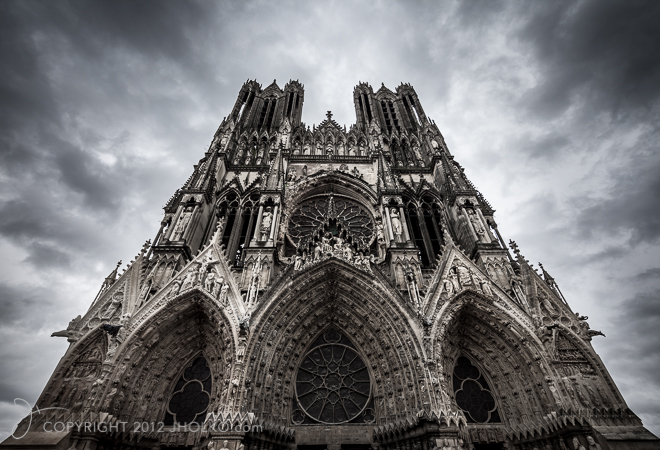 This trip has been a wonderful opportunity to shoot with the new 1DX camera which is continuing to surpass my expectations. It has the best metering and autofocus of any camera I have used. Tomorrow I will be heading for Dijon where I look forward to more photography with this remarkable new camera and of course some more “boudoir the grape.”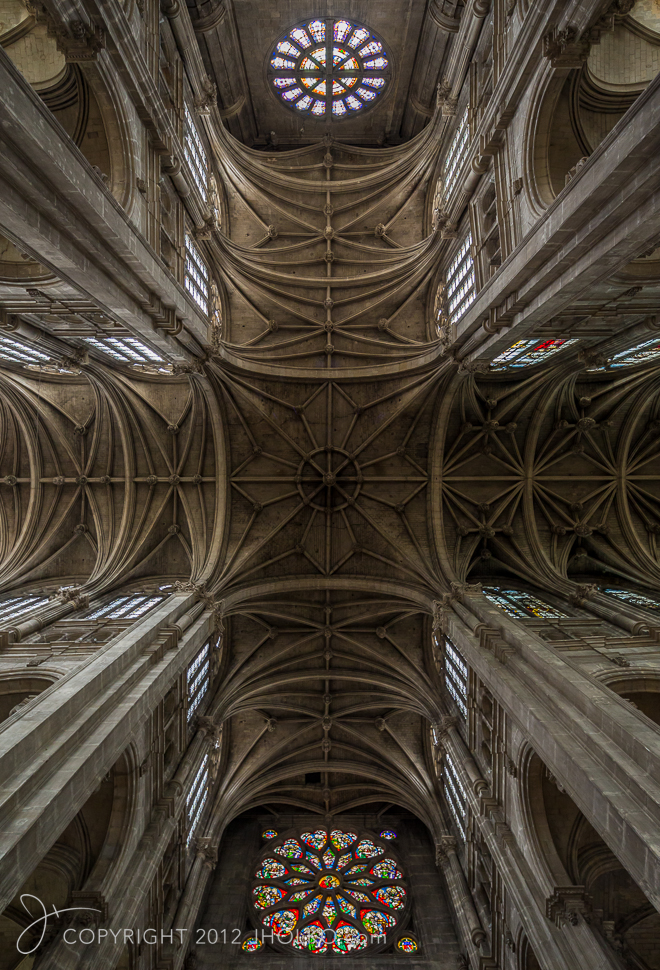
 www.WILDNATUREPHOTOTRAVEL.com