Yesterday I received a number of very supportive messages in response to my WR-APPA post where I summarised my 2017 APPA results and very gingerly dipped my toe into the murky waters of the APPA scoring ‘game’. In response to those messages, which were universal in they’re questioning of why two of my prints did not score Gold awards I have decided to wade further into those dangerous APPA waters with a more in-depth analysis of one of my print scores. In particular, this photograph of a Polar bear which seems to be the one most people have singled out as being short changed of a Gold award.
Before we analyse the reasons behind the prints final Silver Distinction award lets agree that this exercise is purely for the benefit of those who want to better understand why a print scores what it does. As previously noted, I am comfortable with the final score and at the risk of repeating myself I do feel that the panel of five judges did, on the whole, do justice to all of my prints. With that caveat crystal clear lets begin.
Firstly, lets look at the overall scoring process so that everyone has a good understanding of the overall APPA mechanics. In brief, the panel of five judges are scoring prints out of 100 under strictly controlled lighting conditions. The judges scores are then averaged to give a final overall score out of 100. Prints of a professional standard that score between 75 and 79 points are not considered of award standard but are considered to be a good example of solid professional practice. Prints between 80 and 84 are considered examples of photographs above professional practice and worthy of recognition and are subsequently classed as a Silver Award. Prints between 85 and 89 are of exceptional standard and are awarded with a Silver with Distinction. Prints judged 90 – 94 and 95 – 100 are Gold and Gold with Distinction awards respectively that are reserved for prints that are considered to be of the highest calibre. Judges are often heard to wax lyrical about a Gold award print needing to be one that is never forgotten. It takes a print of exceptional quality to be awarded with a Silver or Gold award.
In this instance the panel of five judges scored the print 83, 84, 87, 87 and 87. One of the judges was in the solid silver range on 83, whilst another was on the fence of Silver or Silver Distinction at 84 and the remaining three judges were all on 87 or a solid Silver with Distinction. The scores are added together and then divided by five to give us a final average of 86 – A silver with Distinction.
Now, had one of the judges been five or more points away from the average score of 86 they could have elected to challenge (see footnote 1) the print score and a short debate would have ensued whereby a number of judges would be invited by the panel chair to present their thoughts and arguments on why the print should either score more, or remain the same (it is very rare for a print to be talked down in score). Likewise, if one of the judges had scored it 90 or more (or if one of the judges had been more than ten points away from the average) there would have been an automatic challenge and the debate would have ensued as above. After the debate the print would have been re-scored. Had this occurred the print may have moved up in points and possibly into a Gold Award. Or, it may have remained at 86, a Silver with Distinction.
Now, as it stands none of the judges scored the print 90+ and we can only second guess ourselves as to why (speculating on a judges motives would be a very slippery slope). Additionally, none of the judges were five points or more away from the average and thus there was no opportunity to challenge to improve the score. If, as in this case, the judges are all within five points of the average, the initial average score of 86 will stand with no further option to re-score (the only exception to this is a print on the cusp of the next award level that will then go for review at the end of the judging session). As an entrant, that is the pitfall of consistent judge scoring at APPA; you loose the possibility of a challenge.
Now, one could argue that consistent scoring at APPA is a good thing and this is a perfectly rational and logical position to adopt. Such scoring shows consistency across the judging panel and ‘perhaps’ indicates that the judges are very close to the ‘right’ score. In reality, the only thing it represents for certain is that the judges more or less subjectively agree with each other. The problem with consistent scoring is it does rob the entrant of any chance of real debate and the chance for the print to be re-scored. And that is where a ‘spike’ judge can really benefit an entrant. A ‘spike’ judge is quite literally a judge who tends to score five points or more outside of the average more often than would be considered ‘normal’. The ‘spike’ benefits the entrant by potentially creating a five point difference and triggering a challenge and subsequent debate and re-score. This did not occur in my case. Nor did it occur for my print that scored an average of 88 (another Silver with Distinction with all judges within five points of each other). In fact, the judges were within five points of each other across all four of my prints!
In situations where there is no option to challenge (as in this case) one of the judges is invited to comment on the print by the panel chairperson for the benefit of the entrant. In this case the comment was as follows:
“ Yeah… very interesting picture. It’s not the sort of thing you often see. And the caption describes it perfectly too; the dragging of the foot. I was just drawn to the contrast between the chunkiness and the detail on the foot and then this little bit facial expression. Lovely subtle tones as well. Well done to the photographer.”
What you choose to individually read into the judges comment above is totally subjective. For me, it was quite gratifying as the judge in question acknowledged exactly what this print is about. When I chose this print for my APPA entries I did so because I felt it presented a very unique view of a Polar bear very few people would have ever seen. I also felt the soft and subtle pastel tones of winter light perfectly complimented the fur of the bear and that the overall gesture of the bear carried both a power and delicacy that had strong emotional impact. Whilst the language used in the judges comment is a little clumsy they did at least ‘get it’ and thus it is clear the intention behind the comment was very positive.
With the comment made and the average score of 86 locked in the print was awarded its Silver with Distinction before the next print was turned around and judged with fresh eyes. And that is exactly how a print that you might feel worthy of a Gold Award ends up with a Silver with Distinction. Without that trigger of a challenge there is no possibility of a debate and the subsequent re-score that would follow. You are instead locked into the first and only averaged score. It happens all the time and it is just a fact of life in the APPA game.
__
Footnote 1: Challenges are issued when one of the judges (who is either in Gold on 90 or above; or is more than five points away from the average) wants to see the print finish with a higher score. This is known as “championing the print”. A great many prints finish in the Gold scoring range through this process. Very few prints score Gold outright without a challenge; although it does happen on occasion.


 Wether you are a judge or an entrant (or both as in my case) you have to keep an open mind to critique and comment (good, bad and indifferent). And you absolutely have to maintain a degree of mutual respect for your fellow entrants and the panel of judges. I will admit that it is not easy to accept a print score you disagree with when you have sweated bullets over the final print but there is almost always something positive you can take away from the result and quite honestly that is how I feel about my own print scores this year. Even though I feel two of them should have got up for Gold awards I feel satisfied that the panel of judges I had on the day did overall, do justice to my prints. After all, they scored not only in the Silver Distinction award range, but fell just short of Gold and that very small difference is nothing more than a few points in total across the average of the five judges scores on the given day. Once you accept the decision from the panel and realise its just a point score average you free yourself from any potential disappointment. Take on board any constructive critique and you may find ways improve your work even further. And that is the key to improving your photography at APPA.
 After I finish in Greenland I am heading down to Antarctica for my White Nature expedition. Timed as the first of the season we have planned our expedition to take advantage of dramatic and variable weather as well as giant icebergs and lots of snow and ice. I have been travelling to Antarctica annually for many years now and have found early November to consistently offer the best photographic experience for all aboard. I recently published a full guide on how to choose the right photographic expedition to Antartica and it can be downloaded for free
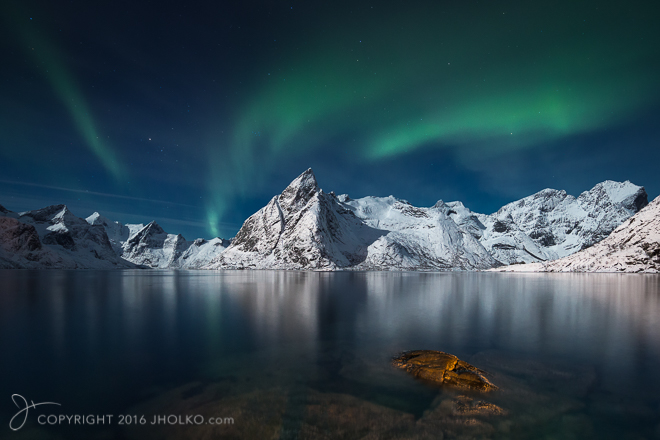
  2018 will kick off with sold out expeditions to Lofoten for Winter landscapes and Iceland for Arctic Fox in winter. My last workshop to Lofoten was in 2016 and I am looking forward to returning to this incredible archipelago. The rising and precipitous mountains that climb directly out of the sea and the rugged coastal landscapes make for a photographers paradise. And of course, the chance of Aurora Borealis (northern lights) only sweetens the pot and adds that magic element to what is one of the most picturesque places I have ever been fortunate to visit and photograph.
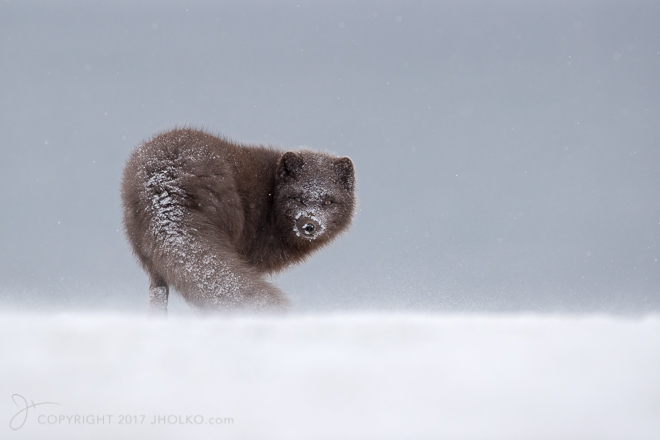
 My annual expedition to photograph Arctic Fox in winter in the remote and wild Hornstrandir reserve in Iceland has also long been sold out (
 After Iceland I will travel to Svalbard to lead a winter expedition north of Longyearbyen in search of polar bears and dramatic winter landscapes. Svalbard in winter is an absolutely breathtaking location. With newly formed sea ice, snow and ice covered mountains and chance encounters with the worlds largest land predator in a stunning white environment this expedition rates as one of my absolute all time favourites (

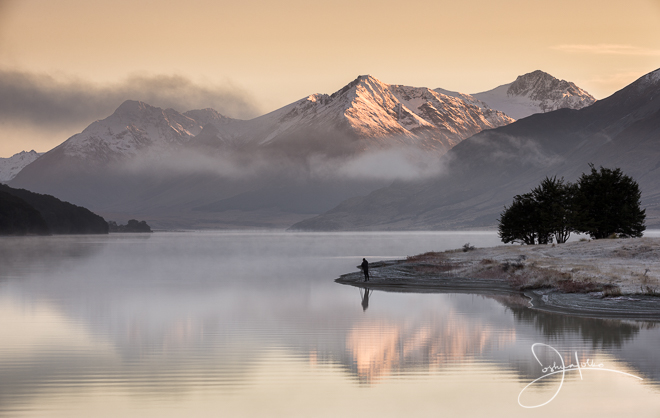 Earlier this year, Daniel Bergmann and I completed a brand new workshop to photograph Atlantic Puffins and other Arctic birds at several different locations in Iceland that included the remote northern Grimsey Island, inside the Arctic circle. (
 In July I will return to Svalbard for my annual summer Polar Bear expedition. This expedition has been designed from the ground up to provide the very best possible opportunities to Photograph Polar Bears in their natural environment. With the reduction in Arctic sea ice the Polar Bears in Svalbard are dwindling in number and the number of years left to photograph them is unfortunately now extremely limited. Late July and August are the ideal times to photograph Polar Bears north of Svalbard due to the dwindling ice around the archipelago. On this expedition we will be carrying a naturalist/biologist who specialises in locating Polar Bears and an expedition leader and captain who have years of experience in placing us in the ideal position to make the best photographs. Their expertise will allow us to approach the king of the Arctic as closely and safely as possible and make incredible photographs under the spectacular midnight sun. To get an idea of what this workshop entails be sure to read the
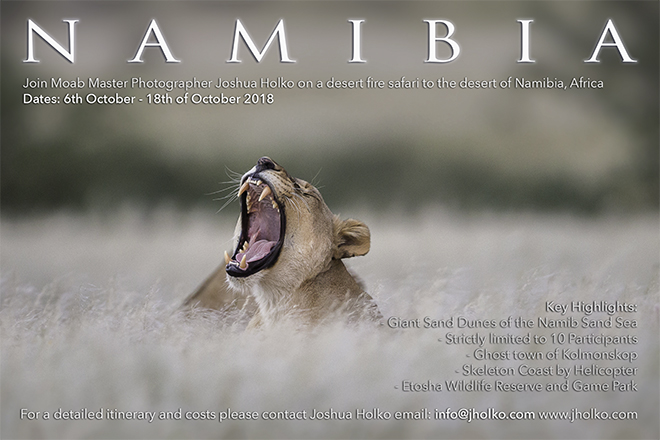
  In October I will return to the gigantic sand dunes of Namibia for a new Desert Fire Safari. This will be my fourth visit to Namibia to photograph the ancient sand dunes of the worlds largest and oldest desert. It is the perfect juxtaposition to my usual polar landscape and wildlife photography and offers an alternate landscape of extremes. Our workshop will sea us visit the giant red sand dunes of Sossusvlei, the eerie ghost town of Kolmonskop as well as the relentless Skeleton coast and the Etosha wildlife reserve. Places are now limited.
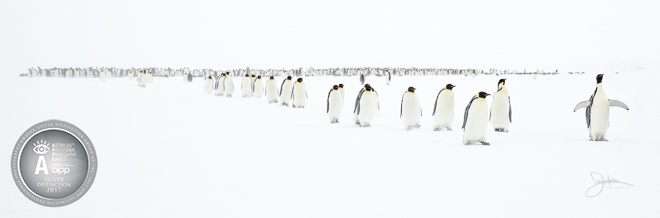
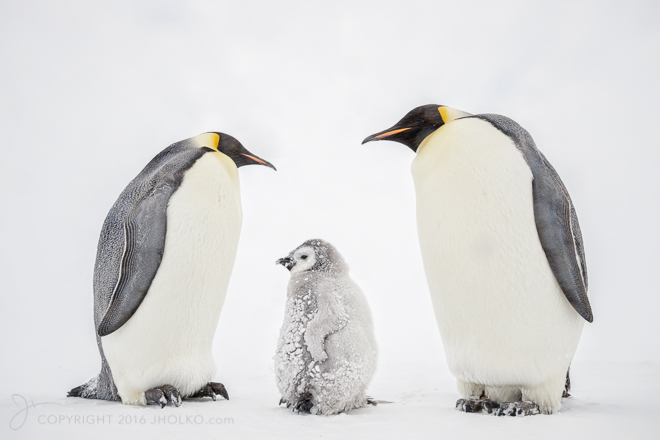
 Finally in November 2018 I will return to the sea ice of Gould Bay in Antarctica for my Emperor Penguin expedition (
 Peaking into 2019 I will be leading a brand new workshop to the north of Finland in February in search of Golden Eagles, Hawk Owls, Wolves and wolverine (full details coming very soon). The workshop is going to include a significant amount of photography from private hides and will afford opportunities to photograph rare species not often seen and even less often photographed. I am not quite ready to start taking bookings for this new workshop but you are welcome to register your interest by
 You can see a little of the making of this photograph in the recent Channel 9 Today show interview by clicking on the image below.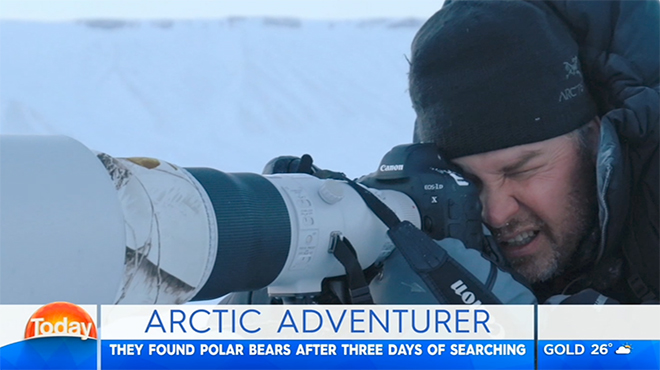

 www.WILDNATUREPHOTOTRAVEL.com