In November of 2017 I lead a dedicated photographic expedition to the Antarctic Peninsula – Antarctica, White Nature – in search of wildlife and dramatic landscapes. The expedition was deliberately timed as the first of the season as typically this is when the weather is still quite unstable in Antarctica and there is the greatest chance of dramatic weather and light. Expeditions later in the season (December, January and February) typically have more settled weather and far less snow coverage on the ground. For wildlife photography this can be problematic as it can be difficult to find clean snow backgrounds for the penguins (Read my guide on how to choose a photographic expedition to Antarctica).

As it turned out fresh evidence of global warming was written all across the face of the Antarctic peninsula with unseasonably warm and stable weather that resulted in more blue sky days than I would have preferred for photography. In fact, there was a huge high pressure system sitting over the peninsula for the entire duration of the expedition (and the one that followed). To date, I have never seen so little snow, or such unseasonably warm and stable weather this early in November. Many of the glaciers I have become familiar with in recent years (such as those at Neko for example) are showing severe signs of melt and distress. Snow coverage was also lower than I have ever experienced in November. National Geographic recently published an outstanding article (July 2017) on the melt in Antarctica that should be mandatory reading for anyone even remotely interested in global warming (skeptics included). Titled: Antarctica; the bottom of the world as you have never seen it I recommend you try and pick up a copy. Putting the facts of the melt aside the underwater photographs by Laurent Ballesta that accompany the article are simply superb.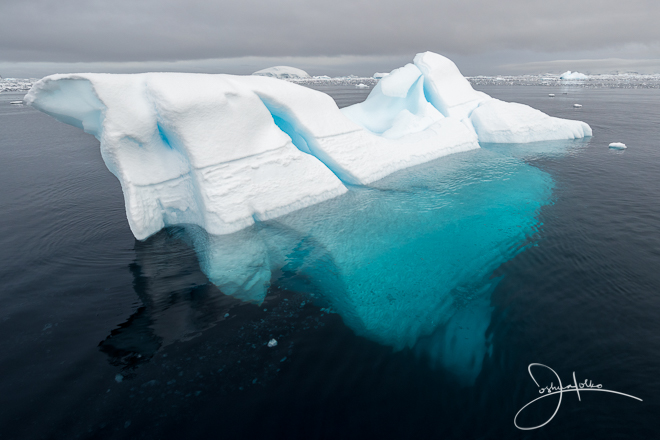 Our Drake crossing for the expedition was relatively mild (thankfully) by the usual standards and we enjoyed predominantly smooth sailing on both the journey down to the peninsula and the return journey to Puerto Williams in Chile. On a scale of 1-10 with 10 being the absolute worst possible crossing I would rate our crossing as a 4 on the way down and a 2 on the way back. All up, just about ideal sailing conditions and about as good as one can hope for. A side benefit of a smooth Drake is the opportunity to photograph the many sea birds that frequently follow the ship. Just some of the birds we photographed include the Black-browed Albatross, Royal Albatross, Wandering Albatross, Grey-headed Albatross, Light mantled Albatross, Giant Petrels, Fulmars, Cape Petrols, Storm Petrels, Diving Petrels and more.
 The map below shows our route for the expedition, including where we stopped for either landings or zodiac cruises. We tried on three occasions to make it through the Lemaire channel (always a long shot this early in the season), but we were blocked by heavy sea ice clogging the channel at its narrowest point on each occasion. Had we made it through the Lemaire it was my hope we would be able to stop at Peterman Island late in the evening. Peterman is one of my favourite landings in Antarctica and is mercifully free from the usual restrictions that mean you have to be off the island by no later than 10pm. As it turned out we were denied the Lemaire channel which meant we had other opportunities further north including an absolutely superb zodiac cruise in outstanding conditions in Curtiss Bay.
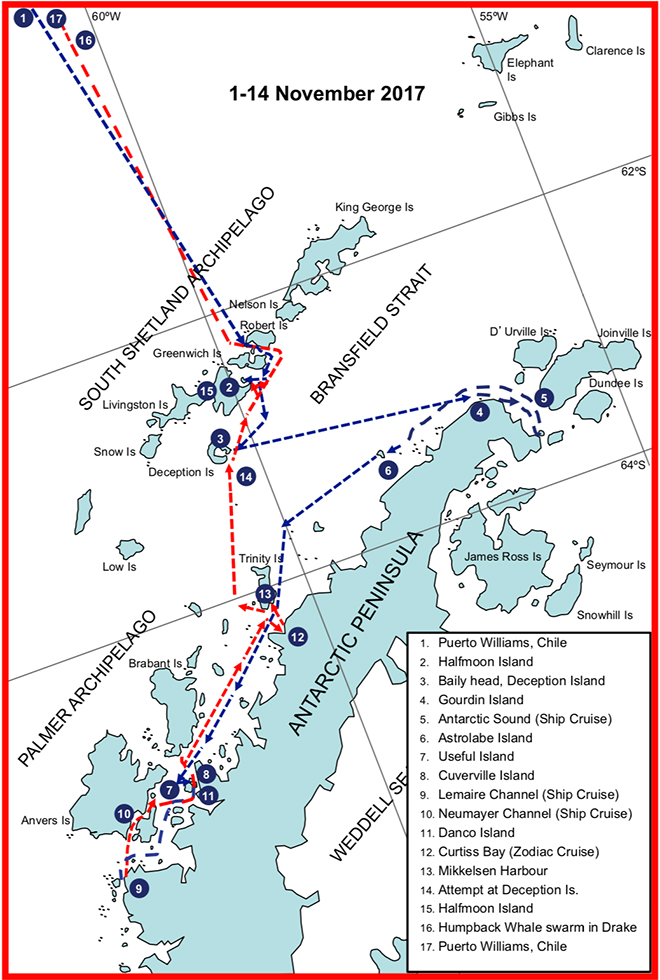 It was our intention to sail as far into the Weddell sea as possible and we did in fact get nearly as far as Paulet Island before we were blocked by sea ice. To date, I have never been able to get this far into the Weddell Sea this early in the season. We encountered some fantastic tabular icebergs in this area as well as a wonderful landing at Gourdin Island where we photographed Adelie Penguins. Gourdin is one of those landings that definitely benefits from snow coverage at this time of year. Later in the season the island is mostly free from snow and it can be very difficult to find clean backgrounds.
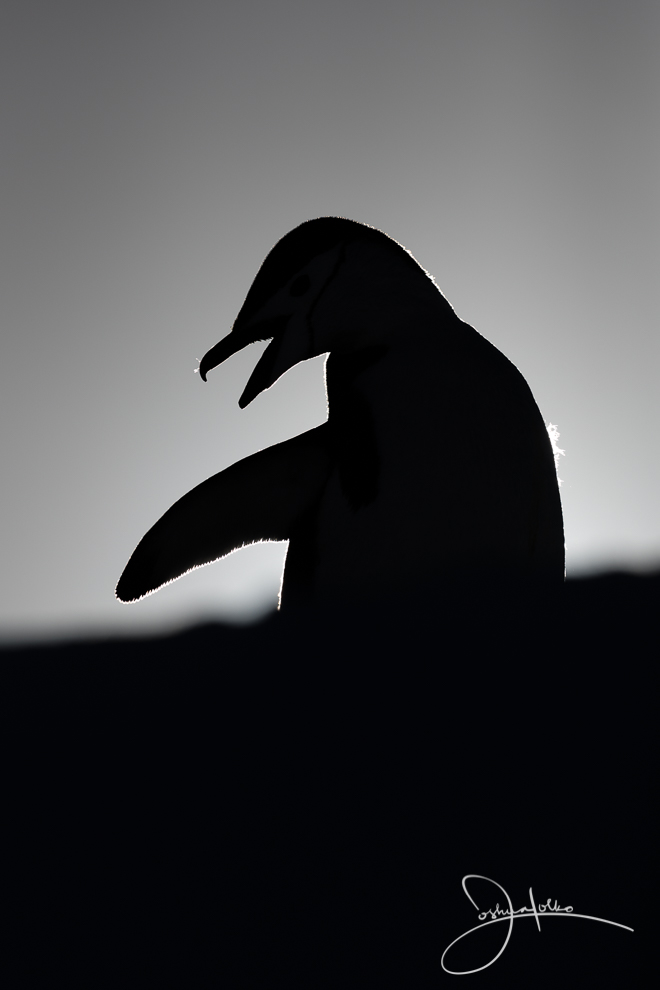 I wrote before our departure HERE that I had decided not to take my underwater housing with me to Antarctica. As it turned out I sort of wish I had (although I still feel my reasoning was valid) given the plethora of blue skies we encountered during the expedition. Blue sky days are just about ideal for underwater split photographs and I did miss some opportunities as a result of not having the housing with me (definitely next time!). For those that did have underwater housings with them there were wonderful opportunities and from what I have seen to date there were some incredible photographs produced. This early in the season the waters in Antarctica are crystal clear and visibility is at its absolute best for underwater work.
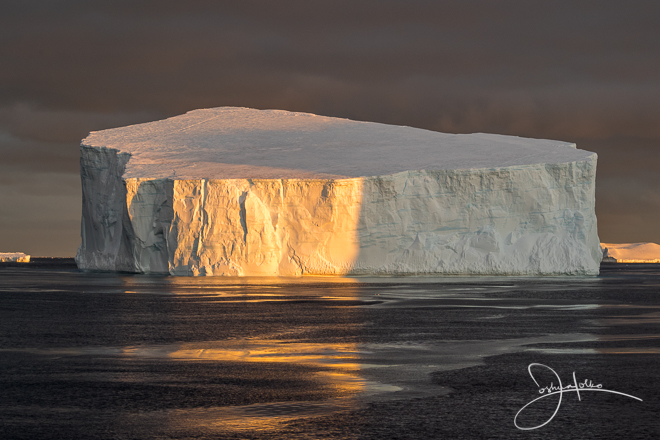
 Blue sky days did result in some really spectacular light at both sunrise and sunset on several occasions during our expedition. Of particular note was the sunrise we experienced near the entrance to Antarctic Sound in the Weddell Sea. Giant tabular icebergs made for absolutely superb subjects in the soft golden pre-dawn light. This was in my opinion one of the absolute highlights of our trip.
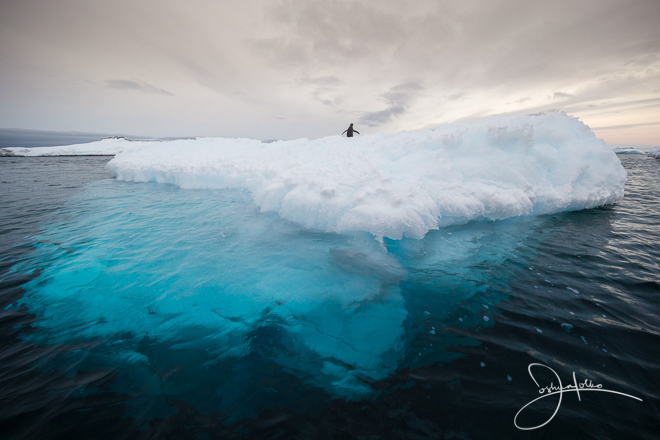
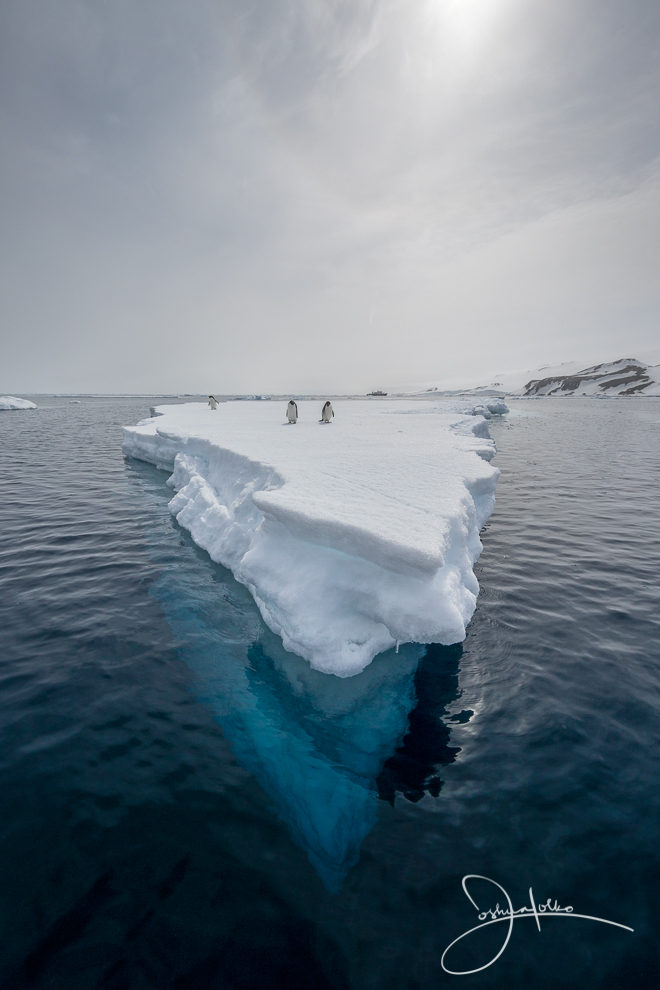
 On another occasion we encountered a large iceberg festooned with penguins drifting slowly through the ocean in the soft pastel light of dawn. These moments produced some absolutely wonderful photographs. It always pays to get up early on an expedition to Antarctica and with sunrise around 3am it meant early starts for all those keen on great light.
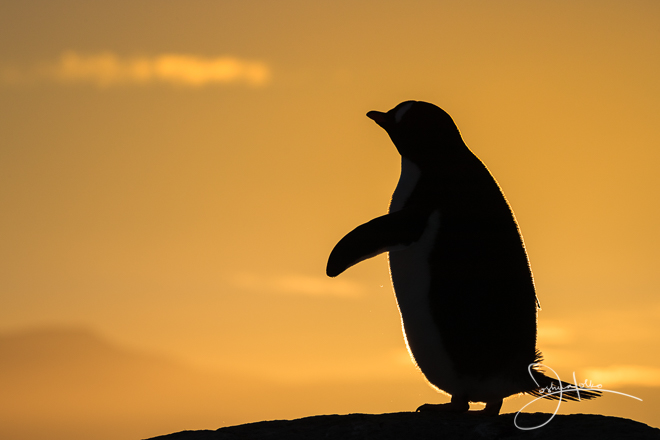
 Useful Island provided us with some superb evening sunset light and has proved itself a fantastic location on recent visits. The hike to the top of the island is steep, but short and provides 360º degree views of the landscape with lots of opportunities to photograph both Chinstrap and Gentoo Penguins with dramatic scenery.
 We were unable to land at Deception Island during the expedition due to a combination of strong winds and significant fast ice in Whalers Bay. Deception Island is a real highlight for many and it was unlucky we could not land to explore and photograph the old whalers remnants. We did however have an excellent landing at Half Moon Island where we photographed the large colony of Chinstrap penguins in blowing snow in what I felt was our best and most dramatic landing.
 On our return journey we were fortunate to encounter an extremely large pod of Humpback whales that were crossing the Drake bound for Antarctica. The size of the pod was immense and the sighting was the perfect finale to our expedition to the Peninsula.
I will be returning to Antarctica in November next year to lead my expedition to the remote sea ice of Gould Bay to photograph the mighty Emperor Penguins (only one place remaining before the expedition will be sold out – Read the 2016 Expedition Report). I am currently looking into options for 2019 expeditions on small vessels (50 people or less) and will have more details in the not to distant future – stay tuned.

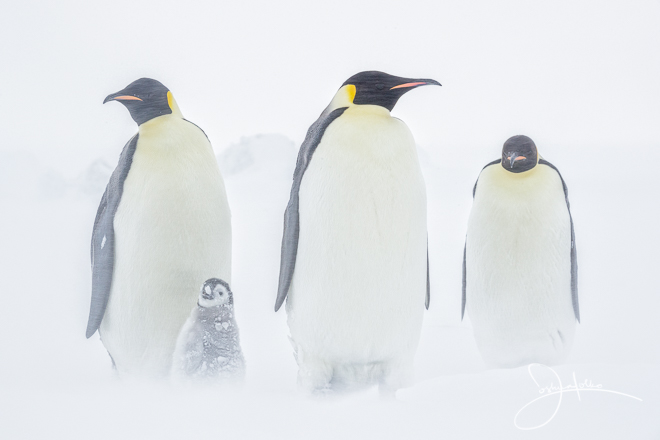
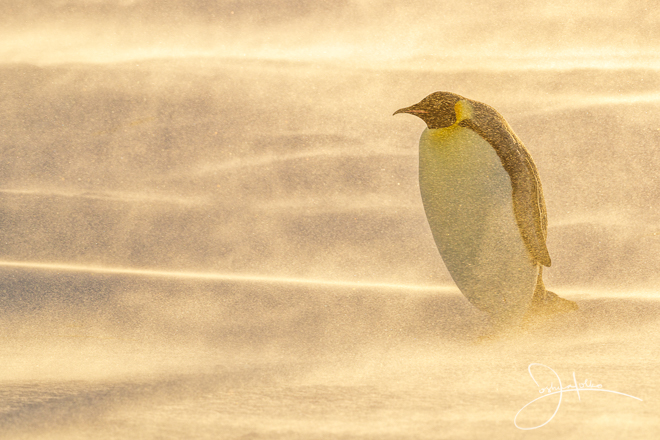 I will be returning to Gould Bay in November 2018 for one final expedition to photograph the mighty Emperor Penguin and will have all of the final details for this expedition early January 2018. Due to the initial registrations of interest there are only two places remaining before the expedition will be sold out.
 www.WILDNATUREPHOTOTRAVEL.com