In part one of this series of articles on choosing an expedition to Antarctica we looked at the option of choosing either a fly or sail expedition. This critical decision will have a huge impact on both your wallet and your overall Antarctic expedition experience. In this second part of the series we are going to look at what you need to know about choosing a ship suitable for your needs if you have made the decision to sail to Antarctica. If you have made the decision to fly then you will likely already have chosen an operator (there are not many to choose from). The first and most important consideration when you are investigating the multitude of ship options for sailing to Antarctica is how many passengers does the ship take. This very critical piece of information is going to have very significant impact on how much shore time you can expect whilst you are in Antarctica and what sort of photographic opportunities you can expect. Before we discuss this in further detail it is important to understand that the IATTO (International Antarctica Treaty Organisation) body is responsible for the protection of Antarctica and managing tourism to the continent. Their regulations are continually being refined, expanded and updated. The critical regulation you need to consider when choosing your ship is the maximum number of passengers permitted to land on Antarctica at any given point in time is limited to no more than 100 people (including ships expedition staff). Therefore, if you choose a ship that carries 100 passengers or more you will be forced to wait your turn and rotate on landings in order for the expedition company to comply with IATTO restrictions (they will make no exceptions to this rule). This will be extremely frustrating having travelled all the way to Antarctica and being made to wait your turn. You may well miss landings (in fact you will), miss wildlife opportunities and miss the best light of the day as you sit with increasing impatience waiting for your turn.
My recommendation is therefore that you choose a ship with as fewer passengers as possible. Anything less than 100 is acceptable with something around fifty or less being ideal in my experience. In fact, the fewer the better – period. Keep in mind that fewer passengers also decreases the potential for other guests walking into your photographs during landings. Note if you are considering a very small sailing vessel for your expedition then the total number of passengers will already be very small.
Once you have made the decision to choose a ship that carries fewer than 100 passengers the next thing I recommend you check with your expedition company is what ice class the ship has been rated. You want to make sure that your chosen vessel is capable of going into broken sea ice and that it is able to push ice out of the way. This is going to ensure that you can get nice and close to icebergs for the best photo opportunities and that you can get into ice filled bays and coves that other ships simply cant access. There is an important distinction between an ice breaker and being ice hardened. You are unlikely to find an ice breaker for your expedition as such ships are usually reserved for commercial operations and are far from comfortable for crossing the Drake (they roll and wallow in high seas because of their hull design). Instead you want to select a ship that is rated ice class 1. Ice Class 1 is the next class down from an icebreaker and ships with this rating are capable of pushing not insignificant pieces of ice out of their way. I have quite literally driven one of these ice hardened ships into the pack ice; parked it, and got out and walked on the frozen sea. That is an experience not to be missed. A word on ship stabilisers. Some expedition companies market the fact that their ship has stabilisers to help keep it from rolling around too much as you cross the Drake passage. Whilst stabilisers can and do make a difference to ship movement you should be aware that ships equiped with outboard stabilisers are usually not suitable for use in the ice. Stabilisers are easily damaged by large pieces of ice so the captains of these ships are usually going to avoid taking the ship into the ice or too close to icebergs. Therefore I recommend you avoid ships that are sold and marketed as being ‘stabilised’.
Once you have chosen a suitable ice class ship that carries fewer than 100 passengers the next thing you need to ensure is that the ship has sufficient zodiacs (small rubber boats that you will use for cruising and landing in Antarctica) for all passengers to be transported at the same time. On average you can comfortably accomodate up to ten photographers (8 is better) on a Mark V Zodiac and still have sufficient room to comfortably photograph. Therefore a fifty passenger boat is going to need not loss than five (and preferably six) zodiacs. Ships will always want to keep one zodiac in reserve for safety purposes so always bank on the total number of zodiacs on the ship being one less than advertised. The number of zodiacs available for operations is as important to your photographic experience as the total number of ships passengers and the ships ice class rating.
A not insignificant consideration in choosing a vessel is the amount of deck space available on the ship for photographers. You are going to be sharing this vessel with up to one hundred (or possibly more) other photographers who are all going to be jockeying for the best position to make photographs during your expedition. Find out if there is an open bridge policy and if you can venture out onto to the bow and stern of the ship for photography when it is safe to do so (many ships have closed bow policies and forbid passengers to access this area of the ship). Ask your expedition company about the places on the ship you can and cannot go so that you have a good understanding of exactly how much space you will have available. If possible, try and obtain a deck plan for the ship so that you can analyse potential shooting locations. Don’t underestimate the importance or manoeuvrability on board the ship for photography. When the ship is under steam and you are passing icebergs you need to have ample deck space and to be able to move quickly to obtain the best angles.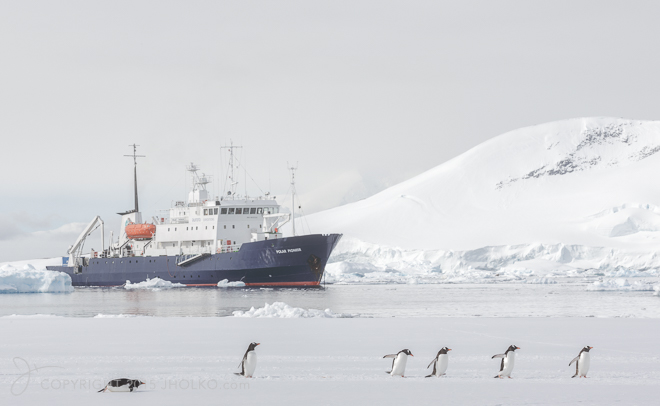 One thing you should be acutely on the look out for is generic expeditions that offer a photographic component as part of their overall program; or expeditions that comprise in the majority of general tourists with what is marketed as an additional small dedicated photography group that plans to co-exist on the same ship. These expeditions are disasters for photographers who are dedicated to their work and who want to achieve the best possible photographs. Any expedition that comprises in the majority of general tourists will first and foremost have to cater to this majority (and not the much smaller group of photographers). Such groups will not be able to rearrange their schedule to suit the best light for photography and will not be able to suitably serve the needs of the dedicated photographers. I can tell you from experience that these sort of expeditions are incredibly frustrating as you are forced to photograph during midday landings in harsh light in order to meet the standard meal times when the light would be optimum for photography. If photography is your primary goal avoid any sort of mixed expedition at all costs.
You should also do your research on your expedition leader and photographic leader. Try and find out what sort of experience they have working in Antarctica. It is of critical importance that your expedition leader have experience working with photographers and that they understand the needs and requirements of photographers looking to capture stunning images in the best light of the day. The expedition leader is in charge of daily operations and therefore is going to make all of the decisions pertaining to shore landings and zodiac cruises. If those operations are planned for midday light to accomodate standard meal times you can expect a very poor experience from a photographic perspective. You absolutely must have an expedition leader who is willing to shift meal times to ensure you are out in the best light of the day. Typically in Antarctica this is very early in the morning and very late in the evening. It is the responsibility of your photographic leader to liaise with the expedition leader to ensure you get the best opportunities. It is not uncommon for photography guides to have little to zero real world Antarctic experience. Such guides should generally be avoided as they are likely to be far more interested in their own photography than in helping you or others on the expedition. If possible, try and select an expedition that includes a photography guide who specialises in polar photography or who otherwise has significant experience operating in Antarctica. Such guides know what to look for in terms of subject and know how to position a zodiac for the best backgrounds and to take advantage of prevailing light. Such leaders also know how to liaise with expedition leaders to deliver the opportunities you would otherwise miss.
The photographic leader and expedition leader you choose are going to have as much bearing on the success of your expedition as the ship you choose to travel on. They are critical elements to your success that should not be overlooked. In fact, you should equally weight your leader and ship choice for any expedition to Antarctica.
In part three of this series we are going to look at the very important decision of what time of year you should travel to Antarctica in order to achieve your desired outcomes.
 The expedition is for a strictly limited number of 54 participants plus photography guides and expedition leader. We have chartered the ice hardened expedition ship M/S Polar Pioneer with a highly experienced crew so that we can get as close as possible to giant icebergs for the best photographs. Our expedition ship the ‘Polar Pioneer’ is equipped with sufficient zodiacs and crew for all photographers to be shooting simultaneously with plenty of room to spare for camera equipment. So bring what you need!
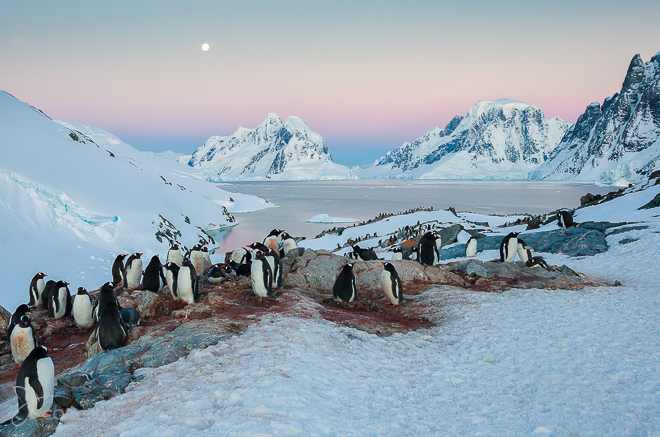 The main focus of this expedition will be Antarctic wildlife including penguins, seabirds, seals, and possibly even whales. We also plan to photograph snow and ice covered landscapes and icebergs. Our expedition has been timed as the first of the season so we expect fantastic icebergs and a breathtaking winter landscape. Very few photographers have visited Antarctica in early November, and experience has shown us that this will give you the best possible photo opportunities.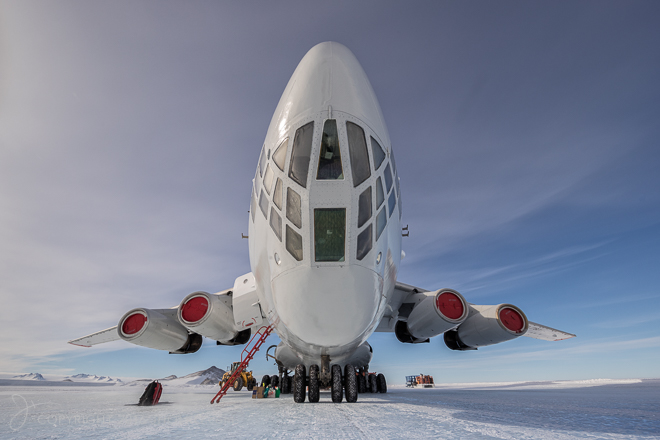

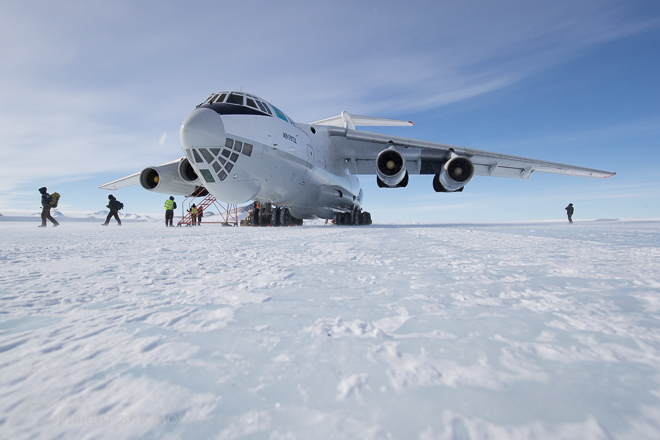 Here is my take on the option of flying to Antarctica after having both flown and sailed on countless occasions. Firstly, lets deal with the real truth about the infamous Drake passage. On average the Drake takes approximately two days to cross via ship from the tip of South America to the tip of the Antarctic peninsula at a speed of approximately 10-11 knots. Vessels under sail will take longer depending on prevailing winds and faster ships will obviously take less time. Currents, winds and weather all throw an additional variability into the travel time mix. Whilst the Drake can be a roller coaster ride with huge seas in-excess of thirty feet or more (Drake Shake); it can also be equally calm with only very minor swells (Drake Lake). In truth, when I look back at the many expeditions I have completed over the last few years I have experienced as much ‘Drake Lake’ as ‘Drake Shake’. In fact, I would say on average that the seas have been quite moderate most of the time. I don’t want to lead you astray with my experiences as the Drakes fearsome reputation is well earned and the Drake is to be respected above all. However, you shouldn’t fear a Drake crossing even if you are prone to seasickness. All of the expedition ships are equiped with Doctors who are equiped with significant quantities of the very latest sea sickness medications. The key is to medicate before you start to feel sick. With proper medication before the onset of sea sickness even a rough Drake crossing can be enjoyable. The good news is, once you arrive in Antarctica the seas are significantly calmer and you can expect any sea sickness you might have experienced to quickly subside and disappear. The Antarctic peninsular is comprised of a great many sheltered straits, coves, bays and inlets and the expedition ships captain will have great experience in navigating them based on prevailing weather conditions. Therefore, once you arrive at the Peninsula you can expect smooth sailing most of the time.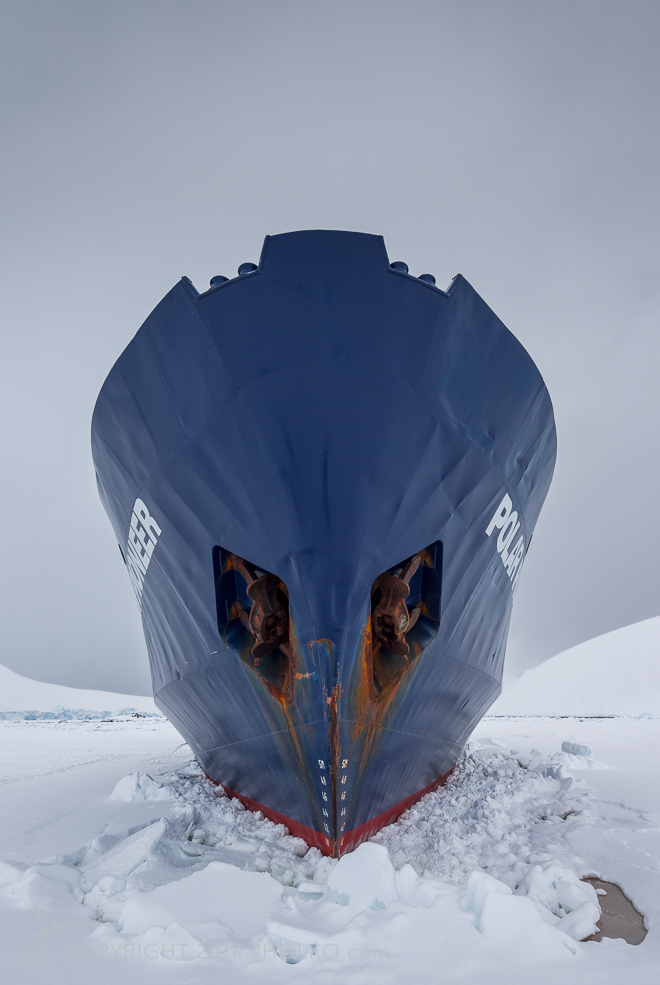


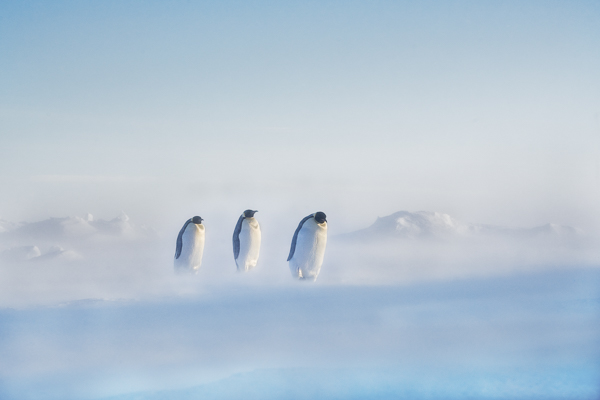
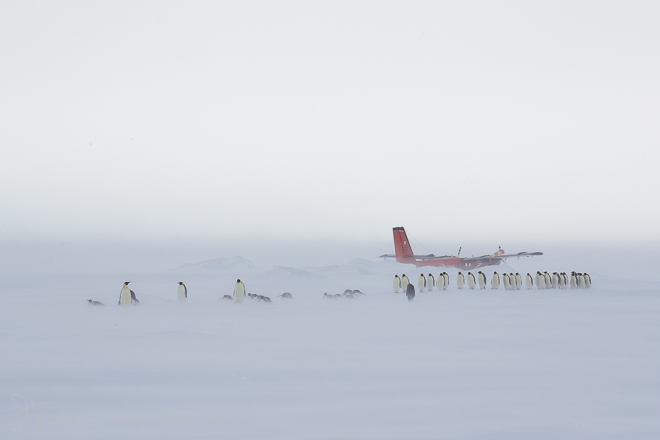
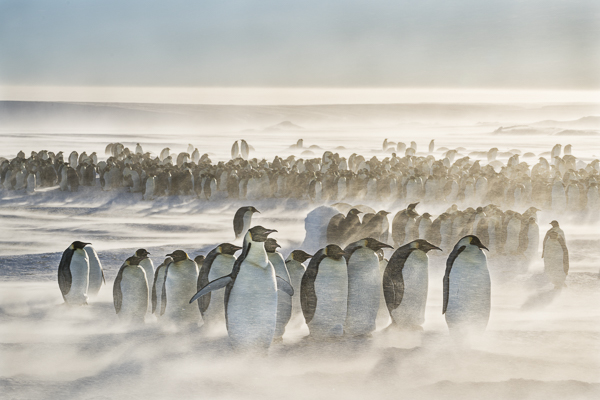 Like other penguin species, emperors spend their summer months next to the sea, fishing in the rich, cold waters of Antarctica. Starting in March, their behavior becomes different than that of other penguins: males and females leave the sea and walk between 70 and 100 kilometers over the ice until reaching the colony in which they were born. There, they will start their annual reproduction cycle.
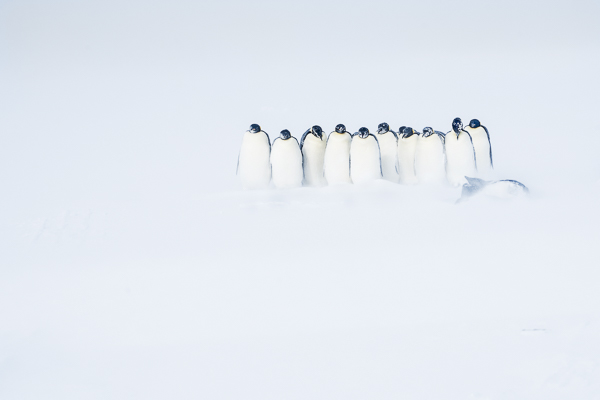
 These colonies are located in extremely cold and windy places, with no sources of food. However, since they are far from the sea, the risk of predators for chicks is reduced. Once they reach the colony, males and females start the pairing process: they will sing a special cry that will lead them to the penguin who will be their mate for the next year. Two months later, each female lays and egg and transfers it very carefully to her mate. The females have consumed too much energy and must now start the long walk back to the sea to feed. Meanwhile, the males will incubate the eggs, protecting them against the harshest winter conditions: temperatures of -70 Celsius, and winds of more than 150 km/h.
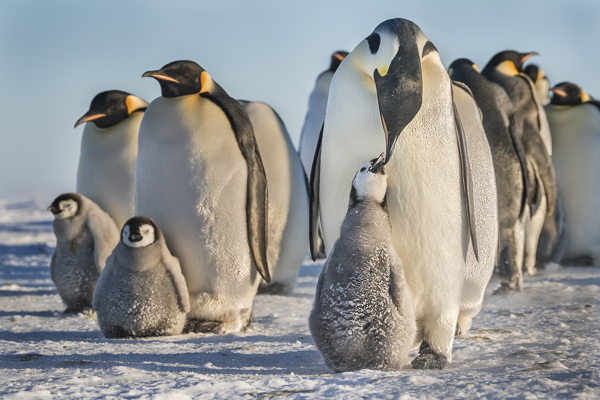
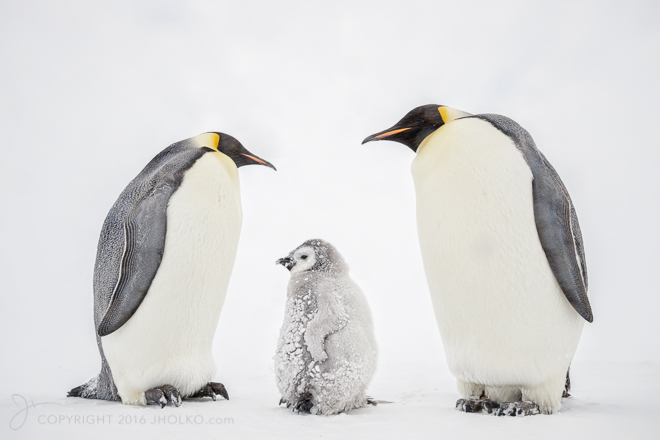
 Chicks are born between late August and early September, still under their fathers care. A few days later, mothers come back, bringing valuable food for their young. It is now their turn to take care of the chicks, while the males walk to the sea to regain the weight they lost. During the following three months, males and females will take turns caring for the chicks and walking to the sea to bring back food.




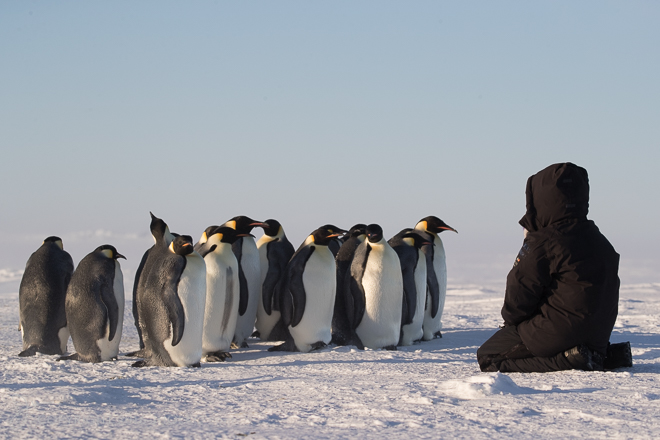
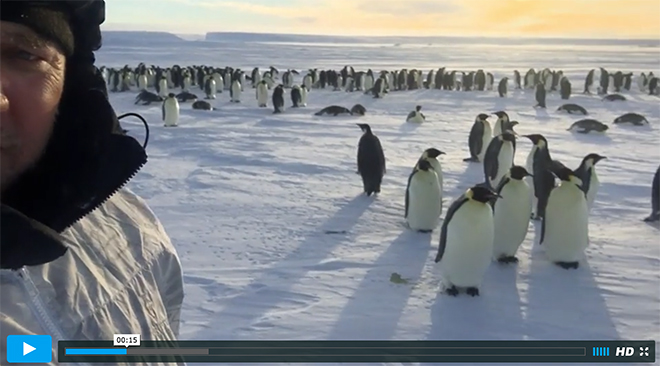
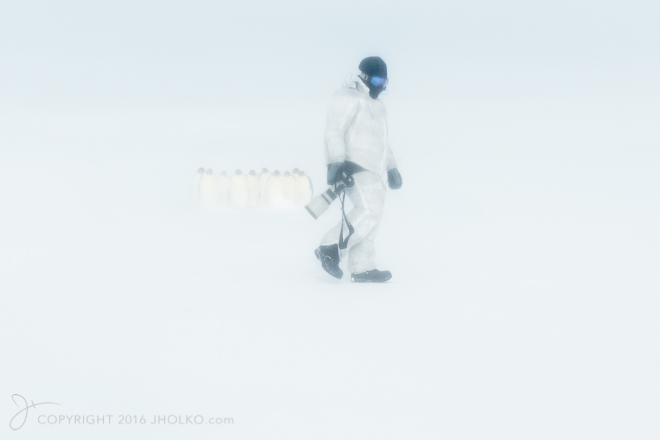

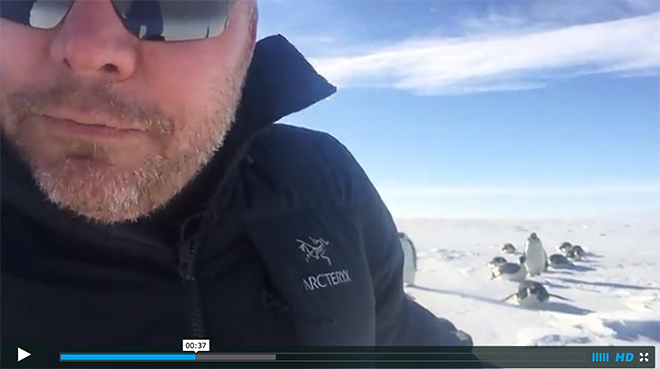
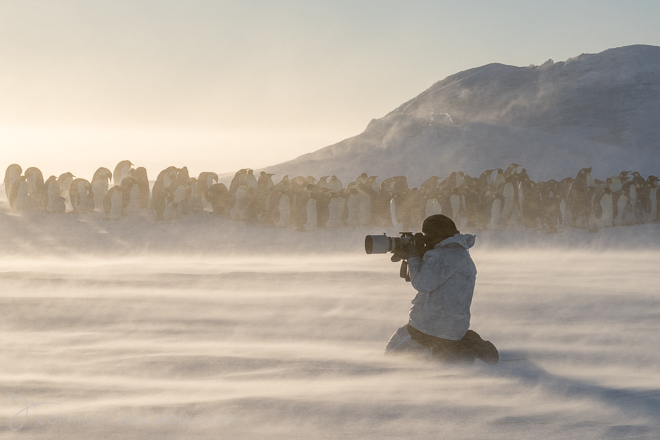 Click the image below for behind the scenes video.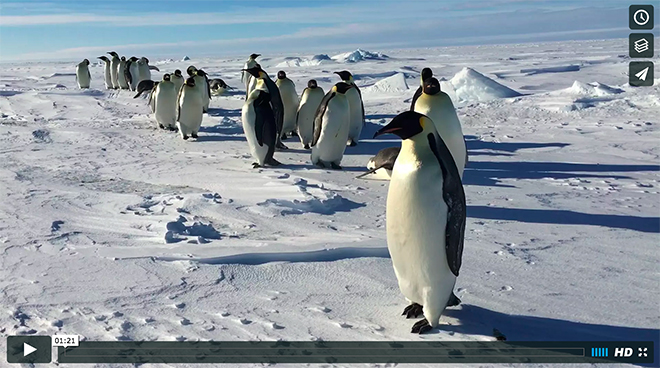

 www.WILDNATUREPHOTOTRAVEL.com