DIGITAL PHOTOGRAPHY+DESIGN – COVER AND FEATURE ARTICLE FEBRUARY / MARCH EDITION

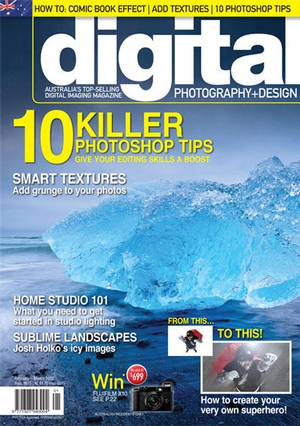
Having a photograph published in a photography magazine (or any magazine for that matter) is a lot of fun and will always puts a smile on a photographers face. Being interviewed and having a multi-page feature on your photography published in that magazine will fix that smile for at least as long as the issue remains on the news stands. Scoring the cover photograph in the very same issue is the home run that hits the ball well and truly out of the park. In a home run for me, the latest February / March edition of the Australia’s top selling digital imaging magazine Digital Photography + Design features an interview and six page spread of my photography, as well as sporting one of my most well known photographs from Iceland on the cover. A PDF of the complete article can be downloaded HERE.

ANTARCTICA – THE PALLET OF COLORS

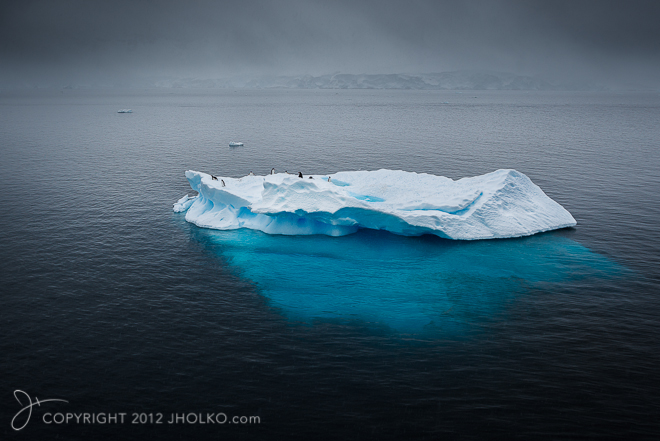
On the surface of it, Antarctica might well be considered an environment that is seemingly devoid of colour and monochromatic in nature. This is a reasonable assumption because the great white continent is renowned for its brilliant white ice and dark brooding seas. Such dichotomy is simply wonderful for black and white photography and consequently some of the photographers on my recent expedition produced some stunning examples. However, there is also a pallet of colours on display in Antarctica that can only be described as extraordinary. For the colour photographer, Antarctica, and its dizzying array of free-form sculptured icebergs, is a veritable playground of deep blues and glowing aquamarines that are as alluring as the sirens’ call. To claim the scope of colours is inspirational is to hugely understate the nature of this superb environment. It is breathtaking.

During my 2011 expedition to Antarctica I wore a persistent ear-to-ear grin when out shooting, which was for most of my waking hours. Many of the bays and coves we visited were festooned with icebergs that provided limitless opportunities for photography. As a colour photographer, I place great emphasis on a complimentary pallet of colours in my images, so I was completely enthralled by the deep blues and luminous aquamarines in the ice. On more than one occasion the cry of ‘look at those blues!’ could be heard coming from either our zodiac, or another nearby.  Even the frequent driving snow did little to dampen my enthusiasm for the extraordinary colours and the magical scenes around us.I am methodically working my way through the editing and processing of my photographs but wanted to share some examples that illustrate the range and tone of colours found in Antarctica. Post-production of these photographs, and in particular the blues and greens, presented some unique challenges. To date, my experience has shown that a very delicate touch is required in order to compliment and accentuate the myriad of subtle tones and textures in the ice and to balance these with the overall colours in each frame.The temptation to overly saturate colour that is naturally incredibly vibrant and surreal is an easy mistake to make. The end result can be a photograph that not only transgresses belief but appears almost gaudy. Judicious use of saturation is the key difference between an incredible, but believable photograph and one that is quite simply ‘over cooked’. It’s a discussion I have had with my good friend and co-Moab Master Andy Biggs over Skype on a couple of occasions and we are in agreement that no embellishment is required in most cases – isn’t Mother Nature wonderful! In these examples very little post-production work was performed to the RAW files. No additional saturation or vibrance was added and in the majority of cases the white balance was only subtly tweaked, or otherwise left as shot.I am starting to make my first prints from this trip for my upcoming exhibition in Melbourne at Source Photographica and have settled on Moab Entrada Rag Natural 300gsm as the paper of choice for my Antarctica images. After some experimentation I have found Entrada Rag Natural to offer the ideal surface and stipple to preserve the tone and colour in my photographs. Images have a soft, soothing, somewhat muted and understated look on Entrada Rag that I find highly complementary to the vividness of the natural blues and greens. Delicate texture and detail is retained and enhanced by the paper surface, whilst blacks remain rich and deep. Entrada Rag Natural 300gsm is in many ways a similar paper to my other favorite Somerset Museum Rag. However, there are some subtle differences in the surface texture that led me to choose Entrada Rag for my Antarctica photographs, because it retains and accentuates all the subtle nuances in the ice surfaces.

Higher resolution versions of these photographs can be seen at my portfolio website at www.jholko.com

EDIT – Some of you may have noticed that this blog entry has also appeared on the Moab website and that another of my earlier entries ‘The Fortress‘ also appeared on Gura Gear’s blog a few days prior to my own. You aren’t going crazy or experiencing a weird case of de’ja’vu. I was invited by both Moab and Gura Gear to share some journal entries for their own blogs that I think might be of interest to their readers.

ANTARCTICA – ‘THE FORTRESS’

It is a very rare occasion in my photography when I click the shutter and instantly know I have managed to capture something special and out of the ordinary. It has probably happened to me only a few times during my photography career.

I recall one such moment, which took place more than a decade ago when I was swinging on a rappel line high above the ground at the You Yangs National Park. I was photographing my brother lead climbing a classic trad-crack rock climb. It was late afternoon and the light was soft with high cirrus cloud muting the usually strong contrast of the Australian sun. Facing a potentially serious fall, my brother slowly inched his way up the rock and into my viewfinder as I hovered in space above him. I was staring down the line of the climb with my camera, watching his every move. As he climbed into the frame, he paused for just a moment and, with muscles rippling, he lifted his head and winced as the summer breeze blew the chalk dust from his hands. The rope went slack as the belay fed out some line, and I fired the shutter. That was the moment. With a last effort my brother quickly stuffed a ‘friend’ into the crack in the rock for some protection and promptly fell off, utterly spent. The resulting photograph still hangs in my brother’s living room and is a reminder to me that photography is so often all about the decisive moment. Unfortunately, I long ago misplaced the transparency and my only record of this shot is now the ageing 16 x 20 Cibachrome.

I experienced another of these decisive moments in Iceland in 2010 when I shot the large iceberg ‘Blue Berg’, which had washed ashore on the black sand beach at the Jokulsarlon glacial lagoon. With a storm brewing on the horizon and the sun falling low in the sky, all of nature’s elements were in perfect alignment for a great image. I set my desired aperture and shutter speed, loaded the graduated neutral density filter, shot some frames and knew I had a great photograph that I would be very happy to hang over my mantelpiece. This photograph subsequently went on to win the 2010 World Extreme Environment Photograph of the Year People’s Choice Award and won a Gold Award in the Landscape category at the 2010 APPA Awards.

The truth is these kinds of opportunities are probably more prevalent than I realize. It is why the skill of just looking and really seeing is of such importance in photography. Failing to recognize the opportunity when it presents itself is a tragedy for the photographer, so it is important to train yourself to be always looking – even when you are not out with a camera.

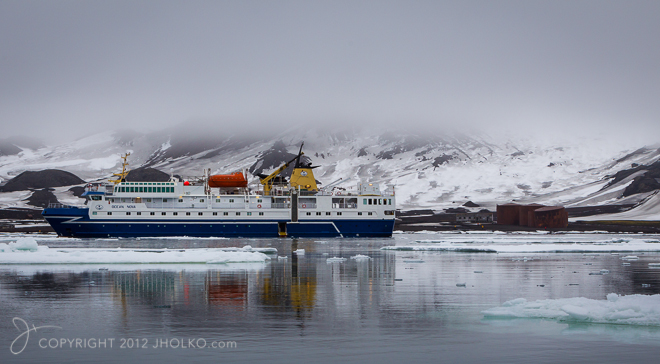
On my recent trip to Antarctica I was fortunate to come across another opportunity of this type. It was somewhere around the Gerlache Strait, and we were slowly cruising past gigantic stadium-sized icebergs in our ice hardened ship, ‘The Ocean Nova’. As our expedition leader Graham liked to put it “Just cruising in Captain Alexey’s zodiac“. The weather was overcast with soft, dim, moody lighting that I find ideal for photographing icebergs. Suddenly, we came across this massive, jagged and castellated iceberg with its precipitous peaks and hard chiseled surfaces. I was standing on the Port side of the ship chatting to my friend Andy Biggs about the Leica S2. As we drew closer I had to make a quick decision about what lens I was going to use to best capture and accentuate the iceberg’s characteristics. I use prime lenses almost exclusively, which meant I needed to make a decision on the spot as to how I was going to approach this particular opportunity. Whilst zoom lenses provide greater immediate flexibility for framing, I prefer the quality of primes for my work.

In this instance, I decided to use the Canon 17mm F4L TSE Tilt and Shift lens on my 1DS MKIII and scurried back to my cabin, dove into my Kiboko bag, and quickly changed glass. By the time I arrived back on deck we were already beginning to circle the iceberg and most of the other photographers were already firing away, whilst simultaneously staring in awe at one of nature’s most amazing wonders.

The decision to use the 17mm F4L TSE was an easy one for me, since I knew immediately I wanted some perspective control to stop the ice peaks from appearing to fall away from the viewer (a problem with wide angle lenses that are tilted when shot). Although perspective control is relatively easy to do in post-production, I prefer to try and get it right in the camera wherever possible (it means less pixel mangling later and I am first and foremost a photographer and not a Photoshop technician). I also wanted to use some lens shift to get me lower and closer to the water since we were shooting from several stories high on the ship. This was a delicate balancing act, since dialing in some lens tilt changes the plane of focus. Although I could have shot this close to wide open without any tilt and achieved adequate depth of field, the introduction of some lens tilt meant I had to be very careful to stop down enough to keep the top peaks of the ice in focus – in other words achieving infinite depth of field from near to far was no longer the issue. I had to achieve sufficient depth of field from top to bottom and this could only be done by stopping down the camera sufficiently – in this case F8 proved perfect. I also had to balance my ISO setting and shutter speed to avoid camera shake (tripods are out of the question on a ship), manually focus the lens (the 17mm F4L TSE is manual focus only), shield the lenses bulbous front element from the pervasive salt spray and get my framing right, all whilst on a pitching, and moving ship surrounded by other photographers all jostling for position.  There was a lot to think about and lots of opportunities for mistakes.

In the end, I shot about two-dozen frames with the 17mm F4L TSE lens of this iceberg while Captain Alexey circled it in the Ocean Nova. I was fortunate that there was some good moody cloud cover to soften the light when we came upon this iceberg. Direct sunlight would have made for much harsher shadows and less pleasing light.

Of all the shots I took of this iceberg only one has what I consider to be the perfect angle in combination with ideal lighting – and this is it. A shot I have titled ‘The Fortress’ for its castle-like precipitous peaks.When I sat down to start this entry I had in mind that I was going to talk about how I processed this photograph in Adobe Lightroom 3.6. However, I realized when I put pen to paper that I had really done very little to the RAW file at all. Basic corrections included setting the white and black points, adding some clarity (+25), refining the crop slightly and capture sharpening appropriate to the camera/lens/shot combination. I also added a graduated filter and vignette to darken the top of the sky; which I normally would have done ‘in-camera’ with the use of a graduated neutral density filter. However, due to the bulbous element on the 17mm F4L TSE it is virtually impossible to use filters. I decided after some tweaking that I actually preferred the white balance as set by the camera and left the temperature at 5650 and the tint at -2, as shot.
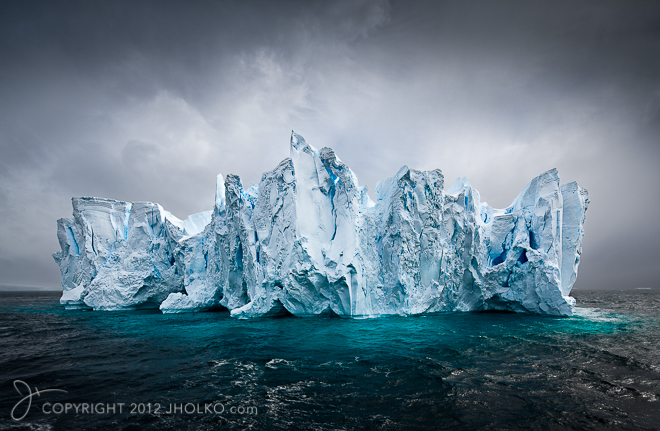
Antarctica is an incredibly surreal location for photography. The pallet of colours on display is quite literally unbelievable. No embellishment is required and as such this photograph was processed with zero vibrance and zero saturation. The shades of blue in the deepest crevices of the ice are naturally so intense that they already fall outside the gamut of some printers.

I would estimate that this iceberg was roughly the size of a football field (above water) and was about eight to ten stories high from the waterline with its jagged and precipitous peaks towering above our ship. Icebergs of this size are quite stable even in relatively strong winds and we were able to get quite close as we cruised past in our ice-hardened vessel. I had my 24mm F1.4L MKII lens on my 1D MKIV camera over my shoulder and although I took some frames with that camera and lens I was not able to fit the entire iceberg into the frame and as such those frames I feel lack the impact of this single image.

In the end, I could have shot this iceberg with pretty much any lens but decided in this instance that it was the iceberg in its entirety that was amazing to me. I deliberately included the distant shore on the left of the iceberg to put the iceberg into context and I also included the distant tabular iceberg on the right to balance the frame. Although I am still editing, sorting and processing my photographs from this expedition, the end result in this instance is a photograph that I feel may stand up as my signature image of this remarkable trip.

A higher resolution version of this photograph can be seen on my portfolio website at www.jholko.com
2011 APPA GOLD AWARDS ARE FINALLY ONLINE

The 2011 (APPA Australian Professional Photography Awards) Gold award images are now finally online and available for viewing at the APPA website (although the Silver with Distinction and Silver awards have not yet been uploaded as of this time). The APPA awards are widely regarded as one of the toughest photographic competition in the world today and are one of the few photographic competitions that still actually judge the ‘printed image’ in the majority of the categories. The 2012 APPA awards are now only months away and it is definitely time to start considering entries for the year. My 2011 APPA Gold print; ‘Abandoned Blue Berg’, is currently on display as part of my ‘Colours of Iceland’ exhibition at the Wilderness Gallery at Cradle Mountain Tasmania. All of the prints in the exhibition are printed on my personal favourite paper – Moab Somerset Museum Rag.

ANTARCTICA DEBRIEF REPORT

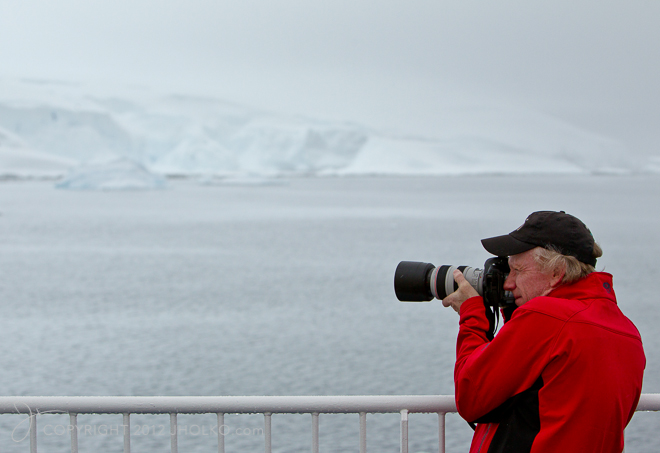
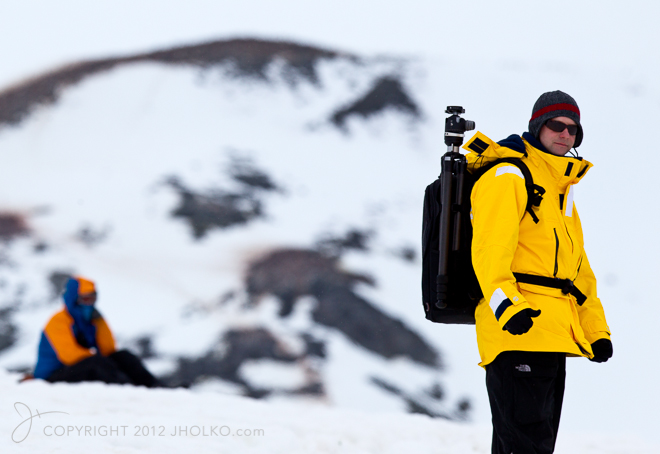
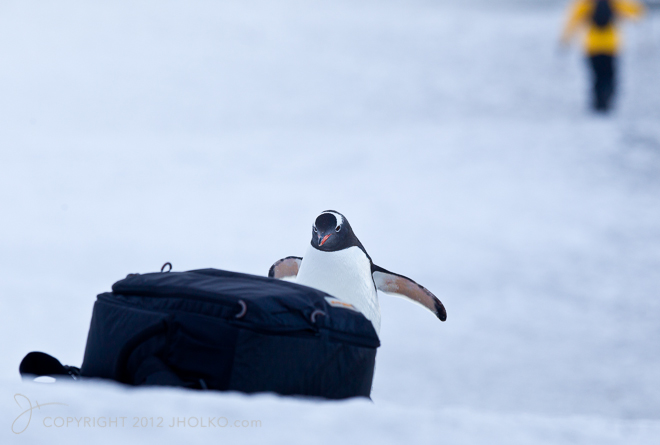
It has taken me longer than I had hoped to pull together this post Antarctica round-up debrief. Between jet-lag (which I just seem to take an inordinate amount of time to get over when crossing so many time zones – particularly between the Americas and Australia), Christmas, New Year social functions, a stomach upset, my kids, the wife etc. it has been longer than I would have liked between posts. I am also well behind in my image editing and processing from Antarctica; and not just because of the above. I am finding images from Antarctica require a very delicate touch in processing to really coax out all of the beautiful detail and texture that is so prevalent in the ice – and so easily lost in post production. Lots of staring time and a very delicate touch required. I also find that it is often wise to let a good amount of time elapse after this kind of ‘heavy-shooting’ trip to reflect on my RAW files in the light of a new day (and new eyes) as it were. Whilst this often leads to me looking at my images thinking ‘what on earth was I thinking when I shot this’ I do find that it frequently results in better editing and selection of ‘picks’. Given I shot over thirteen thousand images in the three weeks I was in Antarctica it is going to be some time in the far distant future before I get through even my initial selects. The only way to even contemplate approaching a task of this size is in small bit sized chunks; so I will likely slowly release my photographs over the coming year as I complete the editing and processing. I am including a few snapshots from throughout the trip in this post to give an idea of what it was like and to help illustrate where appropriate.Now that some time has past and I have had some time to reflect on the trip to Antarctica at the bottom of the world I want to share my experience of what worked and what didn’t work for me during the trip (much as I did for the workshop to Iceland last year). Those of you who follow my blog will already be well aware that I like to plan meticulously in terms of where I am going and what I am going to take with me on my workshops and expeditions. This trip to Antarctica was a little different than normal in that I had no real say in exactly where in Antarctica I was going. Location was determined more or less on a day by day basis dependant on the prevailing weather conditions and our expedition leaders experience and local knowledge. This was in many ways a good thing as it freed me up to focus and concentrate on my photography. A quick word of praise and thanks to our expedition leader Graham who went above and beyond the call of duty on numerous occasions to ensure we were in the best locations at the best possible time. Trying to please 70 odd neurotic and maniacal photographers all mad keen on making the most of their Antarctic adventure is no easy feat. Yet Graham managed his role and duties with great aplomb. His role is in many ways an unenviable thankless task so it is important to take moment to recognise and thank him for his excellent work throughout the trip.

It is worth mentioning at this point in time that shooting from ship presents its own unique challenges. In some ways shooting from ship is quite easy; one can simply step outside from their cabin onto the deck, frame and shoot. Tripods are obviously out of the question so all one really has to do is select a focal length, ensure shutter speed and aperture are appropriate and wait for the subject to roll past – pretty easy stuff that makes for very civilised photography. Shooting from zodiac however presents a different set of challenges – not the least of which is keeping camera gear dry and operating. The logistics of shooting from zodiac make the entire photography equation much more complex and I will write a dedicated post on the pros and cons and how to approach this style of shooting at a later date.All of my camera gear operated and performed flawlessly the entire trip. I noted in my initial blog post on returning from Antarctica how harsh the shooting conditions were and it is worth re-iterating that on multiple occasions my cameras were covered in sea water and salt spray in freezing conditions when shooting from zodiac. I was extremely glad that I decided to take two 1-series Pro bodies with me for this trip as these cameras are all but indestructible and are designed to cope with very adverse shooting environments (and Antarctica certainly qualifies as an adverse shooting environment). Between the salt spray, cold, dust (when changing lenses – Antarctica is an incredibly dusty place), snow and ice there are lots of opportunities for cameras to fail. Several other photographers had failures with Canon 5D MKII’s and 7D’s. It is a testament to the build quality of Canon’s 1-series cameras and L-series lenses that they continue to operate in such extreme environments under such adverse conditions. There is no question that I am both hard and demanding of my equipment. When in the field I take little in the way of precautions to keep my gear dry. In fact, I pretty much gave up during several zodiac excursions as the sleet and spray were overpowering and focused on just wiping away the worst of the spray off my lenses so I could keep shooting. It is also worth noting that there were also several medium format digital rigs on this expedition including a couple of Hasselblad cameras with Phase One backs and a Mamiya 645D. To my knowledge there were no issues with any of the medium format equipment; although I never saw any of it in operation from zodiac.I used all of the lenses I took with me (see my earlier post on what I took to Antarctica HERE)  except my Canon 50mm F1.2L; which did not make it out of my camera bag. It’s not that I  didn’t need it – simply that I was too busy shooting with my other lenses. By far my most used Lens was my Canon 24mm F1.4L MKII, and my 17mm F4L Tilt / Shift. I really enjoyed shooting with the 17mm Tilt Shift from zodiac where I was able to use the shift feature to change the perspective to raise the view ‘off the water’. I occasionally used a small amount of tilt to extend depth of field or correct the perspective of particularly tall ice bergs. Both my 70-200 F2.8L IS and 300mm F2.8L IS were also mainstay lenses that saw plenty of action throughout the trip. The reality of shooting in Antarctica is that there is quite literally a shot almost everywhere you look and almost any lens will work in most circumstances. I saw other photographers shooting with everything from 14mm all the way to 600mm throughout the expedition. I always shot with two bodies; which gave me the opportunity to have two different focal lengths immediately on tap. I would have been very frustrated had I been limited to one body only. In fact, I think I could probably have managed a third body when shooting from the deck of the ship. Given Canon’s 1-series camera bodies run well north of $6000 plus I am highly unlikely to purchase a third.

I was very glad I made the switch from a full size 17″ macbook pro to the smaller and lighter 15″ Pro for this trip. I really noticed the saving in weight, size and convenience during the many hours spent in airports and in transit. I really appreciate the ability to keyword my photographs in Lightroom during my trips (as well as check sharpness and exposure on the laptop monitor) so prefer to travel with a full size laptop as opposed to a small card reader/viewer. That said, I really appreciate the weight and space saving of image viewers and although I do not own one I am keen to try one on a future endeavour.

In many ways this was the Gura Gear trip to Antarctica. I would estimate somewhere around 40-50% of all the photographers on this trip were sporting at least one Gura Gear Kiboko camera bag. And who can blame them? There is no such thing as the perfect camera bag for all occasions; but it was universally agreed amongst all those photographers I spoke with that the Gura Gear Kiboko is the best camera bag on the market and as close to perfection as possible. I am utterly convinced that the Kiboko is the number one camera bag on the market and it was great to be able to spend some time with Gura Gears founder and chief designer Andy Biggs to relay my experience with the Gura Gear product. One of the added side benefits of the Kiboko is that it has very much become the photographers ‘introduction tool’. With so many photographers choosing the Kiboko it has become a symbol for the travelling photographer and both my friend Martyn and I had conversations with several others at airports who recognised us as fellow photographers due to our Gura Gear bags. All good fun and a really great way to meet other photographers.This was the maiden voyage for the Gura Gear Chobe for me. If you read my pre-flight review HERE then you are already well aware that I had high hopes for this bag based on my initial impressions and thoughts on how I planned to use it. I am very pleased to report that the Chobe lived up to my expectations throughout the trip. In fact, the Chobe has convinced me that it really can serve as both an overnight bag and as a dedicated camera bag depending on your specific needs at the time. Given its ability to also carry a laptop, card readers, back up hard drives and other accessories it really can meet just about any demand. Whilst I wouldn’t do any serious  hiking with the Chobe (and it was never designed for this purpose) I would quite happily sling it over my shoulder and carry it in the field for an extended period. Quite a few other members of the trip were also sporting Chobe’s in addition to their Kiboko’s for additional camera gear, laptops and accessories – Gura Gear are definitely on a winner.One of the real joys of the trip for me was the opportunity to shoot with the Leica S2 and 120mm Apo-Macro Summarit lens. I have been half toying with the idea of adding a Leica S2 to my kit for some time and I relished the opportunity to put one through its paces in the field thanks to good friend Andy Biggs. I was particularly keen to see how reliable the Leica was in the very adverse shooting conditions found in Antarctica as I have heard somewhat spurious second hand reports of S2 failures in the field before. The S2 is a wonderful camera that feels like it was carved from a single block of ‘unobtanium’ and I am pleased to report it performed flawlessly during the trip. Its somewhat slow to focus compared to my Canons and dialling in exposure compensation requires far too many button presses but it otherwise has an intuitive user interface and produces stunningly sharp files. The increase in resolution over the Canon 1DS MKIII is most definitely advantageous – at least when viewing files at 100% on screen. The ‘S’ series lenses are quite simply the best I have experienced with outstanding corner sharpness and contrast. I have to continually wipe the drool off my keyboard every time I inspect the files. I have not as yet had a chance to make any prints from the S2, but I am very much looking forward to seeing a few prints roll off the printer. Is there a Leica S2 in my future? No. Put simply, the economics of the S2 currently don’t stack up for me for a number of different reasons. But there is probably a revised Leica S2 in my distant future and I will be keeping a good eye on Leica’s lens range and support for the S2.

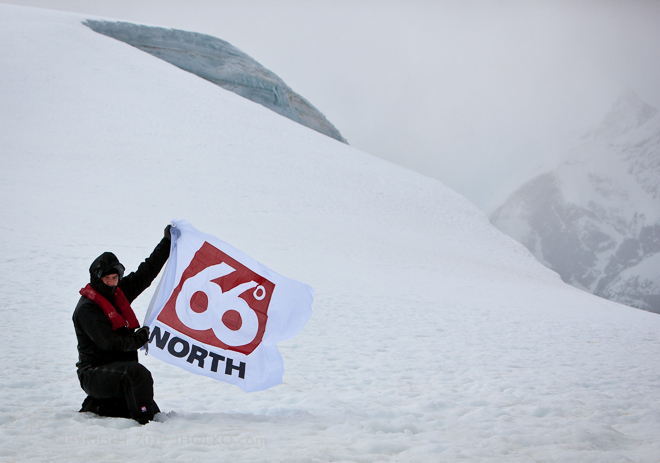
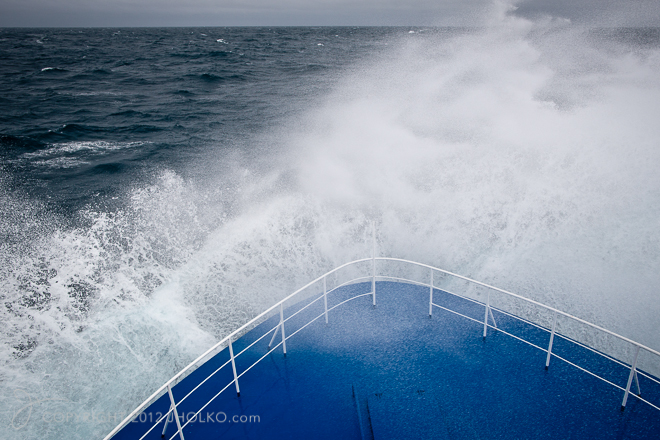
As is usually the case for me I packed too many clothes for this trip. This is something I continually struggle with on all my photographic expeditions. On location I tend to more or less live in the one set of clothes and almost always come home with some unworn items of clothing. I really need to work on minimising my clothing attire. I travelled almost exclusively with 66 North clothing for this expedition and it kept me both warm and dry the entire trip. I was pleased to see several other members of the expedition had taken my pre-trip recommendation and also purchased 66 North clothing – it really is one of the best (ok, the best) range of outdoor clothing on the planet.I already made mention in my initial return post from Antarctica that Quark Expeditions were outstanding in every way and I stand by my prior thoughts and comments. My expectations were continually exceeded by all of the Quark crew (including the legendary secret weapon – Captain Alexey). This praise applies across the board from the ships cleaning staff, to the multiple chefs and culinary staff to the zodiac drivers, biologists, ornithologists, expedition leader and crew. To my mind they could not have provided a better experience. It is worth noting that Quark title their trips as ‘Polar Expeditions’ and not ‘cruises’. Expeditions is an appropriate word as the emphasis on our trip was in getting the photographers to the best possible locations in whatever the prevailing conditions.  Although the level of service was exemplary in every way I would encourage those looking for luxury 5+star cruising to look elsewhere. Alighting a pitching zodiac in Antarctic winds with pounds of camera gear in large swells is not for everyone. Remember its Quark ‘Expeditions’ – Not Quark ‘Cruises’.It is also worth taking a moment to talk about the Drake Passage and seasickness. As I have previously mentioned I have never suffered from any kind of motion sickness but I took preventative medication on this trip in the form of ‘scopolamine’ patches; which are designed to act of the part of the brain that causes nausea. Unfortunately these patches (which last quite a long time – 24 hours+) have some rather dramatic side effects including severe drowsiness, a very dry mouth and a very horrible metallic taste on the pallet. I found they made me so drowsy on the trip over that I felt the urge to quite literally go straight back to bed after breakfast (having already slept ten hours) and sleep another six hours until lunch. No matter how much water I consumed I could not overcome the dry and metallic taste in my mouth so was very glad to rip off the patch when we arrived in Antarctica. For the return trip across the Drake I chose to pop a ‘Kwells’ tablet and keep my ginger levels up by drinking plenty of ginger ale as a precaution. This worked far better for me as I did not suffer side effects from the tablet. On future trips I would avoid scopolamine patches at all costs. I can’t complain however, many of the photographers on this trip were laid completely flat out by sea sickness and unable to even make lunch or the evening meal. I am sure they would have been very glad of just the side effects I suffered.

My flights for this trip were with Qantas and Aerolineas Arengtina. I was fortunate to be travelling at the front of the aeroplane so to speak for the long haul sections of this trip from Melbourne to Buenos Aires and these flights were about as comfortable as fourteen hours in an aeroplane can be – not much more need be said. For my internal South American flights I travelled with Aerolineas; which proved the other end of the comfort scale. Firstly, I was more than annoyed to arrive at the airport in Buenos Aires to find that I had been bumped to a later flight after pre-booking and pre-paying a full eight months in advance. Aerolineas took an opportunity to resell my seat to a higher paying customer because of flight cancellations due to union issues (and sold to the public under the guise of volcanic ash fro the Chile volcano) – most annoying. Aerolineas also really need to do something about the quality of their inflight food. Powdered milk for coffee is not acceptable in my book under any circumstances (even UHT milk would have been better) and the less said about the ham and cheese roll the better. The internal flights from Buenos Aires to Ushuaia and back were also on old MD-88 jets; which are not my favourite passenger jet and always make me a little nervous. I was very glad to touch down both in Ushuaia and Buenos Aires and leave the Byzantine MD-88 behind. I did not have any luggage weight issues on any of my flights and was able to carry on both my 18+ kilogram Kiboko and my 5 kilogram Chobe without issue. I did see a couple of other photographers get nailed for being overweight with carry on luggage on the trip from Ushuaia to Buenos Aires. Aerolineas seem quite happy to randomly select and penalise those they take a dislike too. Personally I have always found a smile and a friendly hello goes a long way with airport check in staff; but your mileage may vary as they say.

If some of the above seem somewhat like nit-picks its because I really did not have any other issues the entire duration of the trip. All of my camera gear and computer equipment operated flawlessly and I never once found myself wishing for anything other than an assistant to hand me another lens or load a new CF card. One of these days I must get a travel assistant!

Antarctica has been a long time dream for me and this expedition was very much the trip of a lifetime. I mean how often does one get to travel with roughly 70 like minded enthusiastic photographers to one of the worlds last pristine wilderness locations on a trip dedicated to nothing but photography! As a photographer who has a passion for ice bergs there really is no location more appealing and it goes without saying that I can hardly wait to return (which I will most definitely be doing in future expeditions). They say you travel to Antarctica a tourist and come back an Ambassador and I think those words ring very true for me.