Whilst I was photographing on a workshop in the Highlands of Iceland recently I experienced what I found at the time to be quite an interesting and challenging statement from a participant. I didn’t quite know how to respond at the time (as it caught me a bit off guard) and it was not until several weeks later (now) that I have fully absorbed, processed and learned from the experience. I want to share my experience and thoughts on maximising the learning experience as I feel they may well benefit anyone travelling on a photography workshop (regardless of the leader or location) in the future.
To put the situation in context, our group had driven into one of the least known (and in my opinion, one of the most photographically rich) areas of the highlands near sunset. The area is rarely visited by tourists and outside of local fisherman is not well known even by Icelanders. It is a difficult to reach location requiring a super jeep and local knowledge. In my opinion, it offers some of the best highland photography to be had anywhere in Iceland and is a regular stop for me anytime I take a group into the Highlands.
We parked our super jeep on the side of the gravel track (not another car or person within kilometres of us), unloaded our gear and walked into the black tephra landscape in search of images. The light was overcast, soft and ethereal. It wasn’t pretty sunset light; but frankly thats generally over rated for landscape imagery.
I walked into the landscape a few hundred metres or so (encouraging all who wished to follow me in the search of good foreground material) and found myself a really nice composition with some foreground rocks leading up to a spectacular peak. I chose to use my 24mm TSE tilt shift lens as I wanted the foreground rocks to be quite large in the frame and I also wanted to maintain my depth of field. I work quite quickly with tilt shift lenses and had my composition and exposure set up in less than a minute. I took the image, reviewed the histogram and shot a second with a slight bump in the highlights. I explained what I was doing at the time to the other participants who had followed me and they subsequently each made similar excellent images (one of which I feel was an improvement on my own). It was at this time that I was approached by another participant who asked me “What are we doing here….? There is nothing here to photograph…” The question was clearly more of a statement and although it was half said in jest it left me somewhat dumbfounded at the time. Being caught off guard I really didn’t know how to respond other than to smile and say “Are you serious? Look around you… There is beautiful foreground everywhere and wonderful mountains in the distance” Said person looked somewhat bemused by my assessment of the situation before they walked off in the direction of the vehicle.
I walked on a little further with other participants in toe and we each made a couple more photographs before we decided to return to the vehicle as I was acutely aware there was now someone waiting to get into the jeep. As is often the case; once a workshop leader returns to the vehicle the signal is given to all that its time to depart and so in short order everyone was back at the jeep and a consensus decision was taken to head for dinner. It was frankly, the wrong decision. In hindsight, I should have insisted we stay at the location we had chosen as it was superb and not twenty minutes after we departed, the area was bathed in dramatic golden light that would have elevated all our images to another level. I could only grimace as I looked out the window toward the location we had just left as the light turned magical.
At the time, I was disappointed that we were missing such a great opportunity (not just for myself, but for those who would have happily stayed), but it was squarely my fault as I allowed an individuals lack of vision to sway a decision that affected the entire group (I have lead a lot of workshops, but I never stop learning from my experiences). And its on this point I wish to press. If you are attending a photography workshop because you want to improve your photography (the best reason to attend) then there is a fair to strong chance you chose your trip based on its leader and not just the destination. One of the best things any participant can do during a trip is to follow their chosen leader, and learn from them. Watch what they do, ask questions (a lot of them). Question them on why they are setting their camera up in a given location and why they chose that lens with the that filter and that particular f-stop. Even shoot similar compositions so that you learn and understand how they approach a scene and how they develop and compose their images. Imitation is after all the greatest form of flattery. The art of seeing takes years to develop and your leader likely has more recent experience than you behind the camera in your current location. If the leader has walked off in a given direction and is making photographs there is more than a good chance that there are strong images to be had at their location. They likely have significant experience in the area and know what to look for. Run, walk or crawl, but find your leader and find what it is they are photographing. Then ask them about the composition and query them on why they chose it. I guarantee you will improve your photography in leaps and bounds if you take this approach.
Turning up (or being taken to) a beautiful location doesn’t guarantee a good photograph (far from it). It simply provides you with a potential opportunity to make a good photograph. Maximising that opportunity means leveraging and using your leader to your advantage. It’s easy to be shy, humble or even a bit intimidated by other photographers around you on a workshop; but don’t let that get in your way. You are there to make the best possible photographs you can, so take a deep breath and lean on your leader and maximise your value. They will have almost certainly visited the location before and will therefore no doubt have a number of useful tips that will help you improve your captures.
Developing your own vision and style beyond ‘carpark photography’ takes a lot of time and a lot of work (did I mention its also very hard!). On a workshop, you have access to a leader you chose because their style appealed to you. Don’t be afraid to ask questions and don’t be afraid to follow their lead. You paid for it; so maximise your opportunity. I will always gladly put my camera down to answer questions and help someone with their composition. I will always put their photograph ahead of my own and will do my utmost to assist them to get the best possible image. After all, participants who go home with a hard drive full of great images are not only going to be very happy, but also very likely to share their experience with other keen photographers. As it so happens, I also get immense satisfaction in helping others make better photographs. I find it inspirational to watch first hand the improvement in participants images throughout a trip.
Always keep in mind, that in landscape photography, the power of observation starts with your feet. Stepping out of the car in a new location and starting to make photographs without exploring is going to severely limit your output. Compose with your feet at all times. Walk and explore the area. Compositions look very different even a few steps apart and quite often a short walk can yield really superb results. I am not advocating you need to walk kilometres at every stop, or hike every hill in sight; far from it. But you should spend some time exploring with your feet (as well as your eyes) as this will not only yield you stronger photographs, but also continue to develop your vision and ability to compose strong, balanced images. By comparison, standing around the carpark or same spot wondering what to photograph is going to severely cripple your output.
It is sometimes painfully obvious to me that participants on a workshop have often not touched a camera for weeks before a trip (work, personal and family commitments simply leave many little time for photography in their daily lives – even if they wish it were otherwise). As such, their vision and ability to see strong compositions and pre-visualise the finished image is often significantly diminished. Not to mention the requirement to focus on being a technician (instead of a creative) as they wrestle with unfamiliar camera controls. I have written before several times on the importance of knowing your cameras controls intimately so that you can free your brain up from being a technician to being creative. The good news is you can continually develop your vision from the comfort of your sofa at home through photography books. Books are one of the best ways I know to expand your creative insight, vision and to continually enhance your photography. I personally try and make an effort to spend at least an hour a week with a photography book; not only for the sheer enjoyment of consuming the images, but so that I can further enhance my own creative vision when I am next in the field.
I want to finish my thoughts on maximising your workshop learning experience with something I often quip about on a workshop, but is actually quite a serious point. As workshop leaders we possess many super powers; but we are not mind readers. We can demonstrate all manner of techniques and approaches to photography but if you don’t ask us questions about what is relevant to you and what you specifically want to know then we cant answer them. The key things to remember then are to ask questions; follow your leaders path, know your camera and always use your feet to compose. You cant make powerful emotive images from the carpark wrestling with an unfamiliar camera. You must get out and explore with a tool you are intimately familiar with. See you out there…
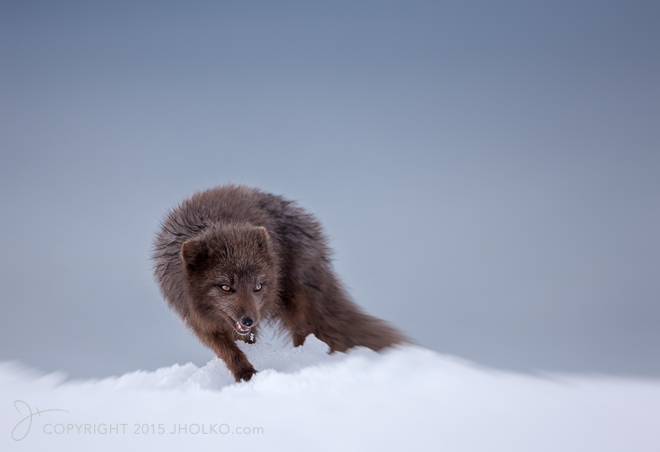
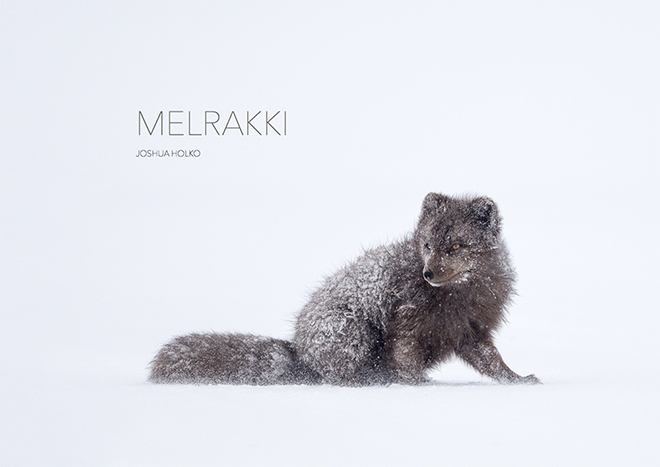
 After our Winter Frozen north workshop I am leading a small group of wildlife photographers up to the extreme northwest of Iceland to photograph Arctic Foxes in a winter setting. We are using a private charter boat to access the remote peninsula and will spend a week living with the Arctic Foxes. Having worked extensively in this area over the last three years on my Arctic Fox project I am really excited about sharing this experience with other passionate photographers. I will have a full trip report on both the Iceland Winter Frozen North workshop and Iceland Arctic Fox expedition on my return.
 After I finish in Iceland I am travelling to Svalbard for a week long snow mobile expedition for a new short film about Nature photography in winter in the Arctic. It has been a couple of years since I was last in Svalbard on snow mobiles in winter and I am really looking forward to getting back out into the back country and wilderness in a winter setting. With just a two person film crew we will be light and mobile and should be able to cover a lot of ground and hopefully have some wonderful wildlife encounters.
 Packing for these sort of expeditions is always a challenge. In terms of subject matter, there will be both extensive wildlife and landscape opportunities during these expeditions and as such I am packing both wide angle and telephoto lenses. With that in mind I settled on the following as my selection for these trips:
 www.WILDNATUREPHOTOTRAVEL.com