Time has really slipped away from me over the last few weeks and I realised this evening that I am already a week late updating my photo of the month for June. This photograph of the Andes Mountain range near Ushuaia in South America was taken from the deck of the Ocean Nova ship as we cruised up the Beagle Channel on our way to the Drake Passage and Antarctica. It is somewhat ironic for me that my favourite photograph of this mountain range should be taken from the deck of a rolling ship with a 300mm lens rather than the chartered helicopter I spent a dedicated hour shooting from with wide angle lenses. It just illustrates how you don’t have to use a wide angle lens from a helicopter to get an evocative shot of a mountain range. The Andes is a spectacular snow capped mountain range with precipitous and towering peaks with countless rugged and jagged ridges that is evocative of a more primordial earth. Being able to see it up close and personal from a helicopter with the door off was really a very special experience. Being able to photograph it from the deck of a ship as it cruised slowly past was equally satisfying. A higher resolution version of this photograph can be seen on my portfolio website at www.jholko.com under South America. This photograph was awarded with a Silver award at the 2012 APPA Australian Professional Photography Awards.
Category: South America
2012 APPA AWARD WRAP-UP
Once a year the annual APPA Australian Professional Photography Awards are held in Australia. This year they were conveniently held in my home state of Victoria. The event is sponsored by Canon Australia and is run by the AIPP Australian Institute of Professional Photography. Widely regarded by many as the toughest photographic competition in the world today APPA remains one of the few world wide competitions where the finished ‘print’ is judged (in the vast majority of categories) by a panel of professional photographers who are each considered experts in their chosen specialities. The five judges score each print out of 100 points under strictly controlled lighting conditions. The judges scores are then averaged to give a final overall score out of 100. Prints of a professional standard that score between 75 and 79 points are not considered of award standard but are considered to be a good example of solid professional practice. Prints between 80 and 84 are considered examples of photographs above professional practice and worthy of recognition and are subsequently classed as a Silver Award. Prints between 85 and 89 are of exceptional standard and are awarded with a Silver with Distinction. Prints judged 90 – 94 and 95 – 100 are Gold and Gold with Distinction awards respectively that are reserved for prints that are considered to be of the highest calibre. Judges are often heard to wax lyrical about a Gold award print needing to be one that is never forgotten. It takes a print of exceptional quality to be awarded with a Silver or Gold award.
Last year (2011) was my first year entering the APPA awards as a full member of the AIPP. Full members of the AIPP are allowed to enter a maximum of four prints across any of the categories and I was thrilled to receive a Gold award with my very first print in the landscape category. My subsequent three prints in ‘landscape’ each scored Silver awards. This year I was equally thrilled to receive two Silver with Distinction awards and two Silver Awards for two photographs from Antarctica and two from Iceland respectively. Each of these prints was printed on my personal favourite paper – Moab Somerset Museum Rag, Higher resolution versions can be seen on my portfolio website at www.jholko.com and limited edition prints are available through Source Photographica in Brighton.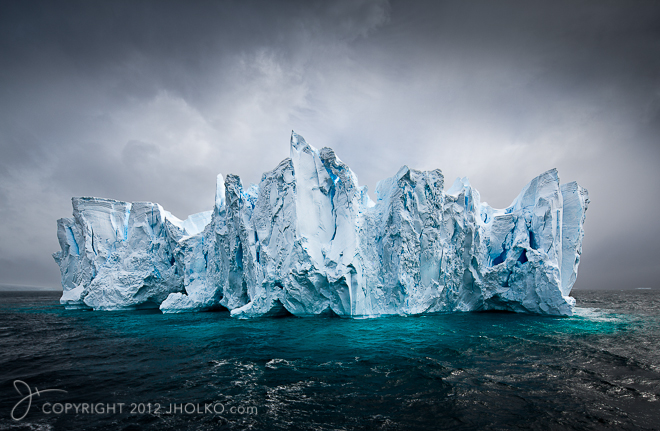 The Fortress – Silver with Distinction APPA 2012
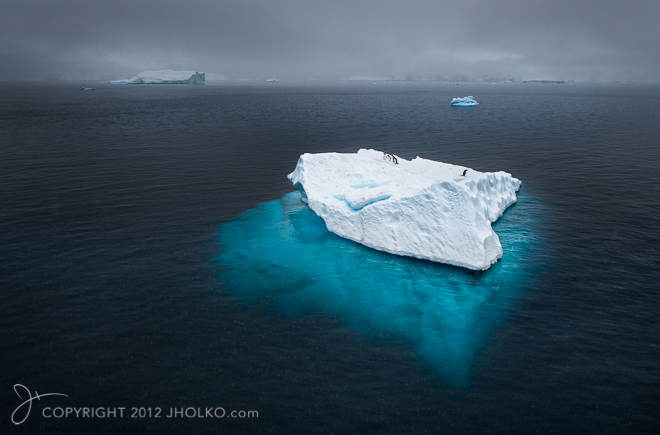 Lone Penguin – Silver with Distinction APPA 2012Black Dawn – Silver APPA 2012
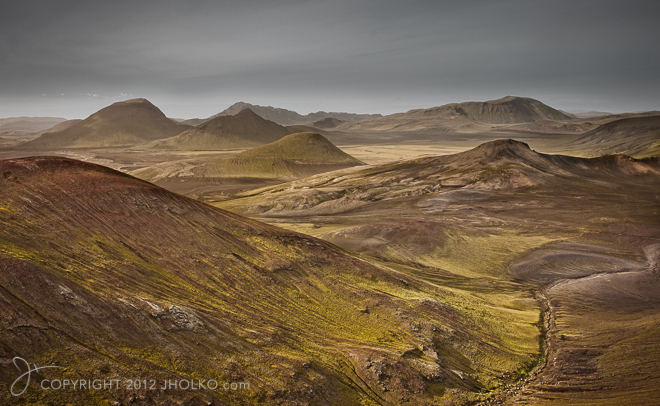 Iceland Pastels – Silver APPA 2012
CAPTURE MAGAZINE TOP EMERGING PHOTOGRAPHERS 2012
I was very pleased to learn yesterday that I was selected as a finalist in the 2012 Capture Magazine Top Emerging Photographers in Australia in the Landscape category. This is Capture’s fourth annual awards showcasing the very best of Australia’s emerging photographic talent as chosen by some of Australia’s preeminent professional photographers. Over 4000 images were received this year for judging and I am very honoured to have had my portfolio of six photographs amongst them and to be selected as one of only three finalists in the Landscape category. Capture Magazine is Australia’s top selling pro-photography magazine and has also previously featured my work in 2011.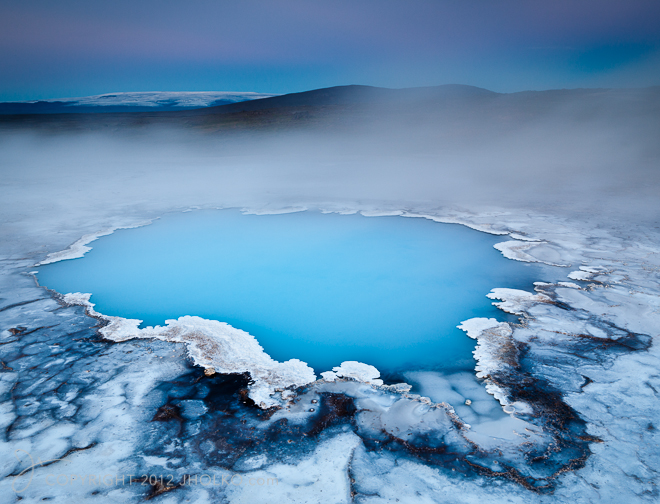
THE IMPORTANCE OF PATIENCE AND CONDITIONING IN WILDERNESS PHOTOGRAPHY
It occurred to me about a week or so ago (when I was forced to drop down into an ‘Everest gear’ to grind out one of the big hills on the mountain bike trail that I ride near my house) just how out of condition I am after my time in Antarctica (over-indulgence in good food during the Christmas New Year period has not helped either). During my time in Antarctica, on board ship, I never really did any exercise; yet I regularly stowed away three square meals a day (large three-course meals at that). Since I didn’t suffer from sea sickness, I was able to keep all those meals down (thankfully). My cardiovascular fitness has really deteriorated and it feels like I am missing a lung as I drag myself up the hills on the bike. After 20 kilometers on the trails, my body feels quite battered and broken. Overall, my time off the bike over the Christmas-New Year period has left me feeling quite unfit and out of condition. Subsequently I have actually managed to crack my bike frame and am undergoing a forced hiatus while I wait for my bike to be rebuilt.
The connection to photography may not be apparent at first. But physical fitness plays a major role in successful wilderness photography. A good level of physical fitness enables you to hike faster, further and arrive at your destination ready to shoot, in better condition. It can be the difference between arriving at the top of the hill and getting the shot before the best light is gone and arriving on location exhausted and disappointed. It can even mean your not making it to the top at all. This is not to say the best shot is always at the end of an uphill hike. However, you will never know if you don’t make it up there to see for yourself. You don’t have to be an elite athlete to be a wilderness photographer, but I find a good level of physical fitness certainly helps.
Whilst I was puffing my way up the hill on my mountain bike, I also got to thinking that mountain biking is like photography in that to get good at it you have to do a lot of it. To stay in peak condition you have to be persistent. I have observed this many times when I am out on my photography excursions. My shots continue to improve as the days roll past and my ‘conditioning’ improves. It takes time to get into the ‘groove’ —the right frame of mind that enables me to recognize the good images from the bad. Antarctica was like that: it took me time to assimilate. After extensive international travel, the few days I had in Buenos Aires and Ushuaia gave me the opportunity to wind down, leave the stress of daily life behind, and start to focus on photography. This time was crucial because I had the chance to relax, which is just as important as being fit for the task. Buenos Aries itself didn’t turn me on photographically. It is a crowded and polluted city, quite unlike my expectations of Antarctica. But, at least, I was in the right frame of mind—relaxed—when we eventually left for Antarctica.
Before I arrive this July for my 2012 workshop in Iceland I am going to be spending a couple of weeks travelling through France and Italy (specifically, driving down from France to Venice) photographing the countryside as a precursor to the workshop. I am hoping to use this time to get my eye in, as it were, and ensure my state of mind is at or near its peak when I arrive in Iceland.
Landscape and Nature photography requires a serious commitment. You must be prepared to spend countless hours outdoors, frequently in inclement weather or harsh environments. It also requires hours of patience to get the best possible light. I have spent many hundreds of hours in the wilderness waiting for the right conditions. Nature and landscape photographers who are truly committed are a rare breed; we have to put up with a lot—fitness, patience, vigilance, and an eye for the main chance. It takes a certain mindset and dedication to stand around in freezing conditions and rain for hours, waiting for the right light when what beckons is a nice dinner and a glass of wine in a warm hotel somewhere. You need commitment and dedication to get the shot. One thing I have learned through experience is that it is always worth sticking it out to the bitter end when waiting for the best light, no matter the prevailing weather conditions. Generally, brief moments of special light don’t fill the bill; you have to see it out to the end. All too often, the light changes in the last few moments and in these instances the light is often at its most spectacular. I recall a very poignant example of this, which I have blogged about before in Iceland in 2010 when I arrived at the top of one of the highest mountains in Landmannalaugar in Iceland, more than three hours before sunset. They skies were dull and grey and we were exposed to the full force of the Arctic winds. My friend Dmitry and I decided to hunker down and wait out the 3+ hours before sunset. I just wanted to hike back to the 4-wheel drive to warm up with a hot cup of coffee and a piece of cake, but the wait proved worthwhile. The shoot provided some of the most spectacular light I have ever experienced anywhere. We had distant rain showers, rainbows and light that can only be described as sensational. Lesson learned – Never Give In. Above all, patience!
THE TIP OF THE ICEBERG – FEATURE MAGAZINE ARTICLE FEBRUARY / MARCH 2012
The current February / March edition of Australian Digital Photography magazine that is just hitting the news stands is tagged as ‘The Landscape Issue’ and has an eight page feature article on my photography (sub-titled ‘Insights into the world of extreme landscape photography’) from Iceland. This was an interesting interview for me as much of the talk was about equipment, technique and the process, rather than discussion of the actual photographs themselves. A high resolution copy of the article can be downloaded HERE.
 www.WILDNATUREPHOTOTRAVEL.com