Tasmania’s 40 ° South magazine – issue 64, features a multi-page spread on the Wilderness Gallery at Cradle Mountain in Tasmania and includes my current exhibition ‘Colors of Iceland‘. A high resolution PDF of the magazine excerpt can be downloaded HERE (download is around 40MB). The Wilderness Gallery is a ‘must see’ for the many visitors who travel to the world famous Cradle Mountain World Heritage park. The gallery is an important part of the Tasmanian Federal Group company; which has a long history of supporting the arts and is the largest wilderness gallery in the Southern Hemisphere.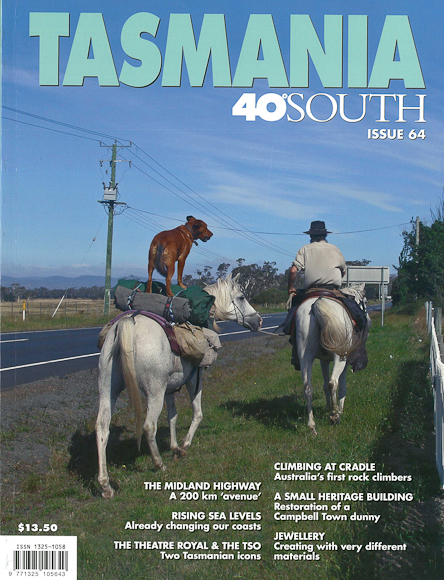
Category: Tasmania
Travel photography in Tasmania
THE IMPORTANCE OF PATIENCE AND CONDITIONING IN WILDERNESS PHOTOGRAPHY
It occurred to me about a week or so ago (when I was forced to drop down into an ‘Everest gear’ to grind out one of the big hills on the mountain bike trail that I ride near my house) just how out of condition I am after my time in Antarctica (over-indulgence in good food during the Christmas New Year period has not helped either). During my time in Antarctica, on board ship, I never really did any exercise; yet I regularly stowed away three square meals a day (large three-course meals at that). Since I didn’t suffer from sea sickness, I was able to keep all those meals down (thankfully). My cardiovascular fitness has really deteriorated and it feels like I am missing a lung as I drag myself up the hills on the bike. After 20 kilometers on the trails, my body feels quite battered and broken. Overall, my time off the bike over the Christmas-New Year period has left me feeling quite unfit and out of condition. Subsequently I have actually managed to crack my bike frame and am undergoing a forced hiatus while I wait for my bike to be rebuilt.
The connection to photography may not be apparent at first. But physical fitness plays a major role in successful wilderness photography. A good level of physical fitness enables you to hike faster, further and arrive at your destination ready to shoot, in better condition. It can be the difference between arriving at the top of the hill and getting the shot before the best light is gone and arriving on location exhausted and disappointed. It can even mean your not making it to the top at all. This is not to say the best shot is always at the end of an uphill hike. However, you will never know if you don’t make it up there to see for yourself. You don’t have to be an elite athlete to be a wilderness photographer, but I find a good level of physical fitness certainly helps.
Whilst I was puffing my way up the hill on my mountain bike, I also got to thinking that mountain biking is like photography in that to get good at it you have to do a lot of it. To stay in peak condition you have to be persistent. I have observed this many times when I am out on my photography excursions. My shots continue to improve as the days roll past and my ‘conditioning’ improves. It takes time to get into the ‘groove’ —the right frame of mind that enables me to recognize the good images from the bad. Antarctica was like that: it took me time to assimilate. After extensive international travel, the few days I had in Buenos Aires and Ushuaia gave me the opportunity to wind down, leave the stress of daily life behind, and start to focus on photography. This time was crucial because I had the chance to relax, which is just as important as being fit for the task. Buenos Aries itself didn’t turn me on photographically. It is a crowded and polluted city, quite unlike my expectations of Antarctica. But, at least, I was in the right frame of mind—relaxed—when we eventually left for Antarctica.
Before I arrive this July for my 2012 workshop in Iceland I am going to be spending a couple of weeks travelling through France and Italy (specifically, driving down from France to Venice) photographing the countryside as a precursor to the workshop. I am hoping to use this time to get my eye in, as it were, and ensure my state of mind is at or near its peak when I arrive in Iceland.
Landscape and Nature photography requires a serious commitment. You must be prepared to spend countless hours outdoors, frequently in inclement weather or harsh environments. It also requires hours of patience to get the best possible light. I have spent many hundreds of hours in the wilderness waiting for the right conditions. Nature and landscape photographers who are truly committed are a rare breed; we have to put up with a lot—fitness, patience, vigilance, and an eye for the main chance. It takes a certain mindset and dedication to stand around in freezing conditions and rain for hours, waiting for the right light when what beckons is a nice dinner and a glass of wine in a warm hotel somewhere. You need commitment and dedication to get the shot. One thing I have learned through experience is that it is always worth sticking it out to the bitter end when waiting for the best light, no matter the prevailing weather conditions. Generally, brief moments of special light don’t fill the bill; you have to see it out to the end. All too often, the light changes in the last few moments and in these instances the light is often at its most spectacular. I recall a very poignant example of this, which I have blogged about before in Iceland in 2010 when I arrived at the top of one of the highest mountains in Landmannalaugar in Iceland, more than three hours before sunset. They skies were dull and grey and we were exposed to the full force of the Arctic winds. My friend Dmitry and I decided to hunker down and wait out the 3+ hours before sunset. I just wanted to hike back to the 4-wheel drive to warm up with a hot cup of coffee and a piece of cake, but the wait proved worthwhile. The shoot provided some of the most spectacular light I have ever experienced anywhere. We had distant rain showers, rainbows and light that can only be described as sensational. Lesson learned – Never Give In. Above all, patience!
SEARCH FOR THE ULTIMATE PHOTOGRAPHY GLOVES – PART ONE ‘THE FIND’
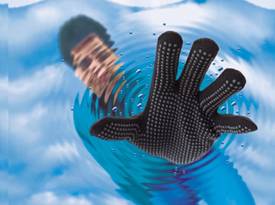 For as long as I have been into landscape, nature and wilderness photography I have been searching for the perfect gloves for outdoor winter photography. The problem has been that I have struggled to find gloves that are waterproof, yet are thin enough to retain enough ‘feel’ to enable me to use my camera equipment unhindered. I have a drawer full of potential candidates that have all ultimately disappointed for one reason or another; usually because the gloves ultimately lack enough tactile feel for camera operation or are not waterproof. Believe me when I say it has been quite a search.
Up until recently I had settled on a thermalite glove liner; which was both warm and thin enough to enable me to use my camera equipment relatively unhindered. The problem is that they are not waterproof and every time I have been shooting with them in the snow I have ended up with wet and subsequently freezing fingers. It also necessitated having multiple pairs (since one pair always ended up wet). Last weekend I was shooting up at Wallace’s Hut at Falls Creek at sunrise in a sleet and snow with the thermalites and yet again ended up with wet and freezing fingers. I told myself at the time I just had to find a better solution before I leave for New Zealand in a few days and before Antarctica later this year. I have no desire to find myself shooting from a zodiac amongst the icebergs in Antarctica with wet and freezing cold fingers.
Later that morning when I was getting a late breakfast / early lunch in Bright I popped into a couple of outdoor stores just to see what they had in the way of gloves. Amongst the usual assortment of skiing gloves (which are just to thick), woollen gloves (which are to slippery and not waterproof) I found a pair of ‘Seal Skinz‘. On first inspection these gloves ticked all the boxes: Waterproof – Yes, Thin for tactile feel, Yes, Grippy and non-slip, Yes. The Seal Skinz are very similar in appearance to the Lowe Pro gloves (I have never really liked the Lowe Pro gloves finding them still too thick and not waterproof), however, they are slightly thinner for better tactile feel and completely waterproof. Only problem was they were just shy of $70 a pair and they did not have my size in stock. Unperterbed I decided to try and order a pair online when I returned to Melbourne; which I did and the gloves arrived late last week just in time for my trip to the South Island of New Zealand. As an aside, I was also able to find them significantly cheaper online. I ordered the standard version of the Seal Skinz glove. Seal Skinz also make a chill blocker version of this glove; which although warmer again with its fleece lining is too thick for photography for me. Time will tell if these gloves prove their worth. The South Island of New Zealand in the dead of winter should certainly be a good test. Last time I was there I experienced -19 Degrees celsius while shooting from Helicopter above the alps with the doors removed (and that was cold!).
As an outdoor photographer whose favourite season is winter I am willing to accept some degree of finger discomfort (cold) to keep good tactile feel with my camera equipment. I can put up with being quite cold as long as I am not also wet. The trick is finding the right balance of warmth and tactile feel and I am hoping these new Seal Skinz finally fit the bill. I will see how they fare in New Zealand as a precursor test to my Antarctica trip and report back.
Cradle Mountain Tasmania – The Ballroom
One of the most accessible and easier walks/treks at Cradle Mountain is the 2 hour stroll around Dove Lake at the base of Cradle Mountain. The walk is relatively flat (only a short uphill section – depending on which way you walk it), well sheltered from the weather for most of its length and takes you through an area known as the Ballroom Forest. This very pretty area consisting of mountain streams, old gnarled moss and lichen covered trees and logs is a great location for forest photography – especially when the weather is inclement; as it was for most of my trip. Overcast skies and mist are ideal for this kind of photography. The dark skies help tame the extreme dynamic range of nature. Bright sunlit days just don’t work photographically under a forest canopy. The extremes of light and dark are to great for the cameras sensor to record; and indeed to great for the human eye. Whilst photography in these conditions is still possible through judicious framing and cropping – and even HDR (although I don’t do HDR) I far prefer a thick cloud cover overhead. Overcast days add an effect I like to refer to as ‘Natures Soft Box’. The extremes of light and dark and gone and the light is softer and more subtle. In overcast conditions the challenge shifts from having to deal with dynamic range to a compositional battle with nature. The photographer is forced to contend with yet another of my favourite photography sayings ‘Nature is inherently Messy’. It takes a good eye, time and patience to make sense of it some times but the results can be very rewarding.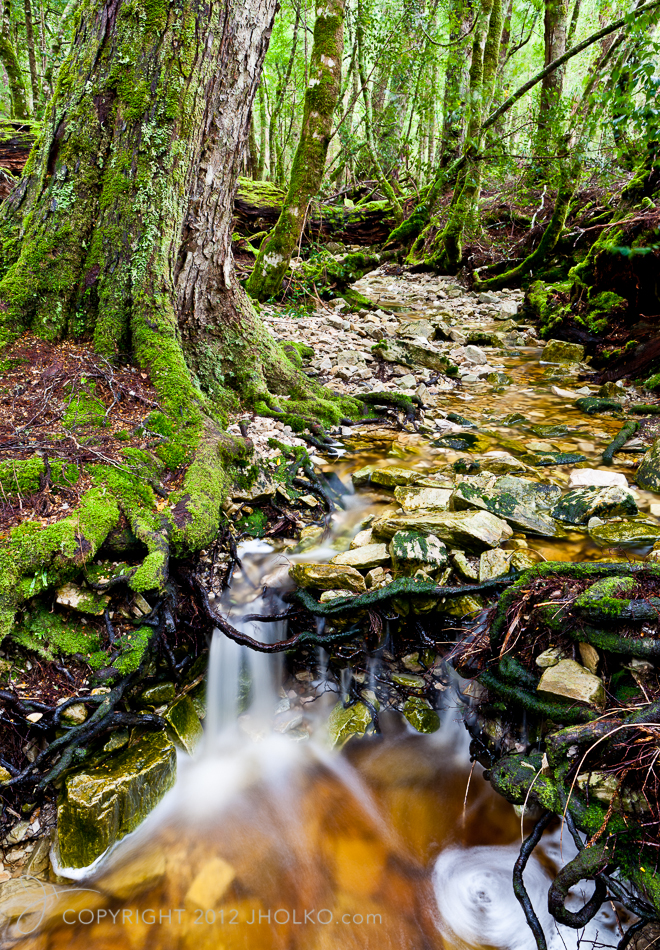
TASMANIA – CRADLE MOUNTAIN WILDERNESS GALLERY EXHIBITION
 In my last blog entry I made mention that whilst I was at Cradle Mountain in Tasmania I had visited the Wilderness Gallery located adjacent to the Cradle Mountain Chateau. In the interests of full disclosure it was a pre-arranged visit not without ulterior motive. I have visited the gallery before (Australia’s largest wilderness gallery; with ten rooms of photography) on several occassions and have always enjoyed spending time perusing other photographers work. This time however, I had planned to meet with the Gallery Manager to discuss a potential exhibition for my own work. I am pleased to subsequently report that I will be having an exhibition of my photography at the Wilderness Gallery beginning 2nd December this year that will run for approximately ten months. The exhibition will consist of approximately twenty 24 x 30 inch Limited Edition fine art pigment on paper prints from Iceland and New Zealand’s South Island. Prints will also be available for purchase online from the Cradle Mountain gift shop. I will post more details toward the end of the year before the exhibition opens in December.
 www.WILDNATUREPHOTOTRAVEL.com