The feedback I have received over the last few months since the release of Ghosts of the Arctic has been nothing short of amazing. Thank you very much to all of you who took the time to write to me with your thoughts on the short film. To date it has been screened or is scheduled to be screened at multiple film festivals across the globe, has been featured on multiple news sites including National Geographic, Daily Mail, Peta-Pixel and many, many more (I was even interviewed by the Today show on Channel 9 about the experience of making the film) and has been seen on both You Tube and Vimeo millions of times.  One of the common and recurring questions I have received since the release of Ghosts was would I do any future films and if so what? Well…The answer is ‘maybe‘. The truth is these short films are extremely time consuming and very expensive to produce. Ghosts of the Arctic was more than two years in the planning and when I look back at all of the work and effort (and cost) that went into the planning and production from all who helped its difficult to quickly make the mental leap into the next project. I do have several future projects in mind, but it is honestly a matter of getting time, man power, love and money to all align in perfect harmony (not an easy thing!). I also want to push more into documenting the radical climate change we are experiencing in the polar regions through both the Arctic Arts Project and Penguin World vehicles in which I am involved. Any future film project will likely be focused in this area and most likely involve the full team involved in each project. At the moment though my focus is on finishing my new hardcover fine-art book on Antarctica, which I hope will be published late in 2018 (more details to come).
Category: Uncategorized
Getting the Best from Ice and Snow with Canon’s Highlight Tone Priority
You never stop learning in the photographic industry and every now and again I learn something that I wish I had known a little earlier. And this is exactly what occurred on my recent Antarctica White Nature expedition (full trip report coming soon). I should have tested this a long time ago, but never did and I think thats because I had mentally written off this setting (Highlight Tone Priority) as just a camera gimmick. If memory serves me correctly I may have even read a test on this feature some years ago on a review site that had more or less written off the feature as being superfluous. The reality is though that Highlight Tone Priority offers some significant advantages for photographers working with ice and snow and that engaging this setting can net you a better file with increased texture and tone in your ice and snow than you might have otherwise have been able to achieve.

Those who have travelled and photographed with me before know I am constantly harping on about the importance of having both texture and tone in ice and snow (I have written on my blog about this before as well as produced a short video on how to process images with ice and snow). Without texture and tone in your ice and snow you have nothing but flat white areas that are devoid of any depth or life. In fact, short of a major technical error there isn’t much else that will ruin a photograph of ice and snow than a lack of definition (texture and tone) in the snow. So the key to a great file with ice and snow is that you have to have both texture and tone. Well, as it turns out Canon cameras with the Highlight Tone Priority setting have an advantage in this regard.
On my recent Antarctica expedition I was going through the menu system of my Canon EOS 1DX MKII cameras looking for an adjustment for auto focus when I came across the Highlight Tone Priority setting. We were heading out to photograph icebergs on a zodiac cruise in just a few minutes so I decided to actually turn it on and test it. The opportunity was perfect with lots of wonderful icebergs in soft overcast light and I wanted to see if engaging the setting actually had any real effect on the visible texture and tone in the ice and snow. As it turned out, I ended up testing this feature extensively over a period of three weeks.
The Highlight Tone Priority setting is located in the jpeg menu area of the Canon EOS 1DX MKII so you would be forgiven for thinking that perhaps this setting only applied to jpegs and not RAW files. However, Highlight Tone Priority does indeed benefit RAW files and in the case of ice and snow by a not insignificant amount.
From the research I have done and from what I understand Highlight Tone Priority works by trying to optimise contrast and detail in the brightest part of the file by altering the sensor response curve. All cameras have a fixed dynamic range, from shadow to highlight, that they can capture so its important to understand that its not possible to simply increase the dynamic range. Instead, Highlight Tone Priority shifts some of the available dynamic range from the mid-tones to the highlights to produce smoother tones, with more detail in bright areas. Canon describe Highlight Tone Priority in the following way in the Canon EOS 1DX MKII user manual:
Highlight details are improved. The dynamic range is expanded from the standard 18% grey to bright highlights. The gradation between the greys and highlights becomes smoother.
The Highlight Tone Priority setting will be indicated by a D+ symbol in the LCD display when it is engaged. According to Canon you should avoid using Highlight Tone Priority in low light or when shooting subjects with heavy shadows because it may cause more noise to appear in those areas (In my own testing to date I have not encountered this).
Incidentally, the reason you cannot set an ISO lower than 200 with the Highlight Tone Priority setting engaged appears to be because the camera is in effect underexposing the photograph by shifting the ISO under the hood (probably to ISO160 or even ISO100). The net result is better preservation of highlight detail when the Highlight Tone Priority setting is engaged. You could argue you could achieve the same effect by under exposing your photograph without turning on the Highlight Tone Priority. However, underexposing the photograph means you are also increasing the noise to signal ratio and thats never a good idea.
In my own experience and as a result of direct testing over a period of more than three weeks in Antarctica with ice and snow in various light and conditions I have found that enabling Highlight Tone Priority increases the perceptible tone and texture (fine detail) in ice and snow and that there is no negative side effect of engaging this setting (provided you expose correctly). In fact, I noticed a difference immediately when looking at the jpeg preview generated on the back of the camera magnified at 100%. Once I got the files onto my laptop and was able to look carefully at them I was convinced of the benefit and once I got the files home and onto my high end graphics workstation I was a complete convert. Enabling this setting does produce a file with increased texture and tone in snow and ice than might otherwise have been achieved.I am not advocating that you engage Highlight Tone Priority on your camera for all subjects and that you simply turn it on and forget about it. But I am advocating that you think seriously about trying it the next time you are photographing ice and snow (wedding photographers might also find this extremely useful for brides dresses). For me, Highlight Tone Priority is now a mandatory setting and I have added it to the ‘My Menu’ area on both my EOS 1DX MKII cameras. I will certainly turn it on whenever I am shooting ice and snow in the future.
MacPhun Pre-Order Luminar Neptune 2018 for Mac and Windows
MacPhun have just announced the new Luminar Neptune 2018 is now available for Pre-order for both Mac and Windows. Those of you who follow my blog or who have travelled and photographed with me in recent times know already that I am a huge fan of this time saving software.
About Luminar: Luminar 2018 offers everything a modern photographer needs for photo editing, including new filters powered by artificial intelligence, major speed improvements, a dedicated RAW develop module and a forthcoming in 2018; a digital asset management platform.
A Digital asset management platform is huge news for those users looking for an alternative to Adobe’s rather bloated Lightroom software and increasingly annoying subscription model.
Users will also benefit from the new intelligent Sun Rays filter, LUT support, and real-time noise removal. With workspaces that match different styles of editing, Luminar adapts to deliver a complete experience that avoids clutter and complexity.
Luminar 2018 has been re-built from the ground up for dramatic performance boosts. Existing filters deliver richer colors and depth in less time. A brand new streamlined user interface speeds up working with presets, filters, and masks. With full support of pro options like layers, masks, and blending modes, complex repairs and photo composites can be easily accomplished.
Luminar 2018 is available now for pre-order on November 1, and released on November 16 2018. Pre-Order HERE.
Svalbard in Winter Expedition March 2018 – A Landscape and Wildlife Paradise
This coming winter (March 2018) I will be leading an expedition to Svalbard in search of spectacular frozen landscapes, Polar Bears, Reindeer, Arctic Fox and more. The Arctic in Winter is a place to inspire the imagination. It is a white landscape bathed in golden light. The main focus of this expedition will be Arctic winter light, landscape and wildlife. In March and April the light conditions in Svalbard are magical. Usually winter trips to Svalbard are limited to day trips on snow mobiles quite close to the town of Longyearbyen. With our expedition ship we will explore a much bigger area including the western and northern areas of Spitzbergen. Expeditions such as this to Svalbard in winter have only really been possible for the last few years. With our ship now fully prepared for an Arctic winter it is possible for us to sail north from Longyearbyen and explore the spectacular coastline of the Svalbard archipelago.
This unique expedition has been designed to provide the very best possible opportunities to experience and photograph Svalbard in winter light. We expect to meet wildlife such as Polar Bears, Walruses, Seals, Arctic Foxes and Reindeer. At this time of year the sea birds will also be returning to their breeding grounds. This exclusive expedition is for a strictly limited number of just 12 participants plus leader and is dedicated to winter photography in Svalbard. Currently there are only a few places left before the expedition will be sold out.
We will be using the ice hardened expedition ship M.S Origo that will enable us to skirt the edge of the pack ice searching for and photographing landscapes and wildlife. M.S Origo is widely regarded as the best ship in the Arctic for Photography. Our expedition ship is also equipped with suf cient zodiacs (2 x Zodiac MKV models) and crew for all photographers to be shooting simultaneously with plenty of room to spare for camera equipment – So bring what you need!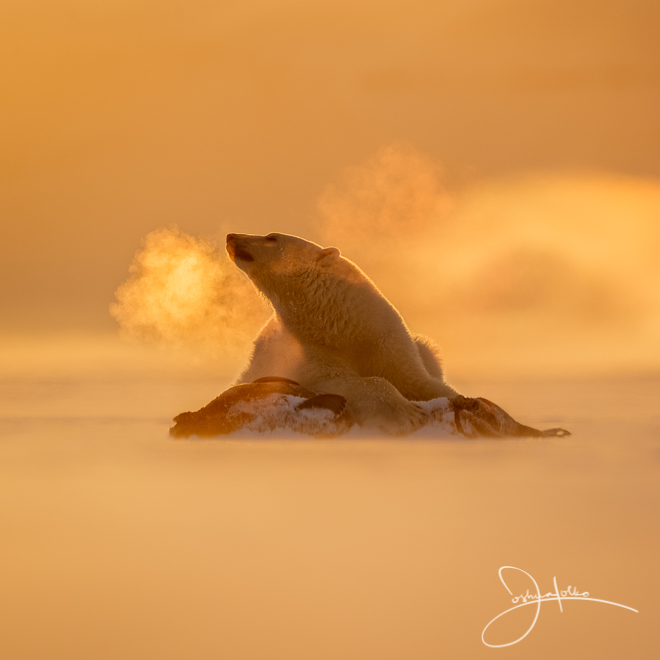 If you are keen to photograph the Arctic in winter you can register you interest in one of the few remaining places by dropping me an email. A detailed PDF with costs and itinerary can be downloaded HERE. Places are filled on a first come, first served basis.
Major Workshop / Expedition Update 2017 / 2018
With August almost behind us (just where is the year going?) I felt it time for an update on workshops and expeditions for the remainder of 2017 and into 2018 (with a sneak peak into 2019).
In a little under two weeks time I will be heading north to Greenland for two back-to-back expeditions to the remote east coast of Greenland. These expeditions into the remote and wild Scoresby Sund fjord system have been in planning for more than two years now and I am really looking forward to setting sail from Constable Point in Greenland to start our photographic expedition. Both of these expeditions have long been sold out, but I will be returning to Greenland in 2019 and will have more details on that expedition later this year. After I finish in Greenland I am heading down to Antarctica for my White Nature expedition. Timed as the first of the season we have planned our expedition to take advantage of dramatic and variable weather as well as giant icebergs and lots of snow and ice. I have been travelling to Antarctica annually for many years now and have found early November to consistently offer the best photographic experience for all aboard. I recently published a full guide on how to choose the right photographic expedition to Antartica and it can be downloaded for free HERE. This expedition is sold out.
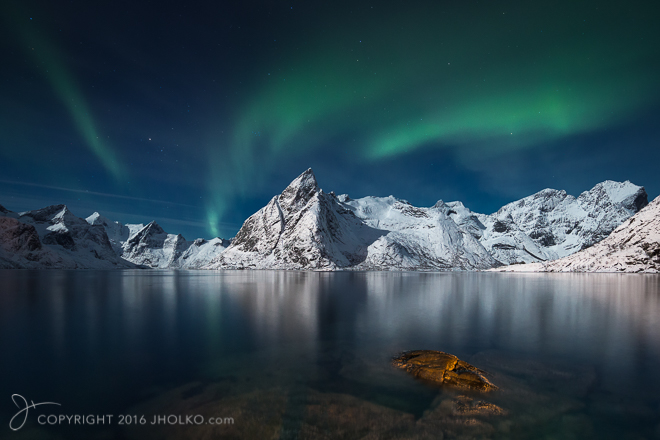
 2018 will kick off with sold out expeditions to Lofoten for Winter landscapes and Iceland for Arctic Fox in winter. My last workshop to Lofoten was in 2016 and I am looking forward to returning to this incredible archipelago. The rising and precipitous mountains that climb directly out of the sea and the rugged coastal landscapes make for a photographers paradise. And of course, the chance of Aurora Borealis (northern lights) only sweetens the pot and adds that magic element to what is one of the most picturesque places I have ever been fortunate to visit and photograph.
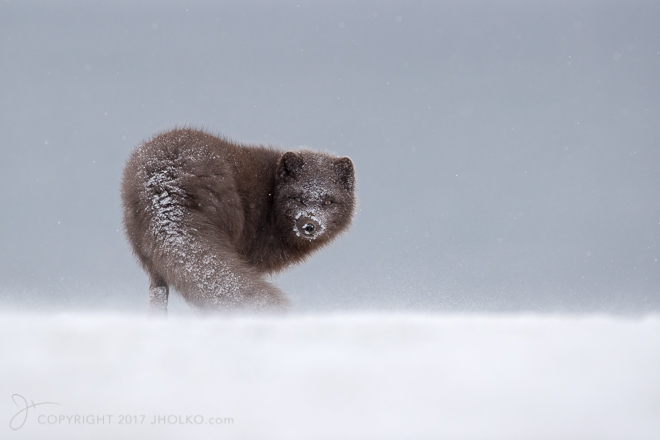
 My annual expedition to photograph Arctic Fox in winter in the remote and wild Hornstrandir reserve in Iceland has also long been sold out (Read the 2017 Expedition Report). I will be returning to Iceland in 2019 for this expedition and am now taking expressions of interest from those interested in photographing this incredible survivor. I will have full details including dates and costs for 2019 soon.
 After Iceland I will travel to Svalbard to lead a winter expedition north of Longyearbyen in search of polar bears and dramatic winter landscapes. Svalbard in winter is an absolutely breathtaking location. With newly formed sea ice, snow and ice covered mountains and chance encounters with the worlds largest land predator in a stunning white environment this expedition rates as one of my absolute all time favourites (Be sure to check out the Expedition Trip Report from March this year). At this stage there are still a few places remaining before the expedition will be sold out. If you are interested in joining us and exploring the winter white wonderland of this Arctic archipelago you can register your interest by dropping me an email. The remaining places are filled strictly on a first come, first served basis. To get an idea of what winter is like in Svalbard be sure to check out the new Ghosts of the Arctic short film by clicking on the image below.
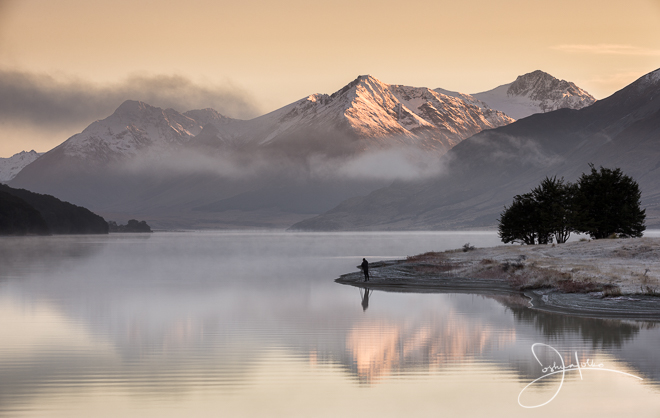
 In late April / Early May I will lead my annual New Zealand South Island Masterclass workshop. This will be the last year I offer the South Island workshop as I plan to switch gears in 2019 with a brand new Van Diemens Land Tasmania Landscape workshop that will also include an optional extension to the Great Ocean Road in Victoria Australia (more details on this to come at a future date). The New Zealand South Island Masterclass has been an eagerly anticipated workshop over the last few years. For the final year my co-leader Phillip and I are including even more helicopter time over the spectacular southern alps with doors off photography to enable us all to capture some truly stunning imagery. Strictly limited to just six participants there are now only a few places remaining before the workshop will be sold out.
  Earlier this year, Daniel Bergmann and I completed a brand new workshop to photograph Atlantic Puffins and other Arctic birds at several different locations in Iceland that included the remote northern Grimsey Island, inside the Arctic circle. (Read the trip Report). The workshop was a great success and as such we have decided to offer a new workshop in May next year that will take us back to Grimsey Island to photograph both the wildlife and incredible landscape of this remote island. As well as Grimsey Island we will also spend time in Myvatn in the north of Iceland – One of the best places in the world to photograph Arctic birds. Grimsey Island in particular is one of the most spectacular locations I have visited in Iceland with towering cliffs that rise hundreds of feet out of the ocean and incredible basalt columns. It is a wild and primordial landscape that is rarely visited and even less rarely photographed. If you are interested in photographing the loveable and comical Atlantic Puffin and other Arctic bird species this workshop is not to be missed. Only two places remaining before the workshop will be sold out.
 In July I will return to Svalbard for my annual summer Polar Bear expedition. This expedition has been designed from the ground up to provide the very best possible opportunities to Photograph Polar Bears in their natural environment. With the reduction in Arctic sea ice the Polar Bears in Svalbard are dwindling in number and the number of years left to photograph them is unfortunately now extremely limited. Late July and August are the ideal times to photograph Polar Bears north of Svalbard due to the dwindling ice around the archipelago. On this expedition we will be carrying a naturalist/biologist who specialises in locating Polar Bears and an expedition leader and captain who have years of experience in placing us in the ideal position to make the best photographs. Their expertise will allow us to approach the king of the Arctic as closely and safely as possible and make incredible photographs under the spectacular midnight sun. To get an idea of what this workshop entails be sure to read the 2016 trip report.
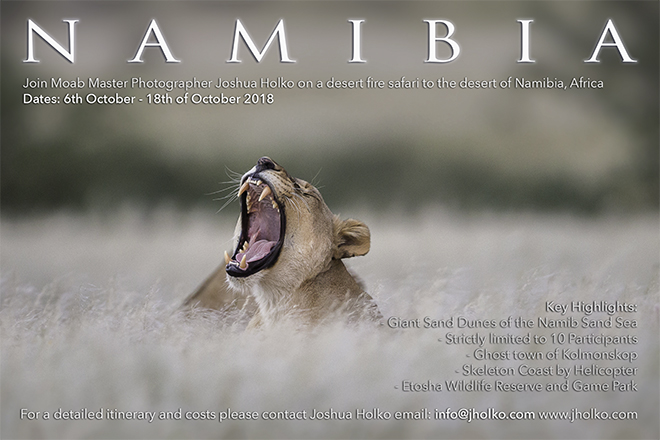
  In October I will return to the gigantic sand dunes of Namibia for a new Desert Fire Safari. This will be my fourth visit to Namibia to photograph the ancient sand dunes of the worlds largest and oldest desert. It is the perfect juxtaposition to my usual polar landscape and wildlife photography and offers an alternate landscape of extremes. Our workshop will sea us visit the giant red sand dunes of Sossusvlei, the eerie ghost town of Kolmonskop as well as the relentless Skeleton coast and the Etosha wildlife reserve. Places are now limited. For more information please send me an email.
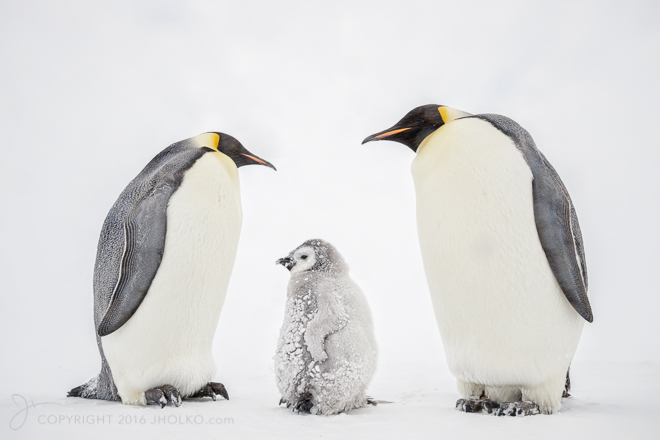
 Finally in November 2018 I will return to the sea ice of Gould Bay in Antarctica for my Emperor Penguin expedition (Read the 2016 Expedition Report). There are plenty of species the world over that are much harder to find than Emperor Penguins. To my knowledge however, none is as difficult or as expensive to reach as the Emperor Penguin; and thats the conundrum of Emperor Penguin photography. We know exactly where they are located, we just cant get to them without great difficulty and significant expense. Living on the sea ice in remote and difficult to reach areas of Antarctica the Emperor Penguin is therefore as difficult to reach as the enigmatic snow leopard is to locate in the wilds of its mountainous territories. This expedition will see us fly to Union Glacier deep in the Interior of Antarctica where we will set up our base camp before we take smaller twin otter aircraft out to the sea ice for our advance camp where we will live with the Emperor Penguins during our time on the sea ice. Strictly limited to just eight photographers there is only one place remaining before the expedition will be sold out (Read the 2016 Expedition Report).
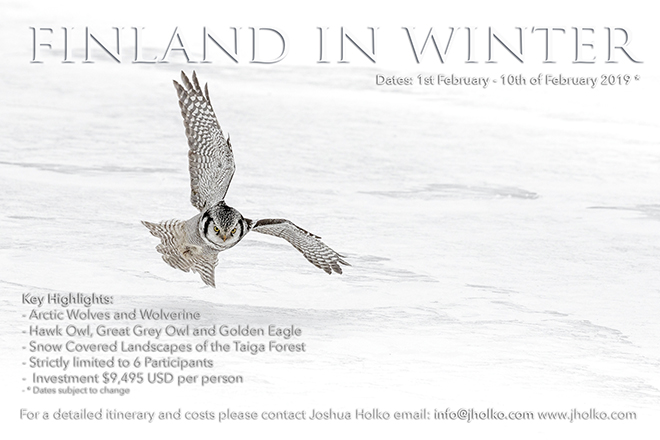
 Peaking into 2019 I will be leading a brand new workshop to the north of Finland in February in search of Golden Eagles, Hawk Owls, Wolves and wolverine (full details coming very soon). The workshop is going to include a significant amount of photography from private hides and will afford opportunities to photograph rare species not often seen and even less often photographed. I am not quite ready to start taking bookings for this new workshop but you are welcome to register your interest by dropping me an email.
A final sneak peak into 2019 includes a new workshop to photograph the landscapes of Van Diemens land (Tasmania) with an optional extension to the Great Ocean road in Victoria Australia. More details to come soon….

