I have just published Episode #42 of my Wild Nature Photography Podcast. This podcast episode includes a complete wrap-up from my Ellesmere Island expedition this March in Winter to search for the White Arctic Wolf, Arctic Hare, Ptarmigan, Musk Ox, and Arctic Fox.
The photograph of the month for April 2022 comes from my recent expedition to Ellesmere Island in Winter (trip report coming next few days – along with a wrap-up podcast) and is of a Rock Ptarmigan in full winter plumage. What makes this photograph so special for me isn’t just that it was -45º Degrees Celsius when I made the photograph and couldn’t feel my fingers as I lay in the snow and ice, but that there is such a wonderful delicacy to the small flowers that balance the image on the right-hand side of the frame. The combination of the bird’s gesture, delicate flora, and soft transition of light from top to bottom all work together in harmony.
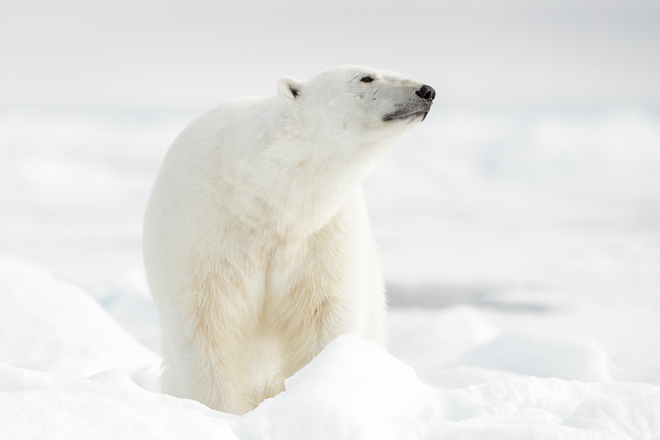
It is often difficult to frame wildlife in the field using local flora, when the intent is to try and insinuate how docile or aggressive an animal is renowned for being. I rarely see this approach successfully pulled off in wildlife photography but when it succeeds it can produce truly stunning imagery. When framing this photograph, I made a very deliberate creative decision to place the Ptarmigan quite far to the left of the frame and let it walk into the image. This approach allowed me to choose my final composition (which included the flowers) and simply wait for the Ptarmigan to come into position. In the final image the Ptarmigan is not only balanced by the small flowers, but they impart a delicacy that works in harmony with the bird. Despite the fact that the Rock Ptarmigan is not a very impressive species in comparison to something as dramatic as a Polar Bear, this photograph remains one my personal favorites from the Ellesmere expedition.
After two years of pandemic delays, I am really excited to be departing on our ship tomorrow on my Svalbard winter expedition. This expedition was the first affected by the COVID outbreak and thus has been the most delayed. It was originally intended to run in April of 2020 and was subsequently delayed until 2021 and then 2022. To finally be getting underway is really wonderful. We are looking forward to frozen sea ice, snow-covered landscapes and with a little luck some wonderful photographic encounters with Polar Bear and other Arctic wildlife.
Since my return from Ellesmere Island a little over a week ago (I came straight from the Canadian Arctic to Svalbard) I have been guiding a private snow-mobile trip up here in Svalbard. I had planned to put together a podcast wrap-up from Ellesmere, but time has gotten away from me with long days on snow-mobile travel in the field and this will likely now have to wait until I get back to Australia.
Please note that I will be offline until we return to the small northerly town of Longyearbyen on the 16th of April. Bring on the Polar Bears!
I have just published Episode #41 of my Wild Nature Photography Podcast. This podcast episode includes an in-the-field update from my Ellesmere Island expedition to search for the White Arctic Wolf, Arctic Hare, Ptarmigan, Musk Ox, and Arctic Fox. This episode was recorded several days ago from a remote cabin near Vendom fiord that was our home for most of the expedition.
Yesterday our expedition group arrived in the small Inuit town of Iqaluit in the far north of Canada; a journey of approximately three and a half hours flight time from Ottawa. Our plan was to continue our flights north early today to Arctic Bay, Resolute, and then finally Grise Fiord, the jumping-off point for our expedition. However, as is typical of Arctic expeditions in winter, the weather has thrown a spanner in the works and we are currently delayed in Iqaluit while we wait for the weather to improve. We are re-scheduled for tomorrow and weather permitting will continue our travels north tomorrow. Temperatures here are currently hovering around -32º Celsius. With three flights still to go, we are expecting the mercury to drop even lower as we continue north…