I have just published episode 100 of my Wild Nature Photography Podcast. In this episode, I discuss and give my further thoughts on the soon-to-be-announced Canon EOS R1 flagship camera and wrap up both of my Africa workshops with thoughts on the photography experience. I also have a short rant about the current state of YouTube inspired by a comment tweeted by my friend Craig: ‘You Tube is a Cancer’. And, of course, this is episode 100 of the podcast, so I take a moment to reflect back on the previous 99 episodes and discuss the future of the podcast.
In May 2024, I led an exclusive wildlife, landscape, and aerial masterclass in Namibia. This meticulously designed workshop provided a unique opportunity to capture the incredible beauty of this remarkable country. We explored the iconic Dune landscapes of Sossusvlei from both land and air and ventured into multiple private wildlife game reserves, offering unparalleled opportunities for wildlife photography.
A little about Namibia: On the South Western Coast of Africa, where the icy Atlantic Ocean meets the world’s oldest desert lies a place known for its incredible landscapes and abundant wildlife. The unique combination of desert, grassland and cold ocean currents form a one-of-a-kind terrain found only here. For this reason, landscape and wildlife photographers from all over the world journey to the Namibia Desert to try to capture its ethereal beauty and fantastic wildlife.
The first half of our workshop was dedicated to visiting a variety of private game reserves. This allowed us to photograph wildlife at eye level in a private and secluded setting. We could get out of the vehicles in several locations and even walk with a small family of White Rhinocerous. We deliberately avoided large public game areas and reserves like Etosha (which does not allow access before sunrise and stipulates that you must be out of the park before sunset) to ensure the best possible photography conditions. Our professional guidance ensured that we were always in the right place at the right time for the best shots.
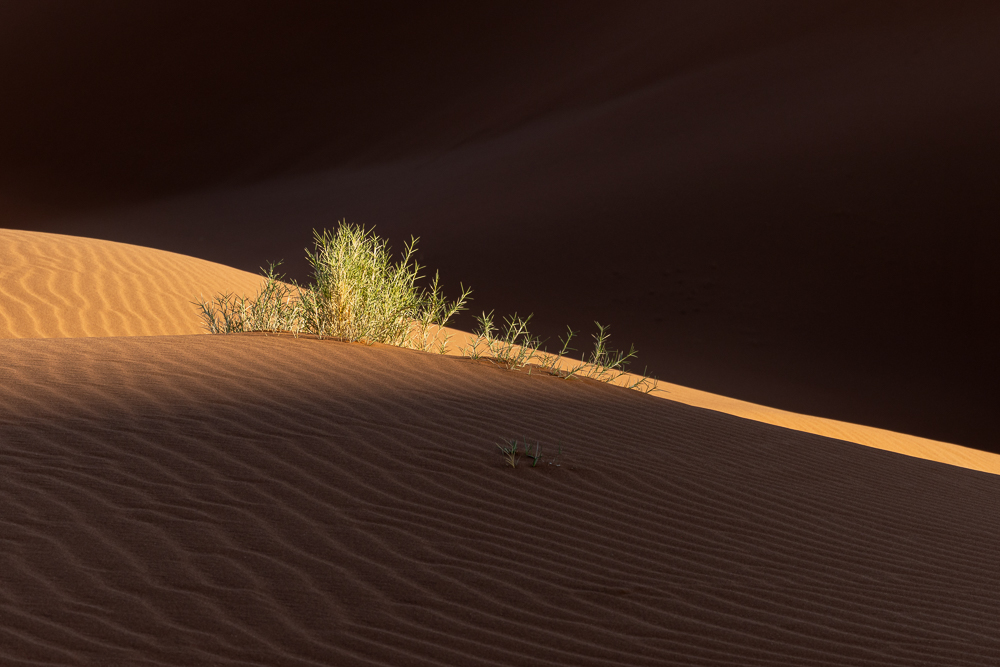
The second part of the workshop was landscape-focused and included a visit to the world’s oldest dunes – the Namib Dune Sea. We had intended to use private chartered helicopters for doors-off aerial photography over the dunes, but last-minute mechanical issues prevented any aerial work (the desert is not kind to machinery). Instead, we made the most of the time available and hiked into the dunes for breathtaking landscape opportunities. Of course, Deadvlei is a must-visit for anyone on their first visit to this region, but there is so much else on offer in Namibia. I have been fortunate to travel and photograph in Namibia more than half a dozen times. After much scouting, I have located some incredible locations in the dunes that others do not visit. We maximised our time in these locations at the best time of the day to provide unparalleled opportunities and photographs. These are opportunities simply unknown to the vast majority that visit Namibia.
Our workshop began in Windhoek, Namibia’s capital. We visited several private game reserves over the first week, where we photographed leopards, Cheetahs, Elephants, Lions and White and Black Rhinos. The nature reserves were carefully chosen and boasted over thirty different animal species consisting of plains game, including kudu, giraffe, eland, oryx, hartebeest, zebra, impala and many more that roam freely, as well as predators such as lion, cheetah and leopard, being familiar residents of the area. We also utilised a private hide for eye-level photography of the wildlife. In addition, there were more than 300 different bird species in the area to photograph.
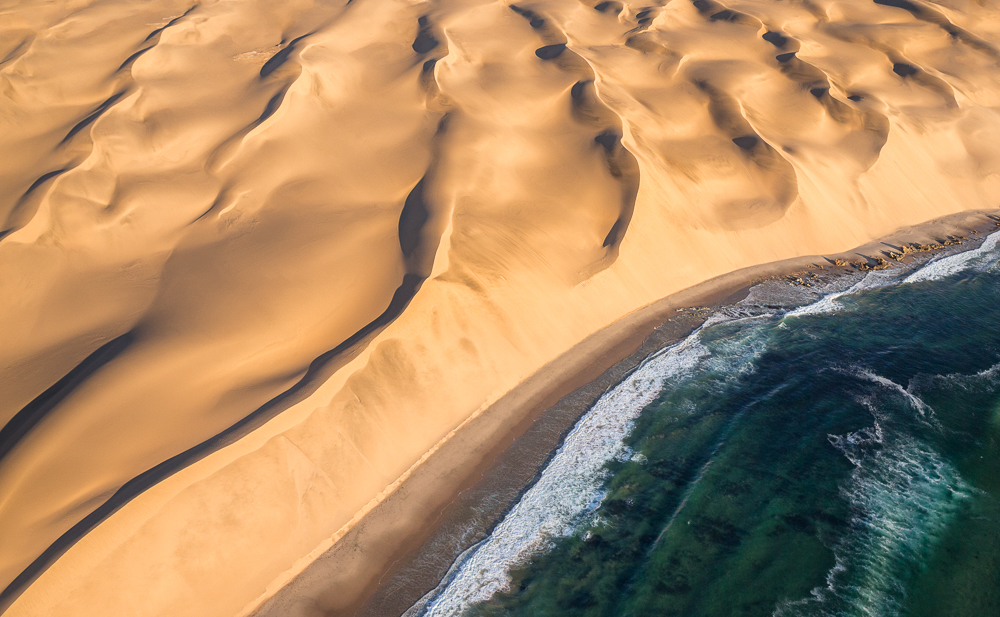
After spending time in the private game reserves, we travelled to Swakopmund, where we boarded our private charter aircraft for the spectacular flight to Sossusvlei. This flight took us over the incredibly expansive Namib dune sea and provided an opportunity for some aerial imagery of this vast primordial landscape. This flight allowed us a bird’ s-eye view over the salt pans, Sandwich Harbour, shipwrecks, abandoned mining camps, and dune sea before landing at the Sossusvlei Lodge airfield.
Namibia
While in the Sossusvlei area, we explored the iconic DeadVlei and the limitless opportunities offered by the desert’s shifting sands. As we were already inside the park in our carefully chosen accommodation, we had the advantage of heading into the park an hour before sunrise and exiting an hour after sunset. This allowed us to see the sunrise and capture the dunes while the light was soft and shadows accentuated their towering shapes and curves. This area boasts some of the highest free-standing sand dunes in the world.
While in this area we hiked up into the dunes in the late afternoon to be in the best locations, when the light was at its very best for photography. These locations are off the beaten track and unvisited by tourists but provide some of the best dune photography to be found anywhere in the Namib desert. On our last day we had a wonderful encounter in a nearby canyon with a troop of Baboons that provided some incredible opportunities for back-lit wildlife.
At the end of our time in Sossusvlei we transferred back to Windhoek where we wrapped up and concluded our workshop with a farewell dinner before onward travel.
I will return to Namibia again in late May 2026 to lead another workshop in this incredible country. The workshop will focus on three carefully chosen and curated locations, including the Namib dune sea surrounding Sossusvlei. The workshop will also include air transfers between locations inside Namibia to minimise arduous drive times typical of most travel to this large country. We are still finalising the details, but we hope to open the trip for bookings very soon. You can pre-register your interest by dropping us an email.
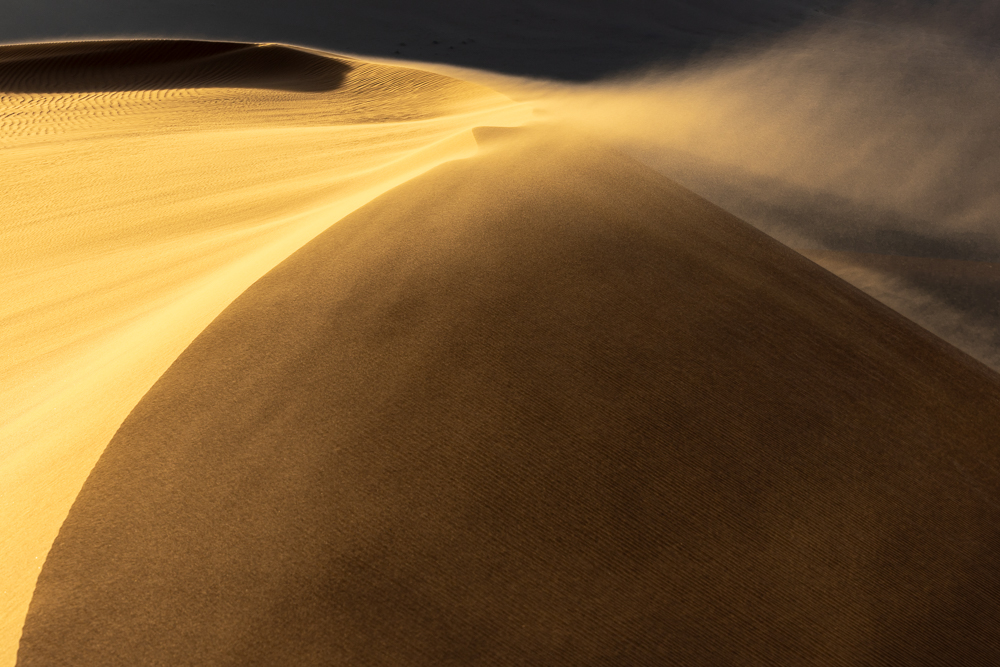
The photograph of the month for June 2024 comes from my recent Namibia Masterclass workshop (Trip Report coming very soon) and is of the Namib dune sea at sunset. This particular part of the Namib desert is one of my favourite locations. This an area I have been returning to on each visit, and it always offers a fantastic play of light, shadow and sand. Interestingly, I have never seen anyone else in this area – even though it is relatively easily accessed and is only a short walk off the main tourist road into Deadvlei. The photograph plays on shadow and light and uses geometric form as its subject. The interplay of shadow and light and the drama of the flying sand is what makes this such a strong photograph for me. I will return to Namibia again in 2026 – full details will be posted soon.
I have just published episode 99 of my Wild Nature Photography Podcast. In this episode, I discuss the consumption of Nature vs, appreciation of Nature after a recent, somewhat sour ‘tourist’ experience during a tour in the Cango caves in South Africa. Apologies in advance, but I somehow managed to screw up the numbering of these podcasts and refer to this episode as number 89 during the recording when it is, in fact, episode 99. That was most probably jet lag.
Earlier this year I was fortunate to be highly honoured in the Polar Passion in Nature’s Best Photography awards, and yesterday I received the exciting news that I have also made the semi-finals in the international Nature’s Best Photography Awards. I have now had my photography make the semi-finals over ten times (including multiple highly honoured images) and am thrilled to have had my photograph selected again. I can’t share which photograph has been selected at this point in the judging, but will post the image up as soon as the final judging is complete. Hint, it was something from the Northern Hemisphere (not a Wolf, Fox or Polar Bear)…






 www.WILDNATUREPHOTOTRAVEL.com