Departing for Ellesmere Island in Search of the White Wolf

The seven days I have had at home (on return from Finland) to catch up have quickly come and gone and in a few moments (as soon as I finish this post) I am going to make my way to the airport for the long-haul international flights to Canada. And, of course, yet another round of COVID testing and international travel declarations. Canada is not the easiest country to negotiate with its confusing and somewhat convoluted entry requirements. Everything from a compulsory dedicated ‘Canada Entry’ App for smartphones to the possibility of random testing (which must be pre-booked) on arrival makes for an entry process that seems on the surface far more complicated than it needs to be. It is definitely a first-world problem, but international travel was certainly significantly easier to facilitate pre-pandemic – enough said.

My flight schedule to Ellesmere will be the longest on record for me, eclipsing even the many flights to the remote Emperor Penguin colony out on the sea ice at Gould Bay, in Antarctica. The schedule for Ellesmere: Melbourne to Sydney, Syndey to Vancouver, Vancouver to Ottawa. From Ottawa, life gets more complicated with ever-smaller planes from Ottawa to Iqaluit, Iqaluit to Arctic Bay, Arctic Bay to Resolute, and then finally a small twin-otter from Resolute to Grise fiord and Ellesmere Island. That’s seven flights just to reach the starting point for our expedition to find and photograph the elusive white Arctic wolf.

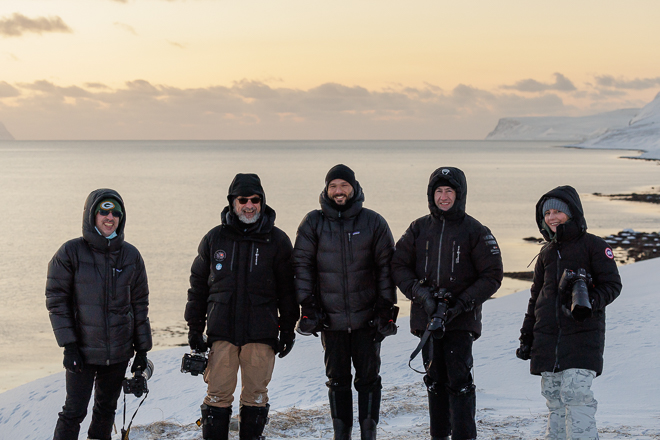
From Grise Fiord we will take snowmobiles and sleds north toward the remote weather station, Eureka, in search of the White Wolf, Arctic Hare, Polar Bear, Arctic Fox, Musk Ox, and Snowy Owl. How far we get, and where we establish our basecamp will depend greatly on what we find and the prevailing weather conditions. This is very much an expedition, and weather and conditions will dictate the ultimate progress and success of the trip.

There will be no updates from Ellesmere Island whilst I am away as once we leave Grise Fiord on our snow mobiles we will have no internet or communications outside of the emergency satellite phones we are taking with us.

Once we finish in Ellesmere Island I will return to Vancouver (via the same return flights) for onward travel to Oslo, Norway via London and finally Svalbard for my Svalbard Return of the Light Expedition. This expedition was originally scheduled to run in 2020, but was delayed until 2021 and then until 2022 because of the ongoing pandemic. Now, with restrictions sufficiently eased, we can finally go ahead with the expedition. I always look forward to Svalbard at this time of year; the light and conditions are truly inspiring. Before we board our boat and head north from the small town of Longyearbyen, I will guide a four-day private snowmobile expedition out to the frozen sea ice of Monbukta in search of both wildlife and landscape opportunities.

From Svalbard, I will return to Australia for a month’s rest before heading to Africa for my Zululand, South Africa workshop. Given the luggage for these extreme winter expeditions, I am very much looking forward to lightweight packing for the heat of Africa! There are a couple of places available on this trip so if you are keen to photograph African wildlife from a ground-level hide please drop me an email to register your interest. As usual, first in best dressed.

In total, this trip away including Ellesmere Island and Svalbard will include nineteen separate flights across a six-and-a-half-week period. With the Iceland and Finland winter trips already complete (eleven flights), this will see my current flight count for 2022 rising to thirty by the end of the first quarter of 2022. Living in Melbourne, Australia comes with a lot of benefits, but short flights and nearby destinations are not amongst them. We are indeed a very long way from the rest of the world!

Of course, I hope to squeeze in a couple of podcasts between Ellesmere Island and Svalbard and will do my best to post blog updates when possible.

See you in Ellesmere Island in a few days!

Finland Winter Wildlife Report February 2022

In mid-February of 2022, I ran a winter wildlife workshop in the northern region of Finland. This is the second workshop I have led into Finland in winter that has been dedicated to wildlife. In my experience, Finland is one of the most underrated destinations for wildlife photography and offers everything from Wolves, Wolverine, Pine Martin, Eagles, Owls, and a plethora of wonderful small Arctic birds. Winter can throw up its challenges including freezing cold weather, but for the photographer willing to get out of their comfort zone, the rewards can be really fantastic. Winter paints a stunning white canvas in Finland in February. The Taiga forest is frozen and frequently draped in snow and the opportunities for minimalist emotive photography abound.

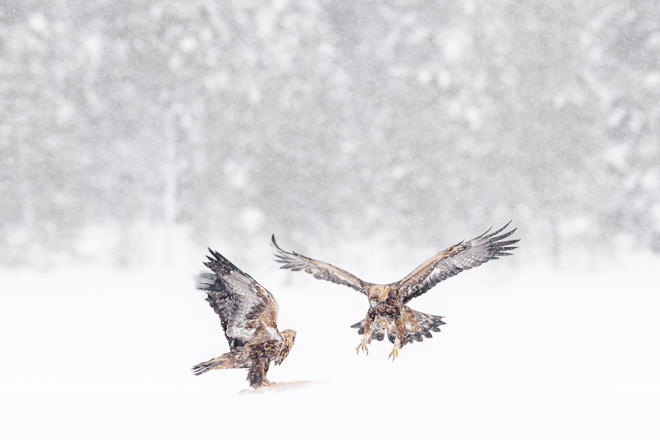
The first part of the workshop was focused on Wolves and Wolverines and saw us based close to the small town of Kuhmo near the Russian border where there are a number of photographic hides positioned in the demilitarised no man’s land region. These are the very same hides I use on my Autumn workshops to Finland (Read last year’s Trip Report) and are exceptionally well-positioned for photographers looking to capture wildlife photographs of these elusive species. Conditions for this period of time were exceptional with a fantastic covering of snow and soft overcast conditions. On several of the days, we had heavy snow and dramatic spindrift. At this time of year, there is sufficient daylight to shoot from roughly 8am until 5pm. Typically we were in the hides by 7am and departed not earlier than 5pm; giving us the maximum amount of time for photography and encounters. Although we were skunked on wolves this year (there were a lot of prints in the area), we did have a fantastic encounter with a young Wolverine that provided some exceptional photographic opportunities in the heavy snow. Both Golden and White Tailed eagles also visited on frequent occasions.

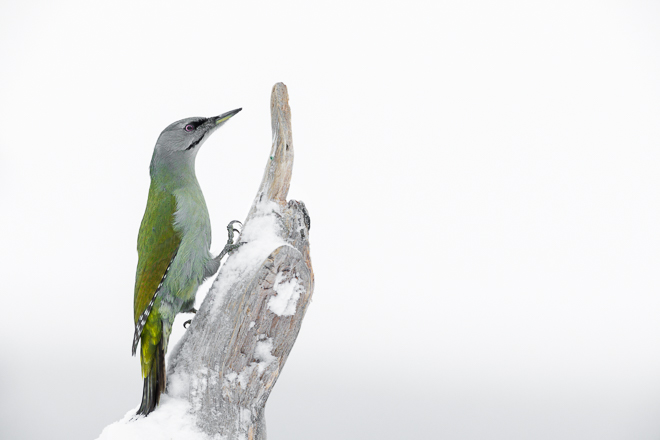
From our private cabins near Kuhmo we traveled roughly four and a half hours to the municipality of Kuusamo where we spent our time in the nearby Oulanka National Park photographing Golden Eagle, Green and Black Spotted Woodpeckers and many of the smaller birds including Siberian jays, Siberian tits, Greater tits, and Crested tits. Conditions were similar to our time near Kuhmo with excellent snow cover and photographic conditions were superb. We had fabulous encounters with a pair of Golden Eagles on both days in the hide.

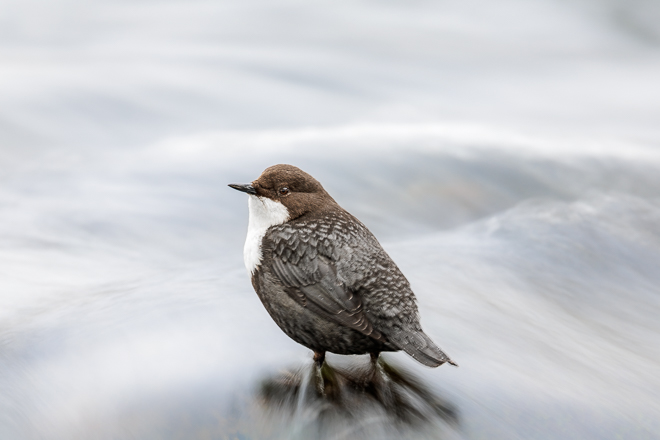
On our last day, we took the opportunity to photograph Dippers nearby to our accommodation before we wrapped up our winter workshop with onward flights home. This particular image of a dipper was captured at just 1/5th of a second in order to blur the water around the small bird.

This was the second outing where I have had a chance to use the new Canon EOS R3 in winter. Like my experience in the prior Iceland expedition (Read the Trip Report), the R3 proved a stellar performer with outstanding battery life and truly incredible autofocus.  As I noted in my Arctic Fox expedition report, the addition of black-out free shooting is a godsend for wildlife photographers and the R3 has now most defiantly found a permanent home as my number one camera of choice. Quite honestly, if you had suggested to me twelve months ago that a mirrorless camera would supplant my EOS 1DX MK3 cameras I would have probably laughed. Nevertheless, there is no question in my own mind at this point that the benefits of the mirrorless R3 outweigh the few cons in comparison to professional DSLR cameras.

Participants shot both Sony and Canon (no Nikon this time). Cameras included the Sony A1, Sony A7RIV, Canon EOS R5, and Canon EOS R3. We typically photographed with telephoto lenses ranging from 400mm and the way to 600mm.

Due to my limited time in the studio in Australia (before I leave for Ellesmere Island in just three days) I have only had time to edit and process a few images from this workshop but will update this post later this year once I have had more time to go through the photographs from this trip.

Iceland Winter Arctic Fox Expedition Report February 2022

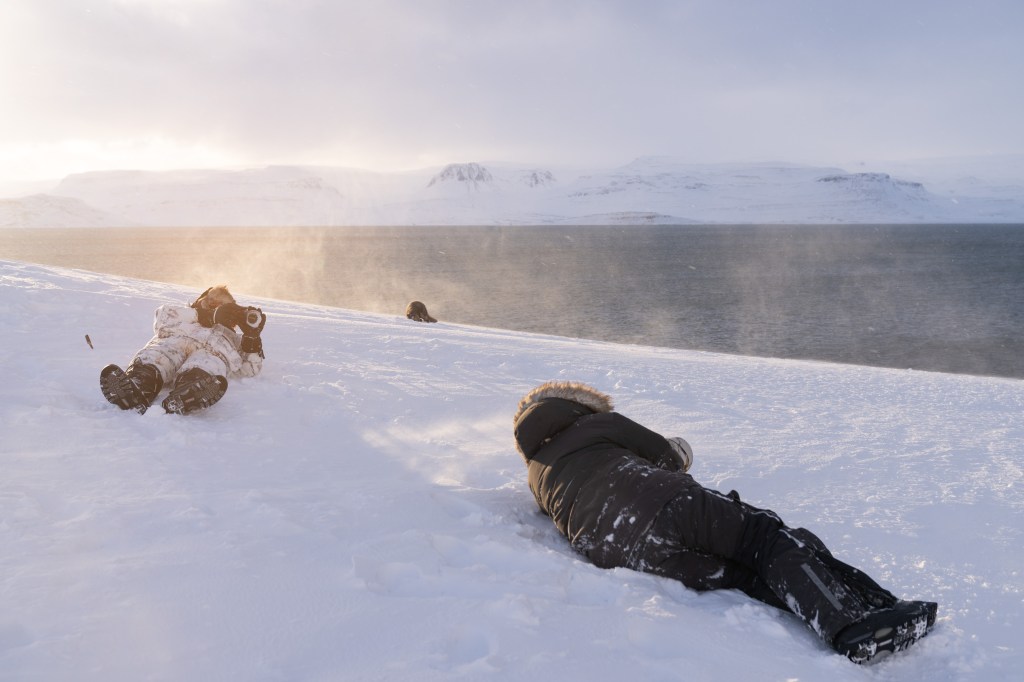
In early February of 2022, I ran and completed my winter expedition for Arctic fox in the far north of Iceland. This has been an annual wildlife workshop that I have been running for many sequential years now. Due to the COVID pandemic, however, I had not been able to return since early 2020 and missed 2021. It did feel absolutely wonderful to again return to this remote and rarely visited area of Iceland. The Hornstrandir Nature reserve is a very special place in winter that lives very deep in my heart.

The starting location for this workshop was the small town of Isafjord in the West-fjords of Iceland (around 45 minutes flight from the capital city of Reykjavik). As is common in Iceland in winter my flight north from Reykjavik to Isafjord was delayed a day by strong winds. The weather in Iceland in winter can be fickle and brutally strong winds are not uncommon. I always allow an extra day or two for delays and the following day our group was able to fly to Isafjord in better conditions and depart on our charter boat for the Hornstrandir Nature reserve. 

The boat ride from Isafjord to Hornstrandir takes around an hour and gave us a chance for a last-minute briefing on what to expect on arrival at our small and remote cabin. During our time in the cabin, we had a pre-arranged house sitter to prepare our meals and keep the cabin warm and cozy. On our arrival, the foxes were there to greet us and we barely had time to unpack and settle in before the curious foxes were providing us with some wonderful photographic opportunities.

The weather conditions were close to perfect for our time in the Nature reserve with consistently low temperatures that fluctuated between -6º and -10º Celsius plus wind chill (around -20º C with wind chill). Iceland is typically a freeze/thaw climate and this sort of temperature consistency is quite uncommon in my experience. We had many days of blowing snow and blizzards that made for absolutely superb photography and we typically spent from sunrise to sunset in the field with a short break of an hour or so for lunch. One of the wonderful things about operating from a small remote cabin such as this is its very convenient to take a short break and warm up with a hot drink if you get a little cold, or want to take a break. The photography was so ‘hot’ this year that no one took even a short break during our time in the field. 

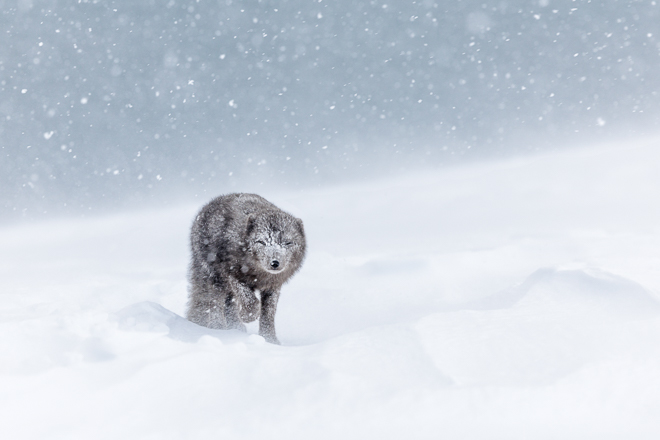
Although many photographers seek out the White morph of the Arctic Fox, it is actually the Blue morph that frequently provides better photographic opportunities in my experience. The wonderful contrast of the snow on the chocolate brown fur really helps give a sense of the environment in which these animals live and survive. Typically, the blue morph is the rarer of the two morphs, however, it is the most commonly found in Iceland. The white morph is more typical across the rest of the Arctic range.

During our expedition for encountered four separate blue morph foxes around our cabin; two of which would regularly come to within just a few feet of us! We photographed every single day of the expedition; including our arrival and departure days. The total shot count per person ranged between fourteen and thirty-thousand images over the course of the expedition which goes a long way toward illustrating how amazing the conditions were and how incredible our photographic opportunities were.

Just one of the comments received post-expedition: “I got home safety yesterday late in the evening but my soul is still in Hornstrandir… It was a great time in nature with a group of fantastic people. Thank you Josh for everything! I have not only amazing images but I have learned lots of new things. “

This was also the first outing where I have had a chance to use the new Canon EOS R3 in winter. The R3 proved a stellar performer with outstanding battery life and truly incredible autofocus.  I was able to get in excess of five thousand images out of a single battery charge in temperatures as low as -20º C with wind chill! The addition of black-out free shooting, in combination with animal eye autofocus is game-changing and I will have more to say about the performance of the new Canon EOS R3 in a future podcast.

Participants shot both Sony and Nikon so all three marques were well represented during the expedition (with myself shooting Canon). Cameras included the Sony A1, Sony A7RIV, Nikon D6, Nikon D750, and D850, and Nikon Z9. We photographed with lenses ranging from 11-24mm all the way to 400mm. There were no camera failures or issues despite the freezing cold and driving snow. The current generation of mirrorless cameras does seem much more reliable in the cold than early iterations.

Our return to civilization from our remote cabin and home away from home in the Nature reserve saw smooth sailing back to Isafjord; however, strong winds had again canceled our return flight and it was necessary to execute a pre-prepared plan ‘B’ and drive our group back to Reykjavik (a drive of approximately six hours). There are three mountain passes between Isafjord and Reykjavik; all of which can be a navigational challenge in winter. Roads are frequently covered in ice and snow and driving conditions can be extremely challenging. All roads were open however and we were able to make our way over all three passes and into the small town of Borganes (roughly an hour’s drive from Reykjavik) where we were forced to overnight in a local hotel due to road and tunnel closure from extreme winds blowing in excess of 42 meters per second (hurricane force). The next morning saw us safely return to Reykjavik and conclude our expedition in time for onward flights home.

I am already looking forward to returning to the Hornastrandir nature reserve in early 2023 to lead my annual workshop for Arctic Fox. Places are now extremely limited on this expedition. If you would like to secure one of the remaining places or would like more information please drop me an email at info@jholko.com. Places are filled on a first-come first-served basis.

Photograph of the Month March 2022 – Into the Blizzard

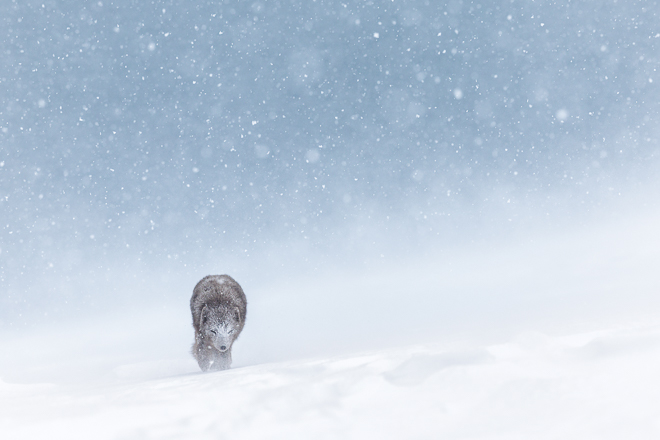
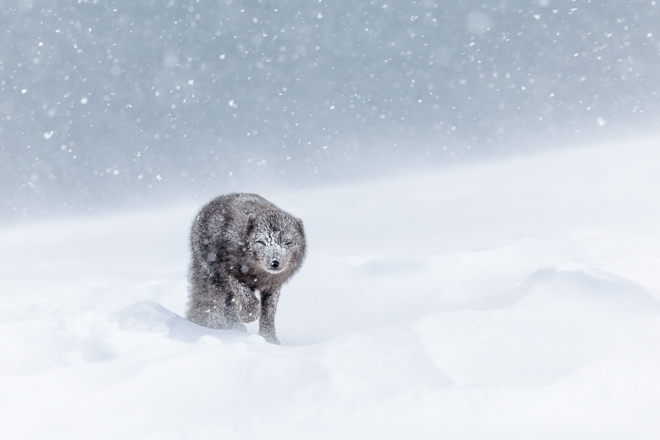
The photograph of the month for February 2022 comes from my very recent expedition to the north of Iceland to photograph the Arctic Fox in winter (trip report coming very soon – tomorrow I hope!). We were extremely fortunate this year to not only have a fantastic covering of snow on the ground but also to have falling and blowing snow on almost every day of our expedition.

In this photograph, I wanted to use the wonderful shapes in the windswept foreground snow to help frame the fox in the context of its surroundings. It is, in my experience, a rare combination to find both wildlife and sculptured and textured snow. The added drama and impact of the blizzard caps off a wonderful moment with this blue morph Arctic fox.