CRADLE MOUNTAIN – TASMANIA ‘COLOURS OF ICELAND’ EXHIBITION

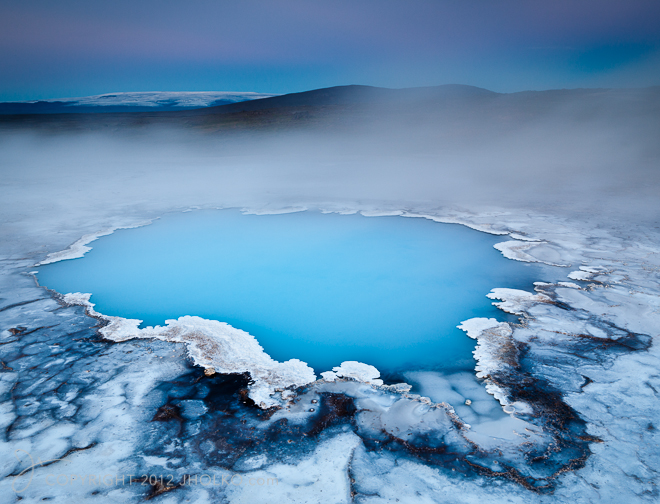
I am heading off to Tasmania this weekend for a few days to visit the Wilderness Gallery where my latest exhibition ‘Colours of Iceland‘ is currently on display. I always enjoy going to Tasmania and am looking forward to spending some time photographing around Dove Lake at Cradle Mountain; weather and light permitting. The weather at Cradle Mountain can be fickle and very much does its own thing – irrespective of what the weather man has to say. The last few times I have been there the weather has been very overcast, dreary and wet; which in and of itself I don’t normally mind. However, it would be nice to get some good colour in the sky at sunrise or sunset to contrast the overcast conditions I have previously experienced. Fingers crossed….

Invitation

ADOBE LIGHTROOM 4 – BETA RELEASE IS HERE

From Adobe’s Blog: The Lightroom team is proud to introduce the fourth major version of the product designed for and by photographers. It was 6 years ago today when we introduced the very first public beta of Lightroom at MacWorld on January 9, 2006. (Yes, it was Mac only, smaller in footprint than most raw files and didn’t have a crop tool!) Since 2006 we’ve been hard at work improving an application that’s intended to be as easy to use as it is powerful. This release builds on the fundamental performance architecture and image quality improvements in Lightroom 3 to provide a truly complete workflow solution. I kept hearing from customers that they love Lightroom but needed to leave the Lightroom to complete X, Y or Z. Lightroom 4 tackles those issues with improvements to image organization, adjustment tools and comprehensive publishing options.

High Level Summary of What’s New

  • Robust Video Support
  • Manage images by location with the Map Module
  • Simplified Basic Adjustments
  • Powerful new Shadow & Highlight controls
  • Additional local adjustments including Noise Reduction and White Balance
  • Soft Proofing Reinvented – Yay!
  • Elegant Photo Book creation
  • Email from directly within Lightroom
  • Publish videos directly to Facebook or Flickr
  • Enhanced DNG workflows
  • Adobe Revel export workflow

Lightroom 4 BETA can be downloaded from Adobe HERE

2012 AND ONWARD – WHATS IN STORE?

2011 was a big year for my photography. I travelled to many wild and wonderful locations throughout the year including Tasmania, the South Island of New Zealand (I never get tired of New Zealand’s amazing landscapes), Antarctica; which was a life long ambition and an absolutely amazing experience, and many more places throughout Australia. I met and made some great new friends in Antarctica and this trip to the bottom of the world was most defiantly the photographic travel highlight of 2011 for me.

I was extremely honoured to be appointed as Australia’s first and only Moab Master photographer by Moab and Legion paper in the USA. I took out a Gold award at APPA (The Australian Professional Photography Awards) with my very first print  in this competition and won three Silvers with my other three prints. I won the 2011 World Extreme Environment Photography Peoples Choice Award, made the cover of F11 Magazine (and feature article), won a spotlight Portfolio award in the prestigious American magazine B&W + Color, won a Portfolio award in the highly regarded Silvershotz journal and had my some of my work featured by National Geographic as ‘Travel Photograph of the Week’. I was also published in numerous other publications including one of my favourite outdoor magazines ‘Wild‘. I was featured on Canon Australia’s EOS1 Wall as a Pro Judge, interviewed for the EOS Pro website and was a semi finalist in the Windland Smith Rice Awards.  I also opened (although I was in Antarctica for the actual physical opening) my new exhibition ‘Colours of Iceland’ at the Wilderness Gallery at Cradle Mountain in Tasmania. This exhibition features a room of 20+ 20×30 inch prints from my 2010 trip to Iceland. I feel like I accomplished quite a lot last year and ticked a lot off my goal list. I am however currently way behind on my image editing and processing from my recent Antarctica shoot; which has already left me feeling somewhat behind the eight ball to kick off 2012 – plenty of work ahead of me.

Colours of Iceland at the Wilderness Gallery

2012 is shaping up to a very busy year with a lot of travel including some time in France, Italy (Venice), London and Iceland (I am particularly looking forward to my workshop in Iceland in July/August); plus more time in the South Island of New Zealand and Tasmania in the next few weeks. I have a new exhibition opening early in the year in Melbourne and my current exhibition at the Wilderness Gallery at Cradle Mountain will continue on for most of 2012. I have a lot of printing to do in the next couple of months to prepare for my Melbourne exhibition at Source Photographica and I am currently selecting images to include in the exhibition. Although I said this last year, I do intend to try and spend more time photographing down the Great Ocean Road in my home state of Victoria. This location is world class and even though it quite literally is in my backyard (just a few hours drive)  it has been much neglected by me – a situation I intend to remedy in 2012.

My travel plans seem to extend deeper and further every year and even though we are only at the beginning of 2012 I have extensive plans either underway or already in place for 2013. I will be leading another workshop to Iceland in July/August 2013 (I will be releasing details in the next few weeks on this trip for those who have already registered their interest) and then heading over to Svarlbad with my friend Daniel Bergmann to photograph the Polar Bears for a couple of weeks. I have already blanked out two weeks in my calendar for the South Island of New Zealand in April 2014 with my friend Martyn – seems a long way off still; but I guess it will be here before we know it. 2014 is also the year I hope to finally make it to Africa with my good friend Andy Biggs and tick the last of the seven continents. Amongst all of this I plan to try and get to Moab and Death Valley in the States – assuming time, finances and the planets all align.

In terms of photographic equipment – The Canon 1DX will no doubt find its way into my camera bag in the first quarter of 2012; but I admit to secretly hoping Canon announce a new monster mega pixel camera to ‘really’ replace my venerable (but still amazing) 1DS MKIII. The 1DX should be a phenomenal low light and wildlife camera; but given the majority of my shooting is long exposure and tripod based its application in my photography will be somewhat limited. I have decided to sell either my Canon 1Ds MKIII or MKIV in the next few weeks to make room for the 1DX. I only purchased the MKIV for Antarctica and although it is truly an excellent and remarkable camera I prefer the 1DS MKIII for landscape because its full frame (the difference in resolution is kind of irrelevant as what the MKIV gives up in resolution it makes up for in pixel quality). I am somewhat undecided on which to sell at the moment. I think I am just having a hard time coming to terms with the realisation that it probably is the 1DS MKIII that should be retired at this point. The trick will be minimising down time by selling the 1DS MKIII just as the 1DX turns up so that I am not without a full frame camera for more than a few days.

I admit to yearning for a Leica S2 after shooting with one in Antarctica (it really produces a stunning file), but I just can’t come to grips with the limited lens selection and economics of ownership of a complete package at this point in time. As per my Antarctica Debrief post I intend to keep a close eye on Leica’s support for the S2.  I spent some time looking into an Alpa STC and Cambo technical camera before I left for Antarctica in November last year and have not yet ruled one out as an option with a Phase One back. However, the industry feels to me like it is in somewhat of a state of suspended animation at the moment with high pixel count 30+ mega pixel DSLR’s on the horizon (but not yet officially announced) and I would like see some files from these new cameras before I make a decision. Other than the 1DX I really have no idea what else might make it into my camera bag this year. Speaking of camera bags – the new Gura Gear 22 litre Kiboko is likely to be added to my camera bag collection this year – specifically for short hikes from the car when I don’t want to schlepp my big fully loaded Kiboko (You can never have too many camera bags!)

I am also hoping to make a couple of exciting announcement regarding equipment manufacturers in 2012. More to come on this later.

Lastly, I am overdue with updating some of the other pages on my site/s and I hope to make some time over the coming months to bring my blog (and website at www.jholko.com) up to date.

Oh.. and before I forget – I have finally updated the photo of the month for January 2012. I rarely include people in my landscape photography; but on this occasion I felt the inclusion of the zodiac really helped give a sense of scale to the ice as well as adding drama to the scene with all of the photographers looking in the same direction – as if they can see something that hasn’t quite come into view yet for the rest of us. For me this photograph epitomises the wonderful experience I had during my 2011 Antarctica expedition. It captures and conveys the feeling of what it is like to shoot from zodiac amongst the ice under dramatic Antarctic skies.

2011 APPA GOLD AWARDS ARE FINALLY ONLINE

The 2011 (APPA Australian Professional Photography Awards) Gold award images are now finally online and available for viewing at the APPA website (although the Silver with Distinction and Silver awards have not yet been uploaded as of this time). The APPA awards are widely regarded as one of the toughest photographic competition in the world today and are one of the few photographic competitions that still actually judge the ‘printed image’ in the majority of the categories. The 2012 APPA awards are now only months away and it is definitely time to start considering entries for the year. My 2011 APPA Gold print; ‘Abandoned Blue Berg’, is currently on display as part of my ‘Colours of Iceland’ exhibition at the Wilderness Gallery at Cradle Mountain Tasmania. All of the prints in the exhibition are printed on my personal favourite paper – Moab Somerset Museum Rag.

ANTARCTICA DEBRIEF REPORT

It has taken me longer than I had hoped to pull together this post Antarctica round-up debrief. Between jet-lag (which I just seem to take an inordinate amount of time to get over when crossing so many time zones – particularly between the Americas and Australia), Christmas, New Year social functions, a stomach upset, my kids, the wife etc. it has been longer than I would have liked between posts. I am also well behind in my image editing and processing from Antarctica; and not just because of the above. I am finding images from Antarctica require a very delicate touch in processing to really coax out all of the beautiful detail and texture that is so prevalent in the ice – and so easily lost in post production. Lots of staring time and a very delicate touch required. I also find that it is often wise to let a good amount of time elapse after this kind of ‘heavy-shooting’ trip to reflect on my RAW files in the light of a new day (and new eyes) as it were. Whilst this often leads to me looking at my images thinking ‘what on earth was I thinking when I shot this’ I do find that it frequently results in better editing and selection of ‘picks’. Given I shot over thirteen thousand images in the three weeks I was in Antarctica it is going to be some time in the far distant future before I get through even my initial selects. The only way to even contemplate approaching a task of this size is in small bit sized chunks; so I will likely slowly release my photographs over the coming year as I complete the editing and processing. I am including a few snapshots from throughout the trip in this post to give an idea of what it was like and to help illustrate where appropriate.Now that some time has past and I have had some time to reflect on the trip to Antarctica at the bottom of the world I want to share my experience of what worked and what didn’t work for me during the trip (much as I did for the workshop to Iceland last year). Those of you who follow my blog will already be well aware that I like to plan meticulously in terms of where I am going and what I am going to take with me on my workshops and expeditions. This trip to Antarctica was a little different than normal in that I had no real say in exactly where in Antarctica I was going. Location was determined more or less on a day by day basis dependant on the prevailing weather conditions and our expedition leaders experience and local knowledge. This was in many ways a good thing as it freed me up to focus and concentrate on my photography. A quick word of praise and thanks to our expedition leader Graham who went above and beyond the call of duty on numerous occasions to ensure we were in the best locations at the best possible time. Trying to please 70 odd neurotic and maniacal photographers all mad keen on making the most of their Antarctic adventure is no easy feat. Yet Graham managed his role and duties with great aplomb. His role is in many ways an unenviable thankless task so it is important to take moment to recognise and thank him for his excellent work throughout the trip.

It is worth mentioning at this point in time that shooting from ship presents its own unique challenges. In some ways shooting from ship is quite easy; one can simply step outside from their cabin onto the deck, frame and shoot. Tripods are obviously out of the question so all one really has to do is select a focal length, ensure shutter speed and aperture are appropriate and wait for the subject to roll past – pretty easy stuff that makes for very civilised photography. Shooting from zodiac however presents a different set of challenges – not the least of which is keeping camera gear dry and operating. The logistics of shooting from zodiac make the entire photography equation much more complex and I will write a dedicated post on the pros and cons and how to approach this style of shooting at a later date.All of my camera gear operated and performed flawlessly the entire trip. I noted in my initial blog post on returning from Antarctica how harsh the shooting conditions were and it is worth re-iterating that on multiple occasions my cameras were covered in sea water and salt spray in freezing conditions when shooting from zodiac. I was extremely glad that I decided to take two 1-series Pro bodies with me for this trip as these cameras are all but indestructible and are designed to cope with very adverse shooting environments (and Antarctica certainly qualifies as an adverse shooting environment). Between the salt spray, cold, dust (when changing lenses – Antarctica is an incredibly dusty place), snow and ice there are lots of opportunities for cameras to fail. Several other photographers had failures with Canon 5D MKII’s and 7D’s. It is a testament to the build quality of Canon’s 1-series cameras and L-series lenses that they continue to operate in such extreme environments under such adverse conditions. There is no question that I am both hard and demanding of my equipment. When in the field I take little in the way of precautions to keep my gear dry. In fact, I pretty much gave up during several zodiac excursions as the sleet and spray were overpowering and focused on just wiping away the worst of the spray off my lenses so I could keep shooting. It is also worth noting that there were also several medium format digital rigs on this expedition including a couple of Hasselblad cameras with Phase One backs and a Mamiya 645D. To my knowledge there were no issues with any of the medium format equipment; although I never saw any of it in operation from zodiac.I used all of the lenses I took with me (see my earlier post on what I took to Antarctica HERE)  except my Canon 50mm F1.2L; which did not make it out of my camera bag. It’s not that I  didn’t need it – simply that I was too busy shooting with my other lenses. By far my most used Lens was my Canon 24mm F1.4L MKII, and my 17mm F4L Tilt / Shift. I really enjoyed shooting with the 17mm Tilt Shift from zodiac where I was able to use the shift feature to change the perspective to raise the view ‘off the water’. I occasionally used a small amount of tilt to extend depth of field or correct the perspective of particularly tall ice bergs. Both my 70-200 F2.8L IS and 300mm F2.8L IS were also mainstay lenses that saw plenty of action throughout the trip. The reality of shooting in Antarctica is that there is quite literally a shot almost everywhere you look and almost any lens will work in most circumstances. I saw other photographers shooting with everything from 14mm all the way to 600mm throughout the expedition. I always shot with two bodies; which gave me the opportunity to have two different focal lengths immediately on tap. I would have been very frustrated had I been limited to one body only. In fact, I think I could probably have managed a third body when shooting from the deck of the ship. Given Canon’s 1-series camera bodies run well north of $6000 plus I am highly unlikely to purchase a third.

I was very glad I made the switch from a full size 17″ macbook pro to the smaller and lighter 15″ Pro for this trip. I really noticed the saving in weight, size and convenience during the many hours spent in airports and in transit. I really appreciate the ability to keyword my photographs in Lightroom during my trips (as well as check sharpness and exposure on the laptop monitor) so prefer to travel with a full size laptop as opposed to a small card reader/viewer. That said, I really appreciate the weight and space saving of image viewers and although I do not own one I am keen to try one on a future endeavour.

In many ways this was the Gura Gear trip to Antarctica. I would estimate somewhere around 40-50% of all the photographers on this trip were sporting at least one Gura Gear Kiboko camera bag. And who can blame them? There is no such thing as the perfect camera bag for all occasions; but it was universally agreed amongst all those photographers I spoke with that the Gura Gear Kiboko is the best camera bag on the market and as close to perfection as possible. I am utterly convinced that the Kiboko is the number one camera bag on the market and it was great to be able to spend some time with Gura Gears founder and chief designer Andy Biggs to relay my experience with the Gura Gear product. One of the added side benefits of the Kiboko is that it has very much become the photographers ‘introduction tool’. With so many photographers choosing the Kiboko it has become a symbol for the travelling photographer and both my friend Martyn and I had conversations with several others at airports who recognised us as fellow photographers due to our Gura Gear bags. All good fun and a really great way to meet other photographers.This was the maiden voyage for the Gura Gear Chobe for me. If you read my pre-flight review HERE then you are already well aware that I had high hopes for this bag based on my initial impressions and thoughts on how I planned to use it. I am very pleased to report that the Chobe lived up to my expectations throughout the trip. In fact, the Chobe has convinced me that it really can serve as both an overnight bag and as a dedicated camera bag depending on your specific needs at the time. Given its ability to also carry a laptop, card readers, back up hard drives and other accessories it really can meet just about any demand. Whilst I wouldn’t do any serious  hiking with the Chobe (and it was never designed for this purpose) I would quite happily sling it over my shoulder and carry it in the field for an extended period. Quite a few other members of the trip were also sporting Chobe’s in addition to their Kiboko’s for additional camera gear, laptops and accessories – Gura Gear are definitely on a winner.One of the real joys of the trip for me was the opportunity to shoot with the Leica S2 and 120mm Apo-Macro Summarit lens. I have been half toying with the idea of adding a Leica S2 to my kit for some time and I relished the opportunity to put one through its paces in the field thanks to good friend Andy Biggs. I was particularly keen to see how reliable the Leica was in the very adverse shooting conditions found in Antarctica as I have heard somewhat spurious second hand reports of S2 failures in the field before. The S2 is a wonderful camera that feels like it was carved from a single block of ‘unobtanium’ and I am pleased to report it performed flawlessly during the trip. Its somewhat slow to focus compared to my Canons and dialling in exposure compensation requires far too many button presses but it otherwise has an intuitive user interface and produces stunningly sharp files. The increase in resolution over the Canon 1DS MKIII is most definitely advantageous – at least when viewing files at 100% on screen. The ‘S’ series lenses are quite simply the best I have experienced with outstanding corner sharpness and contrast. I have to continually wipe the drool off my keyboard every time I inspect the files. I have not as yet had a chance to make any prints from the S2, but I am very much looking forward to seeing a few prints roll off the printer. Is there a Leica S2 in my future? No. Put simply, the economics of the S2 currently don’t stack up for me for a number of different reasons. But there is probably a revised Leica S2 in my distant future and I will be keeping a good eye on Leica’s lens range and support for the S2.

As is usually the case for me I packed too many clothes for this trip. This is something I continually struggle with on all my photographic expeditions. On location I tend to more or less live in the one set of clothes and almost always come home with some unworn items of clothing. I really need to work on minimising my clothing attire. I travelled almost exclusively with 66 North clothing for this expedition and it kept me both warm and dry the entire trip. I was pleased to see several other members of the expedition had taken my pre-trip recommendation and also purchased 66 North clothing – it really is one of the best (ok, the best) range of outdoor clothing on the planet.I already made mention in my initial return post from Antarctica that Quark Expeditions were outstanding in every way and I stand by my prior thoughts and comments. My expectations were continually exceeded by all of the Quark crew (including the legendary secret weapon – Captain Alexey). This praise applies across the board from the ships cleaning staff, to the multiple chefs and culinary staff to the zodiac drivers, biologists, ornithologists, expedition leader and crew. To my mind they could not have provided a better experience. It is worth noting that Quark title their trips as ‘Polar Expeditions’ and not ‘cruises’. Expeditions is an appropriate word as the emphasis on our trip was in getting the photographers to the best possible locations in whatever the prevailing conditions.  Although the level of service was exemplary in every way I would encourage those looking for luxury 5+star cruising to look elsewhere. Alighting a pitching zodiac in Antarctic winds with pounds of camera gear in large swells is not for everyone. Remember its Quark ‘Expeditions’ – Not Quark ‘Cruises’.It is also worth taking a moment to talk about the Drake Passage and seasickness. As I have previously mentioned I have never suffered from any kind of motion sickness but I took preventative medication on this trip in the form of ‘scopolamine’ patches; which are designed to act of the part of the brain that causes nausea. Unfortunately these patches (which last quite a long time – 24 hours+) have some rather dramatic side effects including severe drowsiness, a very dry mouth and a very horrible metallic taste on the pallet. I found they made me so drowsy on the trip over that I felt the urge to quite literally go straight back to bed after breakfast (having already slept ten hours) and sleep another six hours until lunch. No matter how much water I consumed I could not overcome the dry and metallic taste in my mouth so was very glad to rip off the patch when we arrived in Antarctica. For the return trip across the Drake I chose to pop a ‘Kwells’ tablet and keep my ginger levels up by drinking plenty of ginger ale as a precaution. This worked far better for me as I did not suffer side effects from the tablet. On future trips I would avoid scopolamine patches at all costs. I can’t complain however, many of the photographers on this trip were laid completely flat out by sea sickness and unable to even make lunch or the evening meal. I am sure they would have been very glad of just the side effects I suffered.

My flights for this trip were with Qantas and Aerolineas Arengtina. I was fortunate to be travelling at the front of the aeroplane so to speak for the long haul sections of this trip from Melbourne to Buenos Aires and these flights were about as comfortable as fourteen hours in an aeroplane can be – not much more need be said. For my internal South American flights I travelled with Aerolineas; which proved the other end of the comfort scale. Firstly, I was more than annoyed to arrive at the airport in Buenos Aires to find that I had been bumped to a later flight after pre-booking and pre-paying a full eight months in advance. Aerolineas took an opportunity to resell my seat to a higher paying customer because of flight cancellations due to union issues (and sold to the public under the guise of volcanic ash fro the Chile volcano) – most annoying. Aerolineas also really need to do something about the quality of their inflight food. Powdered milk for coffee is not acceptable in my book under any circumstances (even UHT milk would have been better) and the less said about the ham and cheese roll the better. The internal flights from Buenos Aires to Ushuaia and back were also on old MD-88 jets; which are not my favourite passenger jet and always make me a little nervous. I was very glad to touch down both in Ushuaia and Buenos Aires and leave the Byzantine MD-88 behind. I did not have any luggage weight issues on any of my flights and was able to carry on both my 18+ kilogram Kiboko and my 5 kilogram Chobe without issue. I did see a couple of other photographers get nailed for being overweight with carry on luggage on the trip from Ushuaia to Buenos Aires. Aerolineas seem quite happy to randomly select and penalise those they take a dislike too. Personally I have always found a smile and a friendly hello goes a long way with airport check in staff; but your mileage may vary as they say.

If some of the above seem somewhat like nit-picks its because I really did not have any other issues the entire duration of the trip. All of my camera gear and computer equipment operated flawlessly and I never once found myself wishing for anything other than an assistant to hand me another lens or load a new CF card. One of these days I must get a travel assistant!

Antarctica has been a long time dream for me and this expedition was very much the trip of a lifetime. I mean how often does one get to travel with roughly 70 like minded enthusiastic photographers to one of the worlds last pristine wilderness locations on a trip dedicated to nothing but photography! As a photographer who has a passion for ice bergs there really is no location more appealing and it goes without saying that I can hardly wait to return (which I will most definitely be doing in future expeditions). They say you travel to Antarctica a tourist and come back an Ambassador and I think those words ring very true for me.