I am back from four days photography in and around the Cradle Mountain National Park in Tasmania. The weather and conditions were not great for this trip and as such I actually did more hiking than photography – the light and weather were most un-coperative. Apart from a few hours either side of midday the mountains were ‘clagged’ in with cloud and mist with dull grey overcast light – such is life. Not much one can do as a landscape photographer in situations like this except wait it out. I cannot help but think however, that if this had been my first trip to the area, or if I had come from Europe or somewhere much further afield that I would have photographed anyway. Its easy to get spoiled when a great location is so close to home and to not shoot when the conditions are less than ideal. I abandoned my back up plan of driving down south to the candlestick as the prevailing weather forecast was always for it to clear. And indeed it did – the morning I was leaving.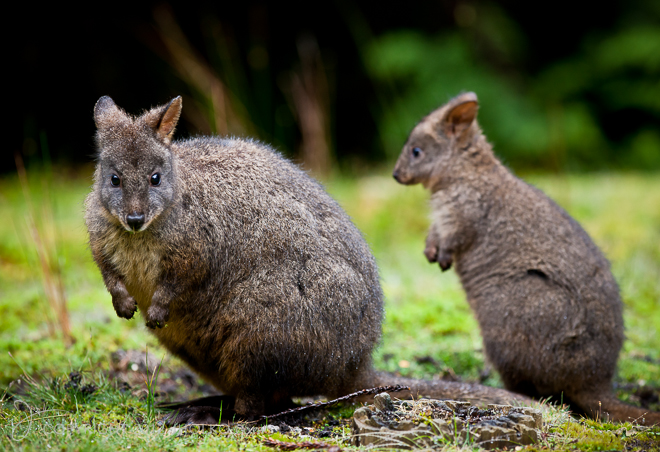 I did keep a sort of journal during the trip as there was no real internet access to speak of at Cradle Mountain for blog updates – or at least I did not want to drive out of the park to try and get some mobile reception. Below is a brief recount of the few days I spent in the area.
Journal
Arrived in Cradle Mountain early Friday morning around 9am to be greeted by overcast conditions, mist and cloud – the Mountains socked in with some very average weather and grey dull overcast light. Decided to go for a stroll around Dove Lake for a couple of hours and unwind from the office and get into a more relaxed state of mind more suitable for photography. Stumbled upon some Pademelons grazing on the wet grass and spent a few minutes photographing the inquisitive little creatures. I then headed over to the Tasmanian Wilderness Gallery to have a look through the gallery and a spot of lunch (all quite civilised really). More to come on the Wilderness Gallery in my next post.
The weather forecast is currently predicting some afternoon breeze/wind along the coast – which; with a bit of luck will blow off the cloud later this afternoon. Tomorrow is supposed to be better. I am planning to hike up to Crater lake this afternoon for a sunset shoot – wether its successful or not will be very weather dependant. I have been up there before and the scenery is spectacular – so as long as the light and conditions are co-operative I should be able to get the shot I want.
Tomorrow (Saturday) I will get up for sunrise at Dove Lake and then take a leisurely breakfast before heading up for the long steep hike to Twisted Lakes and little Big Horn to scope it out for a sunrise shoot the following morning. I have seen some photography from this area before and it looks very promising.
If the weather holds tomorrow I will then possibly charter a helicopter for an aerial sunset shoot over the summit area. If it’s a bit dicey weather wise and if the helicopter cant fly or conditions are not ideal for photography I will then take a bit of a chance and instead make for the summit of Cradle Mountain on foot. I have had two attempts at the summit proper on other ocassions. The first time with my wife – we got close before she decided she had had enough and we came back down. The second time I was on my own and was turned back by waist deep snow just past Kitchen Hut after trudging for hours in horrendous conditions.
The following morning – Sunday; will very much depend on wether I got the right light and conditions on Saturday. If I manage to nail Dove Lake on Saturday morning then I will rise extra early and head back up in the dark to Twisted Lakes to photograph little Big Horn. But again, its very weather dependant.
Update Friday evening Sunset – Or rather lack of it. Hiked for two hours up to Marions lookout and crater lake late this afternoon. A strong wind sprung up and gusted across the mountain tops making the whole hike in the wind and rain quite arduous and very cold. Unfortunately for me it did not clear – despite my patience. Waited for two hours at Marions peak in the hopes of it blowing over before descending in the dark with my headlamp. With any luck it will all blow over tonight and dawn will provide better opportunities.
Update Saturday lunchtime – I got up at 5am this morning but the bad weather had not cleared. The mountains were still clouded over and there were high winds. I hiked up to twisted lakes after breakfast and the weather has continually improved throughout the day. The sun is out and the wind has died down. If it stays like this there should be a good sunset and some decent light. As you can see in the photograph below: By Midday the skies were relativley clear; it was not to last. Update Saturday night – Hiked up to Kitchen Hut for sunset but the weather did not hold and rain clouds blew in obscuring everything. Sunset was a non event and it was another long cold descent in the dark after waiting a couple of hours in the frigid weather near the summit. Arrived back at camp at 10pm.
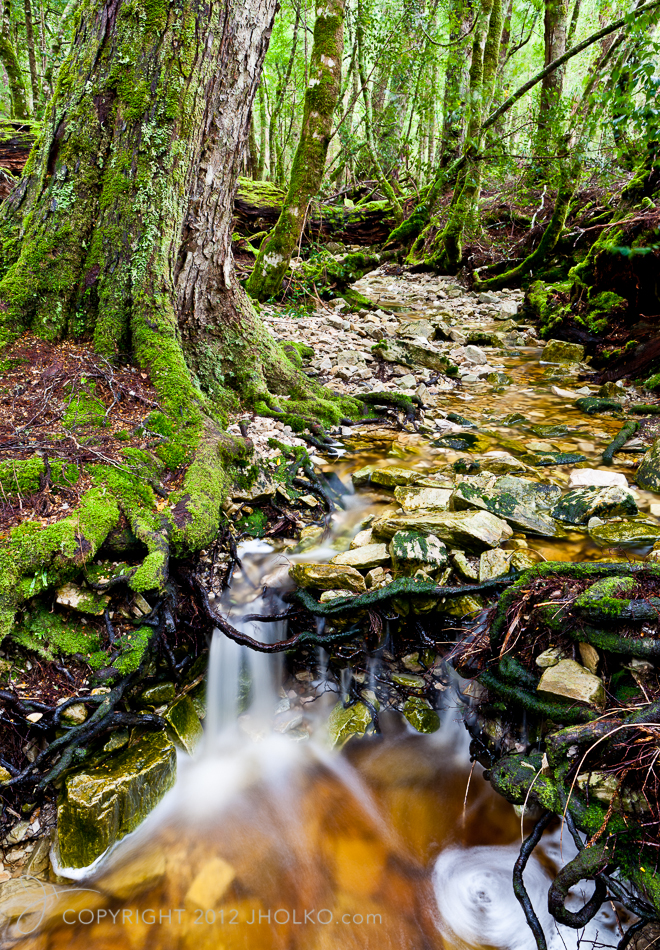
Sunday morning – raining and cloudy. Sunrise was not to be seen – hidden behind thick cloud and rain. After breakfast hiked up to the base of Dove Lake falls from the Ballroom forest and did some photography. Wonderful wilderness- atrocious conditions.
Sunday afternoon and the weather has finally started to improve – almost all of the cloud has blown away. Hiked up to Kitchen Hut just below the summit of Cradle Mountain for sunset and was finally rewarded with some decent but brief golden light. Relatively clear skies meant that twilight did not end until nearly 9pm. Yet another long cold, dark descent back to camp under headlamp – arrived back at 10:30pm; pretty physically shattered.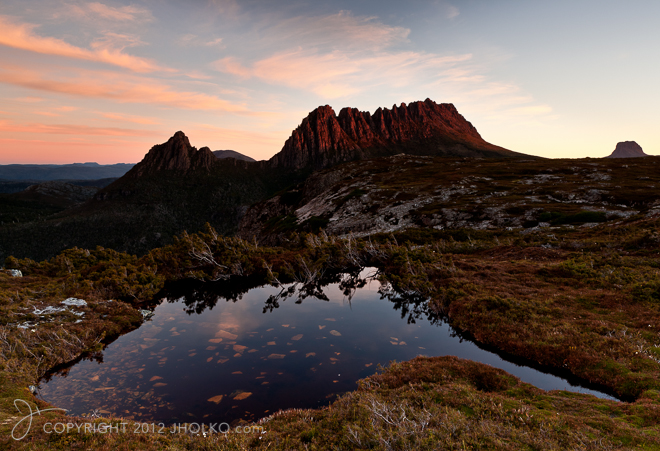 Monday morning – Rose at 5am to be greeted by clear skies; not a cloud in site and not a breath of wind. Managed to squeeze in a few frames just before sunrise at Dove Lake before I had to high tail it for Devenport to catch the 8:00pm Spirit of Tasmania Ferry back to Melbourne. Made it with less than 5 minutes to spare.
Overall this was an enjoyable trip – if not an overly successful one photographically. Despite a few brief minutes of golden light it was pretty uneventful photographic wise. Still, that gives me reason to go back and try again – perhaps in winter this time when the mountain is capped in snow.




 www.WILDNATUREPHOTOTRAVEL.com