I have just published episode 171 of my Wild Nature Photography Podcast. In this episode, I discuss the role of luck in Wildlife Photography and how we can stack in the deck in our favour to create strong, emotive and powerful wildlife photographs.

I have just published episode 171 of my Wild Nature Photography Podcast. In this episode, I discuss the role of luck in Wildlife Photography and how we can stack in the deck in our favour to create strong, emotive and powerful wildlife photographs.
By request we decided to offer another Svalbard Spring Light expedition in April next year. The expedition will run from the 7th to the 15th of April, 2027 and include nine nights / ten days. Early April is one of the very best times to visit Svalbard. At this time of year, the sun is still low in the sky, and the landscape is bathed in golden light. Our ship for this expedition will be M.S Freya, which means we can offer limited single cabins without single supplement. More than half the places have already been spoken for – please get in touch if you would like to join us for this incredible expedition.
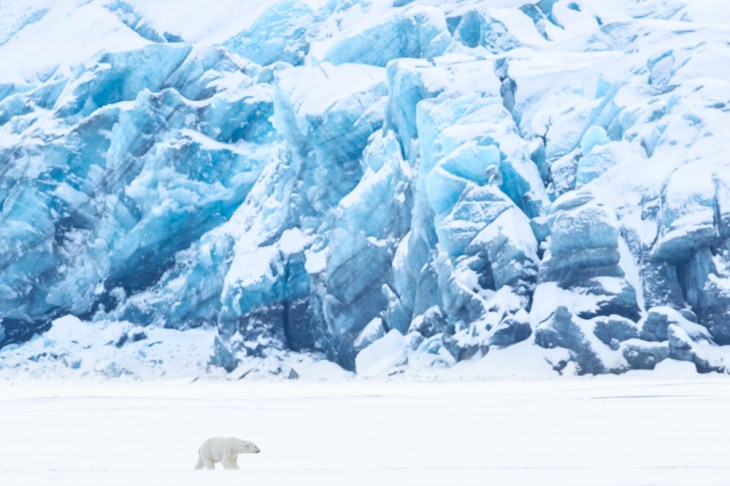
You can read and check out the 2026 Trip Report to get an idea of what this expedition is like and what incredible landscape and wildlife opportunities can be had at this time of the year in Svalbard. Be sure to also check out the Svalbard Portfolios on my website.
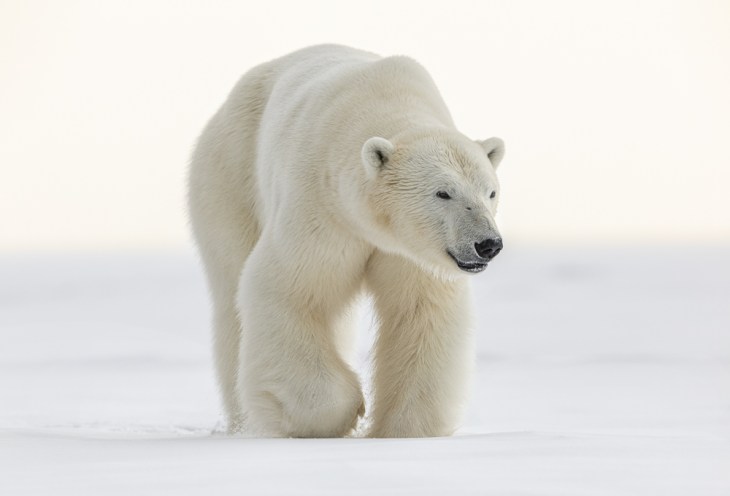
In August 2026, I ran my semi-annual workshop in Finland to photograph wild wolves, brown bears and wolverines in the remote Taiga forests of northern Finland. This is a workshop I have been running for many years now, and is always one I look forward to. Finland remains one of the most underrated destinations for wildlife in my experience and always offers very special encounters. Our workshop ran for 8 days / 7 nights from August 1st until August 8th, with the group spending the week photographing from a series of private wildlife hides. We also had an extensive post-production seminar at the conclusion of the worskhop.
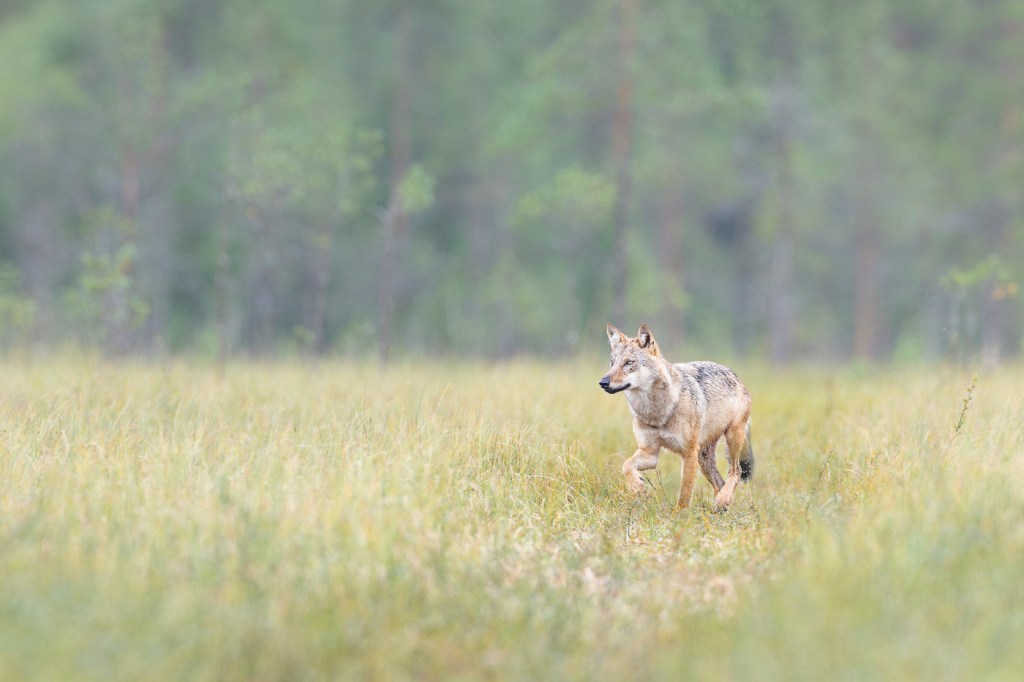
This region of Finland is one of the few places in the world where you can reliably photograph both wild wolves and brown bears in their natural Taiga forest habitat. The setting provides an extraordinary photographic environment, with dense coniferous forest, mist, low evening light and the possibility of unexpected encounters at any time.
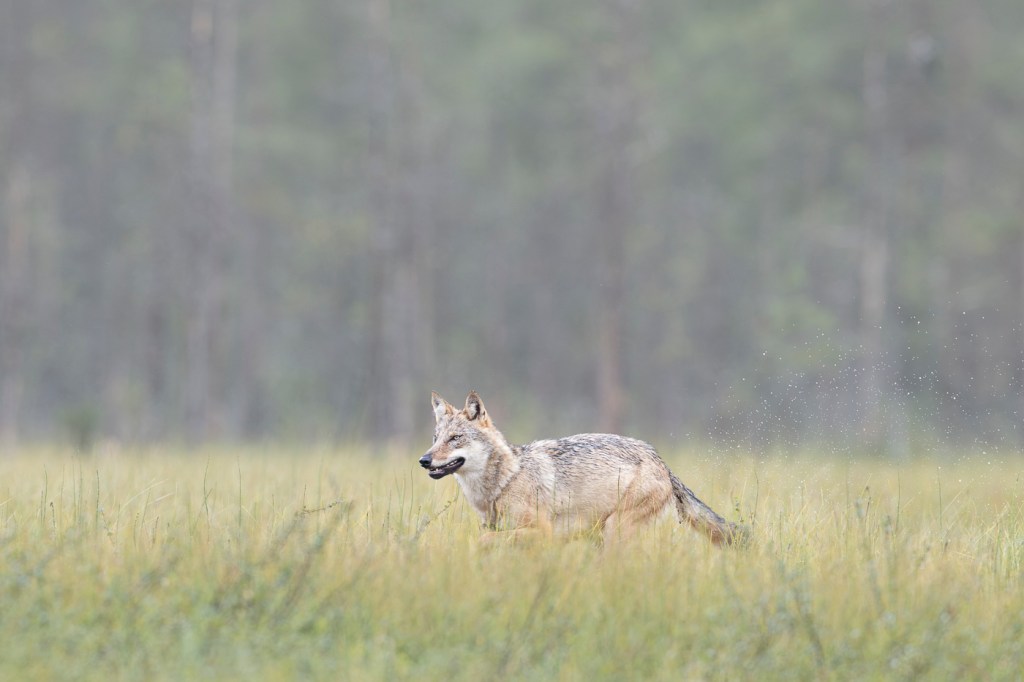
At this time of the year, the sun is setting around 10pm, and the wildlife is most active in the evenings. As such, we spent our time in the hides between 4pm and 10pm each evening. We were fortunate this year to have some significant rain during the workshop, which made for really moody, atmospheric photographs.
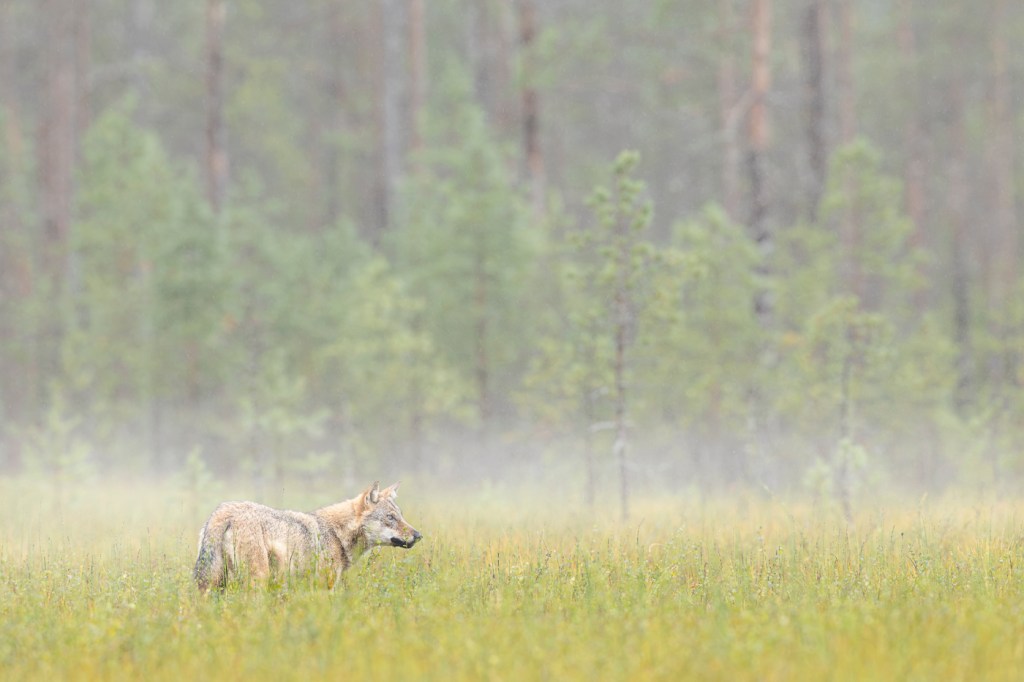
Over the course of the week, we had photographic encounters with more than half a dozen individual brown bears and at least four different wolves. As always, it is important to emphasise that these are genuinely wild animals. They are completely free to come and go as they please, and there are no guarantees of sightings. The unpredictability of these encounters is an important part of what makes photographing them so rewarding. Every appearance is on the animal’s terms, and patience is essential.
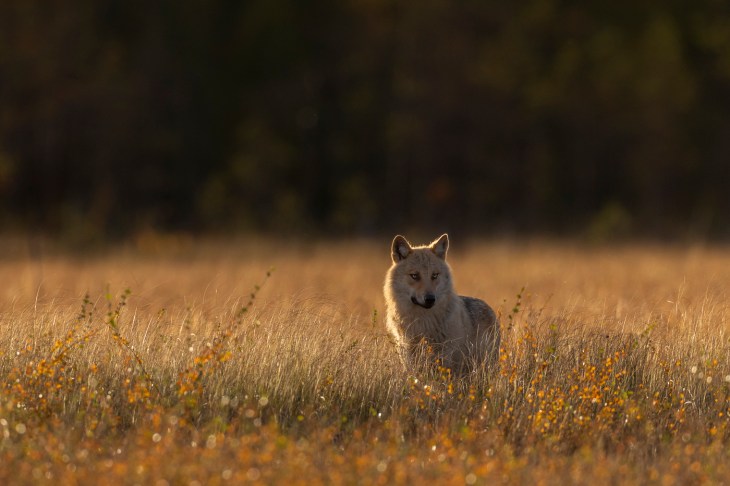
The private hides provided excellent opportunities to work at close range while remaining unobtrusive to the wildlife. This allowed us to concentrate on behaviour, interaction and environmental portraits rather than simply recording sightings. The long hours spent quietly waiting in the hides were repeatedly rewarded with memorable encounters. One such encounter was with a white-tailed eagle that landed in the grass directly in front of my hide position, facilitating the opportunity to capture it as it took off into the wind.
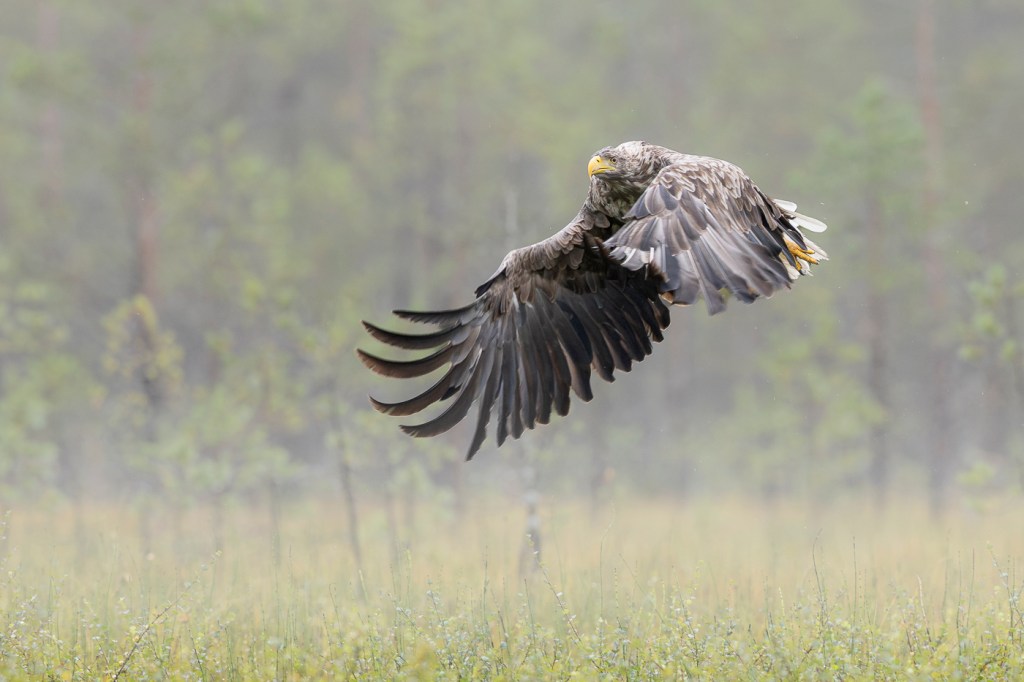
The changing light of the northern summer also provided a wonderful range of photographic conditions. The extended daylight hours allowed us to continue working late into the evening, while the atmospheric conditions of the Taiga created opportunities for images with a strong sense of place. This area of Finland is truly virgin forest that provides for opportunites that extend beyond the wildlife.
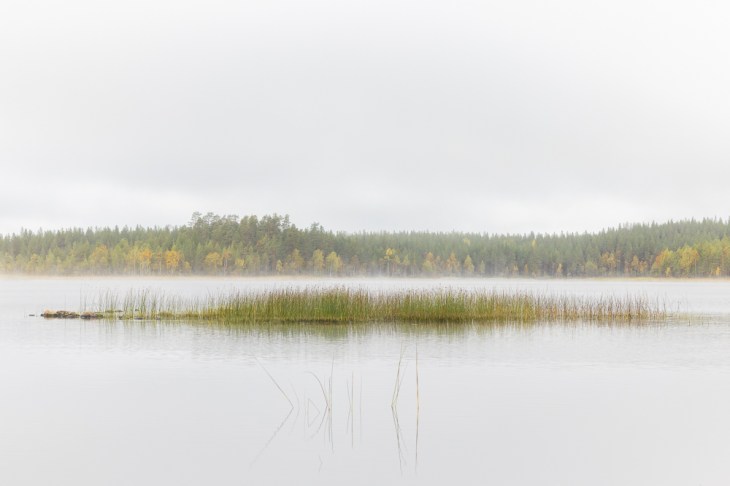
For the duration of the workshop, we stayed at a nearby, comfortable hotel with modern amenities. This provided a welcome base between photographic sessions and made it possible to concentrate fully on the wildlife and photography throughout the week. Typically, I recommend longer telephoto lenses for this workshop (500mm and 600mm are ideal), but it is always worth keeping something shorter handy as there are times the wildlife approaches quite close to the hides. My preference is always to photograph with two cameras – one with a 600mm lens and a 2nd with a mid-range to telephoto such as a 100-300mm lens.
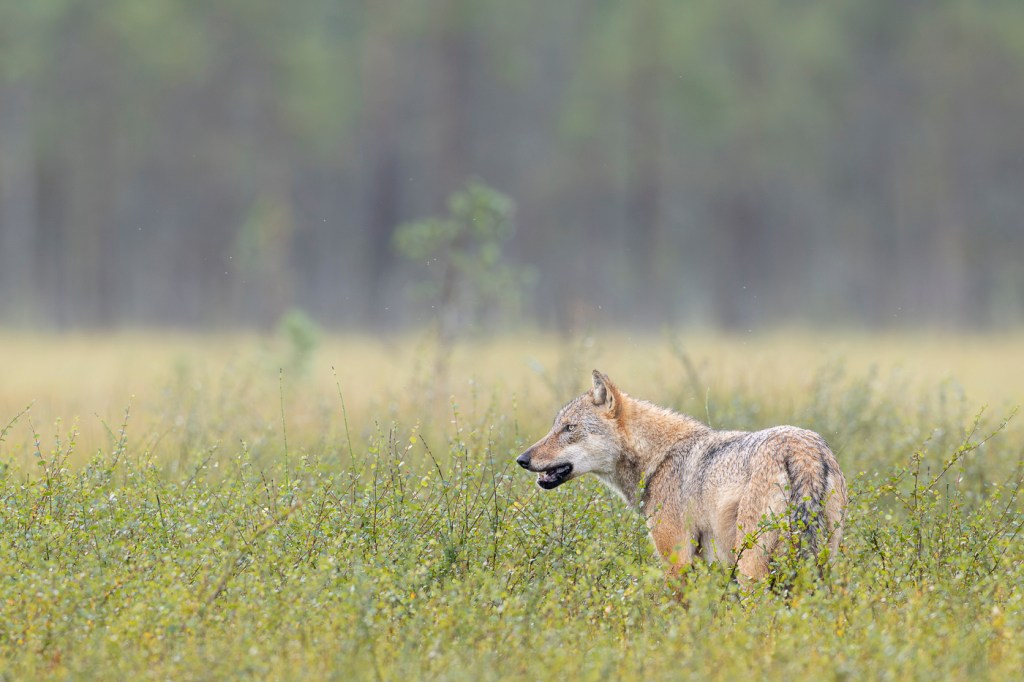
Once again, Finland’s Taiga delivered an outstanding week of wild wolf, and bear photography. With multiple wolf encounters and more than half a dozen bears, as well as several eagle encounters, the August 2026 workshop provided an exceptional collection of wildlife encounters and photographic opportunities in one of Europe’s great wilderness environments.
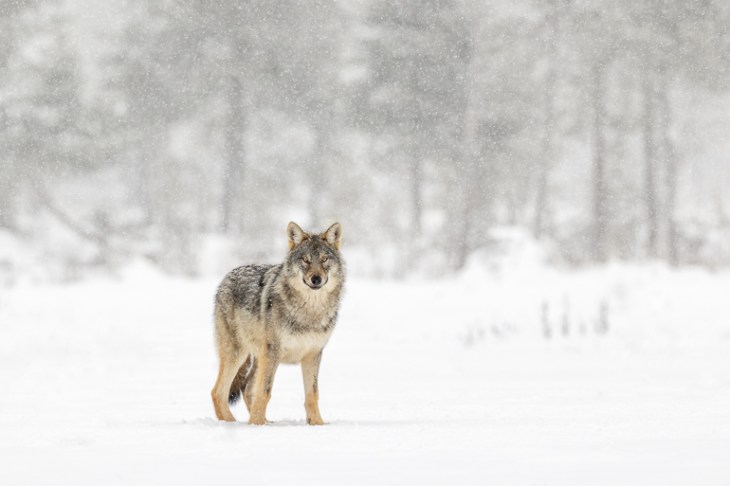
We are returning again next year in both August and November for two more workshops to this wonderful region of Finland. The August trip is set up for optimal fall colour and our November trip is set to coincide with what should be arrival of the first snow. If you have ever wanted to photograph wild wolves and bears in a stunning forest setting, then this is absolutely the workshop for you. Places are already extremely limited on both trips, so please get in touch if you would like to join us.
In some landmark photography-related news, as of July 20, 2026, a U.S. federal judge gave final approval to a $1.5 billion settlement between Anthropic and a class of authors and publishers. It is the largest known U.S. copyright settlement of its kind. And it hopefully paves the way for photographers (like myself) who have had their photographs used by Anthropic (and others) to train their A.I model without our consent.

The case, Bartz v. Anthropic, concerned Anthropic’s use of copyrighted books in developing its Claude AI models.
The important points to note:
The really interesting part for AI and copyright and what this might mean for future cases: The court’s earlier ruling was actually quite favourable to Anthropic on AI training itself. The judge found that training Claude on legitimately obtained copyrighted books could constitute fair use. The problem was that Anthropic had also obtained millions of books from pirated sources, including LibGen and Pirate Library Mirror, and stored those copies. That was the copyright infringement problem. So, in simplified terms:
“Training an AI on copyrighted books” wasn’t what produced the $1.5B liability. “Obtaining and storing pirated copies of those books” was the much more serious problem.
Anthropic settled rather than taking the piracy issue to a potentially enormous damages trial. The settlement also avoids creating a binding appellate precedent on the broader AI-training question.
And this is very current: just two days ago, another music publisher, Round Hill Music, filed a new lawsuit against Anthropic alleging unauthorised use of lyrics from hundreds of songs, potentially expanding to more than 10,000 compositions.
What this could mean for photographers and AI companies using photographs to train models is unknown. Regardless, the Anthropic case has some interesting implications.
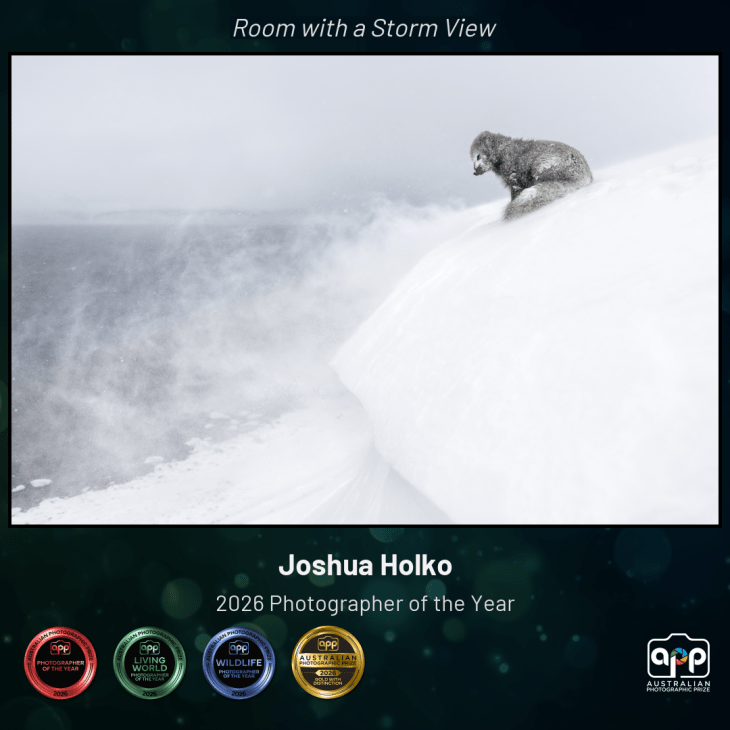
I have just published episode 170 of my Wild Nature Photography Podcast. In this episode, I discuss my results in the recent Australian Photographic Prize Awards and what it means to win the overall grand prize and title of Australian Professional Photographer of the Year. This is a deeper dive into my thoughts on the winning photographs, where and how they were taken, with what equipment and what my thought process was from capture to the final processed image. The photographs can be seen online HERE.