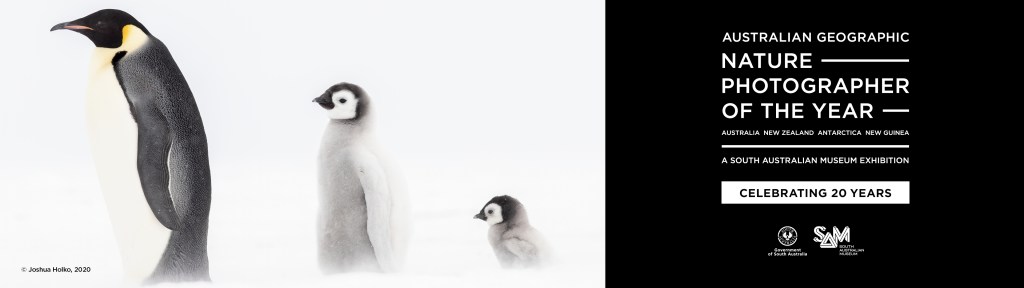
The ANZANG/Australian Geographic Nature Photography Competition is celebrating its 20th anniversary. To celebrate this, ANZANG has curated a collection of hero images as a ‘Best of 20 Years’ collection. The images are now on display on digital screens across Australia. These locations range from domestic and international airports to shopping malls, office buildings, and complexes, all with a high flow of pedestrian traffic. I am pleased to report that one of my photographs of Emperor Penguins ‘Family Walk’ is included in the collection. Look out for it in your travels.
Canon has released a fairly significant firmware update for the Canon EOS R3. There is also new firmware for those shooting the EOS R5 that includes 400 MP IBIS Pixel shift.
This firmware includes the following improvements and fixes:
Compatible with Speedlite EL-5. * The automatic dimming function of the AF-assist light is not supported.
Added [Priority for registered persons] to the menu. It is now possible to prioritize detection and tracking of pre-registered people.
Depending on the scene or shooting environment, where the face is small, oblique or profile, part of the face is hidden, or the subject has movement, the effect may not be achieved.
Added [Save and read communication settings to card] to the menu. Network settings can now be transferred between cameras of the same model.
Added [Sink Shooting Assist] to the menu. When shooting with a compatible lens, “image stabilization” and “subject stabilization” are performed during exposure.
With the Auto White Balance (AWB) setting, the time it takes for AWB results to be reflected in the viewfinder when looking through the viewfinder has been reduced.
Added “Image Protection” for FTP transfer to the menu. Images transferred via FTP can now be automatically protected. This allows you to determine whether the image has been transferred by FTP.
This coming Thursday, the 30th of March, by invitation, I will be giving a presentation to the residents of Svalabrd on photography in Antarctica. The presentation will include photographs from more than a decade of travel to the white continent and my thoughts on how to photograph icebergs, polar wildlife and more on the beauty of Antarctica. The presentation will be at 18:00 – attendance is free.
I have just published Episode #68 of my Wild Nature Photography Podcast. In this episode, I discuss my thoughts on judging photographic competitions from the judge’s perspective. Includes some retrospective thoughts on judging a major international photographic contest and tips you can employ in your photographic competition entries.
An update on the availability of workshops and expeditions this year. Currently, there are only three trips this year with open availability. For 2024 and onward, please visit my website at www.johlko.com/workshops
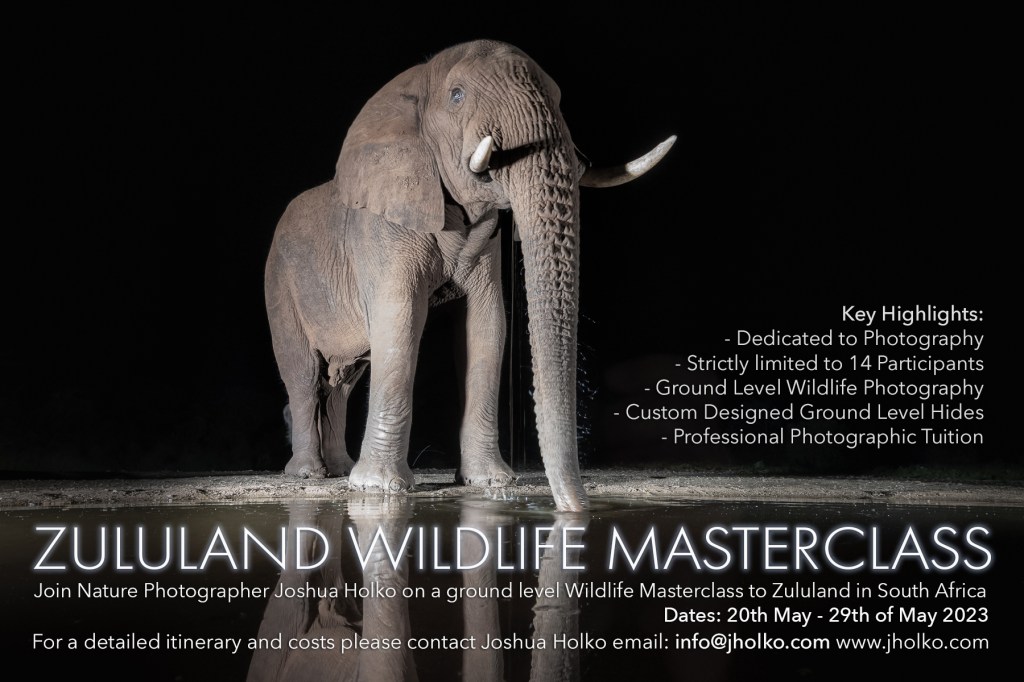
Zululand Africa – May 20th – May 29th 2023 – 2 Places Available Only
This is the workshop for you if you have ever wanted to photograph African wildlife from eye level. We will use custom-designed hides and a brand-new safari vehicle designed specifically for eye-level photography. Full details of this workshop: https://jholko.com/workshops/zululand-africa-ground-level-wildlife-masterclass Please contact me for information on last-minute places.
Wild Wolves of the Taiga Forest Finland – September 10th – September 18th, 2023 – 3 Places Available
If you have ever wanted to photograph wild Wolves, Wolverine and Brown Bears in the beautiful Boreal forest, this is the workshop for you. There is also an optional extension for both Eagle Owl and Golden Eagle from comfortable custom-designed hides. Full details on this workshop: https://jholko.com/workshops/wild-wolves-of-the-taiga-forest-in-finland
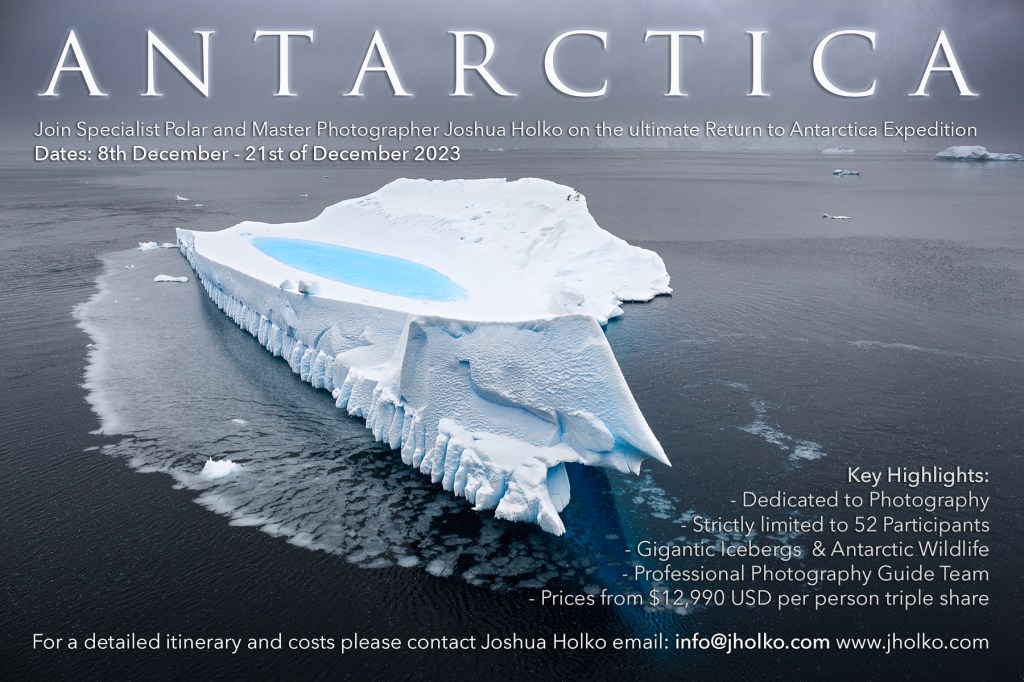
Antarctica Return to the White Continent – December 8th – December 20th 2023 – Limited cabin types available
A full dedicated charter to the Antarctic Peninsula for wildlife and spectacular ice and snow-covered landscapes. This charter only takes a maximum of 40 people, which means it’s the smallest number of people on any commercial ship in Antarctica. That means we will all land at the same time. Our days will be optimised around photography. That means you will be out late and early when the light is at its best and not dragged back to the ship because of inflexible meal times. Full details on this once-in-a-lifetime expedition are available here: https://jholko.com/workshops/antarctica-return-to-the-white-continent


 www.WILDNATUREPHOTOTRAVEL.com