Travel Tip – Wash Your Trekking Boots

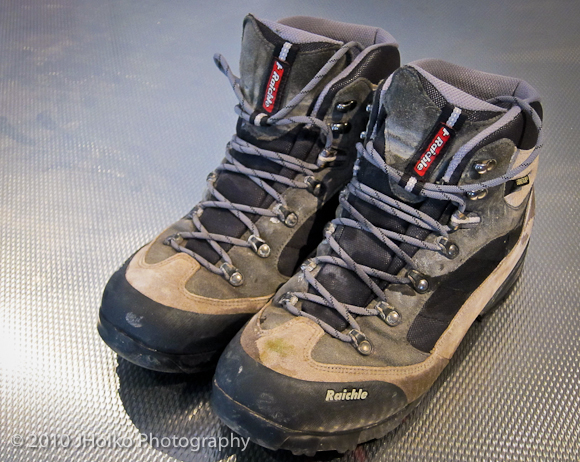
Upsetting customs officials when you first enter a foreign country is never a good idea. Yet, this is something I almost achieved last year in the South Island of New Zealand when I got pinged for packing my favourite trekking boots in a rather dirty state. Lesson learned – Never pack a pair of dirty or muddy trekking boots in your baggage without giving them a good scrub and clean before you leave home. Customs in many countries have strict quarantine procedures to protect their individual and often unique  eco systems and can either confiscate or fine you accordingly for either not declaring muddy boots and/or not cleaning them before entering a foreign country. Always better to be safe and clean them before leaving home.

Clean Me!

Iceland – Whats in Josh’s Bags?

For the travelling Landscape, Nature and Wilderness photographer there are some significant international travel hurdles to overcome. Not the least of which is the ‘light weight’ carry on restrictions enforced by pretty much all the airlines nowadays (I don’t know anyone who is willing to check their expensive camera gear in general baggage). To this end I have spent the better part of this evening balancing out my photographic equipment between my two camera bags to meet the individual ‘carry-on’ bag weight limits, but yet maintain a reasonable sense of order for working in the field. A task that is not as easy as it might first sound, but I pretty much have it sorted now. I posted a full equipment list in an earlier post HERE. My Canon 1DSMK3 is in my Lowe Pro Nature Trekker bag with the 24mm F1.4L MKII lens attached. This bag also holds the 17mm TSE F4 lens, the 50mm F1.2L lens, a 1.4 MKII Tele-extender, a macro extension tube, the Canon S90 Point and Shoot, all of my graduated filters, adapters and polarisers, spare battery, lens hoods, rocket blower and other accessories such as memory cards and bubble level. It tips the scales right on the 8 kilogram limit. The second smaller Lowe Pro bag has my 70-200 F2.8L IS and 300mm F2.8L IS lens along with my RRS Ball-head. The Canon 85mm F1.2L MKII lens is staying at home. My tripod is going inside my main luggage suitcase. Worst case, if the airlines loose my luggage I can always buy another tripod in Iceland and use my RRS ball-head which I carried on board.

Whats in Josh's Bag?

Iceland Preparations and Itinerary

Its only a week now until I fly out to Iceland for two and a bit weeks of Landscape, Nature and Wilderness photography under the midnight Sun. Originally this trip included a brief stop in Denmark to meet with some business associates at their factory; but that has changed and I am now catching up with them in London (which has subsequently given me an extra day in Iceland). The last minute preparations are still ongoing – as yet I have not had time to change in some Australian dollars for some Icelandic Krona and U.K pounds; but its on the list – along with quite a few other ‘Must Do’s’ for a successful trip.

I have been furiously studying the Lonely Planet guide for the last week to get up to speed for the trip, to finalise my itinerary and to ensure I maximise and take full advantage of my time in Iceland. Iceland is a big country and its always difficult to plan your time for what, where and when to photograph in a country you have not visited before. I am relying heavily on my guide Daniel Bergman  for a large portion of the trip; along with online trip reports from other photographers such as Michael Reichmann over at the Luminous Landscape. The itinerary below may be of interest to some – but its really a reference for me during my trip to remind myself of what is planned and when. Elements of the trip are quite flexible and weather dependant so it may vary from day-to-day.

ITINERARY

DAY ONE – My flight into Keflavik airport in Iceland should arrive just before midnight on Thursday the 29th of July if all goes according to plan with the airlines. I plan to catch the Flybus into Reykjavik (the Capital City of Iceland) and am staying at the Hotel Odinsve Thursday and Friday nights; which is pretty much smack bang in the middle of town. Despite the temptation to grab the camera gear and start shooting I plan to do nothing more than get a good nights sleep on arrival.

DAY TWO – Is a ‘familiarisation day’ in Reykjavik – perhaps a little site seeing and shopping before dinner with a couple of other photographers who are flying in from other parts of the world. I have a midnight Sun whale watching tour planned (weather dependant) with Elding after dinner. This tour operator picks up from the Hotel and drops back afterward; which is very convenient. This tour is a good part of the reason I am schlepping my Canon 300mm F2.8L IS lens along with me.

DAY THREE – In the morning I am joining up with a group of half a dozen other international photographers and Daniel Bergman who is to be our guide. We are heading over to Skaftafell in the Southeast where we will be based for two nights. From there we plan to photograph at the Jokuslsarlon glacial lagoon and the glacier and mountain landscape of the Skaftafell National Park. The drive from Reykjavik to this first base is around 350 km.

DAY FOUR – More photography around the black pebble beach by Jokulsarlon. Possible hikes up to some of the glacial tongues, glacial moraines or in the National Park.

DAY FIVE – We plan to continue to travel East along the coast and end the day in the town of Egilsstadir, about 350km East of Skaflafell. Along the way we plan to photograph the landscape south of Vatnajokull glacier, mountains and the beach by Stafness and the fjords to the East. We may also head up to Mount Snaefell or photograph along the Lagarfljot River.

DAY SIX, SEVEN, EIGHT AND NINE – Our base for these few days in the Northeast will be beside Lake Myvatn. We plan to head up to the geothermal areas of Namafjall, Leirhnjukr and Theistareykir – some of which are only ten minutes from where we will be staying. A day will be devoted to going into the highlands south of Myvatn to visit Askja. We will also make a trip to the waterfall trio  in the Jokulsargljufur canyon, Selfoss, Dettifoss and Hafragilisfoss and of course Godafoss. I am particularly looking forward to seeing Godafoss; which is supposed to be spectacular for photography.

DAY TEN – We’ll cross the Sprengisandur highland road (a 5 hour journey through the centre of Iceland) to reach Hrauneyjar. On the way we will make stops at Aldeyjarfoss waterfall and Nyjjadular. We will also visit Veidivotn – a cluster of crater lakes about 30 minutes from Hrauneyjar.

DAY ELEVEN – The second day in Hrauneyjar will be devoted to a visit into the Fajallabak reserve. We plan to hike to Brennisteinsalda in Landmannalauger for either sunset or sunrise.

DAY TWELVE – The 9th of August – More photography around Hrauneyjar in the morning before heading off for Keflavik airport to drop off most of the other photographers. I am hitching a ride back into Reykjavik with Daniel; picking up a four wheel drive and borrowing some camping gear for three more full days in Iceland before leaving for London. Once I have picked up the 4WD and bought some provisions I plan to drive over to Gullfoss (Iceland’s most famous waterfall) and Hveravellir; a geothermal area of fumaroles and multi-coloured hot springs. Hveravellir is located on the Kjölur route (number F35), which runs across the middle highlands from Gullfoss in the south to Blöndudal in the north. The distance from Gullfoss to Hveravellir is about 90 km but the distance to Blöndudal is about 110 km. Hveravellir lies about halfway between Reykjavik and Akureyri, but there are about 200 km in either direction. Hveravellir is located 30km north of the Kerlingarfjoll turn-off approximately 200km from Reykjavik. I will spend the night camping somewhere nearby and photographing as the best light dictates.

DAY THIRTEEN – More photography around Hveravellir before I pack-up and head over to the Snaefelness Peninsula; which involves back tracking to Reykjavik. Its a two and a half hour drive form Reykjavik to the Snaefelness Peninsula where I plan to photograph the glacier at the centre of the Peninsula and what ever else looks interesting in the area. There is a campsite at Arnarstapi; which is supposed to be very good and have a good restaurant.

DAY FOURTEEN – Day fourteen is my last full day in Iceland and at this stage I plan to spend it in and around the Snaefelness Peninsula. I will likely head to areas that have been recommended to me by my guide during the initial trip or by other locals.

DAY FIFTEEN – My last day in Iceland will be driving back from wherever I have ended up on day fourteen. My flight out of Keflavik is at 4pm in the afternoon, but I need to drop off the 4WD in Reykjavik no later than 1pm and catch the Fly bus out to the Airport for a flight to London – I get into London late on the evening of the 12th of August and will catch the tube to my Hotel.

DAY SIXTEEN – A day to enjoy the sites of London, catch up on some sleep and meet up with some business associates for a tour of their facilities followed by a good British Pub Crawl.

DAY SEVENTEEN – Site seeing and rest and relaxation.

DAY EIGHTEEN – A lazy breakfast, and a few local sites are all that is planned for the last day in London. My flight leaves Heathrow at 3:05pm for the long haul back to Australia.

THE UNKNOWN – Planning is a really important aspect of travel photography. Maximising the time you have in front of the camera in a foreign country is critical to being able to get good photographs. A good landscape photograph needs a good subject, with good composition combined the best possible light. It takes time to find the ‘subject’, so subjects (or rather locations that may have good subjects) need to be planned in advance as much as possible. The subject then needs to co-incide with the right/best light; which means allowing sufficient time at each location to get the shot. Only the composition is left to the moment. In a light hearted way the whole thing is a sort of juggling act akin to influencing an aligning of the planets.

With that said – I am more than prepared to ‘wing it’ as needs be. Whilst the Eyjafjallajökull volcano may no longer be erupting its bigger nearby brother Katla is being tipped to erupt soon – indeed its overdue. Should such an event occur my plans may well change very rapidly to take advantage of the situation. Likewise I plan to take full advantage of local knowledge and follow up any hot location tips. We shall soon see what Iceland has to offer.

Compact Flash and Secure Digital Cards – The Cost of Being at the Cutting Edge

I had to order some new Compact Flash (CF) and Secure Digital (SD) memory cards for my Iceland trip a day or so ago and I was struck by what it costs these days to be at the cutting edge of memory card technology. By way of introduction and example: A 32 Gigabyte Compact Flash card with a write capability of 90 MB/s costs in the order of $450+ Australian dollars; yet a 32 Gigabyte Compact Flash card with a 60 MB/s write speed only costs around $230 Australian. Thats a difference of more than $200 for the same size card but with a write speed one third slower. The immediate and obvious question is – Does that extra speed make a difference? And is it worth the price of admission?

From my point of view as a contemplative Landscape, Nature and Wilderness Photographer the answer to both questions is a resounding ‘NO’. My reasons are fairly straight forward and it has a lot to do with how I choose to set-up my camera. You see, my Canon 1DSMKIII is capable of taking both CF and SD cards and writing to both cards simultaneously. This is a great feature as it means I can load a 16 Gigabyte CF and 16 Gigabyte SD card into the camera at the same time and set the camera to record the RAW file to both cards at the same time – effectively giving me a RAID1 array for data redundancy in my camera. What this means in layman’s terms is if one card goes bad I still have the other card with exactly the same RAW images on it – An excellent in the field back up. The only downside of this set-up is it effectively halves the number of frames one can take without changing cards – but since memory is now so cheap this really isn’t an issue. The only other problem with loading both CF and SD cards and writing to both simultaneously is that you are then limited by whatever card has the slowest write speed to clear the cameras internal memory buffer. There is no point having a CF card capable of writing at 90 MB/s if the matching SD card that the camera is simultaneously writing to writes no faster than 30 MB/s. The CF card will clear the camera buffer faster than the SD card but you still wont be able to shoot again until the camera has finished clearing its buffer by writing the same files to the slower SD card. So that extra speed and cost is wasted. Thus in this example if the fastest SD card one can buy writes at 30 MB/s there is no point buying CF cards that write any faster than 30 MB/s. A 32 Gigabyte CF card with a write speed of 30 MB/s only costs about $100 – A whopping saving of $350 over the 90 MB/s write speed card! For the same capacity!

So, if I don’t need cards capable of writing at 90 MB/s a second who does?

There are numerous applications where it might be beneficial to have CF cards capable of these kind of blistering write speeds. A motor-sport photographer shooting with a Canon 1DMKIV in motor drive at ten frames per second has a good practical use for this kind of card speed. It is arguable that someone shooting with a 60 megapixel Phase One Medium Format Digital Back might also have an application for this type of card. The slower paced Landscape, Nature and Wilderness photographer like myself doesn’t need this kind of write capability and for a change can pocket the savings (us landscape photographers don’t often get this kind of win!).

So what did I order?

For my Iceland trip I ordered (in addition to the cards I already have) two Sandisk 16 Gigabyte 30 MB/s CF cards and two Sandisk 16 Gigabyte 30 MB/s SD cards – total cost $395.80. If I had ordered the same sized cards but with a 90 MB’s write speed I would have paid an additional $330 just for the CF cards (Sandisk currently dont make SD cards with write speeds faster than 30 MB/s) and effectively wasted my money by being unable to take advantage of that extra speed because of my set-up to shoot to both cards simultaneously. It is perhaps fair to say I have traded some speed for data protection – but that is a compromise I am prepared to make every-time.

Iceland – ‘Final’ Equipment Check List

Its only a few weeks now till I leave for Iceland for three weeks dedicated landscape and nature photography; which means its definitely time to finalise my photographic and non photographic equipment for the trip. The non photographic equipment is pretty much confined to a few sets of suitable trekking clothes, Gortex jacket / pants, boots, personal items etc. The photographic equipment on the other hand requires considerably more thought. I have pondered the equipment to take for months now and my revised check list is as follows:

  • Canon 1DSMK3 Camera Body (going to serve as my primary DSLR Camera workhorse for the trip)
  • Two Spare Batteries and Battery Charger (should be heaps – I get over 1000 frames out of a single charge)
  • Canon S90 Point and Shoot (Going to serve as a back-up in the unlikely event the 1DSMK3 falls over)
  • Flip HD Camcorder or my Canon HD Camcorder (I cant decide as yet which to take)
  • Canon 17mm TSE Lens (my widest lens for the trip – with TSE a Bonus!)
  • Canon 24mm F1.4L MKII Lens (My Favourite Landscape Lens)
  • Canon 50mm F1.2L
  • Canon 70-200mm F2.8L IS
  • Canon 300mm F2.8L IS
  • Canon 1.4x Tele-Extender
  • Canon Macro Tube
  • Canon 580EX Flash with a ST-E2 Remote Trigger
  • Cable Release and Bubble Level
  • An assortment of LEE Hard and Soft Graduated Neutral Density Filters / Filter Holder
  • The LEE Big Stopper 10 Stop ND Filter
  • A couple of Circular Polarisers
  • A Slew of Compact Flash and Mini SD cards – totalling around 100 Gigabytes
  • My Mac Book Pro / accessories and Back Up LACIE rugged hard drive
  • Arctic Butterfly (for Sensor Cleaning), lens cleaning tissue, lens cleaning fluid, grey card etc.
  • Gitzo Tripod and Really Right Stuff Ball Head
  • My much loved shooting vest
  • Lowe Pro Nature Trekker II Camera Bag and Lowe Pro Compact Backpack (which will hold pretty much all of the above except the tripod and shooting vest). I need to split all of this gear into two bags in order to meet the carry on airline weight restrictions per piece of luggage.

The above equipment list pretty much covers me for all the major focal lengths – except 35mm (which I have decided I can live without for this trip). I know in many ways all of this equipment flies against the current trend of many photographers to travel as light as possible; typically packing only a zoom lens or two to ease the travel discomfort. But, I am approaching it from a different angle and am prepared to wear the travel discomfort and to some extent the excess baggage for flexibility and maximum quality when in the field. Since I wont be doing any serious hiking and will have a 4WD for the trip moving all this around shouldn’t to bothersome.

Other Items I need to Take

  • Down Sleeping Bag
  • Petzl LED Headlamp
  • Shooting gloves

Whats not coming? (but might sneak in at the last minute).

  • Canon 85mm F1.2L (I can cover this focal range with the 70-200mm F2.8L IS)
  • Canon 5D Camera Body (I want to take this… my heart says yes… my head and wallet say NO!)
  • Canon 14mm F2.8L MKII – Off the radar and out of budget for this trip