Australian Geographic Magazine features ‘Fortress’ Iceberg Antarctica

The latest issue of Australian Geographic Magazine – May / June 2014 features a double page spread of one of my favourite photographs from Antarctica. A photograph I titled ‘Fortress’ for its giant castellated peaks and ominous presence. I took this photograph back in 2011 on my November Antarctica expedition and it has remained one of my favourite images from subsequent repeat visits to the Great White Continent. We were very fortunate to come across this incredible iceberg under dark and moody overcast skies as we cruised up the Gerlache Strait and I recall thinking to myself conditions could not have been more perfect to photograph this leviathan.

As I have written about here on my blog before this photograph was taken with a 17mm Tilt Shift lens from the deck of the Ocean Nova on my Canon EOS 1DS MKIII. I used the lenses shift mechanism to lower the perspective and give the impression the photograph was taken closer to the water. A higher resolution version of this photograph can be seen on my website in the Antarctica Portfolio and prints are available from my gallery in Brighton Australia and Aspen in the USA. Please contact me for sizes, edition availability and pricing.

Finalist ANZANG and BBC Wildlife Photographer of the Year 2014

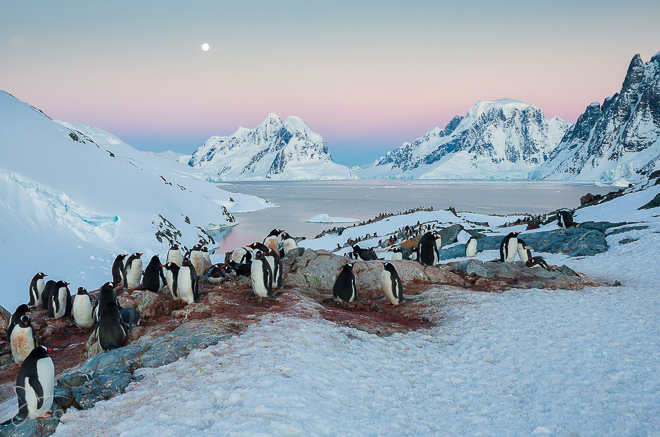
I returned home late last night from an incredible two months spent in both Iceland and the oldest deserts in the world in Namibia. Both my Iceland winter 2014 workshop and Namibia 2014 workshops were incredible experiences and I will have a lot more to say about both trips over the coming weeks including complete debrief reports here on my blog. In the meantime, whilst I was away I learned that several of my photographs had made the finals in both ANZANG and BBC Wildlife Photographer of the Year competitions for 2014. Both of these competitions are two of the most respected amongst outdoor photographers today and I am extremely honoured to be a finalist in both of them. Judging is still underway for both competitions but I can reveal that one my finalist images for ANAZNG is from my last trip to Antarctica – Penguin rookery at Petermann Island. This photograph was taken around 11pm in the evening under perfect conditions, magical light and the rising moon at Petermann Island on my 2013 Antarctica expedition. This photograph is also my photograph of the month for April 2014.

A Polar Photography Experience Video Interview and Outtakes

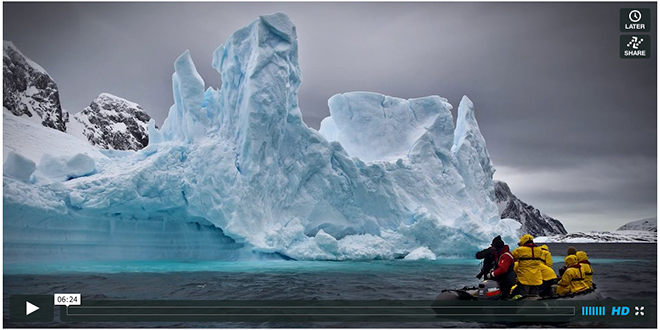
Late last year I released a short movie I produced in conjunction with Untitled Film Works in the Arctic on what it was like to travel on a dedicated photographic expedition to the Polar regions – A Joshua Holko Photography Polar Experience Video. This video was a huge amount of fun to produce and work on with the crew from Untitled Film works. During the filming we were fortunate to experience and capture some truly spectacular sights including an incredible free standing iceberg collapse amongst some incredible landscape and wildlife experiences. The video was shot on a combination of a RED Epic Cinema Camera and a couple of Canon 1DC 4K Cinema Cameras. Audio for the film was recorded separately by a dedicated sound person. The entire movie was shot over a two week period in the Arctic using our ship ‘Polar Pioneer’ as a base of operations. We departed from Iceland in August and sailed across the Denmark Strait to Greenland where we explored the many fjords before we sailed across to Svalbard and docked in Longyearbyen. If you have not seen the movie click on the image below to watch it in full high definition.

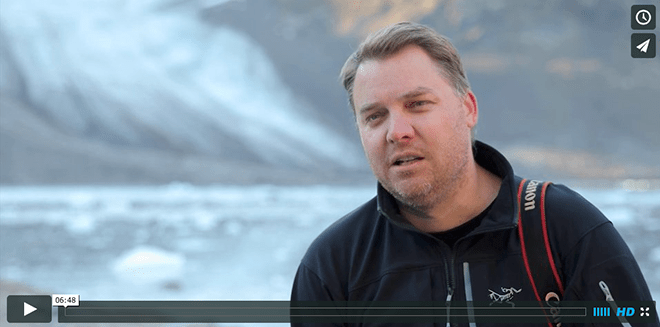
One of the really enjoyable things for me during the production was the video interview we shot high in the Arctic near the calving face of one of Svalbard’s glaciers. The full interview includes all of the final cut footage included in the film as well as all of the outtakes, stumbles and slips that are a part of video production and interviews. The full unedited interview is included below. Enjoy – And remember its outtakes as well!Equipment for this Project

Since the release of this video I have had a few emails asking me specifically what equipment was used to produce this film. So I am including below a list of hardware we took to the Arctic and utilised for the production of this movie.  All of the editing and post production work was completed by Untitled Film Works at their studio in Sydney and a number of different software programs were used depending on wether the footage in question was shot with the RED Epic or the Canon 1DC cameras.  The RED Epic RAW footage requires different grading to the motion jpeg produced in the Canon 1DC cameras and so it was necessary to process them separately before combing the footage in the final edit. The entire project was however shot in 4K resolution and much of it was also shot in very high frame rate on the RED Epic.

Camera for this project included:

  • Red Epic 5K Cinema Camera for high frame rate slow motion footage in 4k resolution
  • Canon 1DC 4K Cinema Cameras x 2
  • Canon 1DX Camera (behind the scenes)
  • Canon 5D MK3 Cameras x 2 (behind the scenes)
  • Several Go Pro Cameras were also used for filming but none of the footage was included in the final cut

Lenses for this project included:

  • Sigma 15mm Fisheye
  • Canon 17mm F4L TSE
  • Canon 24mm F3.5L TSE
  • Canon 24-70mm F2.8L MKII
  • Canon 70-200mm F.27L IS MKII
  • Canon 200-400mm F4L IS with inbuilt 1.4 TC
  • Canon 2X Teleconverter

Other Equipment included:

  • Really Right Stuff TVC-24L 4 Section Tripod x 2
  • Really Right Stuff BH-55 Ballhead x 2
  • Really Right Stuff Levelling Plate x 2
  • Really Right Stuff L Mount Camera Brackets for Canon 1DC, 1DX and 5D MK3 cameras
  • Really Right Stuff Lens Plates for 70-200 and 200-400mm lenses
  • Really Right Stuff MonoPod with RRS Ballhead
  • Miscellaneous Really Right Stuff Accessories including Multi-tool and universal clamps
  • Glide Cam
  • Miller Video Tripod and Fluid Head
  • Various Rode shotgun and lapel microphones
  • Audio Recording Devices
  • 15 Terrabytes of Hard Drives and numerous laptops and associated accessories.

Solicitation for Payment to Promote Artists – Use Caution

Over the last few years I have been receiving sporadic emails inviting me to have my work published and / or displayed in some form of publication on a cost to the artist basis. These emails almost always begin with ‘You have been specifically chosen from amongst thousands of artists‘. These solicitation emails have historically utilised printed media such as magazines and quote ‘ Art Books’ as their publishing platform. The long and short of this approach should you be unfortunate to receive one of these email invitations is that the artist or photographer is approached (usually via email) with an offer to have their work published in a quote ‘respected’ book or magazine. The offer often goes into quite some detail about the ‘extensive’ circulation of the publication, the importance of being included and the exposure that comes from having ones work displayed in the publication. The artist / photographer is presented with a number of different offers that range from a single page of publication to multi-page spreads at a cost of usually $600-$900+ USD per page. There is usually significant embellishment by the seller on the number of galleries the publication is distributed to as well as the extensive number of art purchasers who subscribe to the publication. The entire package is then dressed up for sale and proffered as an exclusive opportunity to the artist / photographer. Most of these books that I have researched are in excess of 300 pages which gives an idea of just how many artists you would be competing with should you pay to have your work included. Some simple math indicates that even at the lower end of $600 per page these publishers are raking in around $180,000 USD in revenue (and many of them are upwards of $900 per page and well in excess of 300 pages). With book publishing being as cheap as it is today in China  you can bet that less than a quarter of that is being spent on the actual publication. It doesn’t require much thought as to where the rest of it ends up. I did some checking with galleries here in Australia as well as those in New York and other prime locations. Most had never heard of the short list of ‘Art books’ I had been approached by and those that had did not have kind things to say about them; suggesting quite bluntly they were a complete waste of money and that any artist who was seeking representation should contact them directly for folio appraisal.

I am going to refrain from naming some of these publications even though I have both direct and indirect experience with quite a few of them. You should be able to quickly recognise these publications for what they are in how they market and present themselves. These publications prey on the often fragile ego of the artist photographer hoping to be recognised and to stand out from the crowd. The sales pitch is designed to entice the artist to part with their money in exchange for having their work published and distributed to an often unknown network that is difficult to verify. There is almost never any offer of follow up after publication to verify the distribution or of offers to work with the artist who is usually seeking gallery representation. I know of one recent example whereby a good friend paid to have his work printed in what was supposedly a well respected magazine. Despite making his substantial payment in full no magazine has been published to date and all requests for a refund have gone unanswered. In this magazine’s defence I believe they did release a digital PDF version after complaints from many of the contributors (all of whom payed to be published). Who this was distributed to remains unknown and wether an actual magazine will ever be printed remains unlikely. Either way, my friend is unlikely to get value for his money and even less likely to get his money back.

My advice if you are considering paying to have your work published is that you look very closely at the distribution of the media you are considering being a part of. The very first thing you should do on receiving any email that offers you publication in exchange for money is to Google the publication and find what experience other artists have had in dealing with them. I guarantee you will find someone out there who has been approached and written about their experience to help others. Put zero credence in their own website testimonials unless they include a full name and email link to contact the artist to verify the quote. Testimonials without  a full name and email address for verification are worth less than the virtual paper they are printed on.

More recently I have started to receive solicitation emails that are utilising the Apple APP store as the publishing platform. The email offer entices the artist / photographer to have their very own app developed comprising of their work. The company making the offer will design and build the app on behalf of the photographer and take a heavy percentage of any sales on top of a substantial up front development fee. On the face of it this may seem a fair deal. However, you should be sure to read the fine print about who owns the copyright to displayed work and what you are really signing up for. If you are approached with such an offer I suggest exercising caution. Be sure to do your due diligence. Try and speak with photographers or artists who have  paid to to use the medium and find out what they really got out of it. There are many application development kits now on the market that require even less work than setting up a website and I recommend you look into these before you hand over potential profit from sales of your work to a third party. The last such offer I received turned out to be using nothing more than an Adobe application for single issue publication called Adobe DPS Single Edition. This easy to use tool can be used by anyone to create their own application without development costs above those from Adobe for the software and Apple for access to iTunes. You don’t even need to know how to write code.

There are of course many legitimate reasons to pay for publication of your work. Just be very clear in your mind what you are hoping to achieve by having your work published if you intend to pay for the privileage. If it is purely ego driven then perhaps paying to satisfy this need is justifiable. But, if you are paying to publish your work in the hopes of recognition or with a plan to increase your exposure and publicity then I would think very hard about it before you make a financial investment. You are likely to get far more benefit from publishing your own book (or e-book!), or contacting a gallery or agent directly than you will ever get from being included in a artists book that showcases the work of many artists. There are a myriad of options out there for artists who want to promote their work and increase their exposure. Many of them require no where near the upfront investment some publications are asking. There are many roads to recognition for the promotion of artists – consider your options carefully and ask yourself what you are really trying to achieve before you part with your hard earned money to promote your work.

Gura Gear announce the ‘Uinta’ Modular Camera Backpack

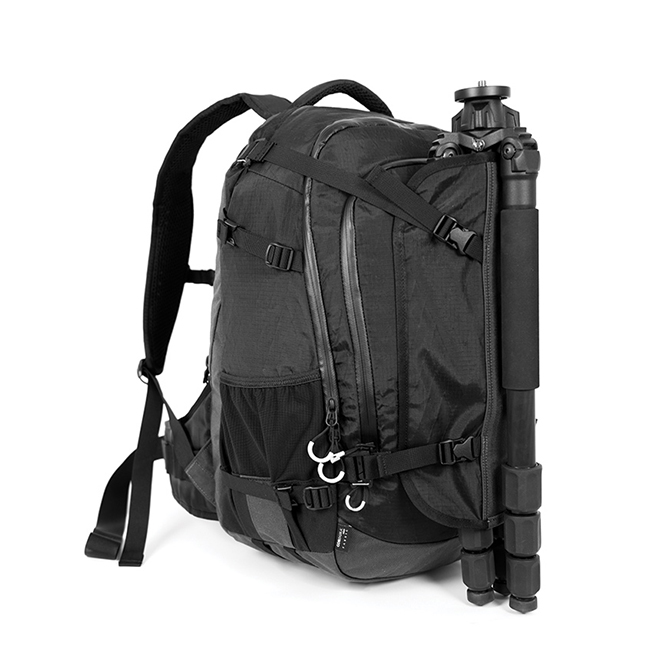
It would be hard to argue that the Gura Gear Kiboko and Bataflae camera bags have not made a major impact with photographers around the world. In my travels, I an fortunate to spend a lot of time with photographers from all over the globe and I consistently see a multitude of these bags on my workshops and expeditions. Gura Gear bags are universally adored by their owners for their sturdy construction, light weight build and ability to swallow copious amounts of gear. In fact, the only criticism I ocassionally here from owners of these camera bags is that they hold too much gear and therefore there is a temptation to carry too much equipment into the field. The only other comment I ever here is “I wish they made a pack more suitable for hiking.” As it turns out the folks at Gura Gear have been listening and since the release of the new Bataflae camera bags Gura Gear have been hard at work behind the scenes on a new modular camera bag system designed for photographers with different needs and they are now introducing the newest addiition to the Gura Gear product line, the Uinta adventure backpack system.From the Press Release: Named after the majestic Uinta mountain range located in Northern Utah, the Uinta is designed to be the ultimate adventure pack ready to haul camera gear and hiking essentials wherever your travels take you. The Uinta spans the gap between urban and adventure lifestyles. Whether you need a technical day pack for photo/video gear, or a reliable adventure pack that accommodates a single DSLR and adventure’s essentials, Uinta boasts 30 liters of space and adjusts to your needs with specially designed module inserts. Uinta is a lightweight, weather-resistant bag that will adapt to your needs.
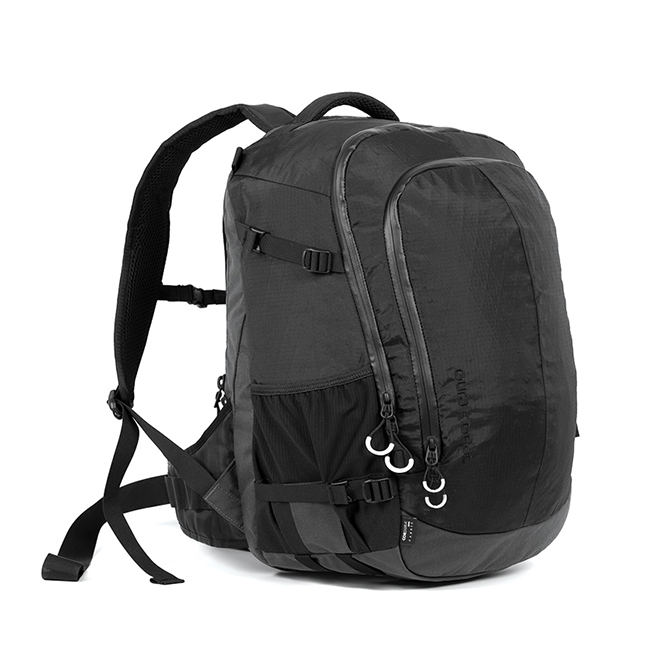
Featuring an extremely comfortable and breathable harness system, the Uinta is perfect for day trips in the mountains, deserts, or wherever life’s adventures may take you. In any situation, accessing gear is easy through any of the multiple access points. Uinta features a set of removable padded, configurable photo modules engineered for the latest in digital photographic equipment allowing the user to adapt the bag for each day’s requirements. The protective foams were specifically designed to maximise protection while minimising weight. Not all of life’s adventures involve the wilderness, that’s why Uinta can even stow up to a 17” MacBook Pro in the padded interior compartment, perfect for travel, work, or play. (I know many photographers will very very appreciative of the ability to carry a laptop in their camera bag if required).

The Uinta is an adventure pack designed to utilise Gura Gear’s new modular photo inserts and tripod and hydration system. Small Pro and Medium Pro Modules as well as a Tripod & Hydration System (THS) are available as separate components. Thus the system can be customised to suit the needs of the individual user. This new bag opens up new areas for Gura Gear and gives those photographers who require a dedicated backpack an ideal solution. The current line of Gura Gear camera bags is very much designed for travel and handling large amounts of gear. This new bag is designed with hiking and day trips in mind.The Uinta is all about being the right bag for whatever adventures you take. Whether you are looking for a spacious technical daypack for hiking to the summit of your dreams, or a pack to haul just a little or a whole lot of camera gear, the Uinta can be configured to suit your needs.

The available modules make carrying just the gear you need easy and accessible. Your options are many:

  • Use both the Medium and Small Pro Modules for the maximum camera gear configuration.
  • Use only the Medium Pro Module and give yourself some additional space for extra essentials at the bottom of the pack.
  • With the Small Pro Module you can handle the lightest camera setup with ample room for hiking essentials. The Small Pro Module can be installed in both the lower and upper sections of the bag. This allows you to manage the weight distribution in the pack to be exactly where you want it.
  • For those times when you’re not taking your beloved camera gear and you just need a lightweight and durable pack, the Uinta offers a spacious configurable 30 liters of space to tote everything you need.
  • Add the Tripod and Hydration System for a simple way to secure a tripod, hydration bladder, small shovel or anything else your adventure requires.

Uinta has many options. Photographers never face the same conditions and what works best in the morning may not work in the evening. With the Multi-Point Front and Rear Access System you have the ultimate control on how you would like to access your gear. When Modules are installed in the top section of the pack you have full access to your gear from either the back or front of the Uinta. And the Small Pro Module (when installed in the lower section) is easily accessed through a third opening on the bottom back of the bag. Uinta even has built in room for up to a 17″ laptop and compartments to organize the small stuff in life.

Introductory Offer

I am currently field testing the Uinta system – look for my full review in the coming weeks. In the meantime Gura Gear have a super introductory offer for those of you keen to get your hands on the new system. When you order a Uinta with both the Small Pro and Medium Pro Modules you will receive a free Tripod & Hydration System (THS) valued at $39.95. Add a Uinta + Sm and Md Modules + THS to your cart. Use coupon code FREETHS when checking out.