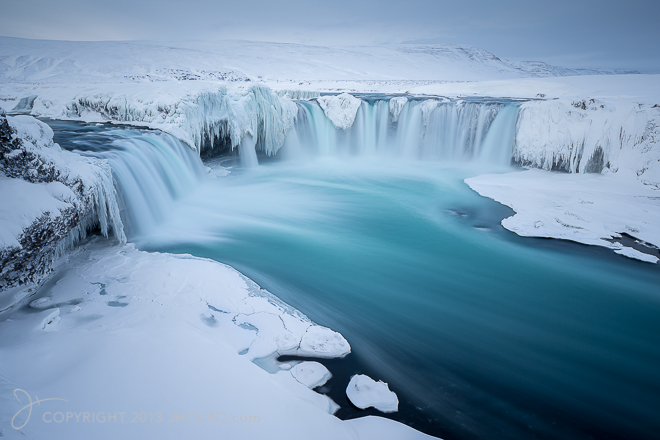
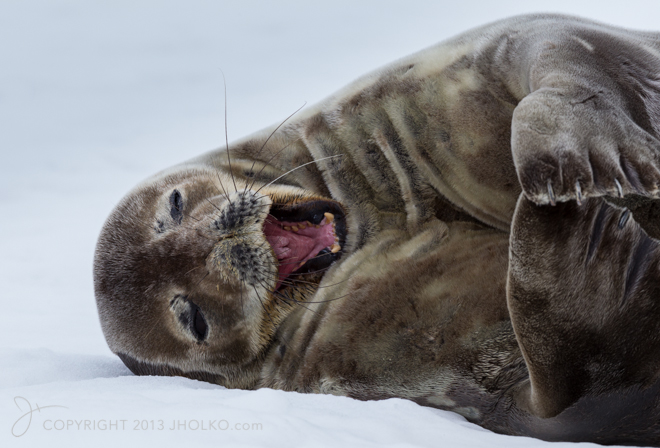
Finalist: Natures Best Photography & Travel Photographer of the Year 2013

I returned home a couple of days ago from an expedition I lead to Antarctica with my friend Daniel Bergmann and am starting to catch up on all of the missed correspondence whilst I was off the grid. I will have a lot more to say about the Antarctica expedition over the coming weeks as this was an extraordinary trip with some of the best weather and light I have experienced in this part of the world – including an absolutely incredible journey through the Lemaire Channel. In the meantime, I was very pleased to learn that two of my photographs were selected as finalists in Natures Best Photography and another in the Travel Photographer of the Year competition. This is the second time I have had images in the finals in both Nature’s Best Photography and Travel Photographer of the Year and am honoured to have had my photographs selected.  The overall winners for Natures Best Photography have already been selected and can be seen on the Natures Best Photography website. Travel photographer of the Year is still in its last round of judging and final winners should be announced in a few days time. Finalist – Natures Best Photography 2013: Landscape Category

Finalist Natures Best Photography 2013: Landscape Category

Finalist Travel Photographer of the Year: Single Shot Extraordinary Image Category

Photographers South Georgia Island and Antarctic 2014 Polar Photography Expedition

I am very excited to announce that after months of organisation and planning Andy Biggs and I are now opening bookings for a brand new and very exciting photography expedition to South Georgia Island and Antarctica.  This twenty day (yes, 20 days!) photography expedition will depart Ushuaia in South America on the 3rd of November 2014 has been designed to provide the definitive South Georgia Island photography experience. We will cross the Drake Passage where we will spend time photographing amazing icebergs and the spectacular Antarctic Peninsula. We will visit Elephant Island, home to twenty two of Shackleton’s men for four months. We will then enter the Scotia Sea detouring to the remote and rarely visited mountainous South Orkney Islands. We will zodiac cruise through a maze of icebergs before landing ashore on a beach bedecked with penguins, seals and lichen encrusted boulders. This location alone promises fantastic wildlife and landscape opportunities. We will then continue across the Scotia sea bound for South Georgia Island where we will see and photograph the world’s largest King Penguin rookeries, majestic albatross nests, seals and a plethora of bird life. Kelp strewn beaches are cluttered with basking elephant seals, feisty fur seals and hundreds of penguins that will prove a wildlife photographers dream.  Stromness and Grytviken harbour 3000 metre rocky peaks that rise up from the ocean to form amazing backdrops to the remains of whaling stations that will fulfil every landscape shooters wishes for dramatic landscape.  South Georgia’s remote, untamed landscape is simply stunning. Scattered across the mighty Southern Ocean, the tiny arc of windswept islands and harbours are some of the world’s greatest wildlife sanctuaries set against world class landscapes. Famed for its abandoned whaling stations and Shackleton’s heroic journey, South Georgia is home to literally millions of fur seals and penguins, wallows of elephant seals, and nesting albatross. After we finish photographing in this breathtaking area we will sail back to Ushuaia where we will dock on the 22nd of November and conclude our once in a lifetime expedition.Andy, and I wanted to put together a dedicated photography expedition to both Antarctica and South Georgia Island that really gave photographers the best possible opportunity to photograph big icebergs, and amazing wildlife. We wanted to ensure sufficient time in both Antarctica and South Georgia Island so this is a brand new itinerary that has been planned from the ground up to really maximise the opportunities for photography. We have specifically timed our expedition early in the season in order to give us the best opportunities for plenty of icebergs as well as wildlife at South Georgia Island. The ice and snow at South Georgia island will be pristine and as yet unvisited by man after the Antarctic winter. If you can only travel to Antarctica and South Georgia Island once in your life for photography then this is most definitely the trip you want to be on.KEY FEATURES

  • Dates : 3rd of November 2014 to the 22nd of November 2014 : 20 days / 19 nights
  • Ship : Ice Hardened Expedition Class Ship ‘Polar Pioneer’ Regarded by many as the best vessel for polar photography for its ability to get really close to big ice and ample deck space for photography.
  • Leaders : Andy Biggs, Joshua Holko
  • Dedicated to Wildlife and Landscape Photography

If you would like to register your interest to secure a place on this trip you can email Andy or I at andybiggs@andybiggs.com or info@jholko.com. Places are very limited on this trip and given the unique nature of this expedition we do expect to sell out quickly. Due to early expressions of interest the Captains Suite and Mini Suites are already sold out and there are only limited twin private and twin share rooms remaining. We have the entire vessel so this trip is solely for photographers and is 100% dedicated to both landscape and wildlife photography. Places are booked strictly on a first come first served basis. Additional information and a detailed itinerary can be downloaded from my website at www.jholko.com

Australian Geographic Desk Diary 2014

The 2014 Australian Geographic Magazine desk diary was released a few days ago. Featuring photography from many different artists,  the diary is a week to a page, hard cover, spiral bound with a ribbon marker. Photographs are taken from around Australia and Antarctica and feature classic Australian landscapes, flora and fauna. The 2014 diary includes more than ten of my own photographs from Australia and Antarctica and can be ordered online from Australian Geographic.

Packing for Antarctica 2013

As has become traditional I like to write up a packing list entry before I leave for an overseas workshop or expedition. This time I am heading back to Antarctica to lead a photography expedition with my friend Daniel Bergmann. Our expedition departs from Ushuaia on the 9th of November and we will be sailing across the Drake Passage to Antarctica where we will explore the Peninsula in an ice hardened expedition class ship – Polar Pioneer. We then sail across to the Falkland Islands and conclude our trip on the 23rd of November. I will be staying on in South America and heading to Patagonia for a week on a personal trip afterward so will be packing for both ship and shore photography. I am more or less packing the same equipment I took to Iceland, Svalbard and Greenland in July and August this year although I have decided to leave my 24mm TSE lens at home this time to save a little bit of weight. As much as I really enjoy shooting with this lens its focal length is already covered in the excellent 24-70mm F2.8L MKII. Additionally, much of the photography in Antarctica is from ship and zodiac without a tripod. Although I can hand hold this lens and still make tilt and shift adjustments it is somewhat awkward to do so on a zodiac and I have found from experience that I end up not using it when shooting from ships.

I had planned to upgrade my Macbook Pro to the new Retina model when it was announced this month in time for this Antarctica expedition but decided in hindsight it was an unnecessary upgrade and will continue with my current machine. There are significant weight savings in the new model (as well as the much improved retina display) however these advantages come at a significant cost and make little sense for the purpose I currently use the machine. You can read my thoughts on the subject in my post: Why I am Ditching the Macbook Pro Line. I will be doing a follow up post in the coming weeks with my thoughts on the new Mac Pro now that I have had time to fully look into the specifications. Suffice to say for now that the new Mac Pro is really optimised for 4k video editing and contains GPU’s that are simply massive overkill for still photography production.

The Canon 1DX will be my primary camera of choice for this trip. I will also carry my original 1DS MK3 as a back-up in the unlikely event of a failure. I will also carry a number of spare batteries so that I can cycle them in and out of warm pockets. Experience has shown me that I can pretty much go an entire day without a battery change but I like to have spares on hand just in case.

Gura Gear Bataflae 32L: (carry on luggage)

  • Canon EOS 1DX Pro Body Camera
  • Canon EOS 1DS MK3 Pro Body Camera
  • Sigma 15mm Fish Eye Lens (I have some specific shots in mind for this specialist lens)
  • Canon 17mm F4L TSE Lens
  • Canon 24-70mm F2.8L MKII Lens (The MKII version of this lens is an amazing piece of glass)
  • Canon 70-200mm F2.8L IS Lens
  • Canon 200-400mm F4L IS Lens with inbuilt 1.4 TC (Watch the Unboxing Video)
  • 4 x Spare Batteries for the Canon Cameras
  • 1 x Macro Extension Tube
  • Cable Release and Bubble Level
  • Assorted CF and SD Cards totalling around 100 Gigabytes
  • Rocket Blower and Dust Cleaning paraphernalia
  • Complete LEE Foundation and Filter Kit with Soft and Hard ND Graduated filters and LEE Polariser – includes a custom made adapter for the Canon 17mm TSE Lens

Gura Gear Chobe Bag: (carry on luggage)

  • 15″ Macbook Pro with Lightroom 5 and Photoshop CS6 with the Nik Plugin suite
  • MacBook Power Adapter
  • 2 x 1TB iOmega dual firewire 800 Hard Drives (for dual in the field image back up)
  • Various Power Adapters / Chargers and Associated Cables
  • Canon 1DX / 1DS MK3 Battery  Charger
  • iPad Mini (e-books and movies for the long flights)
  • Firewire 800 CF Reader
  • Passport / iPhone / Wallet
  • A lot of these items I store inside Gura Gear Etcetera cases inside the Chobe. (These cases are fabulous for organising accessories)

North Face Thunder Rolling Duffle: (checked luggage)

  • Arctic Sport Muck Boots (For use in the zodiacs in Antarctica)
  • 66º North Wet and Cold Weather Outer Shells
  • Base Layers
  • Mid Layers – Trekking Pants and Tops
  • Gloves and Hat
  • Miscellaneous clothes
  • Personal items and toiletries – including Sunscreen (The Ozone layer is extremely thin in the Poles and it is very easy to get sun burned in minutes)

Tripod: (checked luggage)

  • Really Right TVC24L Tripod
  • Really Right Stuff BH-55 Ball Head
  • Really Right Stuff Tripod Spikes (For mossy ground and rock claws for ice and rock)
  • Jobo Jnr. Deluxe Gimbal Head with Really Right Stuff Dovetail Base Plate
How to Avoid Getting Sick When You Travel Overseas

It is somewhat timely to post this article as I have been suffering from a really bad case of the flu which was diagnosed as pneumonia while I was in Kaikoura in the South Island of New Zealand last week. I am slowly on the mend and for the first time in ten days I think I am actually starting to feel a bit better (touch wood!). Being unwell and unable to photograph in such a beautiful part of the world was far from ideal. However, it got me thinking about what I generally do to avoid getting sick when I travel. I need to put a disclaimer on this article at this point in that I am not a Doctor and I am not offering medical advice in any shape or form. The intention of this article and post is to provide you with some general hygiene based practices you can implement to help you avoid getting sick when you are travelling. You should always consult with your Doctor regarding any illness. These are precautions I personally take and they generally work for me. Consult with your Doctor and remember I am not offering you any medical advice.

With that disclaimer out of the way these are my personal Top Ten precautions for avoiding illness when I travel. Many of these might seem like simple common sense but its good to revisit them from time to time to ensure you are implementing best practice to avoid illness.

  • Be Prepared: I try and be prepared for illness and travel with suitable medicines based on my Doctor’s advice. I visit my Doctor before I leave and get a prescription for a generic AntiBiotic medicine. Something that I can take to help my body battle an infection should I be unlucky enough to fall ill. I also travel with a range of medications including pain killers and nausea medicines. Consult with your Doctor for their recommendations on suitable medications that you can use when you are travelling.
  • Prevention: I always visit my Doctor before I leave and find out what he recommends in the way of immunisations for the countries I plan to visit. Prevention is always better than cure when it comes to illness and many of the really nasty ailments can be immunised against (such as Typhoid, Yellow Fever etc.). Immunisations are like crash helmets for your entire body  – You don’t want to be without them.
  • Hygiene: I always pack a small bottle of Hand Sanitiser and use it religiously. When travelling in areas which have questionable hygiene I use the sanitiser to wipe down cutlery, chopsticks, bowls and cups. I wash my hands regularly and always before I sit down to a meal. If I am travelling on a cruise ship I am using hand sanitiser many times per day. As a general rule I try and apply sanitiser very time I touch a ships public railing. Ships railings are the equivalent of a bacteria factory operating at maximum efficiency. I personally prefer to bounce off the ships walls with my arms and elbows than to touch ship railings.
  • Catching Bugs: The default reaction for most people stepping onto an escalator or travellator at an airport is to immediately put their hand on the hand rail. My advice is that unless you specifically require the use of the rail for balance avoid placing your hand on the rail. These hand rails are one of the most common ways germs are transmitted from person to person. All you need to do is touch a hand rail then touch your face and you can pick up a bug or virus. The same applies to everything from buttons in lifts to door handles and airport luggage carts.

  • Water: Only drink bottled water and do not brush your teeth with tap water. The only places in the world I drink tap water are Australia (where I live), New Zealand and Iceland. Outside of those three countries I only drink and brush my teeth with bottled water. If you are used to ordering your drinks with ice be sure to ask where the water came from – bottled or tap. Drink plenty of water. It is easy to become dehydrated when you are travelling and if you are dehydrated it is hard for your body to fight off illness. Personally, I find it hard to drink a lot of water so I usually opt for either bottled soda or mineral water.
  • Vitamins: I take Vitamin C daily when I am travelling as a preventative medicine – usually 1000 milligrams per day. If I start to feel a sniffle coming on I increase my daily dose to 3000 milligrams for a short period. Vitamin C is a proven source of energy for your body to help fight sickness. If the food is questionable in the country I am travelling I will also supplement with a daily general purpose multi-vitamin.
  • Wash: Wash your hands regularly. It never ceases to amaze me the number of people I see walking out of a public bathroom without washing their hands. Wash with hot water and soap – a quick rinse doesn’t cut it and I prefer the surgical scrub approach. Disposable paper towel is my preferred hand drying method as I can usually keep a piece in my hand to open the bathroom door before tossing it in the bin. Remember, any door handles (particularly bathrooms) are potential infection points so avoid them at all times if possible.
  • Touch: This is a hard one to remember, but it is often the key to avoiding illness. Try not to touch your face with your hands when you are travelling. Many bugs and germs are picked up first on the hands and then transmitted to the face where actual infection takes place. Bacteria is carried through moisture, so when people are sneezing and coughing, and then touching things, they are leaving their germs on them. If you are to accidentally come into contact with these germs, you don’t want them getting to your mouth or nose. Be especially careful in restrooms and public spaces.
  • Food: Eat healthy meals and avoid suspect food. As tempting as it might be to try the local delicacy that has been hanging in the street market under the blazing sun all day it probably isn’t a clever thing to do and it certainly isnt worth risking a bad case of food poisoning over. I try and give my body the best food I can when I am travelling within the confines of my food and taste preferences. Take away junk food provides little in the way of nutrition, vitamins and minerals and does not provide the body with the ideal fuel for fitting infection. There is often a temptation when travelling to try new and exotic foods. I exercise common sense and caution whenever I have the option to try something new. Earlier this year I was travelling through an extremely remote part of China near the Russian and Khazakstan borders and my food choices were extremely limited. I chose what I considered to be the safest option in many places but still ended up with some pretty nasty food poisoning. In these remote parts of the world it is often worth bringing food and snacks from home or from a known location.
  • Rest: Get plenty of sleep and rest. Your body will be much more successful at fighting off illness if you are rested. Colds and flues are much more likely to take hold if you are run down and tired. It can be hard to find ample rest time during photographic travels but it is critical to give the body time to recover every few days. There is absolutely nothing wrong with an afternoon nap if the light is poor or its raining outside. Downtime is as important as shooting time. A rested body and mind is also far more creative than a tired one. I confess that of all the things on my list for avoiding illness this is the one I fail at most frequently.

What to do if you get sick anyway?

Inevitably, if you travel as much as I do at some point you are going to get sick when you are travelling – it happens to all of us. If you do get sick you should consult with a local doctor as soon as practical and heed their advice on recommended medication. It becomes even more important to rest to allow the body time to recover so avoid long hours of field work. You may well have travelled half way around the world to an exotic destination to make photographs but if you feverish and sick staying out to catch good light isn’t going to help you get better. You just need good old fashioned bed rest – for which there is no substitute. It is also likely any travelling companions you may have will want to put some distance between themselves and you. Give them space. You don’t want to make other people sick and ruin their experience.  Exercising voluntary quarantine is a very good idea for everyone you are travelling with.