Wildlife Portraits Project – Sumatran Tiger Cubs

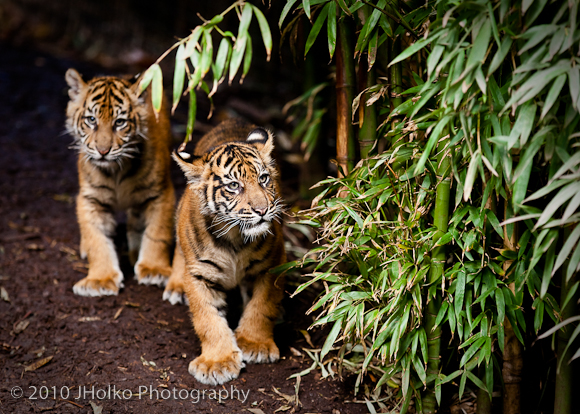
This is definitely an ‘Awwww…. isn’t that cute’ photograph; but I just couldn’t help myself – Sumatran Tiger cubs are too cute! And the opportunity to photograph a couple of these endangered Tiger cubs doesn’t present itself very often. For the record these cubs were born in captivity at the Melbourne Zoo a few weeks ago.This was quite a tough photograph to make. I was at ISO800 wide open on the 300mm F2.8L IS with a shutter speed of 1/100th of a second. I shot half a dozen frames on motor drive and this was the only one where the cubs stopped moving and are sharp (the front cub anyway). The back cub is soft due to the shallow depth of field at F2.8 on the 300mm.

Where's Mum Gone?

New South Wales – Perry Sandhills Part Two

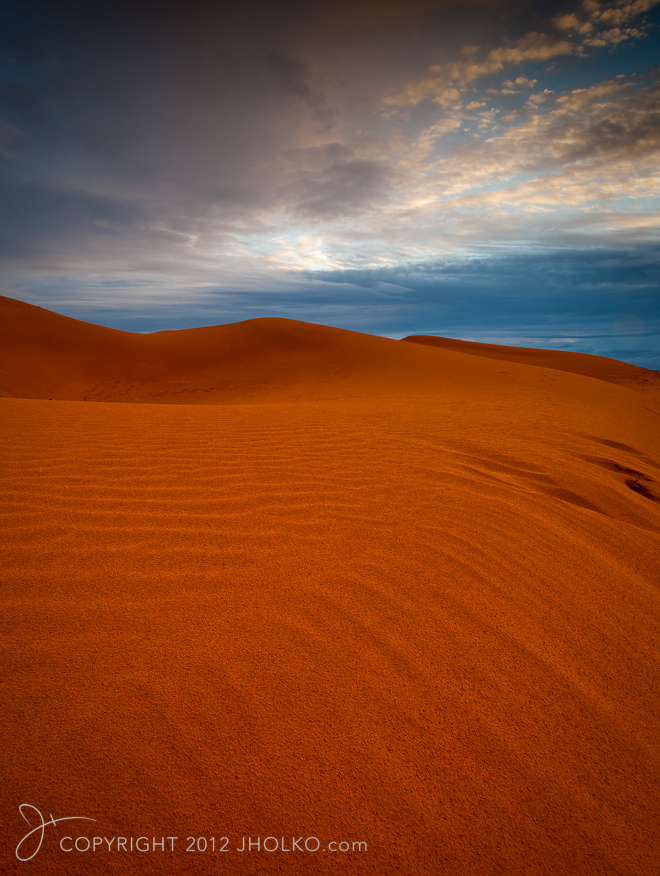
This second photograph from Perry Sandhills in New South Wales was taken the following morning about ten minutes before sunrise (although I never saw sunrise – the sun was buried behind layers of thick cloud). The morning was cold, with howling winds, racing clouds and regular rain showers – In short, weather that is far from comfortable (although quite conducive to good light) for outdoor photography. Nevertheless I persevered, stuck out the weather and came away with a second photograph I am very pleased with. I used a similar approach to the previous evenings shoot using a wide angle lens close to the ground with a three stop soft neutral density filter to darken the clouds. The twenty five second exposure has captured the clouds streaking across the sky adding a good deal of drama to the image. I could easily be accused of using LEE’s new Big Stopper ten stop ND filter for this photograph, but the truth is it just wasn’t necessary. The winds were pushing the clouds along at a rate of knots and any long exposure was going to blur them significantly.

In this instance I deliberately chose to leave in the trail of (almost gone) foot prints as they add some mystery to the image as well as the human element to what could have otherwise been quite a stark photograph. Like the previous photograph the sand is heavily pitted from the repeated rain showers; which has added a texture to the dunes that I find very appealing.

New South Wales – Perry Sandhills Part One

This was my first visit to Perry Sandhills near Wentworth in New South Wales. ‘Cap in hand’, I did have a fairly strong preconception about the sort of photograph I wanted to come away with from this location – the iconic first light of dawn playing across the dunes with some spectacular cloud formations lit with sunrise colour. Not to much to ask was it?

As is so often the case, the preconception is stronger than the reality; and not just because the weather conspired against me – I ended up with rainstorms; which produced some dramatic and unexpected lighting. Landscape photography at Perry Sandhills presents some fairly unique challenges based on its location, surroundings and weather. To start with the Sandhills themselves are surrounded by ugly Mallee scrub and underbrush that detracts from the softness and curves of the dunes. In addition, the dunes are somewhat overrun with weeds and other distracting vegetation. It is quite difficult to frame a shot without this unwanted element intruding into the scene. I found the best solution was to get down low to the ground with a wide angle lens and then some judicious use of the spot healing tool in Lightroom to clean up any unwanted weeds. Landscape photography is often the art of subtraction rather than addition and choosing what to leave out is often more important than what is included.

The other major photographic obstacle is that the Sandhills are a fairly popular tourist destination so the majority of the dunes are literally covered in footprints. Finding a bit of pristine sand involves some fairly arduous hiking into the dunes; being careful not to walk into a potential photograph. Its very similar to my experiences of landscape photography in the snow. In some instances the addition of a human element such as a footprint can really help (with things such as scale); but generally I try to avoid showing the hand or rather foot of man in my landscape photography.

This first photograph was taken just after a rain storm about ten minutes before sunset. The light was quite dramatic and the rain helped greatly with saturation of the dunes. I used a three stop soft graduated neutral density filter to hold back the sky and a two stop coral graduated filter on the bottom half to warm up the sand. It is quite difficult to see in the small jpeg but the pot marks from all the rain are visible at 100% on screen and in a print. I enjoyed my brief stint photographing the Sandhills and will undoubtedly stop off there again on my next trip into the area.
Mungo Trip – A Wash Out

Unfortunately I have had to cut my photographic trip to Mungo, Mildura and the Walls of China a couple of days shorter than I had originally intended. Pretty much non stop rain for the last 48 hours meant that the road into Mungo and the Walls of China was a total quagmire and closed; combined with unforeseen circumstances at the office in Melbourne and it was time to throw in the towel on this trip and head home.

I did manage to squeeze in some photography between the rain storms at the Perry Sandhills near Wentworth in New South Wales as well as an old abandoned house near Charlton in Victoria that I stumbled across on the way home; so the trip was not a complete write off. The road into Perry Sandhills was in a similar state to the road into Mungo. Soft sand, combined with days of rain turned the whole thing into something akin to quicksand and I nearly got bogged several times just getting into the car park. I am pretty tired after more than fourteen hours of driving in the last two days but will post some more photographs from the trip soon. I am not looking forward to washing the BM!

Iceland Volcano – Katla Situation Update

RSEO is reporting 28/05/2010: Katla is the second largest volcano in the country of Iceland, and Iceland’s president is issuing a warning saying that the eruption of Katla is close. Icelandic president Ólafur Grímsson has warned other governments around Europe “that a significant eruption at the volcano is close.” “We [Iceland] have prepared … it is high time for European governments and airline authorities all over Europe and the world to start planning for the eventual Katla eruption,” he said. Europe is still experiencing clouds of volcanic ash from Eyjafjallajokull that erupted in April. Airlines all over the world have lost significant flight time and money due to flights being cancelled as a result of the ash clouds. An eruption of Katla, the second largest volcano is Iceland, could spell even more trouble. There has been speculation about Katla since the eruption of Eyjafjallajokull. Katla is the larger of the two volcanos. The planet appears to be in a perpetual state of unrest. From today’s 7.2 magnitude earthquake in Vanuatu to the pending eruption of Katla in Iceland; it seems like Mother Nature is kicking up her well worn heels.

My Take on the Situation -“a significant eruption at the volcano is close” What does this really mean? In and of itself, not much as how does one define ‘close’?. Was Ólafur Grímsson speaking in geological terms? Or, was he indeed referring to the possibility of an eruption any moment?  We know historically that Katla is usually triggered by an eruption at Eyjafjallajokull. Its just a matter of when not if Katla erupts. It could happen tomorrow or it might not happen for years. Increased seismic activity at Katla points to sooner rather than later; but ‘sooner’ could still be some way off. As the clock ticks down to my own trip to Iceland trip I am growing ever more concerned about when ‘sooner’ might be.