Canon Collective Joins Photographers First Light South Georgia Antarctica

I am excited to announce today that Canon Australia and the Canon Collective have joined my photographic expedition to South Georgia Island and Antarctica this November. Full details of this expedition are available on my website HERE. There are now only a few places remaining before the expedition will be sold out. Full Press Release Below.Antarctica-3198-Edit

Canon Collective joins Photographers First Light in Antarctica for Ultimate Photography Event

Antarctic cruise specialists Aurora Expeditions have unveiled their brand new partnership with the Canon Collective – the social community of leading photography and camera brand, Canon Australia. The partnership will see the two companies align to bring travellers an exclusive Antarctic photography experience on an expedition to Antarctica and South Georgia this November.

The collaboration between Aurora Expeditions and the Canon Collective will provide the ultimate Antarctic photography experience for photographers of all levels. An on-board photography program will be delivered by award-winning professional polar photographer Joshua Holko and inspiring environmental photographer, Martyn Lucas.

Travellers can expect to develop their photography through a series of lectures and workshops as they sail through the stunning landscapes of Antarctica and South Georgia. Guides will assist in the field with camera skills, one-on-one tuition as well as assistance with editing and post-production skills.

Travellers will also be treated to the opportunity to trial a range of Canon’s photography equipment with support from two Canon Collective ambassadors, who will be on hand to teach and assist passengers more about the products as well as support the photography guides with tips and tricks for capturing the best photographs.

What can travellers expect to photograph on this amazing expedition? They’ll capture the early-season light as the days grow longer and skies change from blue to all shades of pink. Soaring seabirds will be photographed as they follow in the ship’s wake along with at least three species of penguin as they come ashore in the thousands for the short, intense summer.

From small inflatable crafts ‘Zodiacs’, passengers will cruise past and snap intricately-shaped icebergs and giant glaciers, piecing out of the snowy backdrop into the clear, icy waters. Daily shore landings offer opportunities to explore and capture the wildlife and landscapes most only dream of.

Whether you’re a professional photographer or just enjoy taking stunning holiday snapshots, this dedicated photography voyage will offer you the best experience to capture the unique beauty of Antarctica and South Georgia.

The 18-day Photographer’s First Light expedition featuring the Canon Collective departs Santiago, Chile with a flight to Stanley in the Falkland Islands on 19 November 2016, and ends in Punta Arenas, Chile on 6 December 2016. Prices start from US$14,300 per person and includes all on-board accommodation and meals, daily excursions, expert guides, photography workshops, and use of Canon’s latest equipment.

About Canon Collective

The Canon Collective is an inspired group whose mission is to help you do more with your photography than you ever thought possible. Our Canon photo ambassadors will share their knowledge and expertise to help you perfect your skills, no matter what your level. The Canon Collective attends a variety of major events from fashion to sports, all around Australia. The team also holds regular workshops and special events. Through the Canon Collective you’ll gain access to unique photographic experiences. Come along, meet new people, learn photography tips and tricks, improve your skills and take part in challenges. For more information visit www.canon.com.au/en-AU/Personal/imageSpectrum/Community/collective-home

Joshua Holko – 2015 Global Arctic Photographer of the Year. 

Joshua Holko is a award-winning, full-time professional landscape, nature and wildlife photographer who specialises in photographing in extreme latitudes of the Polar Regions. A fully-accredited member of the Australian Institute of Professional Photographers (AIPP), Josh is also an awarded Master Photographer. With many accolades to his name, Josh is Australia’s first and only Moab Master Photographer and Printer by Moab and Legion Paper in the USA, and has also sat on the Victorian Council of the Australian Institute of Professional Photographers. More information www.jholko.com

Martyn Lucas

Martyn travels the world with his camera, with a particular interest in the Polar Regions. His recently published work and exhibitions highlight the Poles and focus on the environment and what is profoundly at stake in these regions. His aim is to make photographs that draw viewers into the now. Most people see the world in colour: lustrous, radiant, glossy and saturated… while the world of black and white offers the basics – light and shadow falling on various surfaces, beautiful, rich and inviting shadows, geometries, lines, shapes and bold designs. More information www.martynlucasphoto.comSouthGeorgia2015-8365-Edit

Svalbard in Winter March 2017 Expedition Announcement

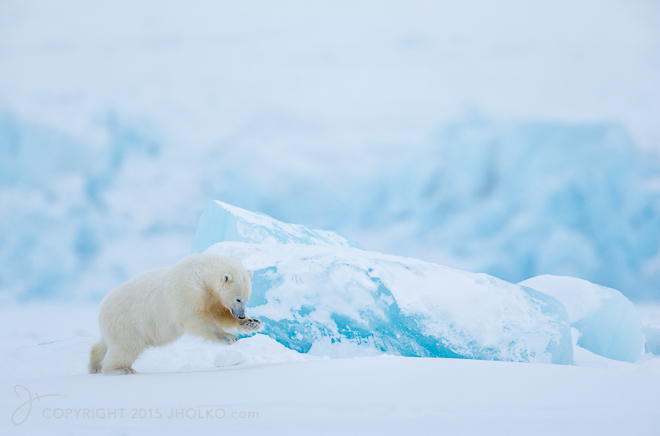
I am excited to officially announce today a brand new winter expedition to Svalbard in March next year, 2017. The result of several scouting and test trips this new and unique expedition offers a first time opportunity to photograph in Svalbard in winter from expedition ship. The Arctic in Winter is a place to inspire the imagination. It is a white landscape bathed in golden light. This brand new expedition is the first of its type to venture north of Longyearbyen by ship in winter. If you want to make unique and powerful Arctic photographs this is the expedition for you.Svalbard-8139-EditThe main focus of this expedition will be Arctic winter light, landscape and wildlife. In March and April the light conditions in Svalbard are magical. Usually winter trips to Svalbard are limited to day trips on snow mobiles quite close to the town of Longyearbyen. With our expedition ship we will explore a much bigger area including the western and northern areas of Spitzbergen.

Svalbard-9725-EditThis expedition has been more than 18 months in the planning and has been designed to provide the very best possible opportunities to experience and photograph Svalbard in winter light. We expect to meet wildlife such as Polar Bears, Walruses, Seals, Arctic Foxes and Reindeer. At this time of year the sea birds will also be returning to their breeding grounds.Svalbard-9056-Edit12015This exclusive expedition is for a strictly limited number of just 12 participants plus leader and is dedicated to winter photography in Svalbard.
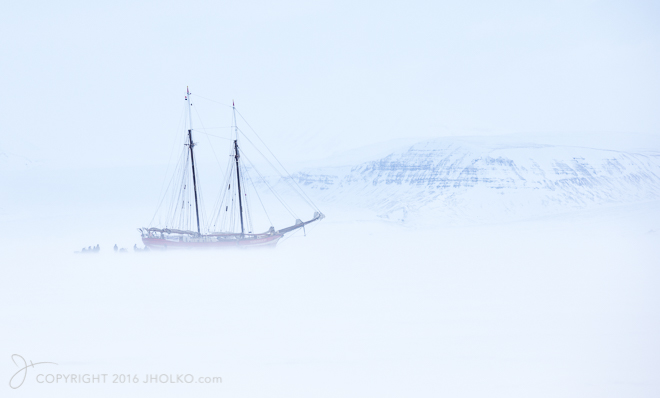
We will be using the ice hardened expedition ship M.S Origo that will enable us to skirt the edge of the pack ice searching for and photographing landscapes and wildlife. M.S Origo is widely regarded as the best ship in the Arctic for Photography. Our expedition ship is also equipped with suf cient zodiacs (2 x Zodiac MKV models) and crew for all photographers to be shooting simultaneously with plenty of room to spare for camera equipment – So bring what you need!Svalbard-0125-EditIf you are excited by the idea of traveling to Svalbard in winter with a small group of dedicated photographers now is the time to secure your place. You can download a detailed itinerary and PDF HERE. Places are extremely limited and once they are spoken for that’s it.
EXPEDITION AT A GLANCE

Dates: 26-03-2017 until the 03-04-2017
Duration: 8 Nights / 9 Days
Participants: Maximum 12 Photographers plus leader Investment: $9,950 USD
Start and Finish: Town of Longyearbyen in Svalbard Norway
Trip Highlights: Winter Landscapes, Polar Bears, Walrus and other Arctic Wildlife, Incredible Arctic Landscapes, Pack Ice and small group size

Why a Winter trip?

Winter in Svalbard provides an opportunity for a snow covered landscape and hours of golden light. In March and April the sun never gets high in the sky and we will have approximately 8-10 hours of daylight with which to photograph. If conditions are good we may get spectacular golden sunset and sunrises.

How cold will it be in Winter in Svalbard?

The average temperature in Svalbard in winter is -2oº Celsius. However, temperatures can plummet below -30º Celsius and with wind chill it can feel even colder, so it is important to be prepared with warm clothing. Survival suits are mandatory for all zodiac excursions in winter and will be provided for you.

Is the ship heated?

Yes. The ship is heated 24/7 and the temperature on board and in the cabins is warm and comfortable.

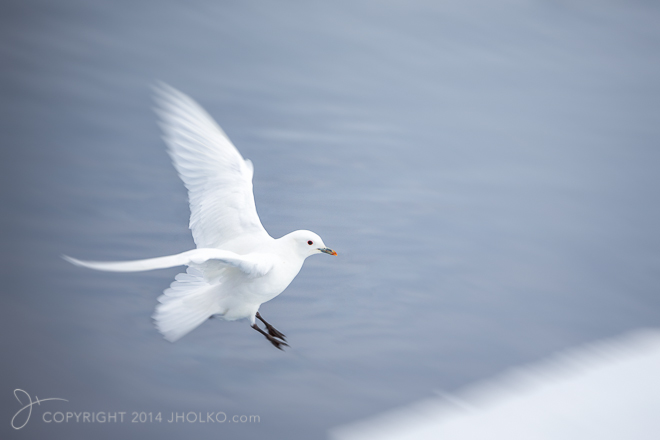
Due to initial expressions of interest and bookings there are only a few places remaining before this new and unique expedition will be sold out. If you would like to register your interest for one of the remaining places you can do so by sending me an email. Places are strictly filled on a first come, first served basis.Ivory Gull

Photo of the Month August 2016 – Lofoten Green Fire

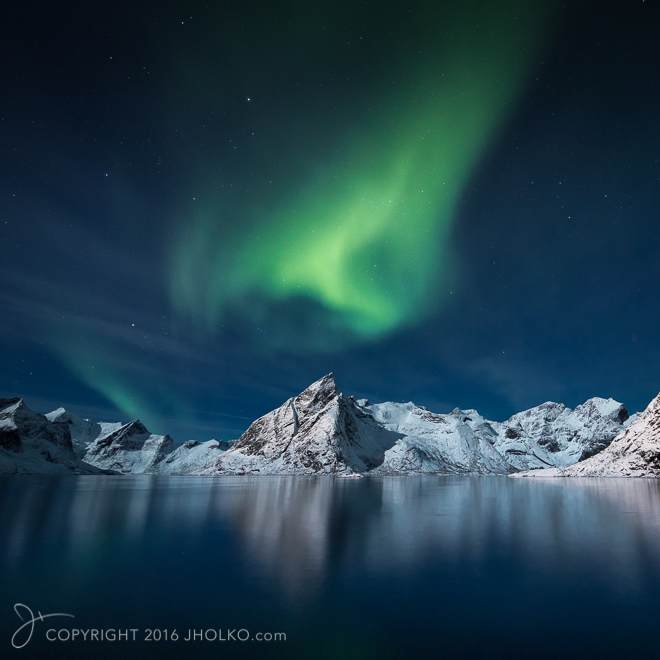
Following on from my Lofoten photograph of the month for July is another image from the Island archipelago. This time its a midnight photograph of the Aurora Borealis over the Lofoten mountains. Taken during my March winter workshop earlier this year (Read the Trip Report) we were fortunate to encounter some pretty good aurora on a clear evening. The landscapes of the northern islands of Lofoten are really quite something to behold. Precipitous and ominous peaks rise straight out of the ocean and make for the perfect back drop for the Aurora Borealis. With a dusting of fresh snow and arctic winter light the entire scene is akin to a fairy tail location and subsequently the photographic opportunities can be truly superb. I have found over the years that one of the keys to Aurora photography is to vary your shutter speed. The lights can come and go at varying speeds and its important to keep shape and definition in the patterns. In this instance, I settled on a shutter speed of 15 seconds after some experimentation as I felt this yielded the best balance of shape and color blur.  I am looking forward to returning to Lofoten in March 2018 for a second winter workshop.Lofoten-0426-Edit

Penguin World Project – Saving the World’s Oceans

As some of you may already be aware (those of you joining me on my Antarctica White Nature Expedition next year) I was recently invited to join the Penguin World Project as one of the project photographers. In brief, the Penguin world project focuses on conservation of our marine ecosystem and aims to help spread awareness of the rapidly deteriorating health of the world’s oceans. Penguin World believes penguins are the best Ambassadors to address conservation issues and challenges for the oceans marine life. For communicating the message Penguin World are publishing books, articles and arranging expeditions, exhibitions and events worldwide to drive urgently needed attention to these important conservation topics. Being asked to be a part of the Penguin World Project as part of a small select team is a great honour and more importantly a fantastic opportunity. I have long wanted to push my efforts and photography more into conservation and I am looking forward to working actively in the project over the coming months. The project also wants to work closely with Partners who want to join forces for a better future for our marine ecosystem. You can read more about Penguin World at the Penguin World Website. I urge you to consider donating to Penguin World. Every small contribution helps. Even $5 (the cost of a cup of coffee) is helpful and appreciated. No one is paid for their involvement in Penguin World and all donations are used to help meet the projects aims and objectives. Donating is only one way to become involved in the project; even spreading the word helps! If you would like to be kept up to date on the progress of the Penguin World Project  you can sign up for the Penguin World Newsletter.Penguin Love

The Mission

Our MISSION is to draw the world’s attention to the importance of, and threats to, our marine ecosystems. Penguins are the perfect ambassadors for communicating about the 18 most serious conservation issues. Adopting a positive and proactive approach to tackling some of the biggest issues, we aim to involve scientists, academics and global companies that have established social responsibility and environmental strategies.

Our VISION is a future with healthy and vibrant oceans. To achieve this, we want to share solutions for more sustainable fisheries, safe seafood, cleaner waters and thriving marine life.

Conservation

On our beautiful blue planet, the sea covers more than 70% of the surface. But the world’s oceans are suffering from pollution, unsustainable fishing, habitat destruction and climate change. How do human activities affect our oceans and what technological innovations, management changes and political agreements will resolve these issues?

Communication

Photography and film are powerful tools to communicate about the conservation issues penguins are facing and outline possible solutions. Some of the world’s finest nature photographers are currently undertaking expeditions to remote islands and areas in the Southern Hemisphere to capture the images to share these stories.

Why Penguins?

Penguins are perfect ambassadors for the conservation of our seas. They eat the same fish species as us, move around upright and have a complex social life, in which we can see a reflection of our own. They are funny and cute, and they speak to us on an emotional level. They are a living barometer of how marine conditions are changing.FalklandIslands2015-3179-Edit


Departing for Polar Bears of Svalbard 2016 Expedition

It seems like only last week that I returned from the South Island of New Zealand (I am sure time is accelerating as I get older) but in a few minutes time I will be piling into a taxi with all my gear and heading to the airport for the long haul flights to Oslo and then onto Longyearbyen for my 2016 Polar Bears of Svalbard expedition. Svalbard has become one of my favourite destinations in the world for both Wildlife and Landscape photography. It is an incredible area located deep within the Arctic circle that offers the possibility for fantastic polar bear photography as well as other Arctic species including Walrus, Arctic Fox, Reindeer, Whales and more. The landscape of Svalbard is also very much an untapped gem and there are limitless possibilities for photography in this remarkable Arctic environment.

On this expedition we are using a small ice hardened vessel that will enable us to get in nice and close to drift ice around Svalbard. Importantly, it has nice low decks so we can get down to eye level with our subjects. With this expedition being limited to just twelve participants we will have plenty of room for everyone to photograph at once from both ship and zodiac and I am super excited to share this experience with all aboard. As well as Polar Bears, we will also likely photograph Walrus, Arctic Fox and a great many Arctic sea birds during our expedition.

After I finish in Svalbard I am headed directly to Iceland for two back-to-back workshops in the Highlands. Each of these workshops covers a different area of the Highlands and each has something different and unique to offer. The highlands are the real heart of Iceland and at least to my mind offer some of the most stunning scenery and photographic opportunities to be found anywhere. It is also a wonderful chance to get off the main roads and into less visited areas of the country. Daniel Bergmann and I planned these two workshops more than three years ago now and I am looking forward to sharing the experience of these wonderful locations with all of our participants. I am of course, ever hopeful that the long overdue Hekla volcano might also put on a show for us…You never know!

My 2016 Svalbard expedition has been sold out for some time, but there are still a few places remaining on next years 2017 expedition before it to will be sold out.  If you would like to get an idea of what this expedition is like you can read the trip report from the 2015 expedition. A full itinerary and additional information can also be downloaded HERE. If you would like join us you can register your interest by dropping me an email at any time. Places are filled on a first come, first served basis.

On the way to the End of the World - AntarcticaWatch Kingdom of the Ice Bear Expedition MovieKingdomoftheiceBearPreparing for both Svalbard and the Highlands of Iceland presents some packing and equipment challenges as I need to pack both long telephoto lenses for the wildlife and a more ‘hike friendly’ light weight system for hiking in the highlands. As such I am taking three different camera bodies on these trips. Two Canon EOS 1DX MKII’s will be my primary cameras for the Polar Bears of Svalbard expedition. The Canon EOS 1DX MKII is the perfect tool for Arctic wildlife photography and I am looking forward to using these cameras for the first time in the Arctic (I did recently take them to New Zealand – Read the Trip Report) I am also carrying the 50 mega pixel Canon EOS 5DSR camera for the two Iceland Highland workshops after I finish in Svalbard. The Canon EOS 5DSR is actually more about weight saving than pixel count for me. Its light weight body is preferable for hiking to the Canon EOS1DX MKII; although quite honestly I prefer the files from the new Canon EOS 1DX MKII cameras.

F-Stop Lightroom Roller Camera Bag

  • Canon EOS 1DX MKII Pro Body Camera x 2
  • Canon EOS 5DSR Camera
  • Canon 24mm F3.5L TSE MKII Lens
  • Canon 16-35mm F4L IS Lens
  • Canon 24-70mm F2.8L MKII Lens (The MKII version of this lens is an amazing piece of glass)
  • Canon 70-200mm F2.8L IS MKII Lens
  • Canon 600mm F4L IS MKII Lens
  • 2 x Spare Batteries for the 1DX MKII
  • 2 x Spare Batteries for the 5DSR
  • Canon 1.4 TC MKIII Tele-Extender
  • Leica Ultra-Vid HD Binoculars
  • Cable Release
  • Assorted CF, CFAST and SD Cards totalling around 300 Gigabytes
  • Rocket Blower and Dust Cleaning paraphernalia
  • Complete LEE Foundation and Filter Kit with Soft and Hard ND Graduated filters and LEE Polariser

I am carrying the TSE lens specifically for landscape photography in Iceland. I am primarily carrying the 600m and 300mm lenses for Polar Bears and other wildlife in the Arctic, but also intend to use them to photograph birds at Jökulsarlon in Iceland.

Chobe Bag: (carry on luggage)

  • 15″ Macbook Pro with Lightroom and Photoshop
  • MacBook Power Adapter
  • Canon 300mm F2.8L IS MKII IS Lens
  • 2 x Sandisk Extreme USB3 2TB SSD Hard Drives for in the field Back Up.
  • Various Power Adapters / Chargers and Associated Cables
  • Canon 1DX MKII / 5D Battery  Charger
  • USB CF, CFAST and SD Card reader
  • Passport / iPhone / Wallet
  • A lot of these items I store inside Etcetera cases inside the Chobe. (These cases are fabulous for organising accessories)

Tripod: (checked luggage)

  • Really Right TVC33 Tripod
  • Arca Swiss Z1 Ball Head with Levelling base for landscape work
  • Satchler FSB-6 Fluid Head with Levelling base for long telephoto lens work
  • Really Right Stuff Tripod Spikes (For mossy ground and rock claws for ice and rock)

In addition to the above camera bags I am also packing the brand new F-Stop ‘Red Bull’ Ajna for hiking in Iceland. My thanks to F-stop for supplying me this brand new hiking pack specifically for these workshops.

I am going to do my best as always to update my blog whilst I am away; but posts may be somewhat sporadic, particularly when I am at sea in the Arctic. For now, I have nearly thirty six hours of travel ahead of me and it’s time to make a start. See you in Svalbard.