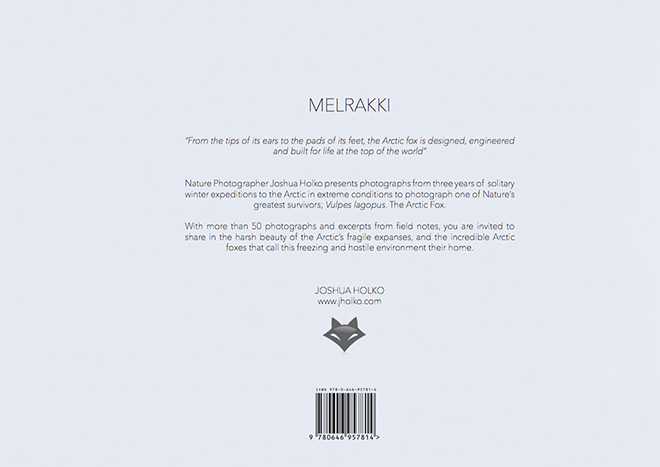
I am extremely pleased and excited to announce today the pre-order release of Melrakki; my brand new Limited Edition Hardcover book on the Arctic fox. The culmination of three years of winter photography in the extreme north-west of Iceland, Melrakki is available now for pre-order exclusively as a Limited Edition hard bound fine-art book. Limited to just 100 copies, each edition is hand numbered and signed and includes an original 11″ x 09″ inch fine-art pigment on paper print.
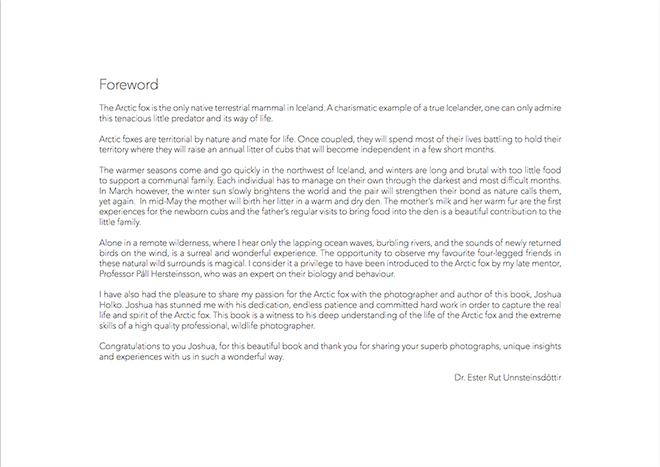
With foreword by pre-eminent scientist and Arctic fox expert Dr. Ester Rut Unnsteinsdóttir, Melrakki includes over fifty photographs and field notes from the three years spent photographing this remarkable predator in the extreme north-west of Iceland.
Melrakki Limited Edition is printed using the highest possible quality Canon Dreamlabo inkjet printer system and is printed on beautiful 250gsm High Definition Lustre paper that fully captures all of the incredible colour and tones of the original photographs. The Canon Dreamlabo represents the current state of the art in book printing and was chosen for this project after extensive testing and proofing as it yielded the highest quality that most closely resembles the original fine-art pigment on paper prints. I am extremely proud to stand behind the print quality in this Limited Edition book.
The included fine-art pigment-on-paper print is printed on Moab Somerset Museum Rag 300gsm paper and is hand signed.
Melrakki Limited Edition is $245 AUD plus shipping and can be ordered online exclusively through my website HERE.
I hope that you enjoy the photographs, insights and field notes from this project into the frozen world of Melrakki – the Arctic fox.
Photographs and Text by Joshua Holko
Approximate Dimensions: 22cm x 30 cm
96 pages (over 50 photographs + field notes)
The photo book & the print are together in a protective cloth sleeve
ISBN: 978-0-646-95781-4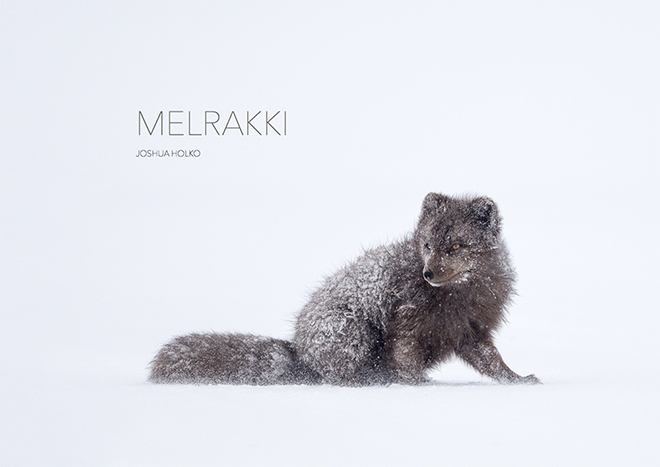


 Watch a short excerpt from the making of Melrakki on Vimeo
 This masterclass landscape workshop was about maximising our time photographing in some of the most spectacular parts of New Zealand. Our small group size of just six photographers provided us a really small intimate group that enabled us to put in some long hours in the field in some of the most spectacular parts of the South Island. The workshop ran for 12 days (11 nights) with an optional four day extension and we stayed in good hotels which were functional and clean. We travelled by private 4-wheel drive vehicles. We utilised several primary locations as bases from which we travelled to each shooting location. We had a good mix of weather and light during the workshop and although we encountered some rain in the Fox Glacier area we were still able to maximise our opportunities with some extraordinary light and conditions. We also managed all three of our planned aerial shoots from helicopter, despite some touch and go weather. Helicopters and aerial photography really add an extra dimension to photography in New Zealand’s South Island. The ability to quickly get up into the mountains to take advantage of weather and light is a significant advantage.
 I wrote quite an extensive report on our South Island masterclass workshop last year (read the
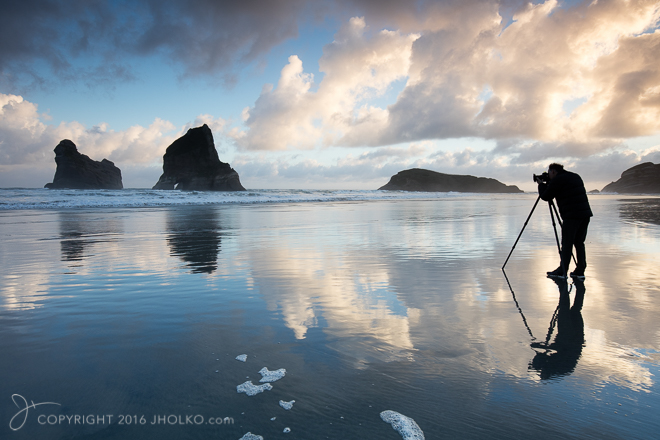 Another early start as we made for the North-west coast, which is completely different to the coastal scenery we had been photographing. Characterised by dramatic sea cliffs and imposing rock formations, there are also intimate lake and tidal inlet scenes so we were kept busy for the whole day in this unique location. We returned to our lodge in the evening.
 We departed early this morning for the drive back to Christchurch. This was a full day on the road and we stopped along the way to photograph forest, country and mountain scenery as we took the Lewis Pass route south. We arrived into Christchurch in the early evening and enjoy a relaxed dinner to conclude our workshop.


 www.WILDNATUREPHOTOTRAVEL.com