It feels only fitting that the photograph of the month for May this year should be from the South Island of New Zealand (where I am currently leading my 2016 Masterclass workshop). This photograph was taken on my 2015 workshop and was one of those ‘drive by shootings’ when one is fortunate to see some really spectacular light, slam on the brakes and be able to grab a photograph before it disappears. In this case, early morning mist burning off a lake. The scene was quite far away from me so I used a long lens and the panorama format (something I rarely do) to capture the scene. It was pouring with rain when I made this photograph. A timely reminder that its well worth getting out to take photographs in inclement weather. 
Category: Landscape Photographs
Landscape Photographs from around the World
New Zealand South Island Masterclass Workshop 2016
In a couple of hours I will be making my way to the South Island of New Zealand in preparation for my 2016 Masterclass workshop. It has been a full year since I was last in New Zealand and I am very much looking forward to returning to this magical country. May is a wonderful time to be visiting and photographing in the South Island; the fall colours will be just about at their peak and the weather is usually quite stable with fresh crisp mornings and rosy pink light.
We are looking forward to photographing around the island including several planned aerial shoots over the spectacular Southern Alps. Aerial photography from helicopter with the doors removed is an incredible experience over these majestic mountains. This photograph from the 2015 Masterclass was taken just on sunrise near Mount cook. Temperatures were will into the sub zero range and the resulting wind chill without the doors meant it was more than a little chilly. The results though are worth all the pins and needles… I am also looking forward to putting the new Canon EOS 1DX MKII cameras through their paces during this workshop. Over the last year I have been photographing with the Canon EOS 1DX and the EOS 5DSR 50 mega pixel camera. My experience with the 5DSR has been somewhat of a mixed bag and I have to say that on the whole I generally prefer the files from the original EOS 1DX (especially above the 5DSR’s base ISO of 100). Quite honestly, 50 mega pixels is just a whole lot more than I need for the vast majority of my photography and so I find myself reaching less and less for the 5DSR. The initial testing I have done with the new EOS 1DX MKII shows the files are considerably improved from the original 1DX; which in conjunction with the other improvements has me very excited about this new camera. I will have more to say about my thoughts on the new Canon EOS 1DX MKII in a future post as well as my thoughts on the current state of equipment in the industry.
For now, its time for a last luggage check and then its time to make my way to the airport. See you in the South Island of New Zealand.
Guest Photographer: Kevin Horsefield Iceland the Frozen North 2016
Two years ago I started a new segment on my blog for photographers with whom I have travelled before in order to provide an outlet for them to share some of their own writing and photography amongst a wider audience. It has been a while since the last post but I wanted to share some thoughts and photographs from Kevin Horsefield who recently accompanied me on my Iceland Frozen North 2016 Workshop. I have had the pleasure of travelling and photographing with Kevin now in Iceland on several occasions as well as Namibia, Antarctica and South Georgia. Enjoy his thoughts and photographs from our most recent Iceland trip.
Iceland the Frozen North 2016 – Kevin Horsefield
I ventured to Iceland in late Winter of 2016 with Joshua Holko and Daniel Bergmann. As a veteran of their workshops, I know that we will be in the best possible location at the right time to maximize our photography. Daniel’s ability to read the light and Iceland’s fickle weather patterns are unparalleled. Once at a location, Joshua can take over and helps his clients fine tune their compositions if necessary.
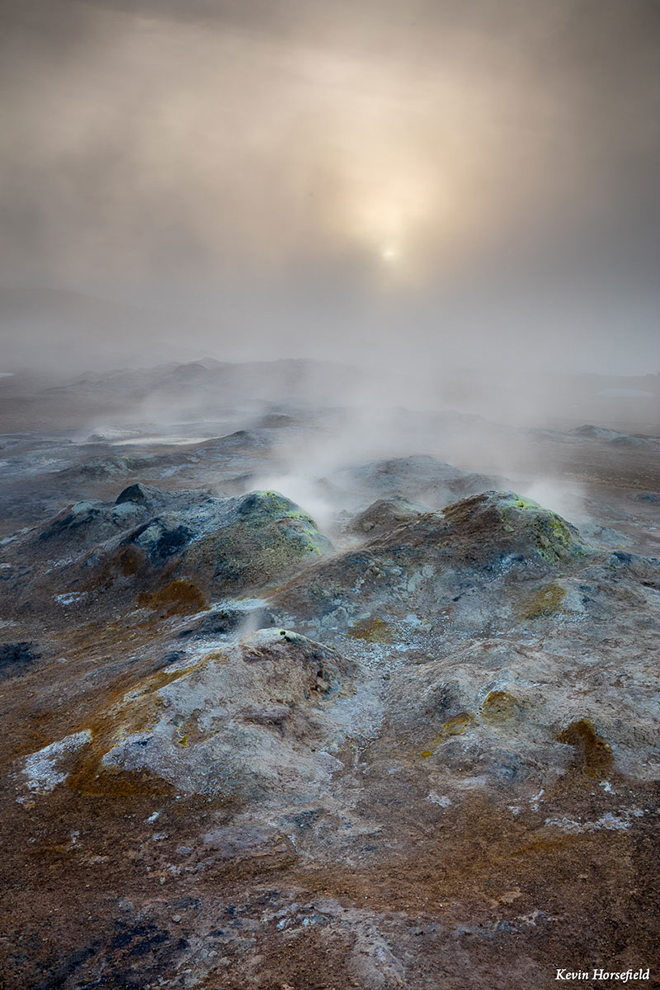
We seemed to be constantly dodging storms on this trip and dealing with rather flat light. My solution was to shoot into the sun to bring a bit of drama to the scene. With the sun being somewhat low on the horizon even at mid-day in Iceland, this technique can work well in these conditions.

I also employ this strategy when I’m working with thermal areas, such as Hverir.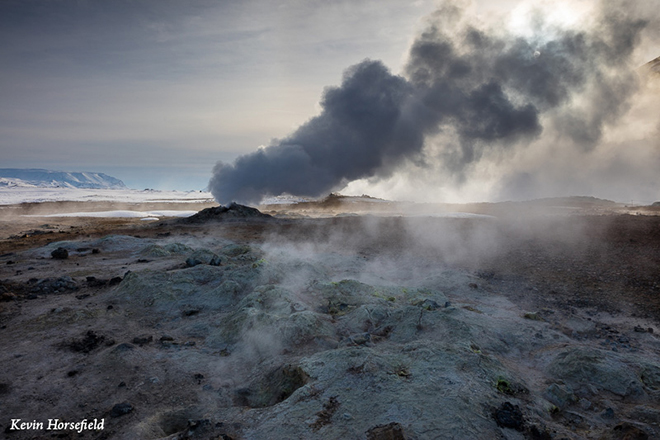
 Backlighting also works well at Iceland’s famous black sand beach with the sun illuminating its translucent icebergs.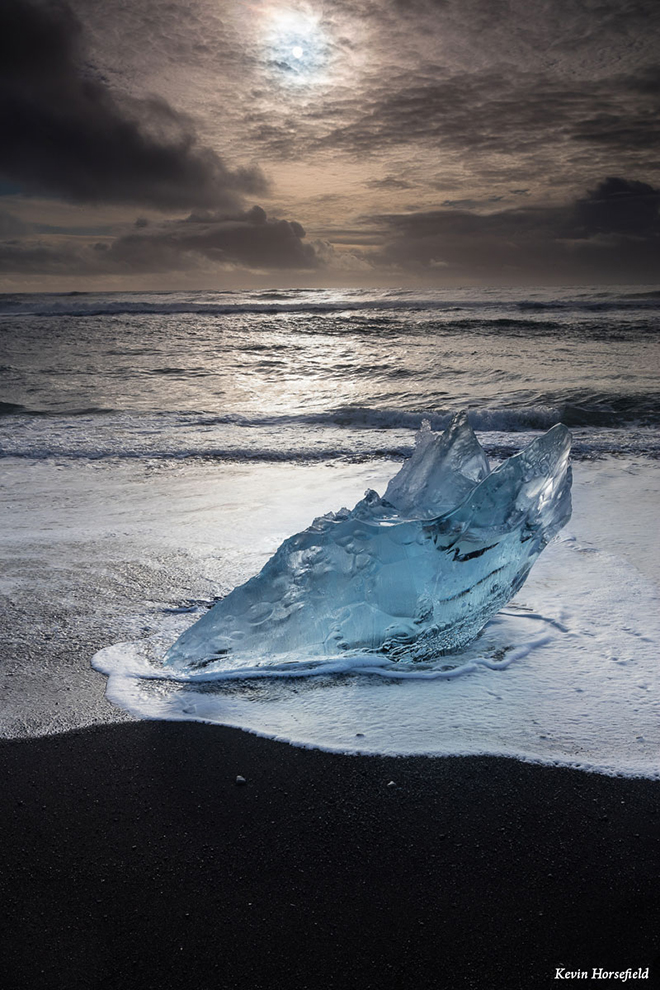
Backlighting also works well at Iceland’s famous black sand beach with the sun illuminating its translucent icebergs.Some images work best with a conversion to black and white. The color at sunset was so muted on this evening that I decided to strip it all away to emphasize this composition. I also added a slight blue tone to this image to convey the feeling of winter in Iceland.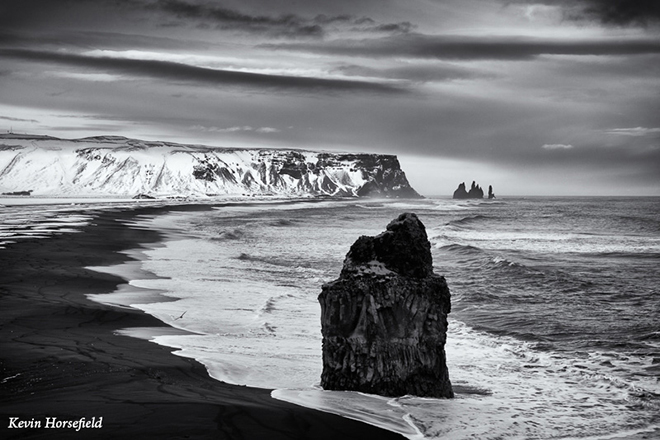
More of Kevin’s Photography can be found at http://kevinhorsefieldphotography.com
Daniel Bergmann and I will be running our annual winter trip again in 2017 and bookings are now open. Just drop me an email if you would like to join us.
Iceland the Frozen North Trip Report – February 2016
In late February and March this year I lead my annual winter workshop to Iceland with good friend Daniel Bergmann. For our 2016 workshop we decided to head north for the second part of our trip and spend more time in areas less often visited during the winter months. Heading north in winter is always a bit of a gamble in Iceland in winter. Roads are often closed due to winter snow storms and it is possible to get stuck up north if there are a few days of very bad weather. Thankfully, we were never trapped by the weather, although it did throw up a series of challenges throughout our workshop. We ended up loosing the better part of our last full day to a large winter storm that swept down from the Arctic that closed many of the mountain passes. The turn in weather necessitated a hasty retreat from the north a day earlier than we had originally planned. The weather was dramatic, but problematic for photography on occasion. The high winds did give us some pretty dramatic opportunities on the peninsula near Keflavik where we spent our last two nights.
During our winter trip we had a small window of opportunity for Aurora Borealis (northern lights) whilst we were at Jökulsarlon glacial lagoon and again in the north near Myvatn. Our opportunity at Jökulsarlon was somewhat anticlimactic due to heavy cloud cover that obscured the best display. Our chance was better in the north with a faint display during mostly clear skies. If you haven’t photographed the Aurora before it can be an incredibly exciting experience. The camera sees and captures a great deal more colour than the naked eye – so even a faint display can yield some very impressive results in camera.
One of the participants (James Shih) on this years winter trip has published a day by day account of our workshop – included Below. To see James’s images from the trip please visit his blog. I am still sorting through and processing my own photographs from the trip – a few of which are included below with James’s text. You can also watch a short video James put together on Vimeo of his Aurora images.
Iceland Winter Workshop Report by James Shih – Photographs Joshua Holko
(Editors Note: Apologies for the grammar in the below report – it has been translated rom Taiwanese into English by Google Translate). Our group was led by the Australian awarded photographer Mr. Joshua Holko and experienced Iceland photographer Mr. Daniel Bergmann in a small group of 12 photographers, with nationality of Australia、Great Britain、USA、Germany、Canada、Hong Kong and Taiwan, We visited many winter famous photography spots, including the frozen beach, sunrise and sunset, glaciers lakes of icebergs frozen waterfalls, of course we have also seen the beautiful northern light activities. We took our time to shoot during the 9 days travel, we got some important key points before each shooting event, so the efficiency of photography shooting can be retained, as the member of the group are all experienced photographers, we shared each other with the experiences and equipment, and could enjoy each event, I could feel the strong passion and the spirit of hard job among all of us, looked like treating the photography as part of our living, we harvested by learning with one another and exchange the viewpoints of the advanced equipment, to learn the knowledge of the composition and shooting skill from the other people are the most precious memory.  Day one: In the morning around 10 o’clock I was collected from the hotel, the transportation is a Mercedes medium vehicle with capacity of total 14 passengers, we started from Reykjavik drove to the east in the southern coast, arrived a port called “Vik”, we shot the famous the three rocks and the frozen beach. After lunch we went to the other side of the beach in the morning, to shoot the sunset and huge waves under the cliff, the sun sometimes showed its face through the clouds, which a treacherous mood aroused among clouds.
Day two: we got up early for the shooting of the “Cascadas Skogafoss” waterfall, which the water running swiftly down from over 60 meters cliff impacts the viewers, group leaders advised to move rapidly if we would like to shoot some clean waterfall images, because there can be many travel groups in front of the waterfall in anytime (and it was then). Afterwards we arrived the famous glaciers of Iceland, the “Jokulsarlon” lagoon, we would stay 3 nights in this area, we had some shoots of the icebergs along the lakes, there were some sea birds and seals spreading on the ice, the weather was getting unstable as we moved to the other side of the lagoon. We then went to an ice cave, when we crouched in, an ice roof formed by the blue frozen ice revealed, we shot some amazing detailed texture of the ice roof.  (Editors Note: We also had a good deal of fun with photographing a frozen iceman in the caves).
 Day three: we came again to the lagoon but the weather again not stable with small rain, we went to the sea shore close to the lagoon and had some shoots of the wave, by a long exposure about 1-4 seconds of shutter speed, the wave slapped the icebergs turned beautify milky sheets prints on the sea shore. We planned to see the northern lights in the evening, but because of the heavy clouds there was a small aurora activities around mid night, so went back late with nothing.
 Day four: we started late this morning because of the late came back last evening, today we arrived the “Hvannadalshnukun” national park of volcano, the sun coming out now and then, we had shoots of the blue glacier rocks and closing shoot of the texture by telescope lens, because the bad weather we stayed in the hotel to manage our photos for the rest of the day.
Day five: we came again to the sea shore closing to the “Jokulsarlon” lagoon, there were several big or small icebergs spreading along the winter sea shore, again shot the long exposure images to express the beauty which has no replacement by nature. After lunch we kept east to the port town “Breithdalsvik” where we will shoot sunrise tomorrow morning. 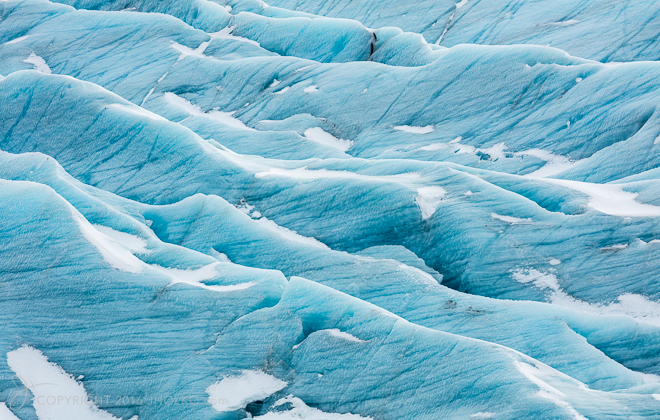
Day six: In the morning we started at 6:45 before breakfast, drove about 40 minutes to a valley that scattered with lots of small streams, the morning just broken the peak of the mountains turning orange from the cold blue as the daylight brighter and brighter, we took pictures with both wide angle and tele lens, which gave different mood of the landscape. After the breakfast we moved to shoot the volcano sites which were full of the underground heats and the smell of sulphur in the air, to shoot with long exposure shutter, the heavy smoke soaring to the sky turned out to be a great view. When we came back to the hotel, the sunset view by the lake can’t be missed of its calm and beauty by long exposure, even the sky has been dark but the reflection of residual light against the snowing ground still kept it bright. Day seven: Today we started at 10:00 in the morning heading for the “Godafoss” waterfall, which is the most famous waterfall in Iceland, the name of the waterfall is according to the history, that the predecessor of the Icelander decided to have the religion of Christ, and threw the symbol of many other gods to the waterfall. The waterfall are composed by 3 sections, you could already feel its magnificent from far, when approaching close, we felt a huge air stream with water against, the water rumbling down from a height of 12 meters cliff, we should wipe the lens from time to time to have a clear image, the sun was shining occasionally provided a slice of gold light in the waterfall, I tried some fish-eye shoots gave a different prospect, the selection of the foreground should be a key in this landscape shooting. After lunch on the way back we took some images of the snow landscape with bushes, the dark color of the bush against the snow providing high contrast can be good for B&W photos, we met by chance a group of horses, a white one was curious of our presence and came approaching as our model. After dinner the sky getting clear, around 9:00 we found the aurora activities along the lakeside from dimming and getting brighter and brighter, a duration of about 3 hours till midnight, I set the exposure as f/2.8, ISO 800-1600(most of the time), shutter was from 5 to 10 seconds, but to adjust according to the brightness of the aurora is needed.
  Day eight: Today after breakfast we drove back to the Reykjavik peninsular, the weather forecasting warned a dangerous strong wind were presented, it was nearly not possible for a photography activities.
Day nine: The weather was not on our side again today, there were small raining except the strong wind. After lunch we have arrived a rock sea shore along the peninsula, no tripod possible with such a strong wind situation, we wanted to shoot some sunset landscape, but the water wetting the lens and nearly couldn’t get a clear images, may be you can enjoy more for a summer Iceland I thought. We had a great dinner of farewell afterwards.
Day ten: the whole journey ended today and say good-bye with one another and hope to see again someday.
Iceland in winter can be quite challenging with weather, but the opportunities in a snow covered landscape can be exceedingly beautiful. Daniel Bergmann and I will be running our annual winter trip again in 2017 and bookings are now open. Just drop me an email if you would like to join us.
Antarctica Weddell Sea Trip Report – February 2016
In February 2016 I lead a dedicated photographic expedition into the Weddell Sea in Antarctica. Our aim was to get as far south as possible into the Weddell Sea in search of giant tabular icebergs and vast Adelie Penguin colonies. We hoped we may even visit Snow Island if conditions permitted and find the small colony of Emperor Penguins that lives on the island (As it happened the ice conditions prevented us from getting to Snow Hill).
This was the first expedition I have lead that has ventured this far south into the Weddell Sea and it turned out to be a truly excellent experience. Antarctic Sound is well known for its giant tabular icebergs and it did not disappoint with some of the largest and most spectacular tabular icebergs I have ever had the pleasure to photograph. We were particularly fortunate early one morning (around 3am) to have superb light on the icebergs near the mouth of the sound. These magical moments are the real bread and butter of these expeditions. Standing on the deck of the ship photographing gigantic tabular icebergs in wonderful pre-dawn light is an experience that just stays with you forever. This expedition departed from Punta Arenas in South America. Punta Arenas has quickly become my preferred departure point for expeditions to Antarctica. The Chileans just seem to be much better organised with their airport timing than the Argentinians and everything seems to run like a well oiled machine. Although Chile also charges a reciprocity fee on entry for Australians (and Americans) it can at least be paid on arrival without having to pre-purchase.
We did decide to delay our departure from port by a few hours due to the weather conditions on the drake passage (blowing in excess of 30 knots) which proved a wise decision and as a result our crossing was relatively mild. In the end the short delay was a boon as it placed us in a wonderful area for photography with great light.
By contrast to the Western side of the Antarctic peninsula, the rarely visited Eastern Side in the Weddell Sea offers a stark contrast that I find reminiscent of the landscapes found around Svalbard in the Arctic. The landscape on the more often visited western side of Antarctica predominantly consists of precipitous mountains with towering peaks of basalt, gigantic glaciers and rugged wild coastlines. By contrast, the eastern side is flatter, consisting of more rolling mountains with some areas free from snow and ice.
Our passage through the Lemaire channel on western side of the peninsula proved the highlight of the expedition with absolutely superb light that could only be experienced to be believed. We arrived at the mouth of the narrow channel just before sunrise and timed our entrance with first light (around 3am). As we sailed through the passage the light just continued to get better and better, reaching its peak in colour around the narrowest point in the channel. I have been fortunate to venture through the Lemaire channel on many occasions now and this was without doubt the very best light I have yet experienced in this remarkable location. The light actually proved quite challenging in post production as the color in the sky was so intense and the reflected light contained such a strong color caste from the sky that white balance selection was somewhat difficult. In the end the above photograph taken from the front bow of the ship with the cameras auto white balance best matched my recollection of the morning.
 We also visited the surreal Deception Island (one of my personal favourite places in Antarctica for photography). Conditions were misty, with low cloud and strong winds on our arrival, which provided a chance to capture some evocative moody images. Deception Island never fails to disappoint with its myriad of rusty whalers remnants that make for interesting subject matter.
Being late in the season much of the snow around Cuvehrville Island and many of the other landing sites was gone, leaving exposed rocky Penguin rookeries and a glacial scarred landscape. The penguin chicks (already large) were starting to malt and were spread far and wide throughout the colonies.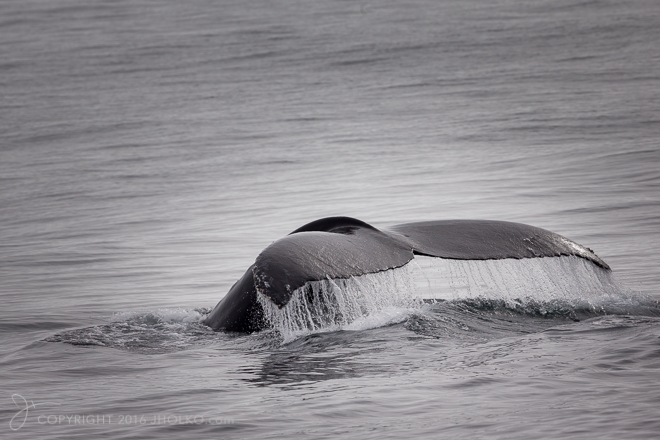 Over the course of the expedition we encountered over 100 whales including Humpbacks. Orcas, Fin whales, Hour Glass Dolphins, Peale’s Dolphins and Minke Whales. We also saw and photographed numerous Albatross including Black-browed, Grey Headed, Sooty, Wandering and Light Mantled as well as numerous other Antarctic bird species.
 Our return drake crossing proved a little bumpier than our first crossing, but on the whole was relatively mild.
This expedition to Antarctica and the Weddell Sea proved a fantastic opportunity to photograph giant tabular icebergs as well as polar landscapes and wildlife. The absolute stand out highlight for me personally was the incredible light we experienced as we made our passage through the Lemaire Channel as well as the giant tabular icebergs at the entrance to Antarctic Sound.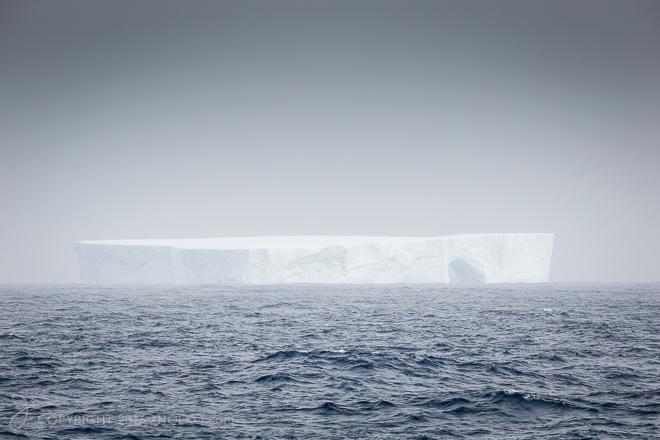 I will be leading a new Antarctica expedition in 2017 that I am code naming ‘Iceberg Hunter’, that is dedicated to photographers and the photography of icebergs and antarctic landscapes. This expedition will depart earlier than all previous trips (in late October) in order to provide us with the best chance to find and photograph icebergs of all sizes and shapes (including giant tabulars) in good light. If you would like to get the jump on this expedition you can register your interest now (no obligation at this point) by dropping me an email at info@jholko.com. Places on this expedition are already limited.
 www.WILDNATUREPHOTOTRAVEL.com