Iceland Dispatch #20 – Heading East

Yesterday I picked up a 4 wheel drive in Reykjavik and headed up to the geothermal pools at Hveravellir; roughly 70 miles from the waterfall ‘Gullfoss’ and the major tourist attraction ‘Geysir’ (the spouting boiling water after which all other such vents are named). The road from Reykjavik to Gullfoss is paved and easy driving – even if it is on the wrong side of the road for an Aussie. The road from Gullfoss to Hveravellir however is a rocky, washboard, potholed excuse for a road that would break pretty much any vehicle of the non-military variety. It is liberally sprinkled with rocks the size of soccer balls, blind corners, steep drops and various other obstacles that are ‘car breaking’ in nature. I don’t think my Jeep’s suspension will ever be the same. Total toll – the car fridge packed up from all the bouncing, the 12 volt-240 volt inverter seems to have given up the ghost and one ‘check engine’ warning light; which seems to have gone away after topping up the coolant.

I arrived at Hveravellir just in time for an hours photography at the geothermal pools before the light faded for the evening around 11:30pm. Rather than pitch the tent I decided to pull an all night shift and turned around immediately and drove the 70 miles back to Gullfoss to be there in time for sunrise at 4am. The drive back was much more challenging as a thick fog bank had rolled in behind me on the way in, reducing visibility to about 10 metres. It took more than three hours to make the return drive, but it  was worth the effort as the light at sunrise this morning was soft and translucent.

Now I am having a late brunch at Geysir after catching up on some sleep and am about to head over to the Jokulsarlon lagoon for more iceberg photography – a few hours drive on paved roads.  The weather at the moment is magical – its around 20 degrees, the sun is shinning and there is no wind – ideal conditions for the lagoon.

Iceland Dispatch #19 – 66º Degrees North

Yesterday afternoon we headed into the Landmannalaugar area of Iceland for the evenings photography – 45 minutes drive along more of Iceland’s infamous dirt roads. Landmannalaugar is a very famous volcanic area of Iceland encompassing multi-colored peaks, steam and sulphur vents  and crater pools. The weather on first arrival was somewhat overcast with occasional patches of brief sunshine and a few odd rain spots – a real mixed bag where pretty much anything can happen (and usually does in Iceland). We decided to hike up to the top of one of Landmannalaugar’s highest peaks stopping to photograph the geothermal vents and other features along the way. We had some wonderful photography amidst the back lit steam vents on the assent. We arrived at the summit a full three hours before sunset to be greeted by overcast light and howling winds; which after a short period of time had us all chilled to the bone. The ambient air temperature was about 5 degrees but the wind chill would have pulled it down significantly below that. Everyone decided to bug out shortly after making the summit and make for the 4WD for coffee and cake. Dmitry and I chose to tough it out for the next few hours until 11 o’clock in the hope we would get some good light at sunset. The next three hours were uncomfortable to say the least. Landmannalaugar’s volcanic peaks are exposed and open to the full force of the arctic winds; which scream down from the north. We spent the next few hours just trying to stay warm by hunkering down as best as possible on the lee side of the mountain – which is hard to do when there is no shelter.

Waiting for Light

Then, as if someone flicked a switch the wind simply stopped and the clouds parted as the sun began to set and we were rewarded with some stunning Iceland sunset light including a large rainbow amidst the distant rain showers. We spent the next hour or so rattling off frames from the summit as the light continued to get better and better. The ‘edges’ of weather combined with sunrise or sunset light are golden for photographers – we live for these moments and this was most definitely one of those moments. It was wonderful. In the brief hour of great light I reeled off more than a hundred frames.

With the light fading we packed up and started the steep descent back to the truck; arriving shortly before midnight (thanks to a wrong turn I took in the lava field – lava fields are natures natural maze).

Today we are headed back into Reykjavik to the airport to drop off most of the other photographers. I am then picking up another 4 wheel drive and am heading up north to photograph the geothermal pools and then to Gulfoss before heading back to the glacial lagoon. The weather forecast is very good for the next couple of days so I am hopeful of even more great Iceland light.

Iceland Dispatch #18 – Alien Landscapes

This morning we rose at 2am from our accomodation in the Highlands and headed into an area known as Veidivotn for sunrise; which is just northeast of Landmannalauger (where we will be shooting sunset around 11pm this evening). Veidivotn like much of Iceland is an alien landscape consisting of mountains of black tephra and a large number of crater lakes from a massive volcanic eruption. Veins of luminous green moss spread out across the black volcanic tephra sands in a surreal off-world landscape that is more akin to the planet LV-426 from Ridley Scott’s ‘Alien’ than anything you would expect to find on Earth. The veins of iridescent green moss glow in the soft morning light against the black tephra sands. Deep blue lakes lie in the volcanic basins creating a totally surreal other worldly landscape that is simply wonderful for photography.

LV-426

This photograph was taken from the rim of one of the many crater lakes with both the LEE 10-Stop ‘Big Stopper’ Neutral Density filter stacked with a LEE 3-Stop Hard ND Filter to hold back the sky. The exposure time of four minutes has allowed the clouds to streak across the sky adding drama to the image. This photograph for me captures he essence of Veidivotn .

Tonight we are headed into Landmannalauger where there are multi-coloured volcanic mountains, sulphurous vents and small lakes. I have seen some very good photography from this area and look forward to seeing it for myself.

Iceland Dispatch #16 – Moving on from Myvatn

We are just about to have some dinner [but I wanted to squeeze in a blog update with our plans for the next day or so] and grab a few hours shut eye before we head off at 3am to Godafoss – “waterfall of the Gods” for a sunrise photography session. I have seen many photographs of Godafoss and am very much looking forward to making my own images from this location – Hopefully the light will be very good; at the moment it’s 6pm in the evening and quite overcast. The forecast is quite good – so we shall soon see.

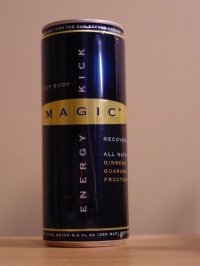
Magic

Spent an hour and a half this afternoon relaxing in the hot aquamarine mineral sulphur pools at Myvatn which was great for recharging my depleted batteries. In combination with this local Iceland energy drink called ‘Magic’ [sort of like a Red Bull – but much better] I feel almost refreshed and ready to keep up the long, long waking hours. I have long since lost track of days and my sense of time is really screwed up.

After our session at 3am at Godafoss we are taking the six hour off road ‘bone-jarring’ drive across the Sprengisandur route to reach Hrauneyjar. On the way we’ll probably make stops by Aldeyjarfoss waterfall and in Nyjidalur. In the evening we’ll visit the Veidivotn area, a cluster of crater lakes about 30 minutes from Hrauneyjar. We are going to spend a couple of days in this area; including a trip up to Landmannalaugar; where according to the guide book there are multi-coloured mountains, hot springs, lava flows and clear blue lakes.

Iceland Dispatch #15 – Askja

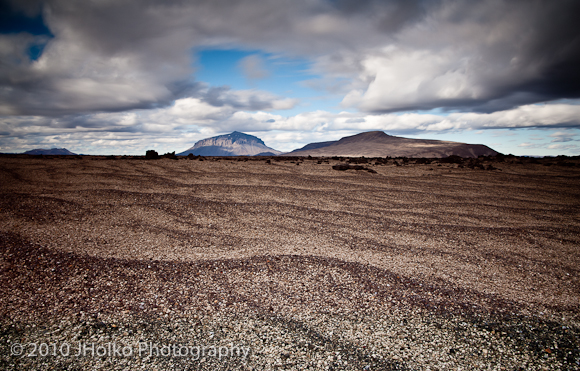
Yesterday we headed into  Askja – which is a huge volcano in a remote part of the the North-east of Iceland. Askja is an utterly desolate region of Iceland. Black lava fields extend more than 100 kms from the caldera creating a very desolate surreal landscape [Think ‘Mordor’ from JRR Tolkien’s Lord of the Rings – but on steroids]. The drive in through the lava fields is anything but comfortable; taking around two and a half hours of bone jarring rough road. The majority of Iceland’s unpaved roads are anything but friendly to cars. According to the guide book the caldera of the Askja volcano encompasses an area of more than 50 square kilometres. The explosion that caused the immense crater occured relatively recently in 1875 when two cubic kilometres of tephra was ejected from the volcano – bits of it landing as far away as Continental Europe. The size and scale of the landscape is overwhelming; it must have been one hell of a bang when Askja exploded.

After the initial eruption a magma chamber collapsed and formed an 11km square km hole, 300m below the rim of the original explosion crater. This new depression has now filled with water and is a sapphire blue in colour and is known as Oskjuvatn – the second deepest in Iceland. The water is geothermally heated and the same temperature as a warm bath. Askja has erupted as recently as 1961 and there are active sulphur vents dotted around the crater.

Tephra Field

We spent several hours photographing in overcast sunset light around the caldera before a midnight supper in the black lava fields [Daniel, that berry yoghurt was delicious!]. We then pulled an all night shoot making straight for Dettifoss to photograph the waterfall from the other side this time at sunrise. This morning we had a wonderful sunrise with some gorgeous soft pastel light with mauve tinged skies – the best light of the trip so far [But I am not going to post these shots just yet!]. After more than twenty four hours of travel and photography it was time to catch up on a few hours sleep. Now its time for some lunch before heading off for the evening sunset shoot.