I recently gave a short interview for Cody Shultz on my polar photography that has now been published online.
Tell us a little about yourself (who you are, where you are based, what you shoot, etc.)
I was born in Melbourne, Australia, but nowadays I spend most of the year overseas. As a specialist polar photographer, I am usually either down in Antarctica or up in the Arctic. I like to photograph in winter or on the cusp of winter the most. When temperatures are in the serious minus area and the snow is flying, that is when I like it the most. I do photography, both landscape and wildlife, but really think of myself first and foremost as a nature photographer working within a very niche genre of the polar areas.
How did you get into landscape photography?
I first developed an interest in landscape photography in my teens when I was doing quite a bit of rock climbing photography. It was a natural progression at the time, as photographing climbers put me out in nature and often in beautiful landscape environments. When I was growing up as a boy, my dad would also drag me around on weekends as he pursued an interest in his own photography.
What do you wish to convey with your imagery? How do you make sure your images convey this properly?
For me it is absolutely all about emotion. If I can successfully generate an emotional response in the viewer of my work, then I feel I have succeeded. Conveying emotion in a still photograph is a very difficult thing to do and the success rate is extremely low. You have to be your own harshest critic and be truly objective when editing your work.
I often ask myself – Is it really a great photography? Or is it just the best I was able to do on the day?
There is a very marked difference. Being objective about your own work is a real skill and being able to edit thousands of shots down to the one or two that are truly excellent is really critical to successfully conveying a message and emotion with your photograph.
What does photography mean to you?
Photography is really a way for me to express my interpretation of the natural world as I see it. I am a firm believer in ‘in camera’ artistry. I do not do heavy manipulation, HDR, composites or heavy cloning work. My aim is to capture the natural world in its pure state. I have quite a detailed ethics statement on my website about postproduction and my photography.
I also have a deep and passionate love for the world’s polar regions. My photography is very much a vehicle for me to spend time in these areas. It allows me to work in an area that I am extremely passionate about. And if you are passionate about what it is you are photographing, then you absolutely always do your best work.
If you could only take one more picture, what do you think it would be of? How would you begin to make that decision?
It’s an easy decision for me – My kids.
What is more important: social media presence or in-person interactions?
I personally find much of social media hollow and lifeless. It can be a useful tool for client engagement, but I think overall social media has a lot to answer for. It has certainly spawned a culture of narcissism that I find destructive and detrimental to photography. In-person interactions are often far more constructive and are a far better tool for improving and growing as a photographer.
How do you recommend getting over G.A.S.? (Gear Acquisition Syndrome)
There really isn’t a better cure for GAS than actually getting out into the field and working with your gear.
Before I buy a new piece of gear I ask myself if it will really improve my photography, or if I would be better off working on my technique. It is almost always the latter that is better value for money. Far too many (and I mean the great majority) of photographers are hung up on having the latest and greatest gear; but they typically have little clue how to use it. Ask them to change F-stop or shutter speed with their eyes closed and many can’t do it.
The reality is that unless your camera controls are muscle memory and you can change them without thinking, then your brain is too busy being focused on being a technician instead of being an artist.
You have to learn the tools you have and learn them back to front, inside out, to free yourself from the technology so that you can be truly creative. If I have to learn a new camera every 6 months, that’s not a productive use of my time. If I can spend that time using a tool I know intimately and that is muscle memory for me to control, then I can focus on creating images and not on equipment.
Should artists sell prints?
Not necessarily.
It really depends on whether you want or need to monetize your photography. Selling work is one way to get it out into the world, but it’s not the only way and there are more efficient ways to share your work.
I get asked by photographers all the time how they can start selling their work and prints and my answer to them is always the same:
Why do you want to?
I think it’s an important question to answer, as trying to monetize ones passion can very quickly take the passion out of it.
I think it’s a good idea to simply start by making prints for oneself and for the sheer enjoyment of it. Share them with friends and family and start to get them out into the world. If people start asking to buy them, then you can worry about selling them as a going concern. In the meantime, print purely for the passion and love of it.
For me, the print is the ultimate expression of my photography. I never truly feel like I have finished with an image until I make a print. And the print is the legacy. The digital file is nothing more than 1’s and 0’s on a hard drive somewhere.
In terms of recommendations for printing…
It really depends on the output, the work, the intended audience etc.. Print size is also determined to some degree by the resolution of your file. If you are lucky enough to find yourself creating a show for a gallery then the gallery will know its clientele well and should be able to advise edition type, size and price to suit the local demographic.
You can read the full interview at Cody Shultz.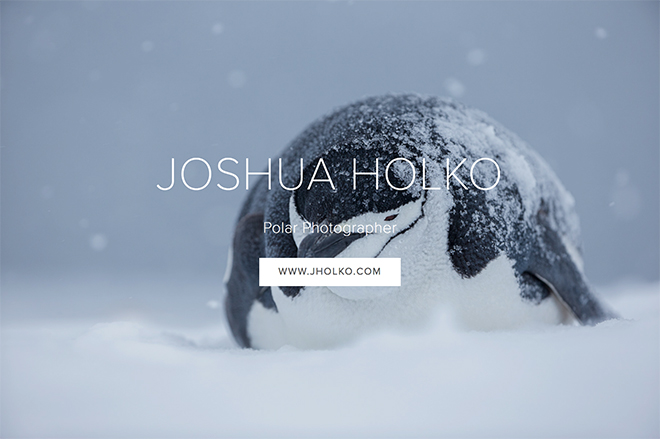


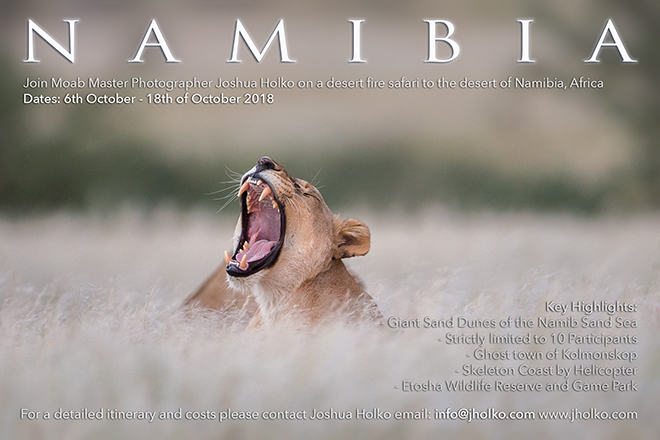
 In this captivating region of Namibia lies a maze of mountainous valleys that look like they were carpeted from slope to slope by ivory coloured grass, criss-crossed by ancient riverbeds and dotted with a collection of photogenic acacia trees. The final unique touch is added by the large snake like dunes that rise from the grasslands like the roof of some subterranean world. These stark and compelling landscapes are something to behold with the human eye, but when it’s sweeping meadows, barren mountains and blood red dunes are captured and transformed into a two dimensional image, it becomes obvious why this place is so beautifully addictive to photographers.
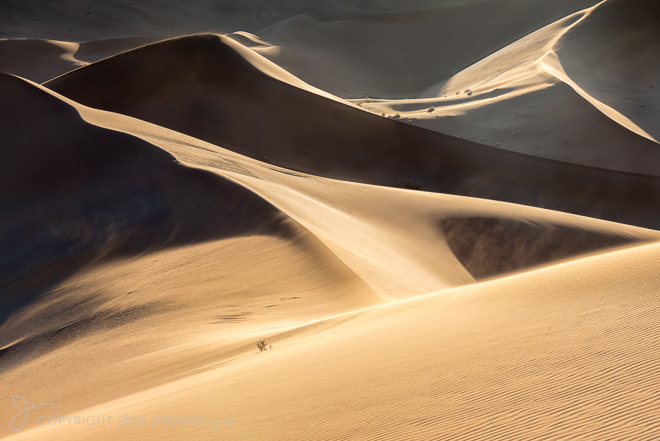 The goal of this safari is to photograph the breathtaking desert landscapes and wildlife of Namibia. We have complete flexibility to stop to take photographs at any time along the way with plenty of room for gear and equipment – so bring what you need! This safari has been designed to a good balance between flexibility, photographic opportunities and comfortable accommodations.
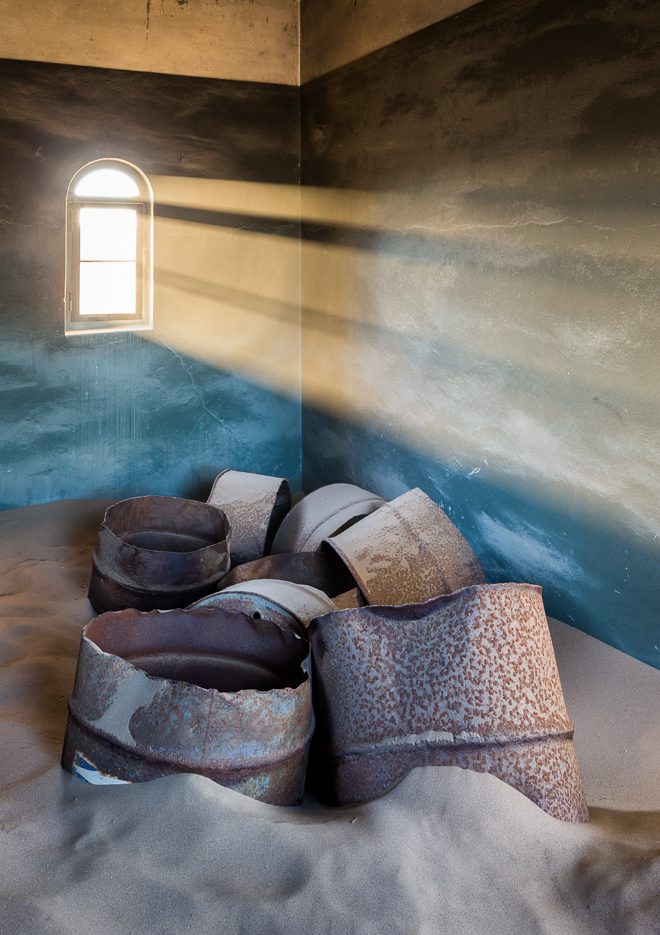 This new safari has been custom tailored and tweaked to take in the very best of Namibia and includes such iconic areas as the mystical Deadvlei, the ghost town of Kolmanskop and the Dune landscapes of Sossusvlei. We will also visit Etosha at the best possible time for wildlife. We also have opportunities for photography flights from helicopter over the spectacular Skeleton Coast. We have even arranged an internal flight to minimise driving time!
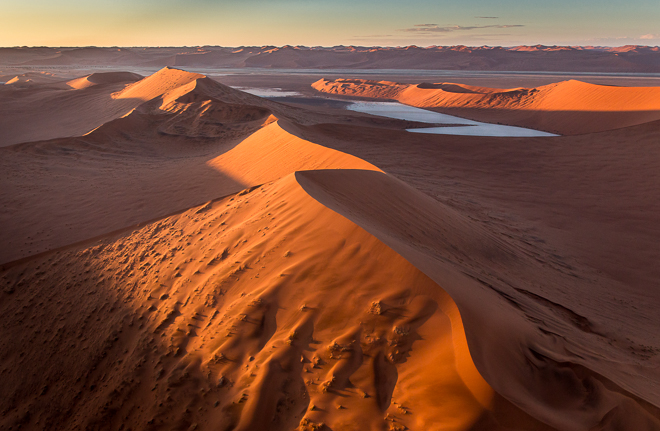 This exclusive safari is for a strictly limited number of just 10 participants (only two places remaining) plus leader and guide and is dedicated to the photography of desert landscapes and the wildlife of Namibia. You can download a complete
  To get an idea of the sort of photographs you can make on this workshop check out the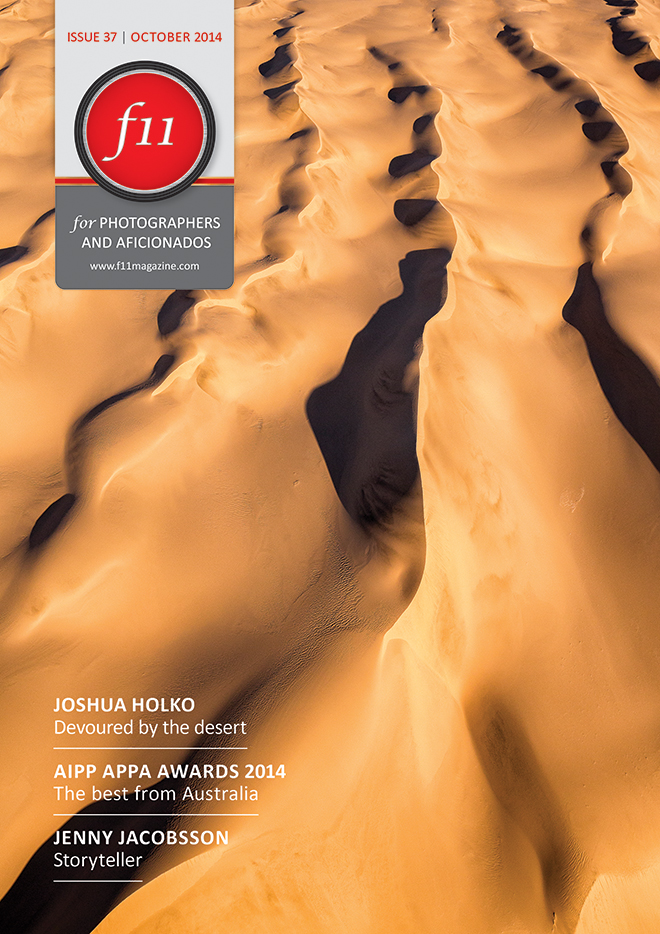
 www.WILDNATUREPHOTOTRAVEL.com