I received some news this morning that Ghosts of the Arctic has just been highly honoured in the 2018 Nature’s Best Photography Awards. Selected from more than 26,000 images and videos from photographers in 59 countries, the finalists in each category will be published in the 2018 Fall/Winter Special Awards Edition of Nature’s Best Photography magazine. Approximately 1,000 photos and videos made it into the semi-final round of judging to select the 123 current winners and highly honoured images.
Category: Wildlife Photographs
Wildlife Photographs from around the World
Polar Bears of Svalbard 2018 Expedition Report
This July and August 2018 I lead my annual expedition north of Svalbard in search of Polar Bears, Walrus, Arctic Fox and of course spectacular Arctic landscapes – Polar Bears of Svalbard. With our small group of just twelve photographers and our ice hardened expedition class ship we were perfectly prepared for ten days of Arctic photography under the midnight sun (it turned out to be an absolute gem of an expedition). July and August are just a fantastic time of the year to visit Svalbard. With twenty four hours of daylight (the sun never sets this time of year) the opportunities for photography are literally non-stop and we took advantage on many occasions to photograph late into the evening and early hours of the morning. Working late into the night (when the sun is still low in the sky) not only extends the amount of time available for photography but it also offers the opportunity to work in a variety of lighting conditions. Typically late evening and early morning provide the softest light in Svalbard this time of year. With the option of working through the night we also have the luxury of being able to choose the best time of day or night to photograph in a given location. This year we had to go well north of 82º degrees to reach the edge of the permanent pack ice, with our northerly most position being 82.5º north according to the GPS in my Canon EOS 1DX MKII (less than 900 nautical miles from the North Pole). This was the farthest north I have ever had to travel to reach the edge of the ice and was a clear indication of just how rapid and how devastating the summer melt has been this year. As tragic as it sounds, I believe we may now be less than a decade away from an ice free summer in the Arctic. What this means for the Polar Bear remains to be seen; but one thing is for sure, without sea ice to hunt the future of the Polar Bear is in serious question.
 We were lucky to experience favourable weather for photography during our expedition, encountering only minimal fog and only a small amount of swell on our journey north to the ice. One of my biggest fears for weather in Svalbard at this time of year is zero visibility because of giant fog banks. Whilst I love fog and find it extremely photogenic it can also be massively problematic in Svalbard in summer. Finding bears in the ice is extremely difficulty with good visibility; finding them in heavy fog is just about impossible. My other fear for weather is ‘blue sky days’ which creates contrast that is just far too strong for artful photography. Thankfully we experienced only a couple of blue sky days with the majority of days during our expedition being heavily overcast; making for superb photographic conditions.
 This year we were extremely fortunate with our bear encounters; encountering a total of eighteen bears during our ten day expedition. Our first encounter was at the island Karl the XII (on our way north to the ice) where we found five bears stranded south of the ice on the small island. Whilst this was an easy tick for five bears for those who had never seen a Polar bear before the photo opportunities were not the best. I find Polar bears on land to be not the most photogenic of subjects and very much prefer to photograph them on the ice in their prime. Fortunately, the majority of the rest of the bears we encountered turned out to be fantastic photo bears with wonderful close encounters around our vessel in the ice. Several of the bears came right up to the ship to satisfy their curiosity and we were able to spend many hours of fabulous photography with these apex predators.
 In addition to bears on the ice we also had two encounters with Polar Bear cubs during our expedition. The first was with a mother and two very young cubs at the base of one of the main bird cliffs in Hinlopen Strait and the second was in Kongsfjord near the site of an Arctic Fox den. Both encounters were very emotional moments for all aboard. Small cubs (born this year) are not only extremely cute (and photogenic), but are walking emotional reminders of how fragile life is in the Arctic. Seeing young cubs gives me hope that the Polar bear may yet have a viable future.
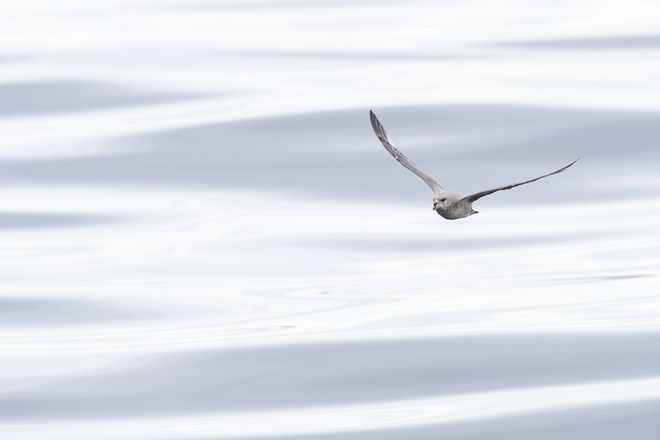
We also had a wonderful photographic encounter with Walrus from our zodiacs during our expedition. We were able to drift on gentle currents in calm seas in one of the fjord systems whilst a large group of Walrus sated their curiosity at our presence. Walrus are best photographed in the water in my experience and we were extremely fortunate to get such a wonderful and close experience. This was only the second time in my many expeditions to the Arctic I have had such a great encounter with Walrus in the water. During our time in Svalbard we also explored the Kongsfjord system where we encountered Arctic Fox, Bearded Seals and a great many of the Arctic bird species found in this part of Svalbard including the Pomarine jaeger (Stercorarius pomarinus), pomarine skua. This was only the second time I have had such a great opportunity to photograph this bird in the Arctic. In terms of bird life we also had fantastic Ivory gulls up in the ice as well as a great many others during the expedition including Puffins, Glaucous Gulls, Eider ducks, Snow Buntings, Guillemots, Purple Sandpipers, Fulmars and more. We also spent many hours cruising the ice filled bays and glacier fronts which offer limitless opportunities for landscape photography – both the grand landscape and the intimate scene. Watching ice carvings from the many glacier fronts from the safety of our zodiac is a real experience not to be missed.
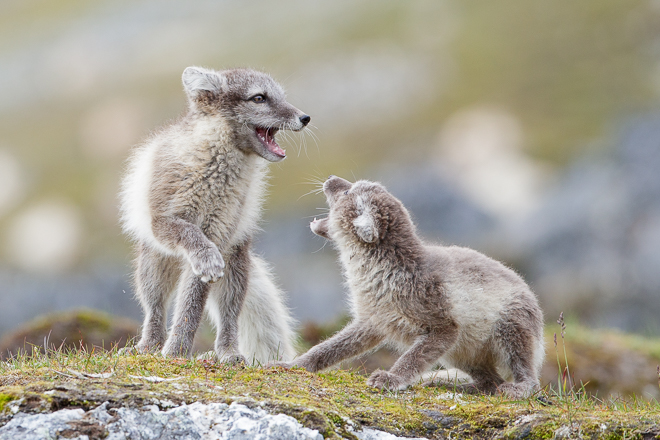
 Lastly, we rounded out our expedition with several hours of photography of some extremely playful Arctic Fox cubs on our return to Longyearbyen. This location also provided a much welcomed opportunity to photograph Reindeer against some spectacular landscape backdrops. All up, our 2018 expedition to Svalbard was a fantastic success with outstanding opportunities for wildlife and landscape photography.
 I have been travelling to Svalbard several times a year since 2013 and it remains one of the most incredible and photogenic locations in the Arctic I have been fortunate to visit and photograph. I will be returning to Svalbard next summer in July for my High Arctic expedition. If you are interested in joining there are already only a few places remaining before the expedition will be sold out. You can register your interest or make a booking by dropping me an email. If you want to get an idea of what this expedition is like be sure to read the testimonial from Rob Young from this years expedition and check out the Kingdom of the Ice Bear video below.
Ghosts of the Arctic Officially Selected for Chagrin Film Festival 2018
In some very exciting news I learned today that my short film with Untitled Film Works, Ghosts of the Arctic has been selected to be filmed at the highly respected Chagrin Film festival in October this year. “The Festival is a five day celebration of the art of documentary film, at venues in and around the century village of Chagrin Falls, Ohio. This inspiring event draws audiences from all over Northeast Ohio, the US and the world to experience documentary films and the compelling art and culture they highlight.”I will be in Africa when the festival is underway leading my Namibia workshop, but if you stop past please be sure to drop me an email and let me know what it was like.
Departing for Polar Bears of Svalbard Expedition 2018
Tomorrow afternoonI am going to be leaving Australia for the long trek up to Longyearbyen at 78º north to lead my annual Arctic summer expedition for Polar Bears, Walrus, Arctic Fox and of course Arctic landscapes. I have been in Australia for two months now – the longest stretch I have had at home in more than five years and I am feeling rested, fully recharged and super keen to get back up to the Arctic. As some of you are aware I have been battling with a badly torn lateral tendon in my right elbow (the result of continued repetitive strain with cameras and lenses (No! I will not switch to mirrorless!) that has precluded me from much serious photography since I returned from winter in the Arctic earlier this year. After very intensive physiotherapy I finally feel like I have started to turn the corner and have taken the first steps on the road to recovery. It will be many months before the tendon is fully healed and I have to be careful how I use my arm, but I can now lift my camera again and that means I am ready to get back into the game with both er… feet….as it were.
 Its tradition for me to do a packing list for each expedition and so included below is my gear choice for this particular trip. All of this will pack into my F-Stop Lightroom Roller which I will use to get the equipment through the transit stage of my expedition (I no longer wish to lug a backpack through airports without rollers). I will then re-pack it on location into my F-stop backpack.
F- Stop Lightroom Roller Camera Bag:
- 2 x Canon EOS 1DX MKII
- 2 X Canon EOS 1DX MKII Spare Batteries
- 1 x Canon 11-24mm F4L
- 1 x Canon 24-70mm F4L IS
- 1 x Canon 70-200mm F2.8L IS MKII (I am unsure if I will upgrade to the MKIII at this stage)
- 1 x Canon 400mm F2.8L IS MKII
- 1 x Canon 1.4 TC MKIII Teleconverter
In my checked luggage I am bringing the following:
- 1 x Sachtler Carbon Fire Tripod (the new model I have not as yet tested in the field)
- 1 x Sachtler FSB-6 Fluid Head
- 1 x Ortlieb Dry Bag (for zodiac excursions)
- 1 x Canon 1DX MKII Battery Charger and Lens Cleaning Kit
The astute gear gurus amongst you will probably note that I am taking the 400mm f2.8 instead of the 600mm f4. The primary reason for this is I have been doing some testing with my physiotherapist and am finding the 400mm better balanced for my elbow as the weight is not so far forward. The addition of the 1.4TC gets me out to almost 600mm in any case and provides both a super fast aperture as well as a flexible focal length.
Summer in the Arctic is an incredible time. With the midnight sun we will have 24 hours of light available for photography and that means a huge amount of opportunities. The ice is quite far north at present, which means we may have to go as high as 82º this year. Either way, I cant wait to stand on the bow as we push through the pack ice and raise my camera for that first polar bear of the expedition. See you in Svalbard!
Addendum: There are now limited places only on next years High Arctic Expedition. If you are keen to join us and secure a spot for the best available Arctic expedition experience please let me know as soon as possible.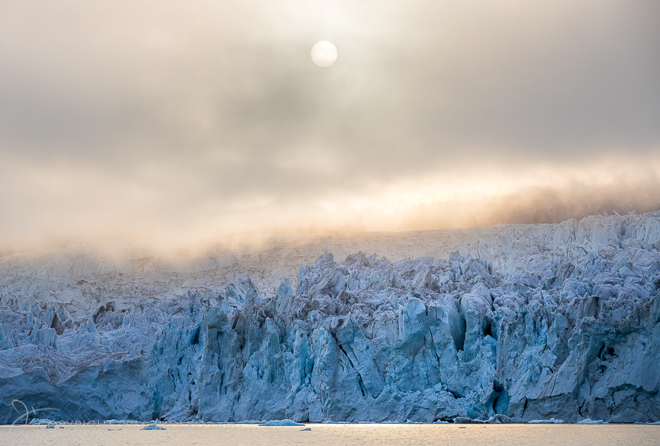
Photo of the Month June and July 2018
Somehow I managed to let June slip past without a photograph of the month update. Either I am getting old and forgetful or just had too much on my plate (I am hoping its the later). Either way this update is both my June and July Photograph of the month (I will try not to forget August!).
The June photograph of the month was taken on my recent New Zealand South Island Masterclass (Read the Trip Report). We were driving from the small town of Fox Glacier to Greymouth on our last full day and had just left town after breakfast. We rounded a bend in the road when I noticed the wonderful cloud and mist swirling amongst the trees and mountains. We immediately pulled over for a drive by shooting session and the following image resulted. The great thing about this sort of cloud and mist is it is constantly changing as it swirls amongst trees and mountains. I made a number of different exposures over a period of perhaps two minutes, but this is the one that best captures the feeling and drama of Middle Earth. In print this image absolutely swings with wonderful delicate tones in the clouds, mist and trees. The July photograph of the month was taken on my Winter Svalbard expedition this March (Read the Trip Report) and is of the full moon rising over the snow and ice covered Arctic mountains. I almost missed this opportunity – or rather, it is perhaps more accurate to say I owe a debt of thanks to Chris who remained outside to watch for the rising moon whilst the rest of us went inside for a warming drink. We had waited outside for over an hour for the moon to rise and had all but completely given up when Chris came inside to alert us that the moon was finally making an appearance over the mountains (thank you Chris!).

 www.WILDNATUREPHOTOTRAVEL.com