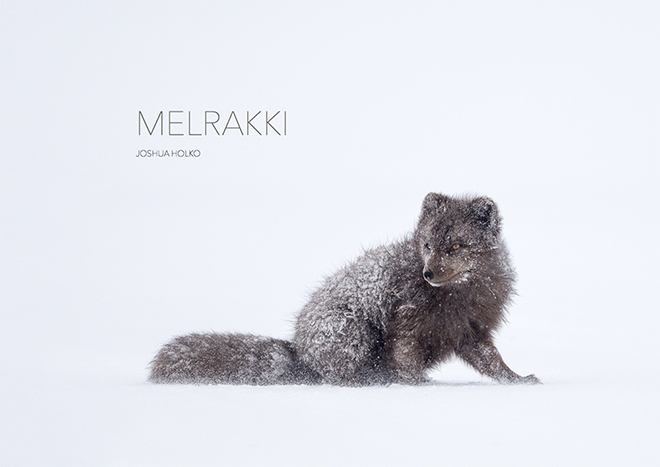
Melrakki – The Arctic Fox Soft Cover Open Edition Now Available

I am extremely pleased and excited to announce today that Melrakki; my book on the Arctic fox is now available for order as an open edition soft-cover (the Limited Edition is Sold Out). The culmination of three years of winter photography in the extreme north-west of Iceland, Melrakki is available for order online now. And to celebrate the first ten orders will also include an original 11″ x 09″ inch fine-art pigment on paper print. The included fine-art pigment-on-paper print is printed on Moab Somerset Museum Rag 300gsm paper and is hand signed.

With foreword by pre-eminent scientist and Arctic fox expert Dr. Ester Rut Unnsteinsdóttir, Melrakki includes over fifty photographs and field notes from the three years spent photographing this remarkable predator in the extreme north-west of Iceland.

Melrakki Open Edition is printed in Australia using the highest possible quality Indego printer system and is printed on High Definition Lustre paper that fully captures all of the incredible colour and tones of the original photographs. I am also extremely proud to have been able to print this open edition in Australia and to be able to offer it at such a competitive price.

Melrakki Open Edition is just $35 AUD plus shipping and can be ordered online exclusively through my website HERE.

I hope that you enjoy the photographs, insights and field notes from this project into the frozen world of Melrakki – the Arctic fox.

Photographs and Text by Joshua Holko

Approximate Dimensions: 22cm x 30 cm

96 pages (over 50 photographs + field notes)

ISBN: 978-0-646-95781-4
Arctic Wings of Iceland 2018 Workshop Open for Bookings

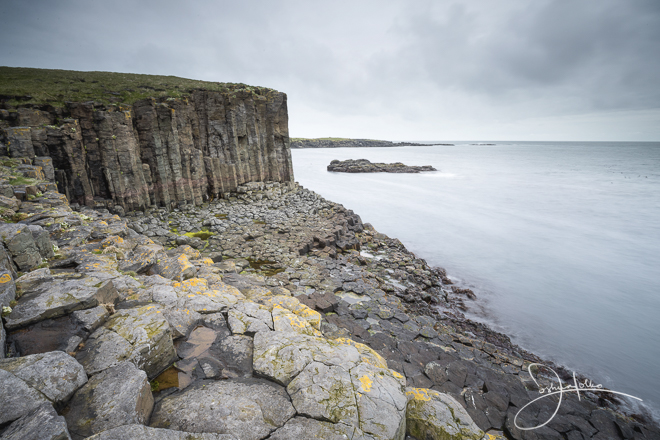
Recently, Daniel Bergmann and I completed a brand new workshop to photograph Atlantic Puffins and other Arctic birds at several different locations in Iceland that included the remote northern Grimsey Island, inside the Arctic circle. (Read the trip Report). The workshop was a great success and as such we have decided to offer a new workshop next year that will take us back to Grimsey Island to photograph both the wildlife and incredible landscape of this remote island. As well as Grimsey Island we will also spend time in Myvatn in the north of Iceland – One of the best places in the world to photograph Arctic birds. Grimsey Island in particular is one of the most spectacular locations I have visited in Iceland with towering cliffs that rise hundreds of feet out of the ocean and incredible basalt columns. It is a wild and primordial landscape that is rarely visited and even less rarely photographed.This photography workshop will last for eleven days (ten nights). We will be staying in good hotels and guest houses that are functional and clean. Breakfast, lunch and dinner are all included and will generally be held at the hotels where we are staying. However, this workshop is all about photography and we will be putting in long hours in the field in order to ensure we get the best possible light for photography. We may take food and drink with us into the field to ensure we are in the right locations get the best possible light.The cost for the workshop is $9,490 US Dollars. This is an all-inclusive price, but excluding your airfare to and from Akureyri, Iceland. From the moment the workshop begins until its end, 11 days later, all costs are included — transportation, food, drinks (excluding alcoholic beverages), and accommodation, which is based on a single room per person (shared rooms at Grimsey Island).Our workshop is strictly limited to a maximum of eight photographers with the first few places already spoken for and pre-sold. The last remaining places will be filled on a first come, first served basis. A complete itinerary and information PDF can be downloaded HERE. If you would like to join us and photograph both the landscape and wildlife of Grimsey Island please drop me an email to register or express your interest.
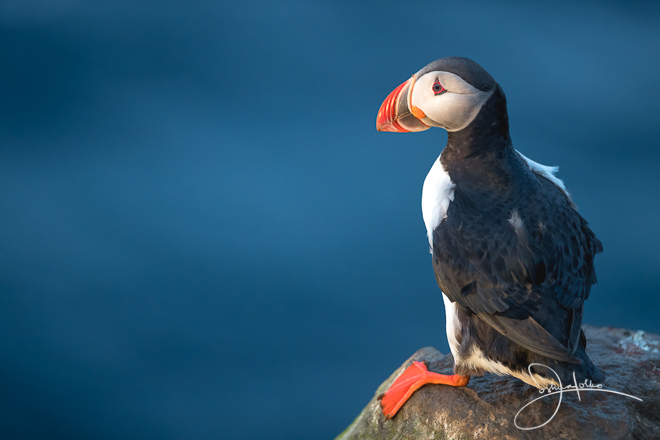
Photo of the Month July 2017 – Look this Way

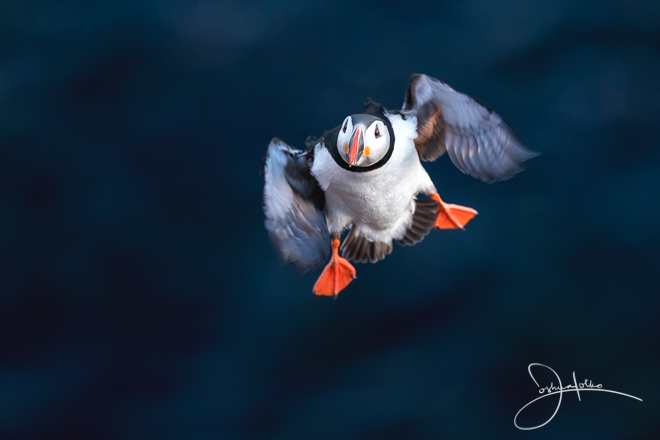
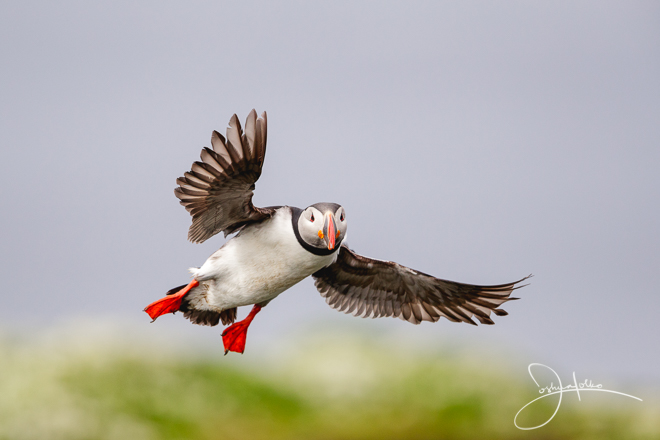
I doubt there are many subjects more difficult to track and photograph in flight than Puffins. At full tilt I doubt there is an auto focus system in the world that can keep up with a Puffin and accurately track it as it moves across the ocean at speed and distance. They are incredibly difficult to track and capture and it takes a lot of practice and a lot of frames to capture something truly special. And to make things even more difficult the goal is not only to try and capture a sharp photograph, but to capture the subject in beautiful light and with ‘gesture’. All these difficulties make it incredibly rewarding when it all comes together in just the right photograph.

This photograph was taken out at Grimsey Island on my recent Ultimate Puffins workshop (Read the Trip Report) and really works for me in terms of subject, light and gesture. It is ultimately a very simple photograph, yet it holds wonderful emotion. I was standing near the edge of a 400+ foot cliff in strong winds near midnight. The Puffins were soaring on the wind currents and the late evening light was bathing them in a warm glow. I used the Canon EOS 1DX MKII with the Canon 300mm F2.8L IS MKII lens. I don’t recall how many photographs I made that evening in an effort  to capture moments such as these, but was a great many.

Ultimate Puffins of Iceland 2017 Workshop Report

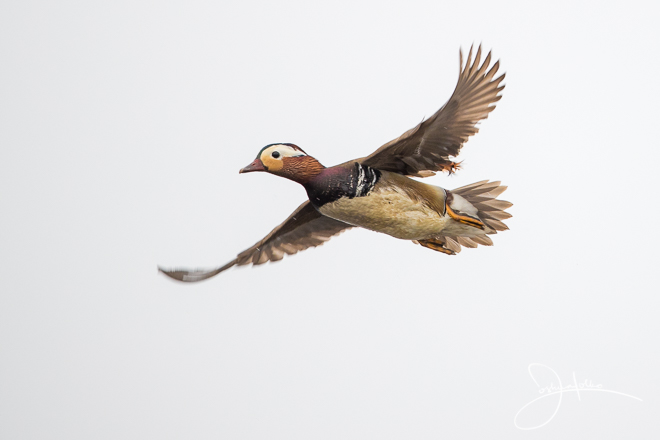
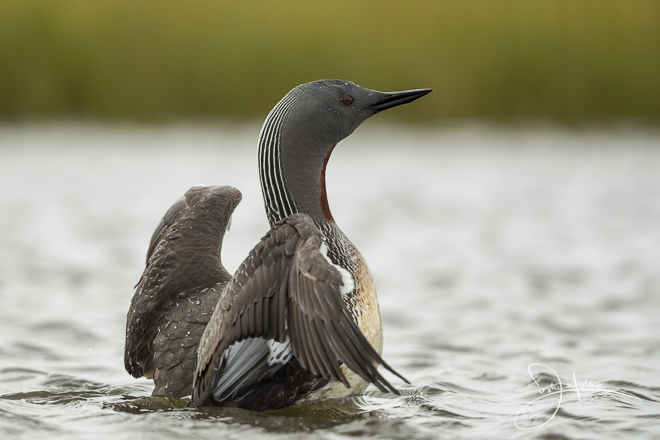
In May of 2017 Daniel Bergmann and l lead a new workshop to the north of Iceland specifically to photograph the Atlantic Puffin and other Arctic bird species. Iceland is one of the best places in the world to photograph Puffins and other Arctic birds in their natural environment and late May is the ideal time to ensure plenty of action in the colonies.Our plan was to focus the majority of our attention on Puffins; although we also planned to visit several different locations around Iceland to photograph different species. We had outstanding access to the Puffins living in burrows on the edge of sea cliffs during this workshop and we had timed our trip to ensure we were in the best locations at the best times to photograph these wonderful birds. There is a lot activity in the bird colonies in late May and early June and we were not disappointed with the sightings and displays.Our workshop took us to a number of different locations around Iceland including the bird cliffs at Latrabjarg in the West fjords as well as the rarely visited northernmost part of Iceland – Grimsey Island.  We also photographed at the Snaefellsness peninsula as well as several other lesser known wetland areas (for Red Throated Divers, Phalaropes and more). Our first stop after Snaefellsness was Flatey Island. Flatey Island  is a great location to photograph Black Guillemots, Snow Buntings, Puffins, Arctic Terns and other common Icelandic breeding birds. We spent one evening at the island and photographed at both sunrise and sunset. At this time of year we were blessed with midnight sun and as such we were able to spend a great deal of time in the field (although we had to dodge the odd rain shower at Flatey island). I was fortunate to see and photograph the very beautiful Mandarin duck whilst at Flatey; which was definitely a highlight of this stop for me.From Flatey Island and the ferry port at the northern side of Breidafjordur bay we journeyed north to Breidavik, where we were based for the next three nights. From there we had superb access out to the  magnificent seabird cliff Latrabjarg. This westernmost point of Europe is the home of millions of seabirds and is very well known for its Puffin colony. The cliffs are a spectacular location and rise 440m out of the sea and are approximately 14km long. We photographed many different bird species in this area and were also fortunate to encounter and photograph an Arctic fox on his evening patrol along the cliff edge.

From Breidavik we travelled to Dalvik to take the car-ferry out to Grimsey Island. This was my first time to Grimsey Island and I can say with a great degree of enthusiasm it was an incredible experience (I am itching to go back!) Grimsey Island is located just inside the Arctic circle and is approximately three and a half hours by car ferry from the northern most part of the mainland. This small island is home to literally thousands of Puffins, Razor bills, Black Guillemots and more. It offers an amazing array of sea cliffs with access from sea level to giant cliffs that soar more than 400 feet high. At this time of year the towering bird cliffs are perfectly aligned with the midnight sun and as such there are simply magnificent opportunities for both wildlife and landscape photography in golden light.In order to easily access the entire island we took our super jeep on the car ferry which enabled us access to all of the cliffs and landscape of this incredible island. Accomodation on Grimsey Island for our workshop was a small comfortable and clean guest house that was perfectly situated for our needs. Although accomodation options on the island are extremely limited the guest house is extremely well equipped and was ideal for our workshop. Grimsey Island is perhaps best known for its gigantic Puffin colonies; but there is also a fantastic landscape to photograph in just about every direction. Plunging sea cliffs, dramatic Arctic skies, spectacular basalt columns are all found in abundance. I was personally in awe of the landscape at Grimsey Island and found it thoroughly refreshing to be making photographs in an area so infrequently visited and photographed by tourists. In an era where Iceland is heavily touristed on the South coast it was blissful to be in the far north with a spectacular Island to ourselves for hours and hours of wildlife and landscape photography. During this workshop we saw and and photographed nearly fifty different species of birds. Our rarest sighting for the trip was the Sabines gull which we saw only briefly at Grimsey Island amongst a flock of black-legged Kitiwakes resting on the ocean (unfortunately none of us was quick enough to get a photograph). It was also fantastic to briefly encounter the Short-eared owl as well as the colourful Mandarin duck. Landscape opportunities were in abundance during our time at Grimsey Island and it was definitely an unexpected bonus to have such a fantastic landscape available.On our last day during our return to Reykjavik we visited some wetland areas to photograph nesting red-throated divers.This was a remarkable workshop that offered up some fabulous wildlife and landscape opportunities. As such,  Daniel and I have decided to return to Grimsey Island next year for a second workshop that focuses on both the birds of Iceland as well as the landscapes of this remarkable Island. We are currently finalising details, but if you would like to amongst the first to be notified once bookings are open you can register your interest now by dropping me an email at info@jholko.com

A Guide on How to Choose the Right Photographic Expedition to Antarctica

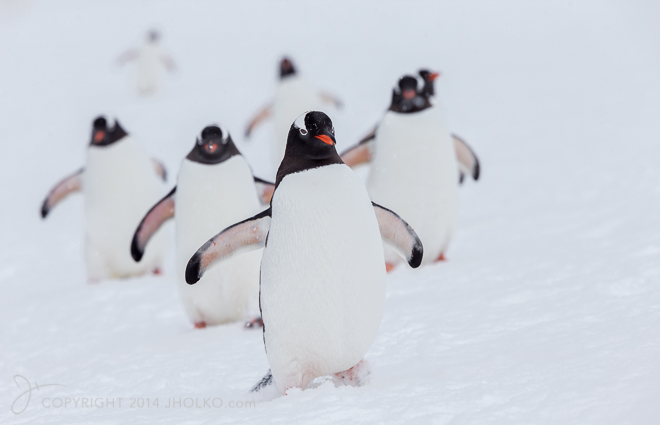
Over the last few months Extraordinary Vision magazine has published a series of articles I penned on how to choose the right photographic expedition to Antarctica to best suit your needs. I have subsequently had quite a few emails from photographers looking to travel to Antarctica who wanted to let me know how helpful they found the articles. In order to make it easy to access this series of articles in one place I have now added them as a single online PDF guide that can be downloaded from my website at www.jholko.com and directly as a PDF Guide. Happy Polar travels!