In August this year (2015) I took a small film crew (Untitled Film Works) with me on a photographic expedition to the very edge of the permanent pack ice, high above the Arctic circle. At our most northerly position we were a mere 500 nautical miles from the North Pole. The film crew documented our expedition as we searched for and photographed the increasingly rare, elusive and threatened Polar Bear. During the expedition we also photographed stunning Arctic landscapes as well as other Arctic wildlife including Walrus, Arctic Fox, Reindeer, and more. It was our intention to capture and share the experience of what it is actually like to travel on a dedicated photographic expedition with a small group of passionate photographers. I am now thrilled to release the short movie of our experiences – Kingdom of the Ice Bear. Be sure to dim the lights, crank up the volume and enjoy. My sincere thank you to Untitled Film Works and all of those participants who partook in this extraodinary expedition – thank you. Just click on the image below to play the movie. If you are interested in travelling to the Arctic to Photograph Polar Bears in their natural environment I will be leading two expeditions in 2016 (Sold Out) and 2017. Please email me for additional information or to register your interest.
Category: Arctic
Book Review: Arctique by Vincent Munier
The final book review I am publishing for 2015 (I will be travelling again soon until the end of the year) is the new release from contemporary wildlife photographer – Vincent Munier. If you are not familiar with Vincent’s photography then you more than owe it to yourself to take some time out of your day and get to know his work. Vincent is a master of wildlife photography and his latest tome ‘Arctique’ is going to be the subject of this review. 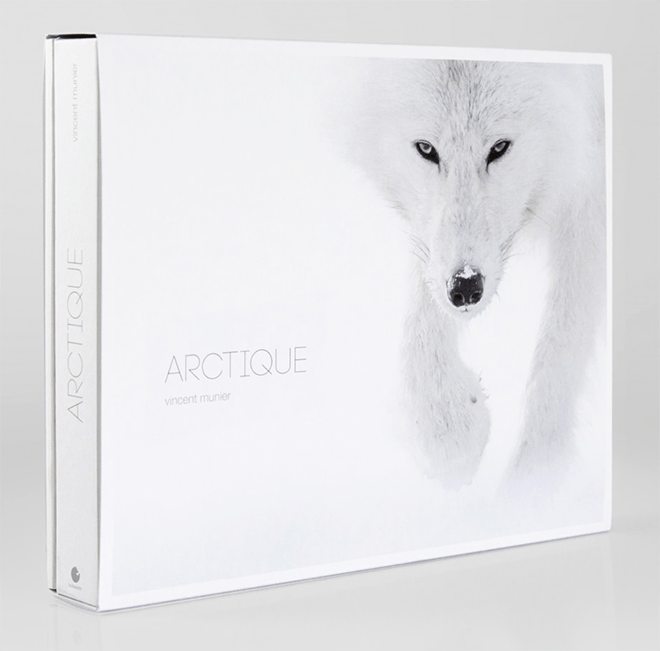 I have been eagerly awaiting the arrival of Arctique since it was announced a couple of months ago. I already own several of Vincent Munier’s books including La Nuit du Cerf (reviewed here on this site) as well as his two volume ‘Solitudes‘ and also own several of his other smaller publications. I regret, I do not own his out of print Kamchatka book (if anyone has a copy they wish to part with please let me know). I am also soon to count one of his fine art prints amongst my collection. The new release, Arctique is a collection of wildlife (and landscape) photographs from the Arctic regions of the globe. It includes some previously published work as well as new photographs. From Vincent’s website:
“Vincent Munier showcases his best pictures from the Arctic. He brought them from different polar expeditions lead in winter during the past 6 years, generally alone and with full autonomy.
In the cold, pulling heavy sleds, he walked and skied across hundreds of miles on the territories of the white wolves: the « ghosts of the tundra », as the Inuit have named them.
From Scandinavia to the northenmost islands of Nunavut (Canada), we are invited to discover a breathtakingly beautiful, fascinating wild world: polar bears and foxes, caribous, muskoxen, Arctic hares, snowy owls… and even a magical encounter, when a pack of nine wolves surrounded the photographer!
Munier’s unique pictures carry us away on a long and adventurous journey across the open spaces of the far North; their gentle, white atmosphere softens the real harshness of this gigantic desert, at the top of the world. And for the first time, the photographer shares with us his travel journal and personal impressions of the Arctic, one the most remote and fragile places on the planet.”
If you are not familiar with the style of Vincent’s wildlife imagery Arctique might seem somewhat alternative to you on first leafing through the pages. You will not find cliché images, or documentary style photography in-between the covers of Arctique. What you will find instead is highly evocative imagery that is rich in emotion and drama and that is presented in a very soft and ethereal manner. This is imagery that whispers in soft transcendent tones and does not feel the need to shout and wave its arms and legs about.
What I particularly enjoy is what is left to to the imagination in these photographs. Photography is very much a subtractive process. When framing an image in the viewfinder what we choose to exclude is often more important than what we include and it is this skill that Vincent employs so artfully in Arctique (and in his previous release La Nuit du Cerf). This has become Vincent’s trademark style and Arctique contains numerous wonderful examples in its many pages. The photographs provide us a glimpse into a mystical frozen Arctic world. They tell us stories about the lives of these incredible animals; about their ability to adapt and survive and the interactions between them. But these stories are not presented chapter and verse. Instead we are provided with just the right number of ingredients for our mind to take us on a journey and let our imagination complete the stories. This engages the viewer on a far superior level to a collection of ‘pretty pictures’. Everything is there to set the stage for a great photograph: Low mist, fog, falling snow, dramatic cloud and light, are all in abundance, but it is the choice of framing and shutter speed that bring the image to life and the soft muted pallet that paints the subject in such a mysterious shroud. We are often left with a sense of the environment in which the animal lives – as if we are provided a partly fogged window with which to look into this remote world. This is artful and soulful wildlife photography executed by a master craftsman. It is wildlife photography at its absolute best.
Presentation – We all know that first impressions count. From the get-go the presentation of Arctique is absolutely superb. From the moment I opened the packaging and removed the shrink-wrap, to the moment I turned the final page and closed the book I was engaged by the complete package. The presentation is extraordinary, and rates amongst the very best I have seen in photographic publications. It is rare for me to be left wanting more at the end of a book, but that is exactly how I felt when I got to the end of Arctique. I had devoured the imagery, enjoyed sublime presentation and was still hungry for more. It was not long after that first viewing that I found myself going back for second and third helpings.
Hardbound on wonderfully heavy art paper (I would guess close to 200gsm paper) Artique is a sizeable publication; consisting of 264 pages (plus an additional 48 pages of travel journal). The choice of a matt Arctic white colour for the cover is complimentary to the photographs and the entire book is a very well constructed package that exudes quality. I really enjoyed the small touches such as the thoughtful matching slipcase (also presented on lovely card stock) and the clever addition of the behind the scenes (travel journal) softcover book included inside.
The travel journal offers a wonderful insight into the making of the photographs in Arctique that really added great depth to the overall experience for me. Having spent many months photographing in the Arctic regions myself I can already appreciate what it took to produce these works. My feeling, is the behind the scenes additions will provide a much deeper level of appreciation for this body of work for those who have not had the good fortunate to visit the Arctic. I particularly enjoyed the small diary excerpts (in French) included therein. The addition of the travel journal will I think for many complete the experience and is a worthy addition to Artique that takes the entire package into that rare air of excellence.
I was very pleased to see a complete lack of full bleed photographs in Artique. All of the photographs are framed by the white of the paper and this works exceptionally well to contain the imagery from page to page. Each photograph is treated as an individual art piece – and rightfully so. I particularly enjoyed the layout of this book and the use of small photographs on some of the pages to draw me in and create a greater level of intimacy. In an era where big is often seen as better it is nice to see the use of small images employed to help draw the viewer into this mystical polar world. This technique is highly effective at viewer engagement and more photographers would do well to take notice. I also appreciated the occasional use of an empty page on the left hand side that allows the eyes and mind to take a slight pause and focus on just one photograph on the right hand side of the page. This is clever design that lets the eye really take in and enjoy each photograph without feeling overwhelmed. Presenting a 264 page book of photographs that continually engages the viewer is extraordinarily difficult and most books of this size leave me tired well before I get to the last pages. The simple reality is that there are only so many photographs my brain can absorb in a single sitting before the images start to blend together. Artique transcended this limitation for me and left me wanting more. That is an extraodinary accomplishment.
Print Quality – In many ways reviewing the print quality of Arctique had me reflecting back to my earlier review of Vincent Muniers La Nuit du Cerf. The difference being, the palette has been reversed. La Nuit du Cerf contained photographs that were very dark in nature (many of them shot at night) where as Arctique has a much whiter and brighter pallet that is a strong example of the use of subtle shades of white and delicate tonal transitions. There are many examples of white on white in Artique and the eye takes great pleasure in the subtle tonal shifts.
It is had to make a direct comparison to my Gold standard for book printing – the 2014 APPA Gold Award Book as the two printing processes employed in these two very different reproductions are (pardon the pun) poles apart. Where as the 2014 APPA Gold book has an incredible D-Max with deep, rich velvety blacks, superb color reproduction and pin sharp printing; Arctique employs a different approach that perhaps more appropriately matches this style of photography. My feeling is that the print quality in Artique is best judged in the subtle tonalities of snow and ice found in many of the images and not in direct comparison with other publications.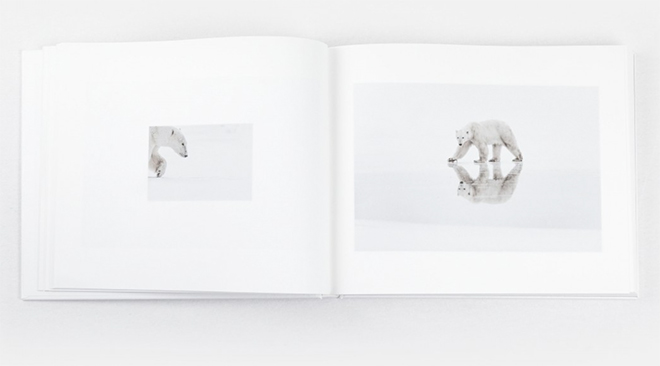 I feel somewhat spoiled in my experience with print quality. As a photographer who regularly makes and sells fine art prints I have a pretty good grasp of just how good modern day fine art inkjet prints can be. To date I have not yet seen an offset printing process that can match that of a finely crafted inkjet print. In this regard, the print quality in Arctique is about as good as offset can achieve with current technology on this type of soft art paper and in that respect it is excellent. The choice of matt art paper is highly complimentary to the photographs and the muted palette of soft Arctic whites is well reproduced throughout this book.
I fear those photographers who eschew technical perfection above all else may well fail to grasp the true beauty of the printed images in Arctique. With the limited dynamic range of the soft art paper and the very limited color palette of many of the images there is an over arching soft and ethereal presence to the photographs that is often monochromatic in nature. These are photographs that do not leap of the page with vibrancy. Rather, they softly whisper sweet tones that will draw you into this mystical white world.
Conclusion – Arctique epitomises just about everything I love and enjoy about wildlife photography in a book. It is a superb collection of highly evocative photographs that is an absolute pleasure to consume. Arctique can be purchased online for 65 Euro plus shipping in standard edition (as reviewed here) or, for 500 Euro as a limited edition (100 copies only) in a presentation box with a signed fine art print.
I highly recommend you consider adding Artique to your collection of photography books. If you are not yet collecting books on Nature photography then this would make a superb start and provide you many hours of enjoyment (as well as providing a valuable reference). If you are already a collector of fine photographic publications then Arctique is a must have addition to your library. Highly recommended.
Overall Review –***** Must Own. No photography library is complete without this book.
2015 APPA – Australian Professional Photography Awards
This weekend past saw the annual running of the 2015 Australian Professional Photography Awards (affectionately known to all those who enter as APPA). For those of you who may be unfamiliar with APPA you can read my previous blog post on the awards HERE. In short, if you want to see where the bar is set for world class photographic images and prints you need look no further than APPA. I am always buzzing with nervous anticipation during the APPA judging. The spine-tingling anticipation of having my work scrutinised for any minutia by my peers gets my heart racing. It’s not even the fear of scoring poorly that puts me on edge; its something far less tangible that I can’t quite put my finger on. If you have never entered or attended the APPA awards that probably sounds a little strange, but for those of you who have entered before you will know exactly what I am talking about. Its a special competition and quite honestly its not for the faint of heart. Its a weekend of heavenly highs for some and crushing emotional lows for others. It’s never wise to take these things too seriously, but on the other hand, APPA is the standard by which professional photographers are judged against each other and is considered to showcase the highest level of photography so one can’t help but become a little emotionally involved.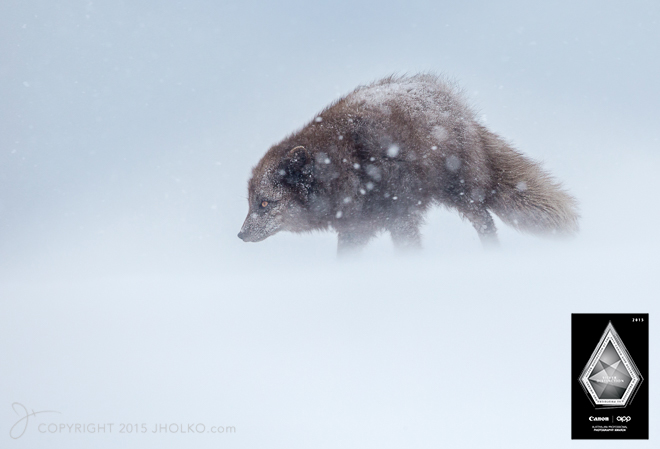
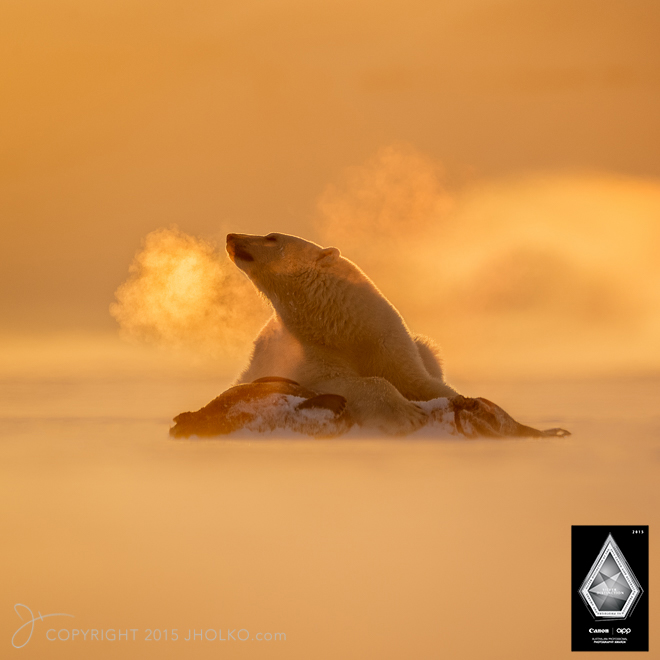

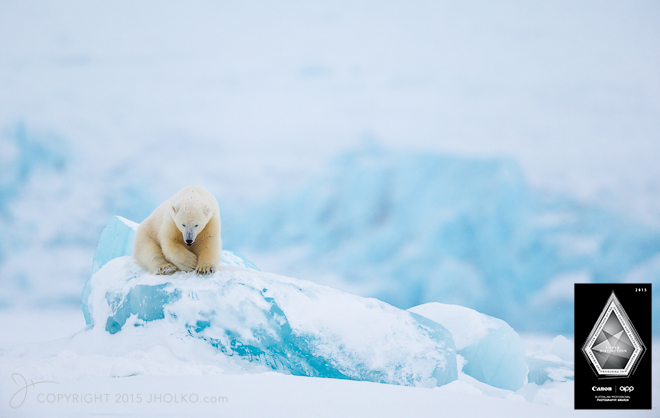 This was only the fifth time I have entered the APPA awards and it was also the first time I have participated as a judge. This year I again chose to enter the Science, Wildlife and Wild Places category (formally known as the Science, Environment and Nature Category), not only because I won this overall category last year, but also because this category has very rigid rules on image manipulation that are consistent with my own ethics for minimalist post production techniques. This year I chose to enter four images from the Arctic that I felt conveyed strong emotional feelings of wildlife in the landscape in dramatic conditions. I was thrilled to receive four Silver with Distinction awards for my four entries; which placed me in the finals for the overall category win. You can watch the judging of my four photographs my clicking on the image below.
 My current APPA points total now sits just a few points away from my first Gold Bar and I look forward to the challenge of banking these last few points at the 2016 APPA awards next year. I also want to congratulate my good friend and co-guide Antony Watson who this year accumulated more than sufficient points for his Associate status with four silver awards.
Lastly, I want to congratulate Keren Dobia who took this ‘homage to Polar explorers’ photograph of me earlier this year. The photograph scored a highly coveted Gold Award in the Illustrative category.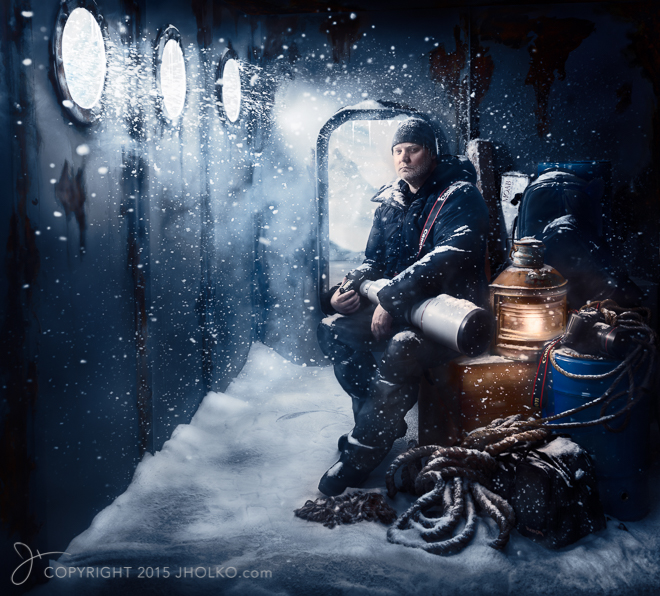
Svalbard Polar Bear Expeditions 2015 Report
In July and August 2015 I lead two photographic expeditions to the edge of the permanent pack ice north of Svalbard to photograph Polar Bears living and hunting in their natural environment. During the expeditions we also photographed incredible arctic landscapes as well as other wildlife of the Arctic region including Walrus, Arctic Fox, Whales, Seals and a plethora of sea birds including the rare and angelic Ivory Gull and the even rarer Sabine Gull (the first time I have seen and photographed this gull). Both of these expeditions were for small groups of just twelve passionate photographers and utilised a small ice hardened ship that enabled us to sail north directly into the pack ice in search of the king of the Arctic.
Importantly, our ship had very low decks that were very close the waterline which enabled us to make photographs at eye level for more intimate images. The choice of ship for expeditions such as these is critical to the ability to put yourself in the best possible place to make powerful and emotive photographs. Large ships that are unable to penetrate the ice and with high decks where you have to compete for space with other passengers are far from ideal and unsuited to photography expeditions. During both expeditions we were fortunate to see and photograph Polar Bears on the pack ice including a number of Bears on recent seal kills. Seeing a Polar Bear on a seal kill is a very rare event and as luck would have it were able to photograph the kills and all aboard were able to capture some really fantastic photographs.
Although both expeditions had the same objectives, we undertook very different routes on both trips to achieve them. On the first expedition (July 25th – August 4th 2015) we sailed south to the bottom of Spitsbergen before rounding the cape and heading north. Our decision to head south was an educated gamble based on the prevailing weather and as it turned out it really payed off with a wonderful mother and cub polar Bear encounter on the sea ice in our first twenty four hours. We also scored the added bonus of circumnavigating Spitsbergen (something I had not done before).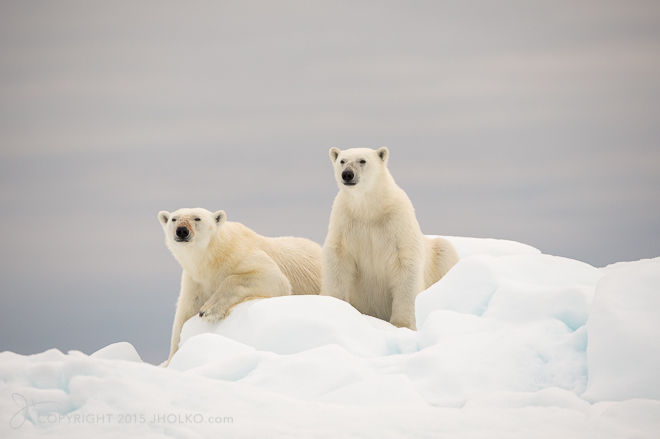 We continued our northerly travels encountering a mix of weather and fog before we arrived into better conditions in the Hinlopen strait. In this area we explored and photographed the spectacular 200 mile+ long glacier face Bråsvellbreen and the plunging bird cliffs at Kapp Fanshawe. The sights and sounds of thousands of nesting birds against such a precipitous cliff is an awe inspiring sight. I have been fortunate to visit this area a number of times now and it never ceases to impress. Bobbing up and down in a zodiac beneath these rock spires, surrounded by thousands of Arctic birds is a very special experience.
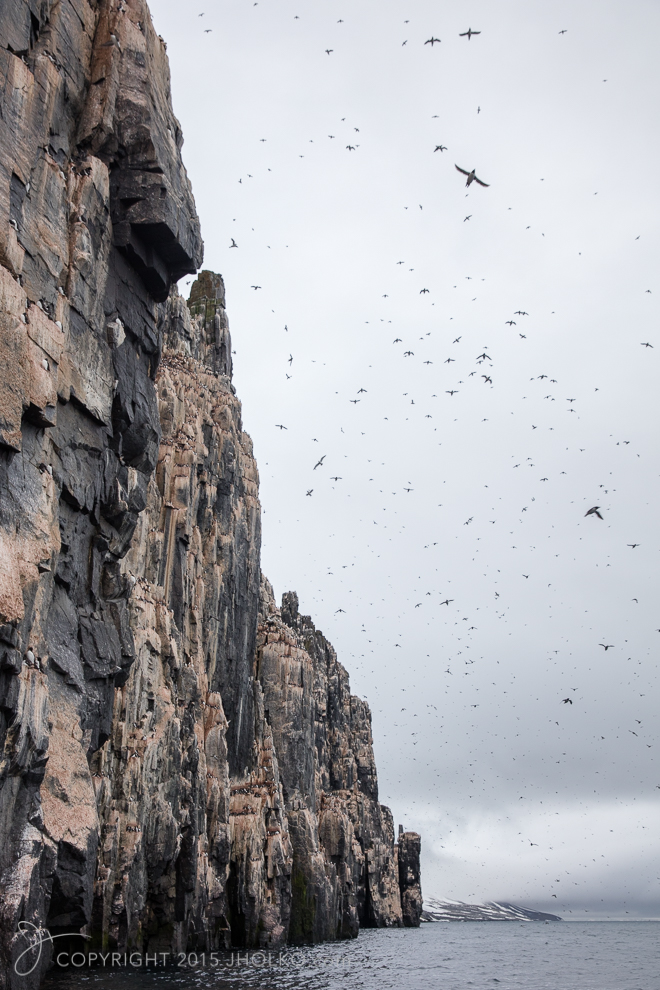 We continued to head north spending the next few days exploring the pack ice and photographing Polar Bears as they jumped from ice flow to ice flow. The Arctic pack ice is a vast area and just finding Polar Bears in this maze of ice can be quite the challenge. We spent many hours scouring the ice with binoculars to find these masters of camouflage. On this expedition our total bear count on the pack ice was eight – with almost all of these being close encounters where we were able to get some really wonderful photographs.
 When it was time to head south again we made several stops in the spectacular Kongsfjorden; where we photographed Arctic Fox cubs and cruised the glacier fronts photographing icebergs, seals and landscapes. We also landed in Poole Pynten where had a wonderful session photographing Walrus in fantastic light. During the expedition we were also fortunate to see and photograph a rare Blue whale (unfortunately I did not get a good photograph). Blue whales are quite tricky to photograph as they rarely reveal to much of their body above the waterline. Nevertheless the experience of seeing this massive mammal is an experience that stays with you forever.
 The second expedition (August 20th – August 30th) saw us set sail from Longyearbyen and head directly north for the pack ice. We made a number of small detours and stops along the way (including a glacier front cruise at Duvefjorden where we encountered three polar bears on some summer melt pack ice) as we dodged some inclement weather before arriving directly on a fresh seal kill with two Polar Bears on the edge of the sea ice – perfect. This was a miraculous find as we had a quickly closing weather window that required us to retreat from the sea ice until the seas calmed and we could return.
 We sought shelter for the evening in the lee of the Seven Islands before resuming our search for Polar Bears on the pack ice. At our furthest northerly most position we were just shy of 82º North – less than 500 Nautical Miles from the North Pole. We cruised the edge of the pack ice for several days photographing the dramatic landscape and had numerous encounters with Polar Bears in fabulous weather.
Untitled Film Works accompanied Daniel Bergmann and I on the second of the two expeditions and filmed the expedition and we hope to soon be releasing a short film of our experiences in the Arctic. Look for this video soon if you have ever wondered what it is like to travel on an small dedicated expedition to the Arctic.
During both expeditions we took advantage of great light at every opportunity and often worked at night when the light was soft and ethereal. One of the most fantastic things about photography in the Arctic is the 24 hours of daylight and the extensive opportunities this provides for image making at any time of the day or night. Our total Polar Bear count for the first expedition was eight including three bears on kills. Our count on the second expedition was fourteen including another two kills. This was a fabulous result that netted some amazing photographs from all aboard.
 This year saw a dramatic increase in sea ice in the Svalbard region that made finding Polar bears very difficult due to the nature of the ice (lots of ice rubble and very little flat pack ice). It is worth noting that this increase in sea ice is not contrary to global warming evidence (as has been reported elsewhere). This phenomena was merely the result of the polar ice cap (which moves) shifting more toward the Svalbard side of the globe. Overall, the massive reduction in sea ice continues and 2015 saw the Arctic ice pack shrink to record lows. Just as an aside I was extremely pleased to hear in late September this year that Shell has now abandoned its oil and gas exploration drilling in the Arctic for the foreseeable future.
 Both of these expeditions were remarkable trips that provided some truly fabulous photographic opportunities. The high Arctic remains one of the most spectacular locations I have ever visited and I look forward to returning again next year when I will lead another expedition to the pack ice north of Svalbard (and again in 2017) Polar Bears of Svalbard. The expeditions will depart on the 25th of July from Longyearbyen and are dedicated to the photography of Polar Bears living and hunting on the sea ice. If you would like more information about either of these expeditions please drop me an email at info@jholko.com
October Photo of the Month Winner – Erica Serena
Congratulations to the tenth print winner ‘Erica Serena’ for the photograph of the month for October 2015: ‘Vanishing Point’.
What Erica said: Wow… This is stunning and I’m just looking at it on my phone! I can only imagine the detail in this as a print. Absolutely gorgeous! Congratulations Erica (and thank you for the wonderful comment!), your print will be sent to you within the next week or two. Keep an eye out on my blog for the next print giveaway with the November photograph of the month. Remember the best way to get instant updates is to subscribe via email.
 www.WILDNATUREPHOTOTRAVEL.com