A Polar Photography Experience Video Interview and Outtakes

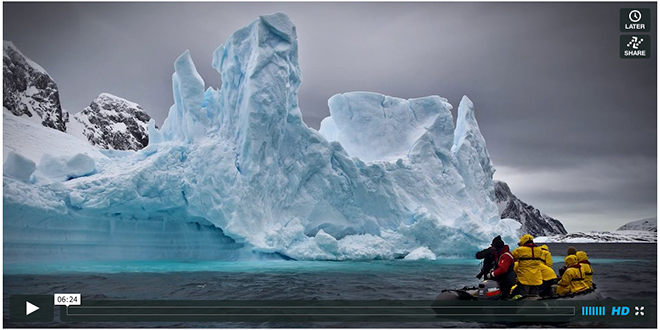
Late last year I released a short movie I produced in conjunction with Untitled Film Works in the Arctic on what it was like to travel on a dedicated photographic expedition to the Polar regions – A Joshua Holko Photography Polar Experience Video. This video was a huge amount of fun to produce and work on with the crew from Untitled Film works. During the filming we were fortunate to experience and capture some truly spectacular sights including an incredible free standing iceberg collapse amongst some incredible landscape and wildlife experiences. The video was shot on a combination of a RED Epic Cinema Camera and a couple of Canon 1DC 4K Cinema Cameras. Audio for the film was recorded separately by a dedicated sound person. The entire movie was shot over a two week period in the Arctic using our ship ‘Polar Pioneer’ as a base of operations. We departed from Iceland in August and sailed across the Denmark Strait to Greenland where we explored the many fjords before we sailed across to Svalbard and docked in Longyearbyen. If you have not seen the movie click on the image below to watch it in full high definition.
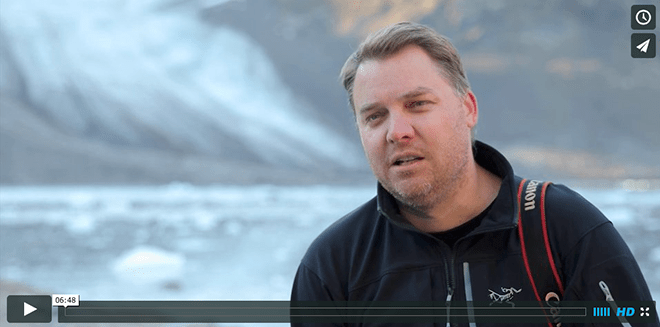
One of the really enjoyable things for me during the production was the video interview we shot high in the Arctic near the calving face of one of Svalbard’s glaciers. The full interview includes all of the final cut footage included in the film as well as all of the outtakes, stumbles and slips that are a part of video production and interviews. The full unedited interview is included below. Enjoy – And remember its outtakes as well!Equipment for this Project
Since the release of this video I have had a few emails asking me specifically what equipment was used to produce this film. So I am including below a list of hardware we took to the Arctic and utilised for the production of this movie.  All of the editing and post production work was completed by Untitled Film Works at their studio in Sydney and a number of different software programs were used depending on wether the footage in question was shot with the RED Epic or the Canon 1DC cameras.  The RED Epic RAW footage requires different grading to the motion jpeg produced in the Canon 1DC cameras and so it was necessary to process them separately before combing the footage in the final edit. The entire project was however shot in 4K resolution and much of it was also shot in very high frame rate on the RED Epic.

Camera for this project included:

  • Red Epic 5K Cinema Camera for high frame rate slow motion footage in 4k resolution
  • Canon 1DC 4K Cinema Cameras x 2
  • Canon 1DX Camera (behind the scenes)
  • Canon 5D MK3 Cameras x 2 (behind the scenes)
  • Several Go Pro Cameras were also used for filming but none of the footage was included in the final cut

Lenses for this project included:

  • Sigma 15mm Fisheye
  • Canon 17mm F4L TSE
  • Canon 24mm F3.5L TSE
  • Canon 24-70mm F2.8L MKII
  • Canon 70-200mm F.27L IS MKII
  • Canon 200-400mm F4L IS with inbuilt 1.4 TC
  • Canon 2X Teleconverter

Other Equipment included:

  • Really Right Stuff TVC-24L 4 Section Tripod x 2
  • Really Right Stuff BH-55 Ballhead x 2
  • Really Right Stuff Levelling Plate x 2
  • Really Right Stuff L Mount Camera Brackets for Canon 1DC, 1DX and 5D MK3 cameras
  • Really Right Stuff Lens Plates for 70-200 and 200-400mm lenses
  • Really Right Stuff MonoPod with RRS Ballhead
  • Miscellaneous Really Right Stuff Accessories including Multi-tool and universal clamps
  • Glide Cam
  • Miller Video Tripod and Fluid Head
  • Various Rode shotgun and lapel microphones
  • Audio Recording Devices
  • 15 Terrabytes of Hard Drives and numerous laptops and associated accessories.
Creating Intimate Wildlife Photographs

One of the easiest things you can do to dramatically improve your wildlife photography is to get down low. Chris Gamel who was a participant on my photography expedition to Antarctica last November touched on this briefly with his ‘Alter the Perspective‘ tip in his guest post here on my blog a week or so ago. It is worth emphasising the importance of this advice as getting down low allows the photographer to connect with the subject and create a far more intimate photograph than one taken at the average human standing height. When you get down low (to eye level) with the wildlife you have a much better chance to connect with your subject and to create a photograph that tells the viewer much more about the life of the critter and the environment in which it lives. Many banal wildlife images could easily have been improved if the photographer had made the effort to get down to the perspective of the subject. Getting down low is not always the answer of course. There are occasions when raising the perspective is the preferred approach and these instances should be relatively obvious.

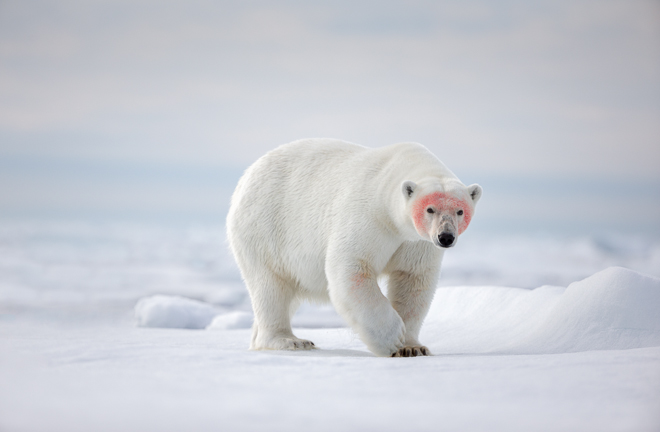
I am including an example below that illustrate the importance of getting down low and connecting with your subject in wildlife photography. I want to place particular emphasis on ‘connecting with the subject’ as this is something professional portrait and street photographers often talk about and with good reason. When you connect with your subject you have a far better chance to successfully capture their character and personality. You are going to create a photograph that tells the viewer something about the subject and perhaps gives an insight into who they are.  Connecting with a subject does not always mean you have to make eye contact either. Connecting in this case simply means you are shooting the subject in a manner in which you are trying to tell their story. When it comes to telling the story of wildlife my preference is often to shoot landscape photographs that include wildlife rather than head and shoulder portraits. Photographs that include the animal in the landscape tell the viewer something about the environment in which the animal lives and helps place the critter in context. In this example I am including a photograph that is more portrait orientated to better illustrate the importance of perspective. I photographed this Polar Bear at 80º North of Svalbard at the edge of the permanent pack ice. This bear showed no fear whatsoever of the small ship (with only twelve photographers aboard) I was travelling on and approached within just a few feet of us. The opportunity to create a great photograph was a combination of being in the right place at the right time, but just as important as actually being there was getting down low. In this instance I got down as low as I possibly could and waited until such time as the bear and I made eye contact before I pressed the shutter and took the photograph. The result is an intimate and personal photograph that speaks volumes about the environment in which the animal lives and how it perceives its surroundings. The viewer perceives the sea ice and surroundings from the perspective of the bear which helps connect the viewer with the subject. In this instance, eye contact with the bear helps draw the viewer into the photograph and emphasises the connection with the subject.

I want to emphasise that getting down low and connecting with your subject starts long before you arrive on the scene and take a photograph. You have to consider the location you are going to be shooting from and how this relates to where your subject might be when you press the shutter. And of course you have to take into account the all important background amongst a myriad of other technical, aesthetic and compositional concerns and challenges.  Some forward planning can go a long way when you are planning your next wildlife photography sojourn. Give serious consideration to the places you will be able to take photographs from and the opportunities that location will provide you. Your chance to get down low and connect with wildlife could be more than hampered by a poor choice of vessel or vehicle. Large cruise ships with hundreds of people and big buses that place the photographer high up are not ideal shooting platforms if you want to get down to eye level with your subject. Be it an African Big Cat Safari or an expedition to Photograph Polar Bears take a moment and find out what your real options are for connecting with your subject. It could well be the difference between an outstanding wildlife image and just another snapshot.

Better Photography Magazine – The Jewels of the Arctic Report by Peter Eastway

One of the real pleasures of 2013 for me was having Grand Master of Photography Peter Eastway co-lead the Jewels of the Arctic expedition last August to Greenland and Svalbard. Peter is one of the most accomplished, awarded and respected landscape photographers working today and it was fantastic to be able to work with him during this expedition. On top of being a landscape photographer Peter is also owner and editor of Australia’s Better Photography Magazine. He recently documented our journey through the Arctic for the Summer 2014 issue and has generously allowed me to release the article here as a PDF for download. Be sure to visit Better Photography and subscribe for future articles and issues.Just in case you missed it – Be sure to watch the short film produced by my good friends at Untitled Film Works of our experiences in the Arctic. Make sure you watch it full screen in glorious 1080p High Definition!

For those of you who have already enquired about the expedition I will be leading in July 2015 to Photograph Polar Bears I will be opening bookings in the next few days. This expedition will be limited to just twelve photographers and there are preliminary details on my website in the WORKSHOPS section.

Happy New Year! January Photograph of the Month

2014 has arrived! (At least for those of us living in Australia). For those of you in America and Europe you still have a few more hours to go – but I i wanted to get in early and wish all of you a very safe, happy and prosperous 2014. I hope your year ahead is full of lots of photography, wonderful light and that you make some incredible photographs.

I am kicking off 2014 here on my blog with my photograph of the month for January. An image I made in the Arctic in August last year of a large female Polar Bear on a kill on the pack ice north of Svalbard. We were fortunate to spot this Polar Bear on a fresh seal kill and to be able to manoeuvre close in our small ship M.S Origo. Incidentally, this is the same ship I have chartered for a dedicated Polar Bear photography trip in late July in 2015 and I will soon be announcing the details of this expedition here on my blog. M.S Origo is widely regarded as the best ship in the Arctic for photographing Polar Bears due to its low decks and operable portholes a mere fifty centimetres above the waterline. This enables the photographer to get down to eye level with wild Polar Bears living and hunting on the pack ice. I made this particular photograph with the Canon EOS1DX and Canon’s new 200-400 F4L IS with inbuilt 1.4 Teleconverter and photographed the bear through the open porthole in my cabin. By shooting down low through the open porthole I was able to get down to eye level with the bear and create a far more intimate photograph than would have been possible from a larger ship. There is simply no substitute for being able to get down to eye level with the target animal in wildlife photography. In this instance I used the inbuilt 1.4 teleconverter and this image was shot at 560mm full frame.

Speaking of gear: I have been receiving sporadic emails since my pre-release video review of the 200-400 lens last year asking me if I know when Canon is going to release its new high end, high mega pixel camera. I know gear talk (and particularly rumours) is the focus of many photography websites, forums and blogs as it creates more website traffic than any other topic in photography. However, I have made a concerted effort to avoid spurious gear talk here on my blog as a general rule and prefer to focus on images rather than equipment. Canon Rumours is probably the best source on the release of new cameras from Canon and they do a good job of reporting the news and rumours. The truth is I actually have no idea when Canon will release a new high mega pixel camera and can offer nothing more than an educated guess at this point. Even if I did know Canon would likely have me under a non-disclosure agreement in any case which would prevent me from discussing it. For those of you who may be into guesses; my best guess would be an announcement by the end of March with a delivery date of sometime later in the year (but don’t take that to the bank). As to how many mega pixels the camera will have and how much it will cost I wold guess somewhere around 40 mega pixels and likely somewhere around $8000 USD provided it ships in a 1-Series body. If it ships in a 5 series body I would expect the price to be closer to $5000 USD. Quite honestly I no longer pine for such a camera and have stopped paying attention to most of the rumours surrounding its release. I am very happy shooting with the 18 mega pixel 1DX at present. It is quite simply the best DSLR I have ever used. 18 mega pixels is more than enough for most of my application needs and the high ISO and auto focus performance are blisteringly good. The Canon 1DX will remain my primary camera for 2014 along with my 1DSMKIII as a back up. The only other planned addition I will be making to my camera and lens arsenal early this year is to invest in Canon’s 600mm F4L IS MKII lens and a pair of Leica UltraVid HD binoculars for spotting wildlife.

Better Photography Magazine – The Iceman

At the tail end of the Jewels of the Arctic expedition I lead this year with Grand Master of Photography Peter Eastway to Svalbard, Greenland and Iceland we sat down for a coffee (ok.. he drinks tea – even Grand Masters aren’t perfect!) in the small town of Longyearbyen for a brief chat about our experiences and life in photography. Peter took the opportunity to conduct an informal interview for his magazine Better Photography and the interview and article were just published in the new Summer 2014 issue. Peter has kindly allowed me to post the entire article in full as a PDF on my blog and website which you can download and read HERE. Peter has also published a separate report on our expedition together in the same issue of Better Photography magazine. To subscribe please visit www.betterphotography.com.au. Peter and I are currently in the early planning stages for a return to Greenland together in 2015 and we hope to finalise details in the first half of next year. As a teaser for those of you who read my entire posts – I will also be announcing a new  trip for 2015 for a maximum of just twelve photographers dedicated to photographing Polar Bears living and hunting on the pack ice north of Svalbard. With the sea ice in the arctic dwindling and the ring seal (the main prey for Polar Bear) disappearing this expedition will very much be a once in a lifetime experience to see and photograph Polar Bears hunting in their natural habitat.

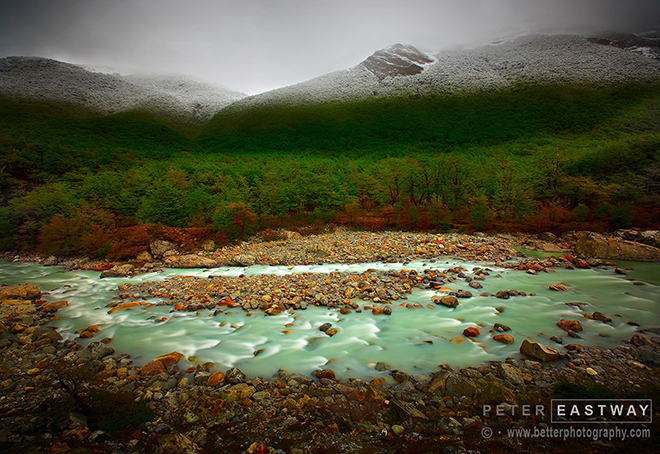
In the meantime if the travel bug bites you or you have the urge to scratch that photographic itch,  Peter is leading a workshop to Patagonia early next year (2014). The workshop takes in Torres del Paine, Perito Moreno Glacier, Cerro Torre & Fitz Roy  and runs from the 15 – 28 March 2014 for 14 days. The trip includes accommodation, all meals, English and Spanish speaking guides, local travel (minibus) and transfers.  You can download the brochure from Peter’s Better Photography website. Having just returned from a week in Patagonia (on the Chile side) I can recommend this location as offering world class landscape opportunities.