Today I took some time in the late afternoon to test a new lens – the Canon 400mm f2.8L IS MKII (I have long wanted to add this exotic piece of glass to my arsenal for both its super fast aperture and superb bokeh). Camera (1DX MKII) and lens (400mm f2.8L IS MKII) in hand, I grabbed a portable hide and wandered down to the local park where Eastern Grey Kangaroos often frequent the open grass areas at dusk. Finding myself a secluded spot just inside the tree line I set up the camera and crawled inside the hide expecting a rather long wait…
From my concealed position I could see a group of Kangaroos out in the field ahead of me; perhaps at 800mm+ range, but too far for anything more than a record shot. They were not particularly active and were grazing in the shade of a large gum tree. A few moments later from around the corner on the walking path comes a lady walking her German Shepard. She spots the Kangaroos, stops and looks around to see if anyone else is around or watching her (she doesn’t see me concealed in a blind inside the tree line). Satisfied she is on her own she lets her dog off the leash and points for it to chase the Kangaroos. Of course, the dog charges off for the Kangaroos, startles them and they scatter. One of the smaller Kangaroos bolts in my direction and I snap off some frames from my hidden position. It was just about perfect with the Kangaroo coming almost directly toward me at full tilt.
Of course, the dog had no chance of catching the Kangaroo and it quickly tired of the chase when it realised it was outclassed. Satisfied the dog had done well the woman called back her dog and went on her way, none the wiser that I had observed the entire fiasco. In fact, neither the Kangaroo, the dog or the woman ever knew I was there. Despite the fact her behaviour was inappropriate the woman had inadvertently set up a great shot for me with exactly what I had been hoping for – a Kangaroo at full gallop coming almost straight toward me. Just about the perfect test for this lens – ISO400 f2.8 1/2000th of a second.
 After I finish in Greenland I am heading down to Antarctica for my White Nature expedition. Timed as the first of the season we have planned our expedition to take advantage of dramatic and variable weather as well as giant icebergs and lots of snow and ice. I have been travelling to Antarctica annually for many years now and have found early November to consistently offer the best photographic experience for all aboard. I recently published a full guide on how to choose the right photographic expedition to Antartica and it can be downloaded for free
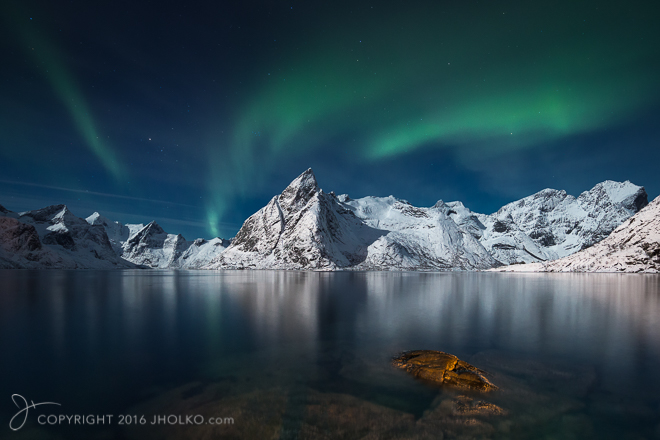
  2018 will kick off with sold out expeditions to Lofoten for Winter landscapes and Iceland for Arctic Fox in winter. My last workshop to Lofoten was in 2016 and I am looking forward to returning to this incredible archipelago. The rising and precipitous mountains that climb directly out of the sea and the rugged coastal landscapes make for a photographers paradise. And of course, the chance of Aurora Borealis (northern lights) only sweetens the pot and adds that magic element to what is one of the most picturesque places I have ever been fortunate to visit and photograph.
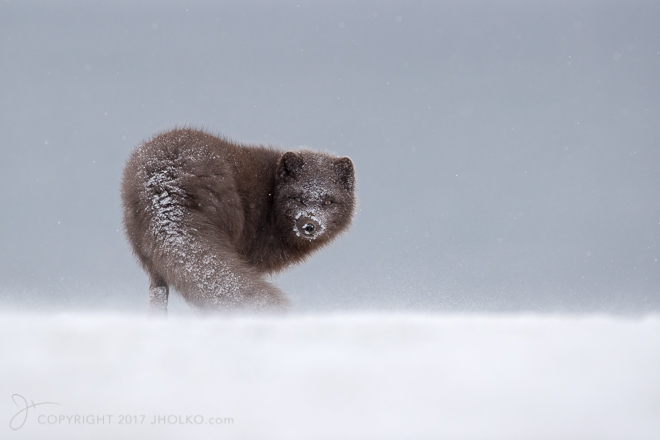
 My annual expedition to photograph Arctic Fox in winter in the remote and wild Hornstrandir reserve in Iceland has also long been sold out (
 After Iceland I will travel to Svalbard to lead a winter expedition north of Longyearbyen in search of polar bears and dramatic winter landscapes. Svalbard in winter is an absolutely breathtaking location. With newly formed sea ice, snow and ice covered mountains and chance encounters with the worlds largest land predator in a stunning white environment this expedition rates as one of my absolute all time favourites (

 Earlier this year, Daniel Bergmann and I completed a brand new workshop to photograph Atlantic Puffins and other Arctic birds at several different locations in Iceland that included the remote northern Grimsey Island, inside the Arctic circle. (
 In July I will return to Svalbard for my annual summer Polar Bear expedition. This expedition has been designed from the ground up to provide the very best possible opportunities to Photograph Polar Bears in their natural environment. With the reduction in Arctic sea ice the Polar Bears in Svalbard are dwindling in number and the number of years left to photograph them is unfortunately now extremely limited. Late July and August are the ideal times to photograph Polar Bears north of Svalbard due to the dwindling ice around the archipelago. On this expedition we will be carrying a naturalist/biologist who specialises in locating Polar Bears and an expedition leader and captain who have years of experience in placing us in the ideal position to make the best photographs. Their expertise will allow us to approach the king of the Arctic as closely and safely as possible and make incredible photographs under the spectacular midnight sun. To get an idea of what this workshop entails be sure to read the
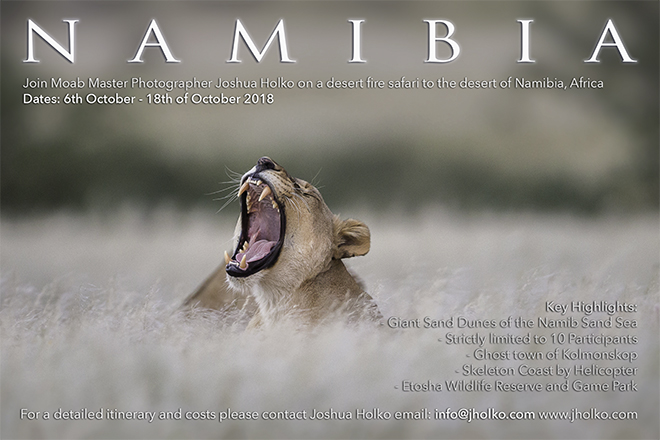
  In October I will return to the gigantic sand dunes of Namibia for a new Desert Fire Safari. This will be my fourth visit to Namibia to photograph the ancient sand dunes of the worlds largest and oldest desert. It is the perfect juxtaposition to my usual polar landscape and wildlife photography and offers an alternate landscape of extremes. Our workshop will sea us visit the giant red sand dunes of Sossusvlei, the eerie ghost town of Kolmonskop as well as the relentless Skeleton coast and the Etosha wildlife reserve. Places are now limited.
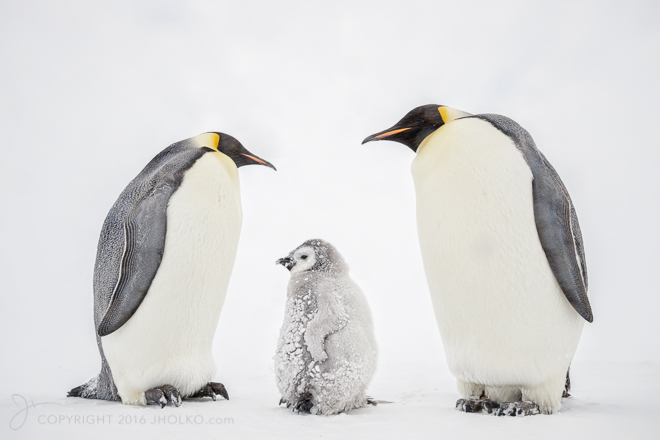
 Finally in November 2018 I will return to the sea ice of Gould Bay in Antarctica for my Emperor Penguin expedition (
 Peaking into 2019 I will be leading a brand new workshop to the north of Finland in February in search of Golden Eagles, Hawk Owls, Wolves and wolverine (full details coming very soon). The workshop is going to include a significant amount of photography from private hides and will afford opportunities to photograph rare species not often seen and even less often photographed. I am not quite ready to start taking bookings for this new workshop but you are welcome to register your interest by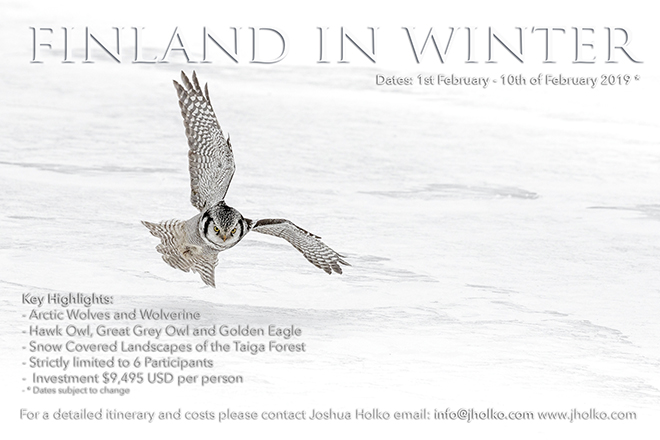
 The Iceland Puffin workshop is entirely focused on bird photography and as such my equipment for this workshop predominantly consists of longer lenses with the 600mm F4L IS MKII and 300mm F2.8L IS MKII being my main weapons of choice. Two Canon EOS 1DX MKII bodies will suffice as my cameras for this workshop. I am also taking a wide angle for close up images as well as my 85mm F1.2L MKII for some shallow depth of field work.

 www.WILDNATUREPHOTOTRAVEL.com