SEARCH FOR THE ULTIMATE PHOTOGRAPHY GLOVES – PART ONE ‘THE FIND’

For as long as I have been into landscape, nature and wilderness photography I have been searching for the perfect gloves for outdoor winter photography. The problem has been that I have struggled to find gloves that are waterproof, yet are thin enough to retain enough ‘feel’ to enable me to use my camera equipment unhindered. I have a drawer full of potential candidates that have all ultimately disappointed for one reason or another; usually because the gloves ultimately lack enough tactile feel for camera operation or are not waterproof. Believe me when I say it has been quite a search.

Up until recently I had settled on a thermalite glove liner; which was both warm and thin enough to enable me to use my camera equipment relatively unhindered. The problem is that they are not waterproof and every time I have been shooting with them in the snow I have ended up with wet and subsequently freezing fingers. It also necessitated having multiple pairs (since one pair always ended up wet). Last weekend I was shooting up at Wallace’s Hut at Falls Creek at sunrise in a sleet and snow with the thermalites and yet again ended up with wet and freezing fingers. I told myself at the time I just had to find a better solution before I leave for New Zealand in a few days and before Antarctica later this year. I have no desire to find myself shooting from a zodiac amongst the icebergs in Antarctica with wet and freezing cold fingers.

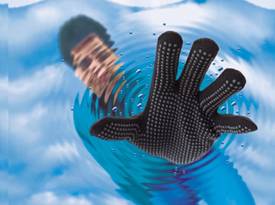
Later that morning when I was getting a late breakfast / early lunch in Bright I popped into a couple of outdoor stores just to see what they had in the way of gloves. Amongst the usual assortment of skiing gloves (which are just to thick), woollen gloves (which are to slippery and not waterproof) I found a pair of ‘Seal Skinz‘. On first inspection these gloves ticked all the boxes: Waterproof – Yes, Thin for tactile feel, Yes, Grippy and non-slip, Yes. The Seal Skinz are very similar in appearance to the Lowe Pro gloves (I have never really liked the Lowe Pro gloves finding them still too thick and not waterproof), however, they are slightly thinner for better tactile feel and completely waterproof. Only problem was they were just shy of $70 a pair and they did not have my size in stock. Unperterbed I decided to try and order a pair online when I returned to Melbourne; which I did and the gloves arrived late last week just in time for my trip to the South Island of New Zealand. As an aside, I was also able to find them significantly cheaper online. I ordered the standard version of the Seal Skinz glove. Seal Skinz also make a chill blocker version of this glove; which although warmer again with its fleece lining is too thick for photography for me. Time will tell if these gloves prove their worth. The South Island of New Zealand in the dead of winter should certainly be a good test. Last time I was there I experienced -19 Degrees celsius while shooting from Helicopter above the alps with the doors removed (and that was cold!).

As an outdoor photographer whose favourite season is winter I am willing to accept some degree of finger discomfort (cold) to keep good tactile feel with my camera equipment. I can put up with being quite cold as long as I am not also wet. The trick is finding the right balance of warmth and tactile feel and I am hoping these new Seal Skinz finally fit the bill. I will see how they fare in New Zealand as a precursor test to my Antarctica trip and report back.
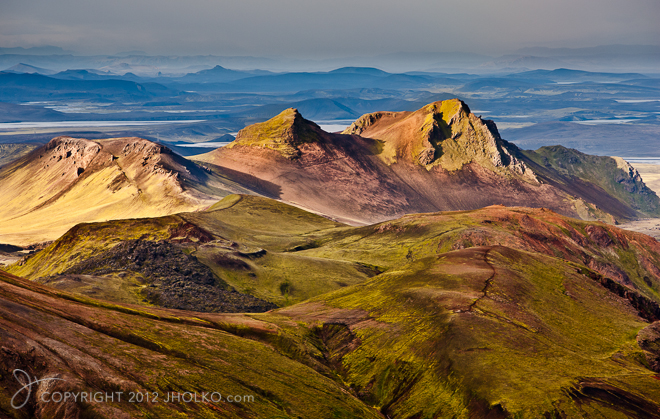
PHOTO OF THE MONTH UPDATED – AND I’M BUGGING OUT!

I am a few days late updating my photo of the month this month but as the proverbial saying goes its better late than never. The photo of the month for June is the recently processed image from Landmannalaugar in Iceland. You can view a higher resolution version of this photograph on my portfolio website at www.jholko.com under Iceland.

I have made a last minute decision to bug out late tomorrow after some office time and head up to the Victorian High Country for a few days for some wilderness photography. Its only a week now until the snow and ski season officially open; which means the mountains will soon be crawling with snow deprived skiers keen to carve up the slopes. This weekend coming represents a last opportunity to spend some time in relative peace photographing the high country of Victoria as well as a last shoot before I leave for New Zealand’s South Island in a couple of weeks.

I had planned to spend the weekend catching up on some image processing and printing for clients but an invitation from a fellow photographer for a photographic strike mission to strategic locations in the High Country and the promise of some mixed weather and possible snow has twisted my arm (not that it really needed a lot of twisting). We are planning to shoot at historic Wallace’s Hut at Mount Beauty as well as several key locations at Mount Buffalo and the surrounding area. It should be a great few days and I cant wait to get out into nature with my cameras. Just one more sleep!

THE IMPORTANCE OF STARING TIME – A THOUGHT PROCESS

It has been almost a year since I was in Iceland on my photographic expedition in July and August 2010. Since I have been back I have been on many other photographic trips and shoots – some local and some further afield. Yet, it is the many thousands of frames I took in Iceland that consistently draw me back for further editing and processing. It is this further editing and processing of photographs that has made me realise the importance of what I am calling ‘staring time’. That is, the importance of time to do nothing more than visually stare at a photograph so as to give both the conscious and sub conscious mind the chance to fully absorb and understand all of the subtleties and nuances of the photograph. It is not until the mind (at least my mind) has spent a significant amount of time staring at a photograph (often over multiple evenings and even weeks) that I feel I have fully understood what the photograph might need to truly ‘sing’ form a processing perspective. Subtle burning and dodging in just the right area, a slight colour temperature tweak or a different crop can often be the difference between a great photograph and one that truly shines. Staring time gives my mind the clarity in relation to the photograph to try and make those adjustments. It doesn’t always work and occasionally I find myself being unable to see the wood for the trees. In such circumstances I often find it useful to put the photograph away and revisit it at a later date.There is no hard and fast rule for staring time. Sometimes (rarely) I find there is quite literally no staring time required. The photograph comes into Lightroom off the CF card, is cropped, processed and exported as a Tiff in its completed iteration. This can be a process that takes no more than a few minutes. Alternatively it can be a long, slow and iterative process that might take any where from an hour to a few weeks (as is usually the case for me).

I want to use this photograph below from Landmannalaugar as an example of what I am driving at. This photograph has resided in my Lightroom library since I returned from Iceland in August 2010. It sat, unnoticed, unloved and unprocessed until a week or so ago when I was casually reviewing files from various shoots late one evening before bed. Something just clicked for me when this file came up and I realised I had a potential gem – a proverbial diamond in the rough. It was late however, and I was tired so I added the image to a quick collection for easier reference later and went to bed.

The next day I eagerly sat down in front of my computer and began to process the image. As is usual for me the first thing I like to do is to set both the white and black point correctly (to restore a lot of the contrast that is in the photograph – but not displayed on screen when the RAW file is imported. This gives me a pretty good indication right off the bat what I am dealing with in terms of how the final image will look. Many images never make it past this point for me. After setting the white and black point I tweak the color temperature and tint before setting the crop for the image. I will clean up any dust spots and then start to fiddle with the tone curve and other controls. This is where staring time enters the processing equation. I find it necessary to often make an adjustment  and then just stop and stare for a while; perhaps even leaving the image and coming back to it later – sometimes after a cup of coffee or sometimes another day. This staring time gives me a greater sense of clarity about wether the change I made produced the desired result. Its a back and forth process that may sound somewhat counter intuitive; but it works for me. This photograph from Landmannalaugar is one such photograph that has absorbed significant staring time. Throughout the processing of this photograph I just stopped and stared more than I perhaps care to accurately recall. In short, I spent a lot of time staring at this photograph, making small subtle changes to really make it sing to me. In the end if I look at the history tab in Lightroom what I find is a list of many changes that were made, unmade, sometimes remade in another form before I ended up at the final photograph. What this tells me is that me (the photographer) had to go on a unknown journey to get to my final destination. I could not simply plot a direct course from point A to point B to arrive at my final photograph. I was forced (ok forced is a little too strong a word) to find my way there by trying varying paths. At the risk of being somewhat controversial this is perhaps one of the key difference between producing a photojournalistic style record of an event (a snapshot) and Art.

Now; if staring time is so important during processing of the photograph it must therefore be equally important during the actual taking of the photograph – it stands to reason. I believe this photograph also illustrates this point. This photograph was taken after spending three hours at the top of one of Landmannalaugar’s highest mountains in the freezing arctic winds waiting for light. I have blogged about this days shoot before so wont repeat the story, but I had a lot of time to stare at the scene during this time; which ultimately lead me to my final composition. Perhaps if I had arrived just as the light was turning magical I would not have been able to make this photograph? The importance of staring time in my photography is considerable and it is a timely reminder for me of its importance on the eve of my trip to New Zealand’s South Island and Antarctica later this year.

A higher resolution version of this photograph is also on my Portfolio website under Iceland at www.jholko.com

THE 2011 NILLUMBIK PRIZE EXHIBITION

I am pleased to follow on from my previous announcement earlier this month of ‘Blue Berg’ winning the 2011 Extreme Environment People’s Choice Award with the news that this photograph has also been selected to be hung at Montsalvat in Eltham as part of the 2011 Nillumbik Prize. This is the second year in a row my photography has been selected to be exhibited in this prestigious award and I am very pleased to have my work included.  The exhibition opens on Thursday the 16th of June at 6pm and runs until Sunday the 31st of July. Unfortunately, I will be unable to attend the opening as I will be in New Zealand on a ten day Landscape shoot in the South Island. I will certainly be stopping past for a visit and coffee when I get back from New Zealand.

Montsalvat is one of my favourite locations for morning coffee and relaxing in the grounds and surrounding buildings – It is a wonderful location with three separate gallery areas, a restaurant / cafe (that makes a really good breakfast) and some fantastic backdrops for portrait photography amongst the old buildings.

The Nillumbik Prize exhibition encompasses all manner of art and craft (not just photography) and includes everything from photography, to painting and sculpture.  The Nillumbik Prize is also one of the oldest community art shows in Victoria – the former Eltham Shire Council proudly sponsored the event back in the mid fifties when it was organised by the local arts community. Then as today it was and is a celebration of diversity and importance of art to this region.

WINTER IN NEW ZEALAND’S SOUTH ISLAND – JUNE ITINERARY

My trip to New Zealand has started to sneak up on me (now three and half weeks away) and its time to formalise an itinerary of places to visit during the trip. I have booked a camper van / motorhome complete with kitchen, mod cons etc. which means I have a great deal of flexibility for the duration of the trip. I can move from location to location and not have to worry about finding accommodation for the evening, or having to constantly pack and unpack (which can be a real hassle). As I like to work primarily at Sunrise and Sunset its far more convenient to be based in a camper van on site – rather than checking out of hotels or bed and breakfasts at 5am in the morning.

I am keeping my itinerary fairly loose as much will depend on the weather. It can be bitingly cold in the South Island of New Zealand in winter and if the weather is socked in around the alps it can make photography problematic so I plan to be flexible and ‘go with the flow’ in terms of weather. If the mountains are clouded in I will spend more time on the coast. I have some business matters to attend to before I can get underway with the photography side of the trip but they should not take more than a couple of days. My loose itinerary is as follows:

  1. Day One: I am going to head from Christchurch to Lake Clearwater and Mount Somers and spend some time around this area before driving down to the Moeraki Boulders for a sunset and sunrise the following morning.
  2. Day Two: After Sunrise at the Moeraki Boulders (assuming the light has been good) I will head back up to Omarama for Sunset at Wanaka.
  3. Day Three: Spend the day at Wanaka and visit surrounding locations
  4. Day Four: head up to Mount Iron and spend the morning in this location before visiting Diamond Lake
  5. Day Five: Drive over to Fox Glacier stopping at several locations I want to shoot along the way
  6. Day Six: Fox Glacier – If the weather is good I may charter a helicopter for some aerial photography.
  7. Day Seven: Another day around Fox Glacier and Lake Matheson
  8. Day Eight: Drive up to Punakaiki and Pancake Rocks
  9. Day Nine: Driver over to Kaikoura for some more locations I want to visit.
  10. Day Ten: Home

In terms of photographic equipment. I am taking my entire kit of cameras and lenses except the 85mm F1.2L which I really only use for specialised portraits and wont need for this trip – since this is a dedicated landscape and wilderness expedition. I am currently having a mental debate with myself on what to do in relation to a back up DSLR camera. Canon 1DS MKIII’s are now available at quite reasonable pricing making them quite an attractive proposition as a back-up. I am reliably informed from various sources that there will not be a MKIVs this year; which adds some weight to the argument of purchasing an additional 1DSMKIII (both for New Zealand and Antarctica later this year as a back-up). I just won a high end Fuji camera in the 2011 Extreme Environment Photographic competition; however, this camera is a different lens mount to my Canon and (although an excellent and well reviewed camera) does not really work for me as a back-up since I prefer a body I can use my existing lenses with. The Canon 1D MKIV is also a potential option I am considering and may actually be the best choice since it provides a little extra reach for wildlife with its 1.3 crop factor.