My good friends Abraham and Dom over at Untitled Film Works have shared some of the extra drone footage we shot during the filming of Ghosts of the Arctic. Cut together specifically for DJI, Abraham also talks about some of the challenges we faced during the making of the short film as well as techniques and ideas he used to obtain certain key shots.
Category: Travel Photography
Photography from around the World
Wild and Scenic Film Festival Creston 2019 Features Ghosts of the Arctic
Join the Creston Valley Branch of Wildsight for the 5th annual Wild and Scenic Film Festival, an evening of outdoor adventure, at the at Prince Charles Secondary School Auditorium on Sat. Feb. 2, 2019. Show starts at 7pm. Door prizes galore. A variety of films featuring stunning cinematography, exotic adventure, and sometimes frontline activism are to be shown—there is something in nature for everyone. The Wild and Scenic Film Festival visits over 150 locations on its North American tour, entertaining and inspiring viewers to make the world a better place. Here is the line-up of films:
1. Ghosts of the Arctic
Follow the grit and determination of polar photographer Joshua Holko as he traverses the frozen landscape of Svalbard, in the high Arctic, to encounter polar bears on foot. Taking place during one of the coldest periods in the last few years, the crew suffered frostbite and camera failures during the filming process. The aerials featured in the film do great justice to the stark beauty of the arctic landscape.
2. Return from Desolation
For Garrett Eaton, a remote and rugged section of the Green River called Desolation Canyon is more than a river; it is a place that brought him back from the brink to reclaim a life he almost lost. At his core, Garrett is a river guide, but his story doesn’t start here. Returning to the wild rivers and canyonlands of his youth, Garrett found true freedom. With each pull of the oars, Garrett reclaimed his faith, his sobriety and most importantly — his family.
3. Love of Place
When an invasive species plant threatens to take over a beautiful desert river, an obsessive park ranger sets out to kill it
4. Irreparable Harm
The Tlingit people have called the vibrant coastline of Southeast Alaska home for over 10,000 years, and continue to practice a way of life intimately tied to the ocean and the largest remaining temperate rainforest on earth. Now, contamination from industrial mining is threatening the safety of the wild food sources that make Alaska so unique. Irreparable Harm gives powerful voices to the Alaska Native communities and conservation groups standing up to protect the cultural and ecological values that make this magnificent marine ecosystem an irreplaceable treasure.
5. Wildlife and the Wall
Filmmaker Ben Masters (Unbranded) goes into the heart of the Big Bend, the last true wilderness in the state of Texas, to consider what effects building a border wall might have on wildlife dispersals, migratory corridors, and access to the Rio Grande, the only water source in a harsh desert environment.
6. Life Coach
When conditions became unfavorable for a first ascent of Alaska’s Ruth Gorge, Alex Honnold turns the camera on Renan Ozturk for a strangely beautiful discussion about life’s big questions.
7. Lost in Light
Lost in Light is a short film on how light pollution affects the view of the night skies. Shot mostly in California, this piece shows how the night sky view gets progressively better as you move away from the lights.
8. The Curve of Time
Due to climate change, ski seasons will be markedly shorter by 2050. Lower elevations will receive significantly less snowfall. Professional skiers Greg Hill and Chris Rubens peer into the future and have a conversation with their future selves, contemplating the sobering forecast and the impact their thirst for adventure has on the very environment that sustains and fulfills them. With an eye on the clock, they launch themselves into an experiment: can they each remain committed skiers while significantly reducing their carbon footprints?
9. Rupununi: Fight for El Dorado
In the late 15th century, Sir Walter Raleigh set out on an ill-fated quest for El Dorado, the lost city of gold. Today, biologists are uncovering what the indigenous people of Guyana have known all along – that Rupununi is a place of untold riches, not only in minerals and oil, but in unrivaled biodiversity. Thanks to well-orchestrated efforts from indigenous communities and conservation biologists like Dr. Lesley De Souza, the Rupununi has the potential to become Guyana’s largest protected area (3 million acres). See this incredible landscape through the eyes of Macushi elders as they fight to protect the forests, rivers and seasonally flooded wetlands from unchecked development and habitat destruction.
10. My Irnik
A young father teaches his son about the value of shared adventures, exploration and his ancestral Inuit heritage.
11. Chasing Wild: Journey into the Sacred Headwaters
Three friends set off on a 400km bikepacking and packraft expedition – pedaling through vast boreal forest, paddling frigid whitewater, battling monster trout, outrunning a grizzly – through the heart of the sacred headwaters in northwestern British Columbia, birthplace of three critical salmon rivers, and home to the Tahltan people. In the wake of the devastating Mount Polley Mine disaster, the team’s goal is to understand what is at stake as a wave of new mines are developed across this remote corner of the province.
Greenland Expedition Announcement September 2019
It has been some time coming but I am pleased to now formally announce my 2019 expeditions to the spectacular Scoresby Sund fjord system on the east coast of Greenland with good friend Daniel Bergmann. For 2019 Daniel and I will be leading two back-to-back ‘fly-in, fly-out’ expeditions that will depart from Reykjavik via charter plane and land at Constable Point in Greenland. Flying to Greenland saves us two days sailing across open ocean in either direction and means we have more time for exploration and photography.

A few words on Greenland: Home to some of the most extraordinary geology to be found on earth, the red and orange glacial scarred landscape of Greenland stands in stark contrast to the electric blue icebergs that carve off its many glaciers and drift slowly down its precipitous fjords. It is a remote land of untamed and unbridled beauty that is rarely visited and even less rarely photographed. It is an incredible place to inspire the imagination and fuel your photographic desires.

The landscape and geology of the East Coast of Greenland is both stunning and extraordinary. Photographing this incredible landscape under soft golden Arctic light is our main objective. In fact, our entire expedition has been planned around us being on location at the best time of year for soft golden light. We will also see and photograph incredible castellated icebergs that have calved off the many glaciers of Greenland. Dramatic glaciers, plunging cliffs and beautiful drift ice formations will be present as well.
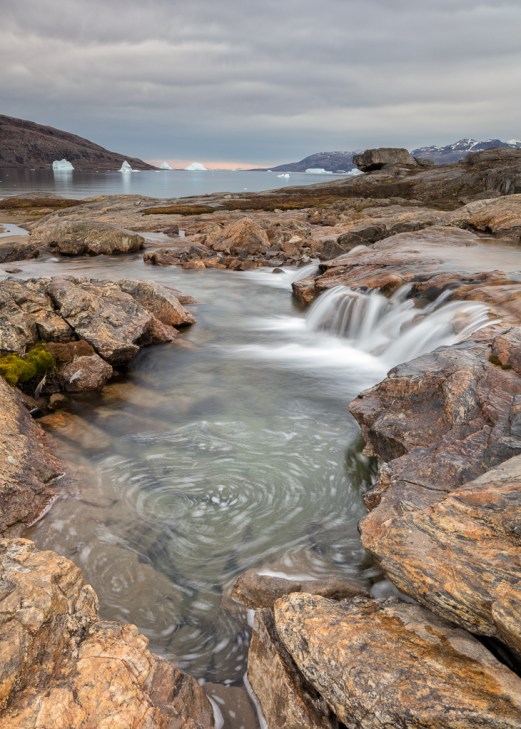
These expeditions have been more than two years in the planning and have been structured on our extensive experience in the region to provide the very best possible opportunities to photograph the incredible landscapes of the remote East Coast of Greenland in the Scoresbysund fjord system. With the sun low in the sky and at an oblique angle, late September and early October are the ideal times to photograph this region of the Arctic. Working during the best light of the day we will maximise our time for photography with daily shore excursions with plenty of time to scout, setup and photograph under the midnight sun.

The photographic opportunities in the Scoresbysund fjord system are limitless and we intend to take maximum advantage of our time in this area. We will use zodiacs to make daily shore excursions for contemplative landscape photography as well as utilise zodiacs for iceberg photography as we cruise amongst the icebergs and brash ice. At this time of the year we are likely to also experience the first sea ice of the coming winter.

The Scoresbysund fjord system is home to some of the most incredible iceberg formations to be found anywhere in the world. As a result of the constant thawing and freezing of the glaciers there is an abundance of icebergs of infinite variety to be found drifting in the fjord system. Many of the icebergs are heavily castellated with electric blue cracks and fractures that are a photographers dream come true. The juxtaposition of these natural sculptures against the orange and red rock scarred landscape is not only awe inspiring in its primordial nature but completely unique. Nowhere else in the world can this combination and beauty be found on such a scale. In photographic terms the landscapes of the Scoresbysund fjord system are virgin ground. Very few expeditions venture into this area of Greenland and even fewer carry photographers.
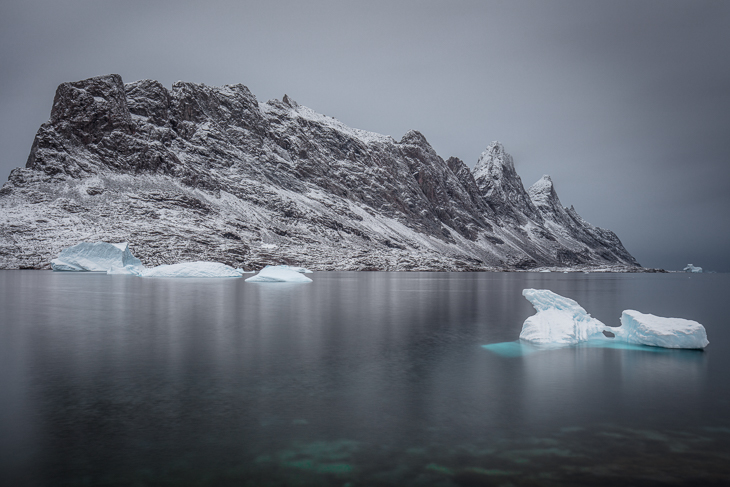
The maximum number of participants on these two expeditions has been capped at just eleven people. By limiting the number of participants on the ship we ensure sufficient room for photography equipment, shooting positions and zodiac photography for all participants without having to compromise.

If you are excited by the idea of traveling to the remote East Coast of Greenland to photograph the incredible landscapes of this country with a small group of dedicated and passionate photographers now is the time to secure one of the few remaining places. Due to the initial registrations and bookings there are already only four places remaining on the first expedition and only three places on the second before both expeditions will be completely sold out. Full details including dates, costs and a detailed PDF itinerary can be downloaded from my website at www.jholko.com.
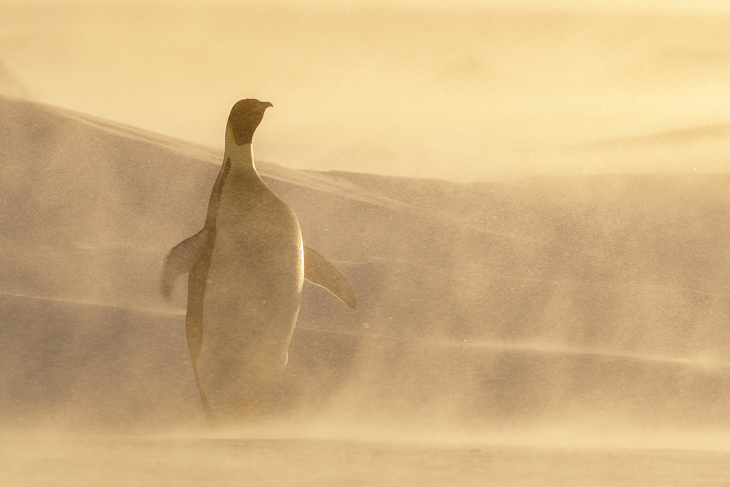
Photo of the Month December 2018 – Emperors Dance in Snowstorm
I am currently making my way back home from Antarctica and an absolutely superb expedition to the remote sea ice of Gould Bay where I was guiding an expedition to camp with and photograph the mighty Emperor Penguins. I will have a full trip report in a couple of weeks once my feet hit the ground and I have had a few days to catch up on jet lag, but in the meantime I can say it was a truly incredible and life-changing expedition on many levels.
It therefore feels appropriate that my photograph of the month for December 2018 is from a previous expedition to the sea ice of Gould Bay. Photographed well after midnight with the setting sun back lighting the flying snow as an Emperor Dances in the golden light. What really works for me is the quality of the light, the flying snow, the penguins gesture and the soft folds of the ice and snow in the background. It was a deliberate choice to use a fairly slow shutter speed to catch just the right amount of blur in the penguins wings and snow to help give a sense of movement which helps bring the photo to life. These sort of conditions can be very difficult to work in when you are cold and tired, but if you make the effort the rewards can be truly wonderful.

Departing for Emperors Expedition 2018
It is hard to believe it has already been two years since I was last camped on the sea ice of Gould Bay in Antarctica to photograph the mighty Emperor Penguins (Read the Trip Report). Time has simply evaporated and in less than two days now I am really excited to again be starting the trek over to the bottom of South America to begin my 2018 expedition to the Emperor Penguins. Camping and living with the Emperors on the sea ice is one of the most amazing experiences I have been fortunate to have in my photographic travels. Like the previous expedition we will be flying down to land on the naturally occurring blue ice runaway at Union Glacier. From there will be taking a smaller twin-otter aircraft several hours out to the sea ice where we can establish a remote tent camp.
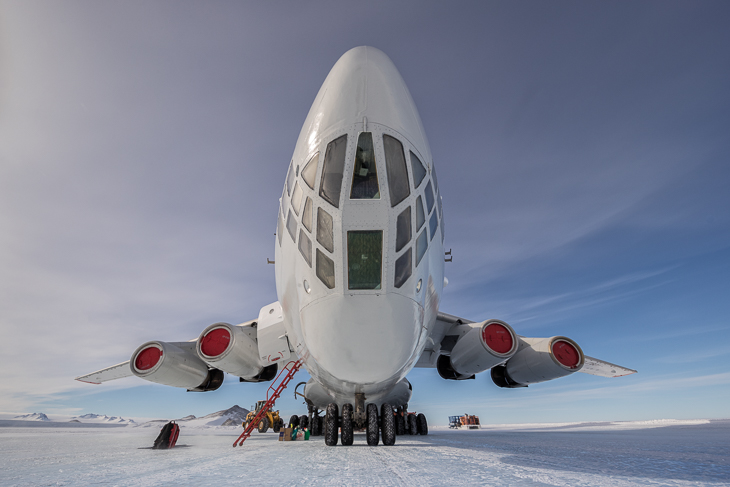
I am planning to try and shoot a bit of video this trip and will be taking a new Go Pro Hero 7 Black as well as an extra Canon EOS1DX MKII (just for video) as well as a dedicated microphone. I don’t pretend to be a videographer and I wont be shooting the sequel or follow up to Ghosts of the Arctic, but I would like to capture enough video to show just what its like to camp with the Emperor Penguins on the frozen sea ice in Antarctica.
My equipment for the Emperors expedition will be all too familiar to those of you who regularly follow my travels, workshops and expeditions. I am teaming up with a friend of mine for the video component (who is also a Canon shooter) so between us we will have just about everything covered. I will re-pack my camera gear on arrival into Punta Arenas into a back pack that will travel down to South America in my checked luggage. If you are wondering why the 300mm 2.8 and 400mm 2.8 its so I can share both lenses with the other Canon shooters.
Lightroom Roller(Carry on Luggage)
2 x Canon EOS 1DX MKII bodies (my friend is bringing a third for video)
1 x Canon 16-35mm F4L Lens
1 x Canon 11-24mm f4L Lens
1 x Canon 24-70mm F4L IS Lens
1 x Canon 70-200mm F2.8L MKII IS Lens
1 x Canon 400mm F2/8L IS MKII Lens
1 x Go Pro Hero7 Black w/ various accessories and spares
1 x Rhode Microphone
Gura Gear Chobe (Carry on Luggage)
1 x Apple MacBook Pro 15″ Retina
1 x Apple laptop charger
1 x Canon 300mm F2.8L MKII IS Lens
2 x USB 3 2TB external portable Sandisk SSD Drives
1 x Thunderbolt CFast card reader and CF card Reader
1 x Sunglasses and sunglasses case
Etcetera Case #1 (Inside checked luggage)
1 x Canon 1-Series camera charger
1 x Power Adapter
2 x Canon 1DX spare Batteries
3 x Go Pro Spare Batteries
Other #1 (Inside checked luggage)
1 x Sachtler Flowtech 75 Carbon Tripod
1 x Sachtler FSB-6 Fluid Head
I had thought that this would be my last expedition to the Emperor Penguins but due to multiple requests I am confirming that I will have another expedition to the sea ice of Gould Bay for Emperors in November of 2020 (exact dates TBA – but it will be going ahead with several spots already spoken for). For those of you keen to get the jump and pre-register you can drop me an email to secure one of the remaining places. For now, I am keen to get my final packing done and get the long haul travel out of the way.

There will be minimal to no updates (other than a couple of scheduled posts) whilst I am in Antartica as there is no internet access out on the sea ice. Camped on the sea ice of Gould Bay we are about as remote and disconnected from civilisation as its possible to be. See you in South America and then onward to Antarctica!
 www.WILDNATUREPHOTOTRAVEL.com