Yesterday I returned to Reykjavik after leading a new expedition to the remote north-west of Iceland to photograph Arctic Fox in winter. I have been travelling to this remote nature reserve in the north of Iceland for the last four years to photograph Arctic Fox but this was the first time I have taken a group with me. We had some amazingly close encounters with several Blue Morph Arctic Fox during our time in the north and I will have a full trip report soon. As well as Arctic Fox we also took some time to photograph some of the dramatic landscape found this far north in Iceland. This particular photograph of snow being blown from one of the surrounding peaks at sunset from my 2016 expedition is my photograph of the month for March 2017.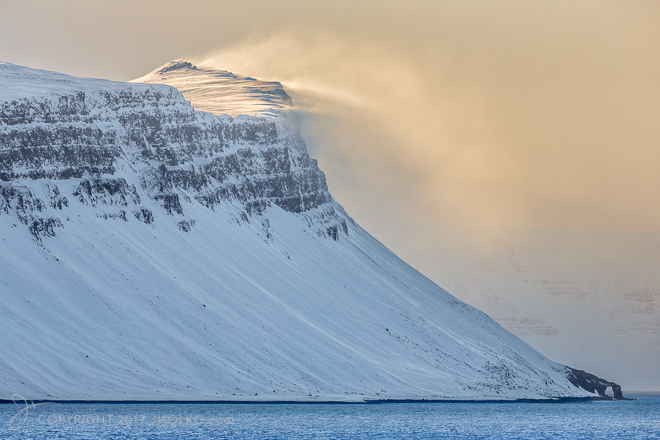
Category: Uncategorized
Workshops and Expeditions Update and Availability 2017
I have been meaning to post a workshop and expedition update for some time now but other matters have taken priority and I now find myself near the end of February and about to embark on my annual Winter workshop in Iceland with Daniel Bergmann. So better late than never, here is a list of what is coming up, what is sold out, what is still available and some of what is planned for the future.
After Daniel and I finish up our Winter Iceland trip (2017 is the last year I will be running this trip for the immediate future) I am heading north with a small group of photographers for a new expedition to photograph Arctic Foxes in the extreme North-West of Iceland. This expedition has long been sold out; but I will be repeating this trip again in 2018. At this stage there are still three places available before it will be sold out. You can download a complete PDF of the expedition HERE.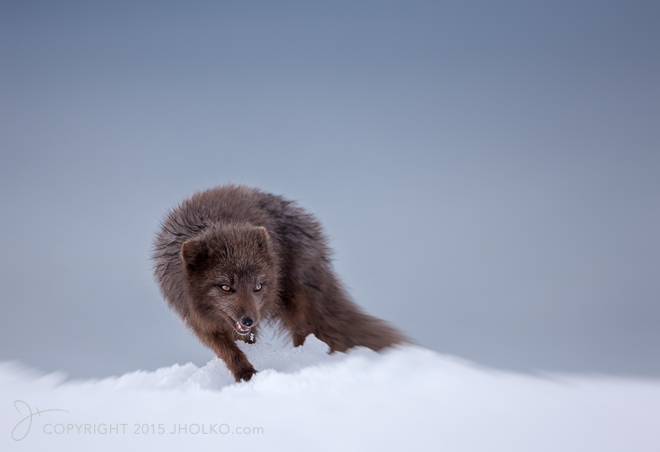 After I finish in Iceland I am heading to Svalbard for a sold out winter expedition to photograph Polar Bears and the landscape of Svalbard in a winter setting. The 2017 expedition has also been long sold out, but I will be repeating this expedition again in 2018 and you can download a complete PDF itinerary of the expedition HERE. Places are already very limited.
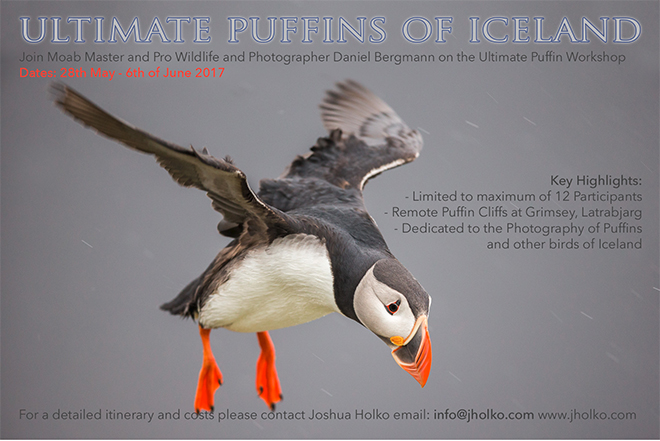
 In May this year Daniel and I still have a couple of places available on our Ultimate Puffins workshop. The workshop is dedicated to photography of the Atlantic Puffin and other birds of Iceland including Fulmars, Kittiwakes, Guillemots (Murres), Arctic Terns and Razorbills. Iceland is one of the best places in the world to photograph Puffins and other Arctic birds in their natural environment. We will visit a number of different locations during this workshop where we will have outstanding access to the Puffins living in burrows on the edge of sea cliffs. We have timed our 2017 workshop to ensure we are in the best locations at the best times to photograph these wonderful birds. We will have hours of golden light under the spectacular midnight sun – ideal conditions for photography of the Atlantic Puffin. We are also heading out to the remote northern Grimsey Island so this workshop promises to be unique and very special. We are now down to the last few places on this workshop before it will be sold out. If you are interested in photographing Arctic Birds this is not to be missed. You can download a complete PDF itinerary HERE.
 In July I will be heading back to Svalbard for my annual summer expedition to photograph Polar Bears and other wildlife of the Svalbard archipelago. You can download a complete PDF itinerary of the expedition HERE. There is now only one place remaining on this expedition before it will be sold out.
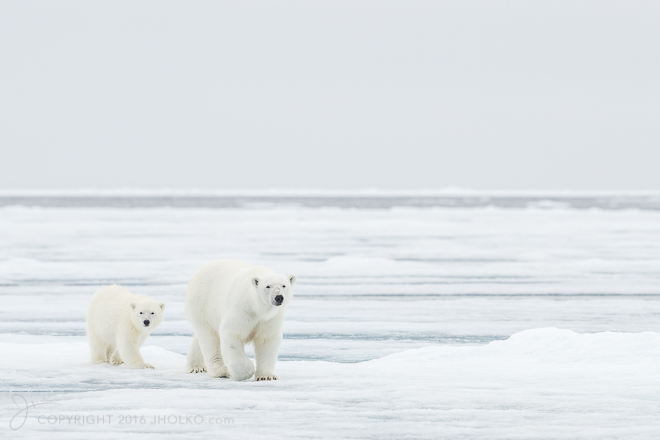 In September Daniel Bergmann and I are leading two back to back expeditions to the Scoresby-Sund fjord system on the remote north west coast of Greenland. Both expeditions are sold out but Daniel and I have just committed to repeat the expedition again in 2019. We will be announcing dates for the expeditions very soon but you can register your interest to be first on the list by dropping me an email.
  In November I will be leading a new expedition to Antarctica – Antarctica White Nature. This fully dedicated expedition is now almost sold out with only two places remaining. This expedition has been specially timed to be the first of the season to ensure the best possible ice conditions. Be sure to read my recent series of articles on how to choose an expedition to Antarctica. You can download a complete PDF itinerary of the expedition HERE.
 As some of you are aware I also recently completed a new winter scouting trip to Kuusamo in the north of Finland (I hope to publish some images from this trip soon). This trip was a great success with some fantastic Golden Eagle and Hawk Owl activity in a wonderful winter setting. I hope to have details on a future January Winter workshop to Finland over the coming months. If you would like to be notified once details are finalised you can drop me an email to register your interest – there is no obligation at this point.
For those of you patiently waiting for confirmation of dates for the Emperor Penguin expedition in 2018 I am hoping to have this all finalised in a few weeks. If you are keen to get the jump on other upcoming workshops and expeditions for 2018 and beyond you can view a complete list on my website at www.jholko.com.
How to Get the Best Shot on Your Next Shoot
Recently I finished reading Paul Nicklen’s new e-book Photographing Wild (well worth the $15 price tag) in which he discusses something he calls the 20/60/20 rule. The 20/60/20 rule is something I have long adopted and practised in my own photography; although I never thought to describe it or write about it. In fact, I have been doing it so long now that it has become instinctive for me and I find myself moving subconsciously through this principle as I photograph my subjects.
The principe of the 20/60/20 rule is that you should spend roughly the first 20% of your time on a shoot getting the safe shots. Compose the image as best you can, make it sharp, in focus and get the shot. Thats the first 20% of your time on the shoot invested. The next 60% is where you push yourself creatively and where you are likely to make your best images. Go beyond the safe shot you already have in the can and push yourself both creatively and technically to go beyond the obvious. This is when you can make truly great photographs that really stand out. Its a time to zoom with your feet, to change composition, try different angles, move higher or lower and to take a different approach to vary your captures. The last 20% of your time is about experimentation and doing things you might not normally do (such as a multi-second hand held exposures, or an in camera composite or such like). This last 20% is a time to experiment and to go a bit crazy to see what you can produce when the standard limitations and rules are removed. Images from this last 20% often don’t work, but occasionally they do, and something truly unique and powerful can be produced. The important aspect to this last 20% is that its free time to experiment and to learn from the results. Its a great way to ensure you continue to grow as a photographer.
Paul describes the process in some detail in his book as he implements it in his workflow (a short excerpt of which is included below).
When I’m working, I want to give my editor something that National Geographic will be guaranteed to publish. So if I see a bear coming out of the forest, I make sure it’s sharp and in focus, and do the best job I can on the composition, light, and mood. That’s the first 20%. If it’s sharp and in focus, it’s still a good image, but I don’t want good: I want great. And then I go to the 60%. This biggest chunk of time is where I sit and push my own artistic ability and technical skills as a photographer; this is how I force myself to come back with something that’s truly special. Once I’ve got that and I’m satiated, satisfied, and really happy with what I’m creating, then I’ll say, “Let’s try something different; let’s do a multi-second exposure just to see what happens.” This is the last 20% of the 20-60-20 rule, and it’s there for my growth as a photographer.
I think this is excellent advice that many photographers would do very well to take note of and try and implement in their photography. I often see photographers standing around on workshops wondering what to do next after they have captured the obvious photograph (the first 20%). If you take Paul’s (and my) advice and move into the next 60% and final 20% you will never be standing around wondering what to do next. Your photography will improve and you will learn more about what works and what does not work when composing your photographs. Perhaps best of all implementing this advice in your workflow costs you absolutely nothing.
I do highly recommend you invest $15 in Paul’s e-book ‘Photographing Wild‘. As well as containing some fantastic advice, and wonderful photographs its also inspirational material for your next photography shoot.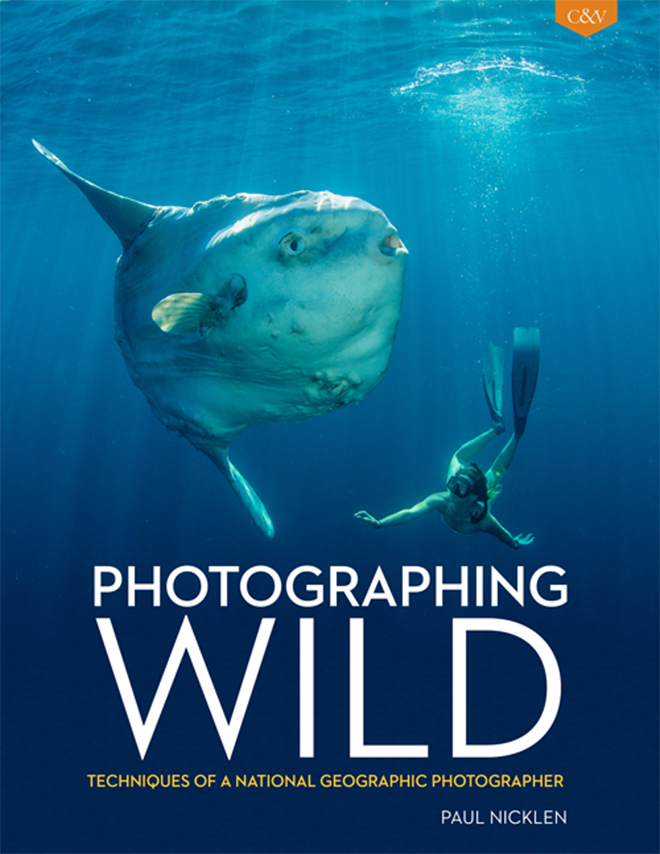
Choosing an Expedition to Antarctica – What you Must Know Addendum
The response to the recent series of articles I published on what you must know when choosing an expedition to Antarctica has been beyond fantastic – thank you. As such, I wanted to expand a little further and publish a short addendum post to Part Four of the series and add in a couple more items of equipment you should consider before your expedition (my thanks to Anil for the first two excellent recommendations). If you missed the earlier parts of the series you can read Part One, Part Two, Part Three and Part Four at each of these links. Most expedition ships will provide you with a pair of rubber boots (Wellingtons) for zodiac cruises and shore landings. However, these boots are generally not insulated and provide poor warmth and support (even if you bring inner sheep skin liners). They are also frankly pretty disgusting having been used and abused by countless participants over many years. I recommend you plan to bring your own boots and that you purchase a pair of Arctic Sport Muck Boots. These insulated waterproof boots are absolutely ideal for expeditions to Antarctica and will keep your feet both warm and dry. They are also relatively inexpensive and useful to have around the house for occasions such as washing cars once you get home. Hiking boots and similar type boots are not suitable for zodiac operations and shore landings in Antarctica. You absolutely must have a boot that comes up to just below the knee and that is warm and completely waterproof. A pair of Arctic Sport Muck Boots will last you many years and will keep you warm, dry and clean. I actually also use my Arctic Sport Muck Boots on board whenever I am photographing from the deck of the ship.
The next item is actually more of a tip than a piece of equipment. You should ensure you mark your dry bag (along with all your possessions) clearly with your full name and contact details. All equipment tends to look alike on expeditions and its best to avoid any confusion by clearly labelling all of your bags and equipment. I even go so far as labelling my card readers as these are items participants tend to borrow quite often. Items such as camera equipment can me labelled with a label maker and clothing and bags can be labelled either with a sharpie or with permanent tags. On the question or sunglasses or snow goggles for zodiac operations I tend to prefer sunglasses in all but the heaviest of blizzards. Sunglasses are easy to photograph with where as it is necessary to remove goggles to actually see through the cameras viewfinder. Personally I like and use sunglasses from Maui Jim as they have no colour tint and are heavily polarized. For goggles I like and use Zeal.
 Although I briefly touched on clothing in Part Four of this series I want to expand a little further on the outer waterproof shell you will need to wear for zodiac operations and shore landings. If possible, I recommend you purchase Goretex bibs rather than pants as these will afford your lower back much needed protection when you are bending over in the zodiac. There is nothing more uncomfortable than salt spray down ones lower back and a good pair of waterproof bibs will ensure you are protected from this unfortunate and uncomfortable eventuality.
It is a very good idea to take a number of microfibre cleaning cloths with you and to keep one handy in an outer jacket pocket at all times. Salt spray, snow, sleet and rain drops are all a fact of life in Antarctica and you will have to clean the front element of your lens regularly during most outings. A lens hood is also a very good idea for all your lenses as it affords some additional protection for the front element of the lens.
Micro-spikes and crampons are not required in Antarctica and are best left at home unless you have a very specific need for them. If you do bring spikes with you keep in mind that you will not be allowed to put them on until you go ashore.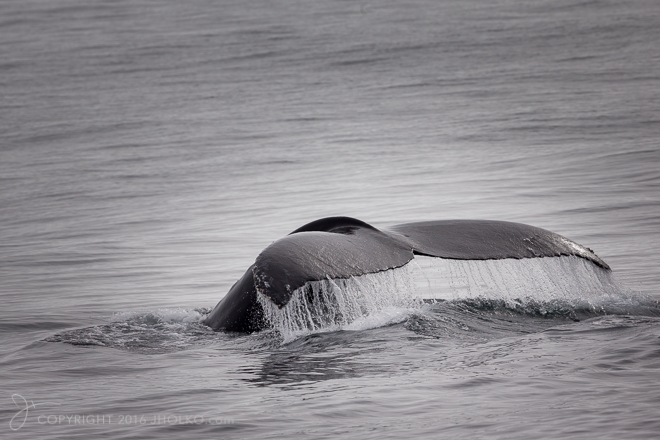 I strongly recommend you purchase and download SanDisks Rescue Pro software to recover any images from damaged or accidentally formatted CF, SD and CFAST cards. I have used this software on several occasions to recover images from cards that clients have accidentally formatted or from cards that are proving otherwise unreadable. This useful piece of software is absolutely worth investing in when you weigh the importance of your photographs against the cost of the expedition.
Underwater housings can be used in Antarctica with great success but you should check with your photographic leader before hand on what sort of opportunities you may have to use this sort of specialised equipment. Not all expeditions cater to underwater photographers and it is best to understand if you will have an opportunity to use this equipment before you schlep it all the way to Antarctica. As some of you are aware I recently invested in a Nauticam NDA-1DXMKII underwater housing for one of my Canon EOS 1DX MKII cameras and I plan to use this in Antarctica this November with a new pole-cam system. The pole-cam system has been designed to facilitate underwater photography without actually having to get into the water. I will have more details on this new custom made system soon.
The 2016 Emperor Penguins Expedition Report
In November of 2016 I lead a new expedition to a remote area of Antarctica to camp on the sea ice and photograph Emperor Penguins. The genesis of this expedition began a little over four years ago when I decided I wanted to set about photographing one of the large Emperor Penguin colonies living on the sea ice in a remote area of Antarctica. It took four years of planning, including a scouting trip last year before our expedition group would finally arrive on the frozen sea ice and get the opportunity to photograph the world’s largest and most difficult to reach penguin, the mighty Emperor. I have mostly included only behind the scenes photographs in this trip report to try and give a good sense of what the expedition was like. To see the full portfolio of images from this expedition please visit my website at www.jholko.com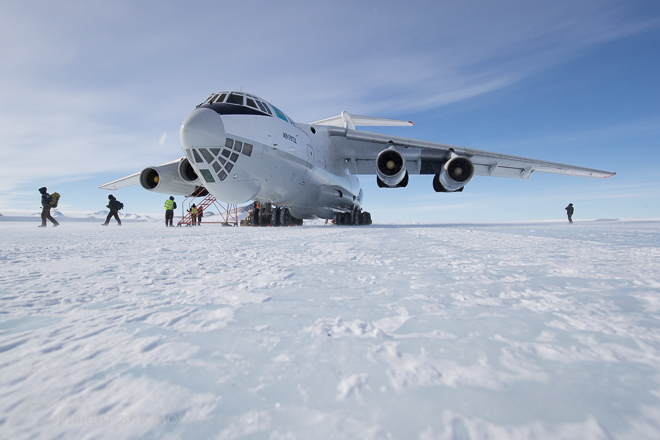
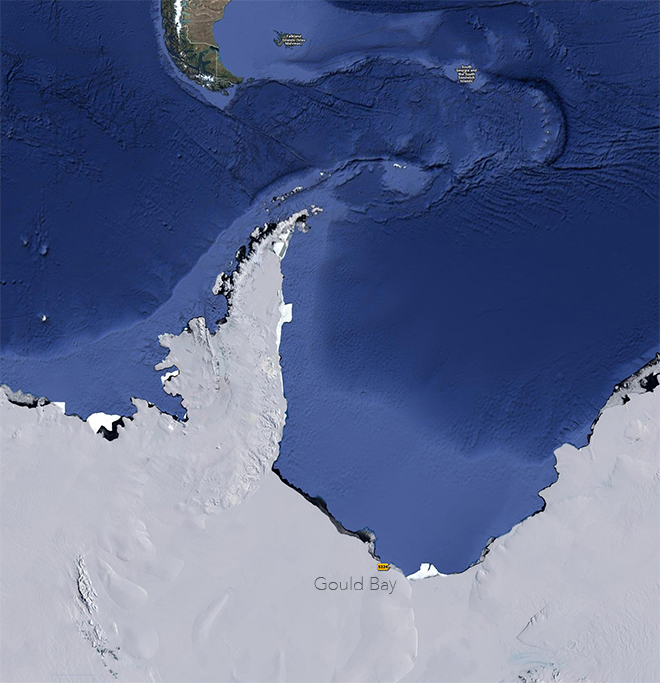 There are plenty of species the world over that are much harder to find than Emperor Penguins. To my knowledge however, none is as difficult or as expensive to reach as the Emperor Penguin; and thats the conundrum of Emperor Penguin photography. We know exactly where they are located, we just cant get to them without great difficulty and significant expense. Living on the sea ice in remote and difficult to reach areas of Antarctica the Emperor Penguin is therefore as difficult to reach as the enigmatic snow leopard is to locate in the wilds of its mountainous territories. It is an odd problem for wildlife photographers to recognise and accept that we know exactly where our subject is located but that we just cant get to it.After months of anticipation, our expedition began with the five of us meeting in the small town of Punta Arenas in Chile at the bottom of South America. Expectations and hopes were high and we were all buzzing with excitement at the prospect of getting underway. Our plan involved taking a flight on a Russian Ilyushin cargo aircraft and landing on the blue ice of Union Glacier in the deep interior of Antarctica at approximately 79º south. We had planned to depart on or around the 7th of November depending on the prevailing weather. Once at Union Glacier we would establish a camp from which we would take a twin-otter aircraft equipped with skis out to the remote sea ice in Gould Bay where we would establish our advance camp around 1.5 kilometres from the Emperor Penguin colony (and around ten miles from the ice edge). We would then commute by walking on the sea ice to the colony for photography during the small hours of the night when the sun was at its lowest and the light at its softest.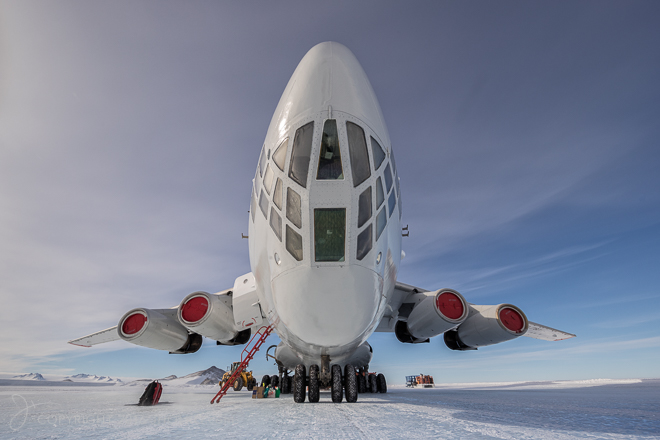
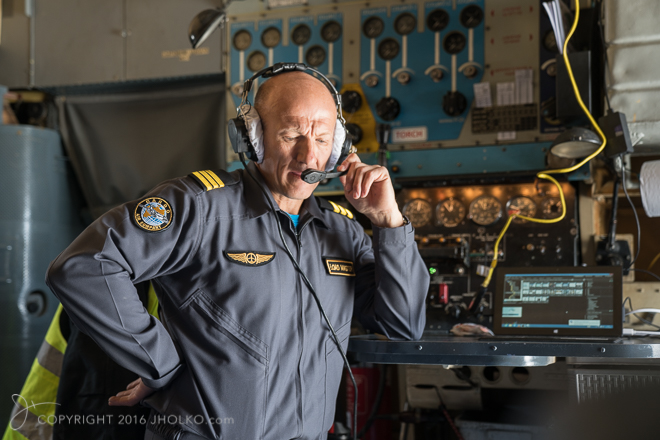 As is often the case, the best laid plans can easily go astray and we were delayed for approximately five days in Punta Arenas waiting for the winds to drop and a suitable weather window when we could depart and safely land on the ice. When we finally received the call and positive news that the winds had dropped sufficiently at the glacial ice runway we high tailed it to the airport and within a couple of hours we were in the air and on our way south to the interior of Antarctica. The flight time from Punta Arenas to Union Glacier was approximately four hours.
 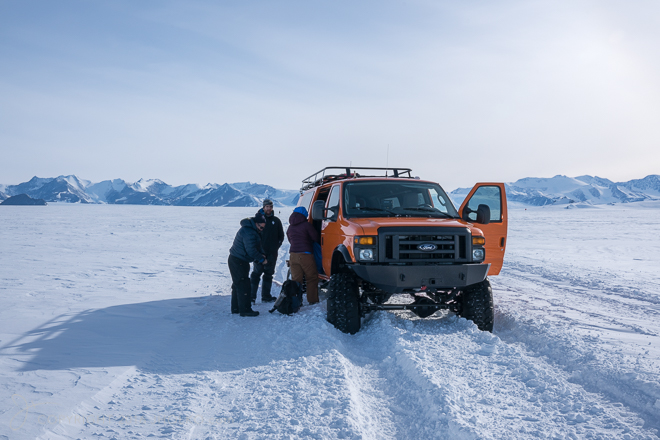 The Ilyushin cargo aircraft is equipped with military jump seats, little insulation and few feature comforts; making the ride exciting and far removed from the average commercial flight. Landing at Union Glacier on blue glacial ice is a surreal experience that is unmatched by any other flight I have ever experienced. When the rear cargo door of the big Ilyushin swings open and you step down onto Antarctic blue ice that is approximately a kilometre thick at the point of touchdown there is a real visceral thrill. Temperatures out on the blue ice were around -20º Celsius with wind chill on our landing. We took the opportunity to photograph the plane whilst all the luggage and supplies were unloaded before it took off for its return flight to Punta Arenas (The Ilyushin has to turn around as quickly as possible due to the risk of the plane and engines icing). We then loaded up the specially modified super jeeps and made our way across the glacier to basecamp. After a short unplanned stop to dig ourselves out of a deep snow drift we arrived at our basecamp location.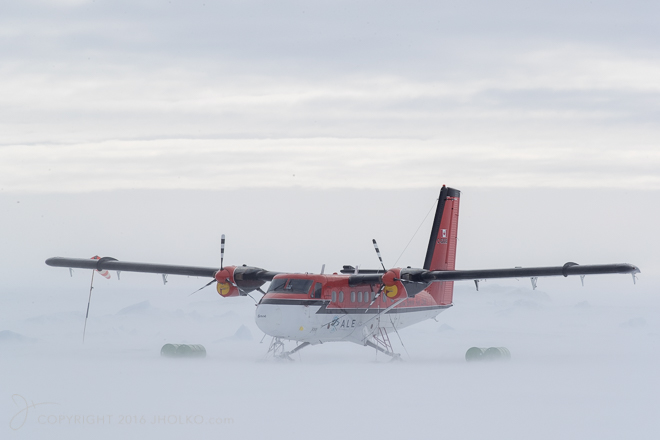
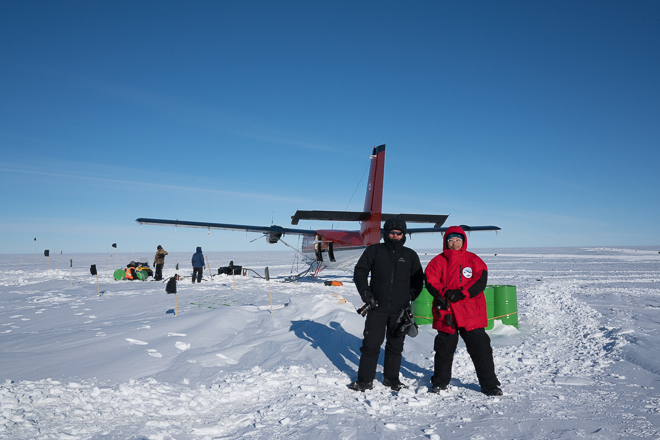 With basecamp established we now needed a second weather window with sufficient visibility for us to take off from Union Glacier and then land on the sea ice at Gould Bay. After a couple of days at basecamp (during which time we took the opportunity to explore a little and do some landscape photography) visibility was finally improving and we were able to load up the twin-otter plane and make the three hour flight from Union Glacier out to the remote sea ice at Gould Bay. We made a quick stop for fuel at a pre-prepared fuel cache on the sea ice and landed at our planned destination on the sea ice in the early afternoon. The sea ice at our chosen camp site was approximately 2.5 metres thick and extended ten miles from where we were camped out to open water (a distance the Penguins commute for fishing on a daily basis). We quickly set about establishing camp and devouring a hot meal before we prepared to walk the 1.5 kilometres across the sea ice to the main penguin colony for a night of stunning photography. We used sleds to carry our gear which we dragged behind us across the ice. This is actually far easier than it sounds and even fully laden with camera gear the sleds slide with relative ease across the ice.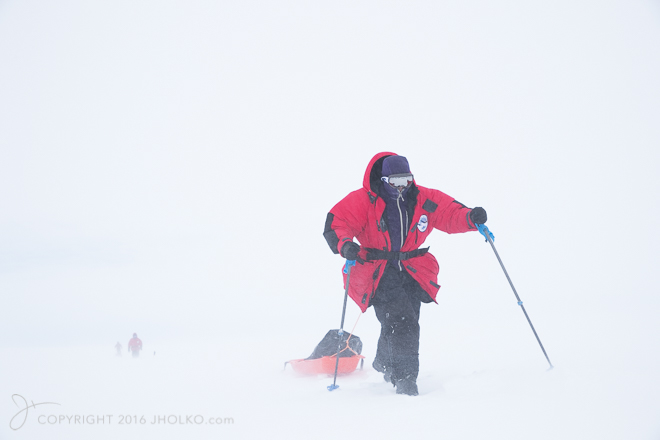
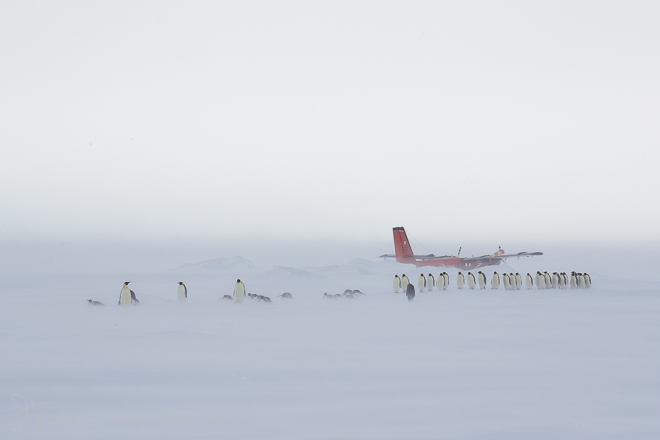
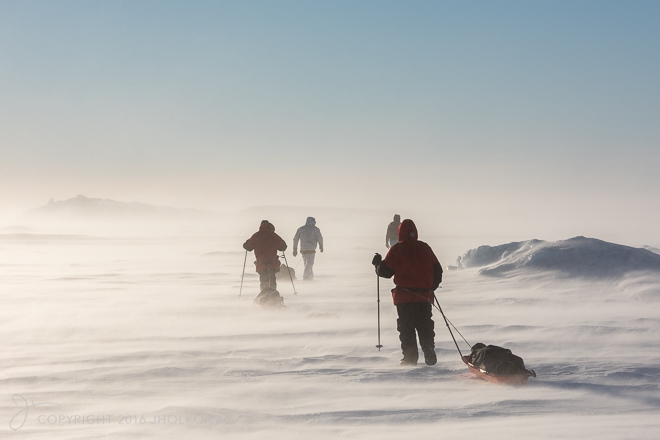 The sun never sets this far south in Antarctica during the summer months so we planned to do most of our photography during the night hours when the sun was at its lowest and the light at its softest. This plan proved fruitful with some really dramatic golden light and back-lit blowing snow that lasted for hours and hours at a time. We spent hour after hour photographing the penguins during the midnight sun and I confess that I completely lost track of time during these sessions. It wasn’t until fatigue and hunger set in that I would glance at my watch and realise we had been photographing for more than five hours; at which point I realised I could no longer feel my fingers. Temperatures averaged around -20º Celsius with wind chill with only our last evening being warmer at around -8º Celsius.
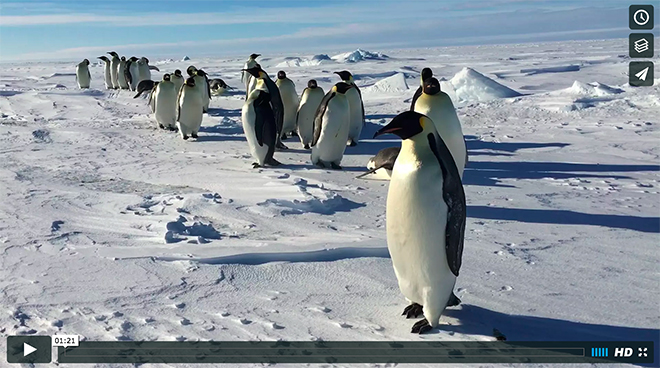
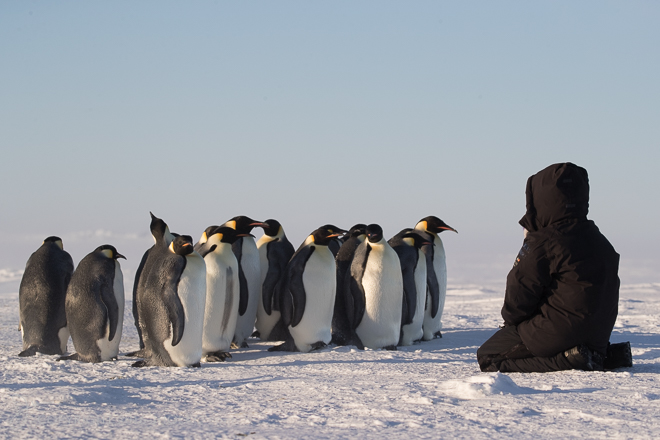 Click the image below for behind the scenes video.
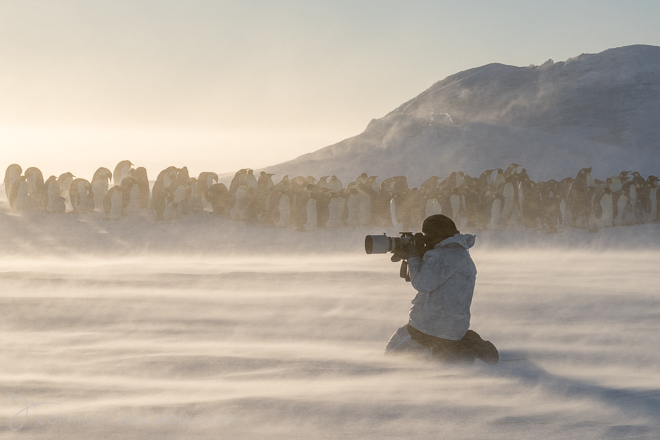
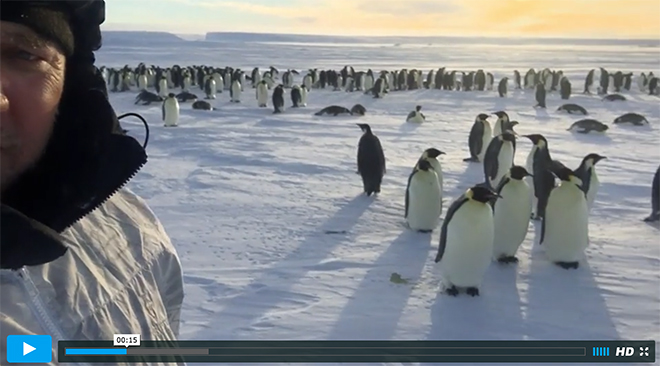 I felt we were extremely fortunate to have really consistent 20-25 knot winds during our time on the sea ice which made camping and commuting to the colony difficult but proved absolutely superb for photography (we had to dig our tents out several times a day to prevent them from being buried under the snow). With strong winds and blowing snow the Emperors and their chicks were often plastered with snow which made for very emotive and dramatic photography. The opportunities for back-lit blowing snow were superb and everyone in the group made some absolutely incredible images during our time with the Emperors.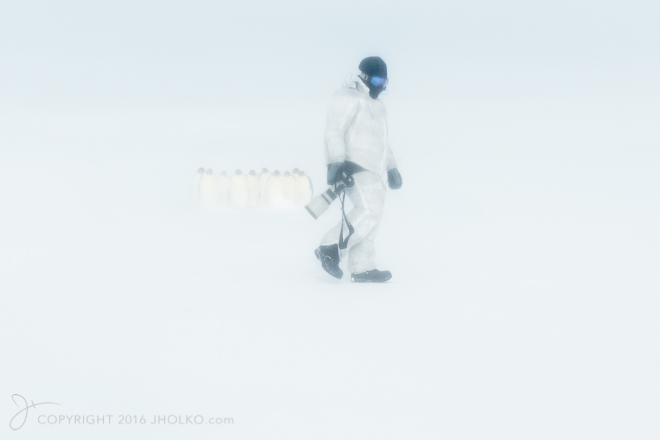

 Click the image below for behind the scenes video.
 In the early hours of the morning, when we had tired and could no longer tolerate the cold, wind or hunger took over we would hike the 1.5 kilometres back to our mountain tents for a meal and some warming drinks. We would then grab a few hours shut eye before breakfast and more photography sessions with the penguins.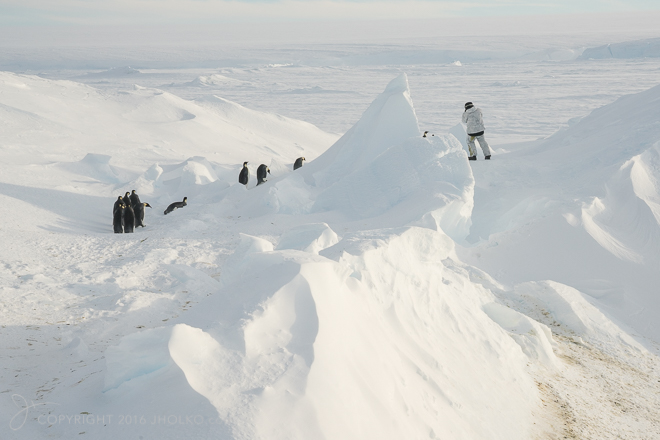
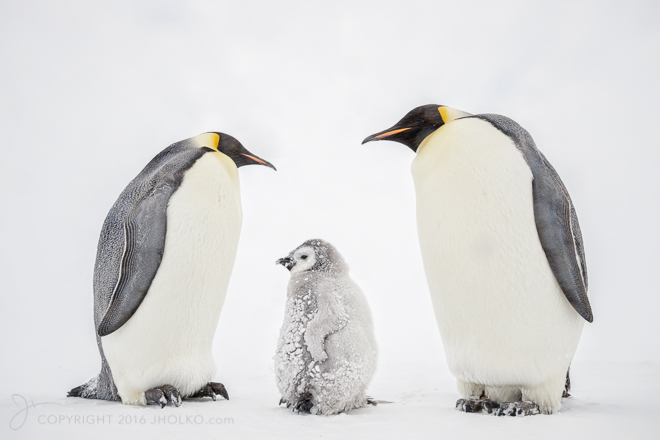 Camping with the Emperors is a life changing experience. Listening to their calls above the wind as they waddle and belly slide slowly past your tent on their march to the ocean to fish for their chicks is surreal to say the least. For me, the experience moved me deeply and bought me closer to Nature than I think I have ever felt. It also bought me a greater appreciation of how special and precious Antarctica (indeed all wildlife) truly is. I don’t want to turn my trip report into a spiel about global warming, global over population and our planets destruction (I think we all know we are well and truly on that path), but I do want to take a moment and ask you to please head on over to Penguin World when you finish reading this report and to please consider a small tax deductible donation to this worthwhile NGO project.
Click the image below for behind the scenes video.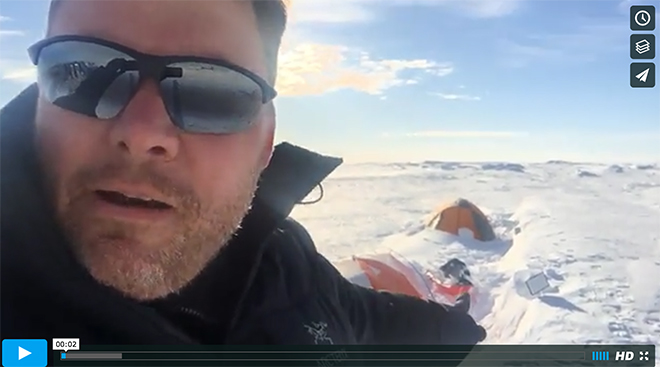
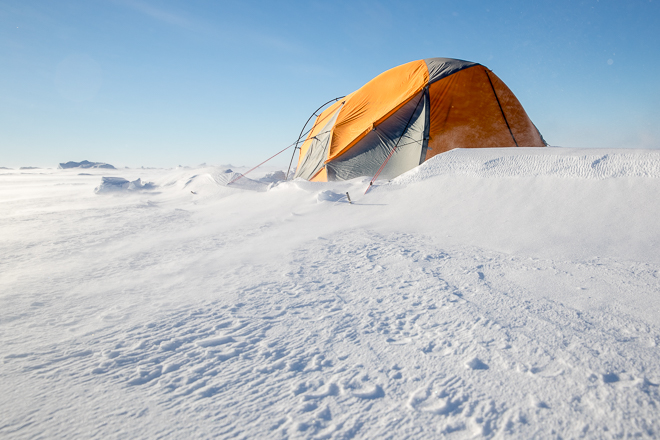 On occasion we had to walk no further than a few metres from our tents to photograph lines of Emperors coming and going on their way to the ocean. Everyone in our group took the opportunity to make photographs whenever the chance arose (which was often). I think we each only slept a few hours a day in total; although I don’t really remember as that part of the expedition already seems somewhat of a blur. The constant daylight and 20-25 knot winds whipping the mountain tents around makes sleep somewhat more difficult than usual. Thankfully though, the tents themselves are solar heated by the 24 hour sun and as such are actually quite warm inside. During the day I found I only needed a base layer of marino wool to stay warm in my tent. Anything else was too hot.
Click the image below for behind the scenes video.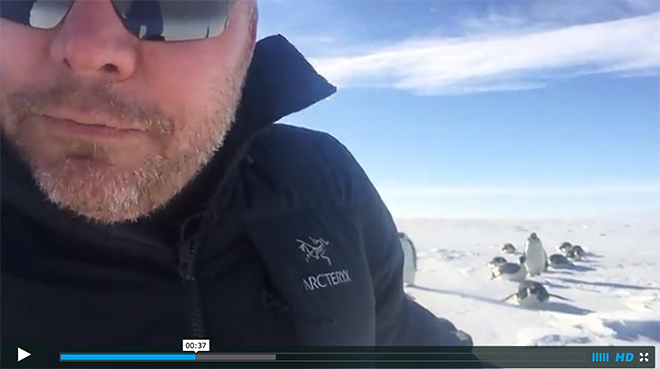 Changing lenses was pretty much impossible because of the flying snow and high winds on the sea ice (I tried it once and ended up with a camera and lens full of snow) so I chose to shoot with two cameras (2 x Canon EOS 1DX MKII) pretty much the entire time. Although I took my 600mm F4L IS MKII lens I only used it on two occasions and in both instances I could have simply walked closer and used something shorter. By far my most used lens was the 300mm F2.8L IS MKII and the 11-24mm F4L. I also shot with the 70-200mm F2.8L IS MKII and made a few images with the 85mm F1.2L MKII. Having now had the experience of camping on the sea ice with the Emperors I would not bother with the 600mm F4 Lens. Quite honestly I could go back with just the 300mm F2.8L IS MKII and the 11-24mm F4L or 16-35mm F4L and be completely content with that selection. Two of the other photographers with me shot extensively with the new 100-400mm F4.5-5.6L IS MKII lens and found this worked extremely well for them. There were no camera failures during the expedition, although I managed to get both my 1DX MKIII cameras so frozen on occasion that I could no longer turn the top or bottom dials (although the shutter kept firing without a problem). This problem is caused by snow hitting the camera and then melting under warm fingers before it runs into the side of the dials where it refreezes almost instantly. The key to avoiding this problem is to turn the dials frequently to prevent too much ice from building up. I spent a lot of time lying in the snow to be at eye level with the penguins so found this more of an issue than others on the expedition. The Sony camera on the expedition fared surprisingly well only suffering from the need for regular battery changes because of its small power cell. By comparison I only needed one battery charge per day in each 1DX MKII camera.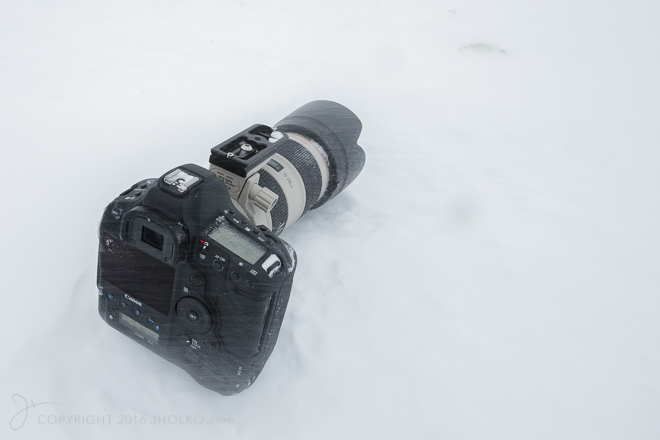
 I had arranged for a small step ladder to be taken down with us to our camp on the sea ice with the idea that we could use it to get some height over the colony. The idea I feel was a good one, but in practice it was impossible due to the winds. Any effort to erect and climb a ladder would have met with disaster so we had to make do as best we could in this respect. In practice it wasn’t really an issue I was able to find some pressure ridges to climb near the colony to get the required height. After four days of camping with the Emperors we made the decision to take advantage of a weather window to reverse engineer ourselves back to Union Glacier and back onto Punta Arenas. Union Glacier itself provides a plethora of landscape photographic opportunities and it was great to also take advantage of our time there to create some really dramatic images of the interior of Antarctica.
 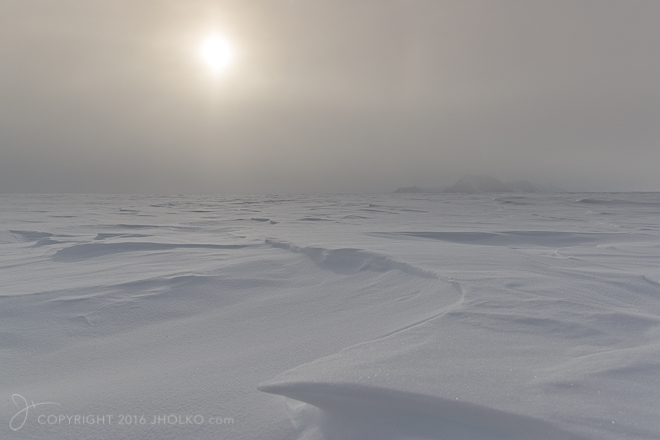 The interior of Antarctica is a magnificent white landscape that is very much an untapped jewel for photographers. Only a small handful of photographers ever visit and photograph the interior of Antarctica. By comparison approximately thirty thousand people visit the peninsula of Antarctica annually. As such, in 2018 I plan to lead a second expedition to both the remote frozen sea ice and the interior of Antarctica for both the Emperor Penguins and the interior landscapes of Antarctica. We will use snow mobiles to access some of the incredible interior features including fields of blue ice, giant wind scoops, beautiful snow patterns, spectacular mountain ranges and much more. The expedition is also going to include an option for aerial photography of the spectacular and dramatic Mount Vinson Massif (the tallest mountain in Antarctica) and surrounding mountains. You can register your interest in this unique expedition by dropping me an email and I will keep you updated as logistics progress. There is no obligation at this point. I have mostly included behind the scenes photographs in this trip report. To see the full portfolio of images from this expedition please visit my website at www.jholko.com

