I received an email today from one of the participants on my winter Iceland workshop this year asking me if I new a good way to remove a really nasty lens flare from a photograph. It has been a while since I worked on an image with lens flare, but the email got me thinking about a frequency separation technique that is often used for retouching skin and can work equally well for removing really nasty lens flares. Its a relatively simple technique that takes just a few steps to achieve in Photoshop but that can really save a file that might otherwise be destined for the trash. The key to this technique is the separation of colour and texture into different layers. This is a really important step as it enables us to work on just the colour component of the photograph without affecting the texture (lens flares are just colour aberrations and contain no texture). This makes this technique especially useful for photographs that have textured areas overlaid by lens flare and the image I received today was a perfect example. To make things easy I have recorded a short video that shows how this process works and what the steps are in Photoshop Creative Cloud to use this technique. Just click on the image below to watch the video.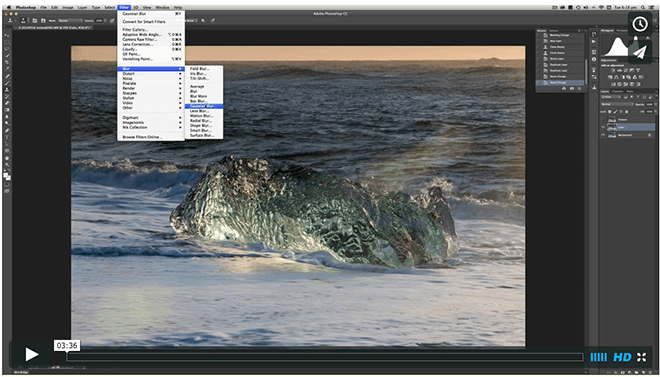 I realised after I had uploaded the video that I neglect to mention that you must ensure that you have sample set to: Current and Below when using the Clone Tool. If you only have ‘current’ set you will not get the desired effect. So there you you have it, a simple technique that might just save a photograph you might have otherwise discarded.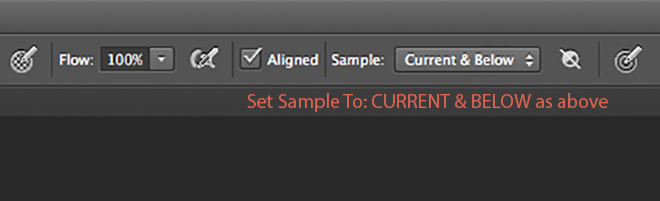

Category: Video
New Zealand South Island Experience and Victoria’s Great Ocean Road
In a few short days I am heading back to New Zealand for a workshop tour of the magnificent South Island with my friend Phillip Bartlett and our group of participants. The South Island of New Zealand is an incredible part of the world and boasts spectacular mountain alps which run down the spine of this amazing country. These mountains plunge almost straight into the sea on both sides of the country. It is the only place in the world I know of where alpine mountains plunge straight into temperate forest that directly hugs such a rugged and wild coastline. I was in the South Island of New Zealand only a few weeks ago completing a week long commercial assignment and I very pleased to be returning again so soon. On this trip we will be circumnavigating the South Island and taking in the best of its many iconic locations as well as visiting some of its hidden treasures and lesser known areas. We will be chartering a helicopter with doors removed for photography over the alps and enjoying a private boat charter for playful Dusky Dolphins and Sea Lions off the coast of Kaikoura. If you want to get an idea of what this tour is going to be like be sure to watch the short tester video below.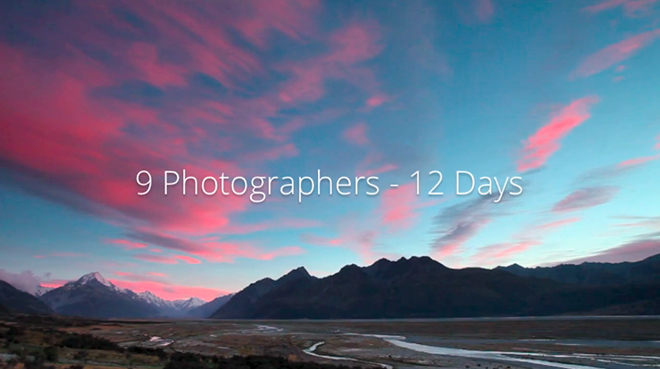
Packing for this trip is somewhat of a challenge for me as I am quite keen to take my newly acquired Canon 600mm F4L IS MKII Lens (why own it if you don’t intend to carry it) as well as the 200-400mm F4L Lens – for both Sea Lions, Dusky Dolphins and Albatross in and around Kaikoura. I plan to carry these two lenses to both Iceland and Namibia in March this year so this trip to New Zealand is an ideal opportunity to see how they travel together on international flights. These two lenses add up to a not insignificant amount of weight, but perhaps of more immediate concern is the sheer bulk and space they require inside the camera bag. With both of these lenses in my Gura Gear camera bags there is little room for much else. Nevertheless it never ceases to amaze me just how much gear can be squeezed into the Bataflae 32L bag. So, after some trial packing I will be carrying the following on this trip: (I know this is a ridiculous amount of equipment but I am a person who prefers to carry it and not need it rather than need it and not have it.) Just as a side addendum to this; I used to think I carried a lot of equipment, but then I worked with a video guy last year in the Arctic who redefined what it meant to carry a lot of gear!)
Gura Gear Bataflae 32L Camera Bag
- Canon EOS 1DX
- Canon EOS 1DS MKIII
- Canon 600mm F4L IS MKII (Lens hood goes in the checked luggage bag)
- Canon 70-200mm F2.8L IS MKII
- Canon 24-70mm F2.8L MKII
- Canon 24mm F3.5L TSE MKII
- Canon 17mm F4L TSE
- Canon 1.4 TC MKIII
- LEE Filter System including Graduated ND filters and Polariser
- Cable Release and other accessories
- 15″ MacBook Pro, back-up hard drive, card reader and accessories
- Canon 200-400mm F4L IS with inbuilt 1.4 TC (incredibly this does fit in the Chobe!)
North Face Rolling Thunder Duffle *
- Clothes and Personal Items
- Really Right Stuff Tripod, BallHead and Jobu Gimbal Mount
* I really like the North Face Rolling Thunder Duffle as a travel bag. It is extraordinarily tough and copes very well with the rigours and violence that checked luggage is exposed to (I really have no idea what baggage handlers do behind the scenes but I am sure it involves some sort of contact sport with people’s luggage). The only downside to this bag is it weighs eleven pounds or five kilograms empty. On flights with a 20 kilogram luggage limit that is one quarter of the limit before you start putting things like clothes in it. Thankfully many of the airlines I travel with these days have more reasonable 25 to 30 kilogram luggage limits and I can usually get close enough to these limits to avoid excess luggage charges.
Victoria – The Great Ocean Road
Just before I depart for New Zealand later this week I will be leading a private three day trip down Victoria’s spectacular Great Ocean Road. The Great Ocean Road is home to some iconic Victorian scenery including the Twelve Apostles, London Bridge, The Wreck Coast and more. It has been nearly a year since I last photographed this part of Victoria and I am looking forward to spending a few days in the field in my home state and sharing these amazing locations with my first time visitors. I am offering further one-on-one private workshops here in Victoria by appointment and based around my existing travel schedule both this year and next for anyone who would like to experience the best of this part of Victoria. Please contact me to discuss timing, cost and availability if you are coming to Australia in the near future.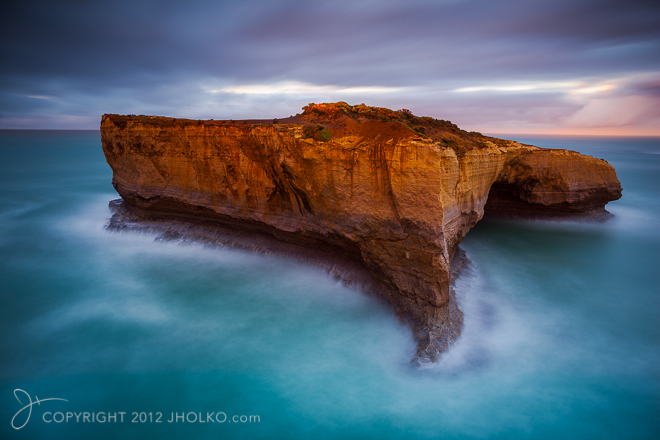
A Polar Photography Experience Video Interview and Outtakes
Late last year I released a short movie I produced in conjunction with Untitled Film Works in the Arctic on what it was like to travel on a dedicated photographic expedition to the Polar regions – A Joshua Holko Photography Polar Experience Video. This video was a huge amount of fun to produce and work on with the crew from Untitled Film works. During the filming we were fortunate to experience and capture some truly spectacular sights including an incredible free standing iceberg collapse amongst some incredible landscape and wildlife experiences. The video was shot on a combination of a RED Epic Cinema Camera and a couple of Canon 1DC 4K Cinema Cameras. Audio for the film was recorded separately by a dedicated sound person. The entire movie was shot over a two week period in the Arctic using our ship ‘Polar Pioneer’ as a base of operations. We departed from Iceland in August and sailed across the Denmark Strait to Greenland where we explored the many fjords before we sailed across to Svalbard and docked in Longyearbyen. If you have not seen the movie click on the image below to watch it in full high definition. 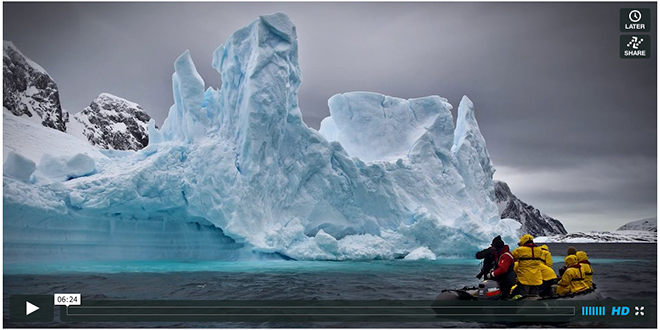
One of the really enjoyable things for me during the production was the video interview we shot high in the Arctic near the calving face of one of Svalbard’s glaciers. The full interview includes all of the final cut footage included in the film as well as all of the outtakes, stumbles and slips that are a part of video production and interviews. The full unedited interview is included below. Enjoy – And remember its outtakes as well!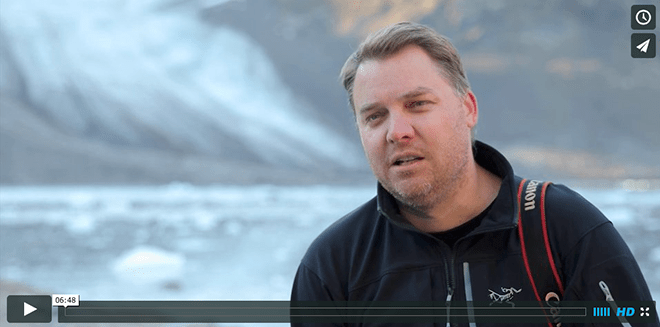 Equipment for this Project
Since the release of this video I have had a few emails asking me specifically what equipment was used to produce this film. So I am including below a list of hardware we took to the Arctic and utilised for the production of this movie. All of the editing and post production work was completed by Untitled Film Works at their studio in Sydney and a number of different software programs were used depending on wether the footage in question was shot with the RED Epic or the Canon 1DC cameras. The RED Epic RAW footage requires different grading to the motion jpeg produced in the Canon 1DC cameras and so it was necessary to process them separately before combing the footage in the final edit. The entire project was however shot in 4K resolution and much of it was also shot in very high frame rate on the RED Epic.
Camera for this project included:
- Red Epic 5K Cinema Camera for high frame rate slow motion footage in 4k resolution
- Canon 1DC 4K Cinema Cameras x 2
- Canon 1DX Camera (behind the scenes)
- Canon 5D MK3 Cameras x 2 (behind the scenes)
- Several Go Pro Cameras were also used for filming but none of the footage was included in the final cut
Lenses for this project included:
- Sigma 15mm Fisheye
- Canon 17mm F4L TSE
- Canon 24mm F3.5L TSE
- Canon 24-70mm F2.8L MKII
- Canon 70-200mm F.27L IS MKII
- Canon 200-400mm F4L IS with inbuilt 1.4 TC
- Canon 2X Teleconverter
Other Equipment included:
- Really Right Stuff TVC-24L 4 Section Tripod x 2
- Really Right Stuff BH-55 Ballhead x 2
- Really Right Stuff Levelling Plate x 2
- Really Right Stuff L Mount Camera Brackets for Canon 1DC, 1DX and 5D MK3 cameras
- Really Right Stuff Lens Plates for 70-200 and 200-400mm lenses
- Really Right Stuff MonoPod with RRS Ballhead
- Miscellaneous Really Right Stuff Accessories including Multi-tool and universal clamps
- Glide Cam
- Miller Video Tripod and Fluid Head
- Various Rode shotgun and lapel microphones
- Audio Recording Devices
- 15 Terrabytes of Hard Drives and numerous laptops and associated accessories.
Antarctica Photographic Expedition 2013 Report
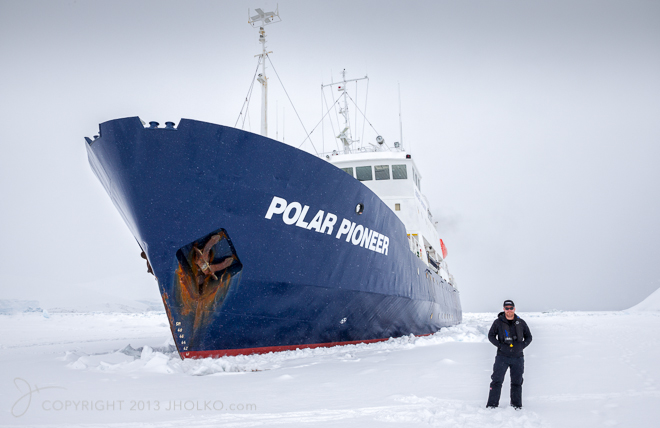
In November this year I lead a dedicated photographic expedition to Antarctica with my good friend Daniel Bergmann. This expedition had been more than twelve months in the planning and utilised the ice hardened expedition class ship ‘Polar Pioneer’. Polar Pioneer is an ex Russian survey ship that has been refitted for polar expeditions to both Antarctica and the Arctic. It’s ice hardened hull and low decks make it the ideal vessel for polar photography. The expedition was for a strictly limited number of 50 participants plus leaders and expedition guide and offered an extended period in Antarctica (15 Day / 14 night Expedition). Whilst most trips to Antarctica take 100+ tourists this expedition was capped at a maximum of 50 dedicated photographers in order to ensure the best possible experience for all aboard. As it turned out we ended up with just under 50 due to a last minute cancellation which worked in our favour with a smaller number of photographers per zodiac. Many first time Antarctic travellers are unaware of the benefits of travelling in small groups such as this. It is worth noting that many of the locations in Antarctica forbid landing more than 100 people at a time. That means that if you are part of a much larger group you have to draw lots and wait your turn to go ashore and likely miss out on opportunities and great light. We had no such restrictions on this expedition and were able to land all of those photographers who wished to go ashore at each of our chosen landing points. The expedition included special access into areas normally restricted to scientific research (including the Polish Station ‘Arctowski’), as well as taking in amazing locations such as the breathtaking Lemaire Channel, the Gerlache Strait and the surreal geothermal Deception Island, to name but a few. At the conclusion of the expedition we sailed across to the Falkland Islands; which avoided the worst of the Drake Passage and gave those of us who wished an opportunity to stay on in the Falklands for more photography. As it turned out we ended up experiencing bigger seas on our return journey to the Falklands than we did on our journey across the Drake – c’est la vie. I chose to spend a week after the Antarctica expedition on the Chile side of Patagonia and will have more to say about my experiences in Patagonia in a future post.
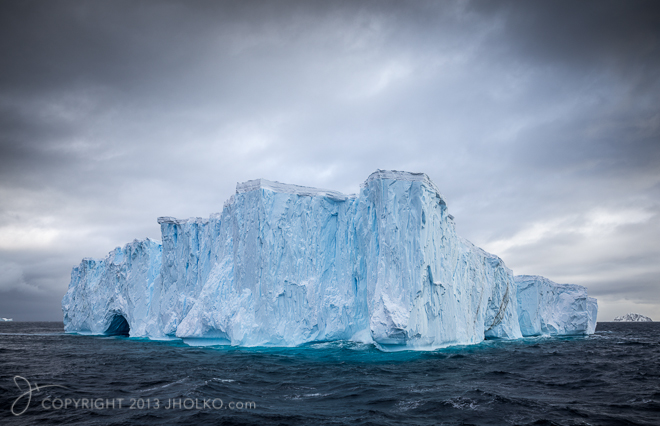 For those of you reading this who have not been to Antarctica before it is impossible to put into words what this continent is truly like. Antarctica is nothing short of miraculous – A continent of stark and beautiful desolation. I know of no other place on the planet that is so remote and so difficult to reach, yet so hauntingly beautiful. It is a landscape of precipitous mountains and glaciers that is bathed in soft polar light. There are deep iridescent blues and aquamarine colours to be found in the myriad of icebergs that drift through the straits, seas and oceans that surround the continent that fall far outside what one would expect from Nature’s box of crayons. The sky frequently displays incredible cloud formations including some of the largest and most impressive lenticular cloud formations I have ever seen. Antarctica is the definition of a pristine wilderness – ice, icebergs, mountains, glaciers, birds, penguins, whales, seals and a myriad of other wildlife. Mother Nature is truly a mad scientist and Antarctica is her greatest achievement.
 Travelling to Antarctica is always an adventure and we began our adventure in the small town of Ushuaia at the bottom of South America where we boarded Polar Pioneer and sailed across the notorious Drake Passage. The Drake Passage is always somewhat of a gamble. On my first trip to Antarctica I experienced huge seas with 25+ foot waves that caused the boat to pitch and roll relentlessly during our crossing. I recall not less than half the ship hiding in their cabins suffering from seasickness during this crossing. On this this expedition we were exceptionally fortunate and experienced the ‘Drake Lake’. Our crossing was smooth and calm by ‘Drake standards’ and we made good time arriving in Antarctica a few hours earlier than expected. Congratulations to my friend Martyn Lucas for winning the prize of spotting the first iceberg during our crossing.
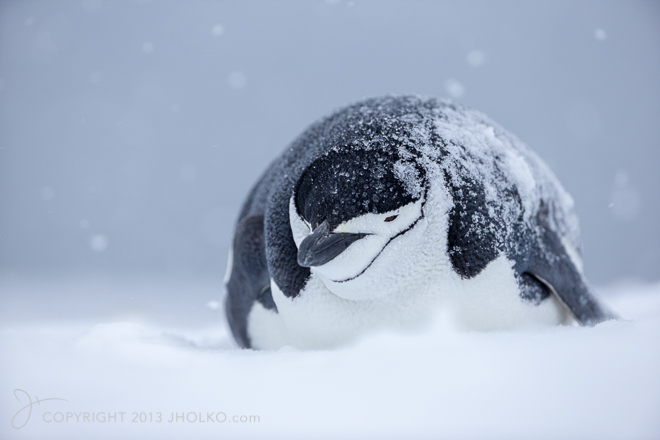 We experienced a broad range of weather and conditions during our expedition that included everything from brilliant sunshine to driving snow and freezing katabatic winds. Thankfully we only experienced one day of blazing sunshine during our time in Antarctica and even then we had sporadic cloud cover. Antarctica is brilliant with deep blue skies and glistening ice when the sun is shinning but these conditions prove extremely problematic for photography with extreme contrast ranges that are impossible to capture in a single frame. Overcast conditions and dark and ominous skies are by far my preferred shooting conditions and my wish for these conditions was fulfilled in spades. Overcast conditions really bring out the blue in the ice and we enjoyed some fantastic polar light during our time in Antarctica. This particular photograph of penguins marching across the sea ice under soft polar light is one my personal favourites from this expedition.
  During the expedition we landed at multiple locations along the peninsula, cruised for icebergs and wildlife in zodiacs and navigated narrows passages such as the Lemaire Channel in our ship Polar Pioneer. Over the course of our time in Antarctica we visited and landed at Brown Bluff and Brown Station, Cuverville and Halfmoon Island, Hydrurga Rocks and Neko Harbor, Whalers Bay (Deception Island), Petermann Island, Port Lockroy at Goudier Island and Point Wild on the North coast of Elephant Island (click on each of these links for a detailed PDF containing information about each location). We also cruised through the Lemaire Channel which proved not only the highlight of this expedition, but also one of the photographic highlights of many participants careers (myself included). It was a remarkable experience. We had arrived at the entrance to Lemaire Channel around 3am in the morning just as the first pangs of light were signalling the breaking dawn. The skies were heavily overcast and grey and the channel was clagged in with low cloud and fog – it was looking anything but promising. Another ship (the Ocean Nova) had been hanging around for two days prior to our arrival unsure of wether to attempt the passage. I was having serious doubts myself about our ability to navigate the channel so early in the season and about the photographic possibilities in the grotty weather. Undaunted we began our journey into the Lemaire and as if someone flicked a light switch the skies cleared and we experienced and enjoyed incredible mountain reflections in the still black Antarctic waters. I recall putting my cameras down for only a few moments during our passage through the Lemaire and only then to pause for breath and take in the sheer beauty of this location and the sheer delight of sharing it with so many passionate photographers. Our passage through the Lemaire proved doubly special as we were the first ship of the season to navigate through the channel. This day also proved our longest shooting day with an afternoon and evening landing at Petermann Island that saw us photographing in perfect light conditions until well after midnight. Those of us who still had some energy stayed up and photographed our return journey through the Lemaire under a full moon. Had we not shot a single frame for the rest of the trip the entire journey would have been worth the Lemaire Channel and Petermann Island experience. Kevin Raber at the Luminous Landscape who was a participant on this expedition (and also has written his own Trip Report) as a representative of medium format camera manufacturer Phase One called it ‘One of the finest days of his life‘. I would have to agree with him.

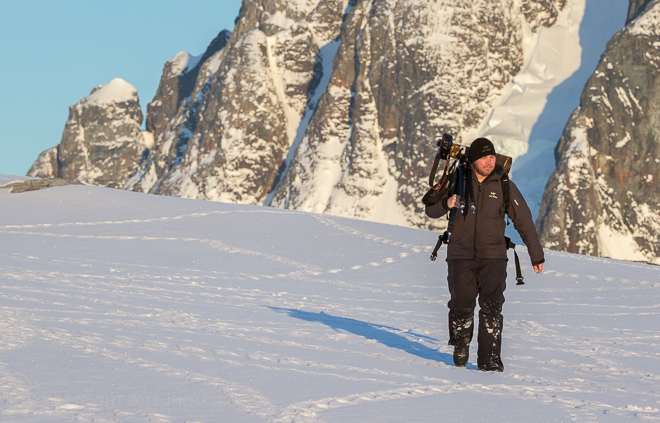 One of the other key highlights of this expedition was our landing at Whalers Bay at Deception Island. We arrived at the entrance to Neptune’s Bellows at sunrise and made our way slowly into the bay where we made anchor. We were blessed with some wonderful golden light as we entered the bay that saw everyone up on deck making the most of the opportunity. The entrance into Whaler’s Bay is incredibly impressive. Navigating through the craggy outcrops of ‘Neptune’s Bellows’ is a very surreal experience. Once anchored and we had made our way ashore it began to snow heavily. Snow blanketed the black beach, ruined whalers station remnants and geothermal areas and provided us with some really unique photographic opportunities. This was the first time I have experienced Deception Island covered in snow and it is not a scene I will quickly forget. We spent over four hours ashore photographing the landscape and remnants of the whaling station in conditions that can only be described as challenging. We experienced a lot of snow fall during this expedition but Deception Island was the heaviest I can recall shooting in.
 One of the other unique experiences we had during this expedition was to park our 72 metre ship in the sea ice at Port Lockroy and disembark for a stroll on the ice. Port Lockroy is located in a natural bay at Goudier Island and is flanked by a glacier that rings half the bay. The glacier makes for really interesting photography on top of the experience of walking on the pack ice. I spent an hour or so photographing this glacier before I realised that what it really needed was the inclusion of the human element for scale – so selfie to the rescue! During our time at Port Lockroy we also visited the Antarctic base and local Penguin colony.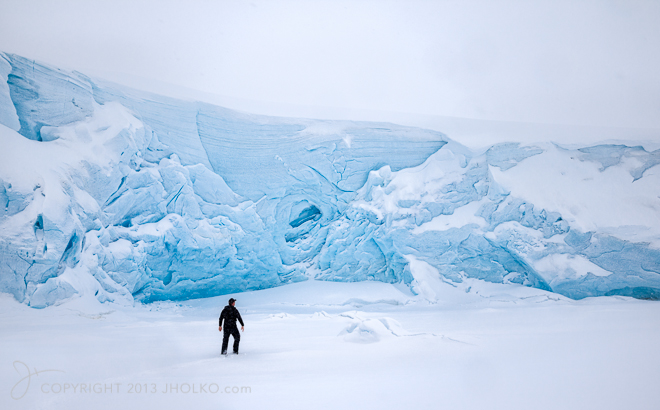
 During this expedition I shot more than 7000 images and since returning home have only just begun the editing and processing process. The few images I have posted here are just the ones that jumped out at me from a first pass. Much like my previous trips to Antarctica, I feel it will be many months (possibly years) before I have mined all the jewels from this expedition. Many of the participants on this trip shot well in excess of 7000 images and have already begun to share their work through their websites and social media. Some fabulous photography has already emerged and I am very much looking forward to seeing more photographs over the coming weeks and months.
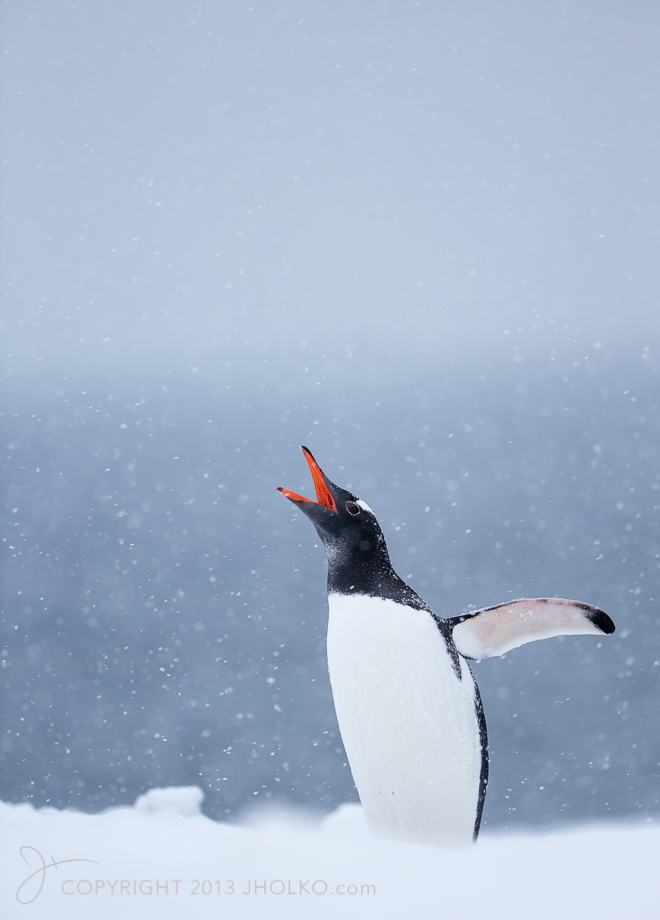 This was an extremely successful expedition to Antarctica with a broad cross section of participants that included some very talented, well known and respected photographers. It was a real pleasure to share this experience with all aboard and I want to thank them again for their input into the collective group. These expeditions require an incredible amount of logistical organisation along with a good dose of planning, timing, weather and luck to be so successful. They also require participants who are dedicated and passionate about their photography and it would be remiss of me not to thank all of them greatly for their contributions towards this expedition. It could not have been successful without them. I was fortunate to also celebrate my 40th Birthday in Antarctica and I could not have wished for a better ground of photographers to share in the experience.
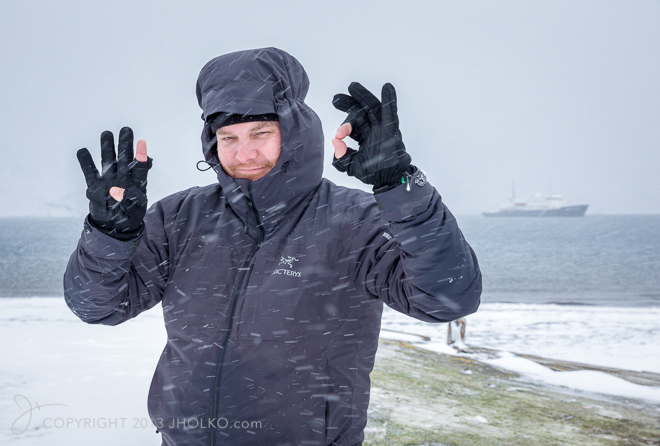 You can view the GPS tracking of this expedition online HERE. High resolution versions of many of these photographs can be seen on my website at www.jholko.com in the Antarctica Portfolios. I will be posting more photographs from this expedition both here on my blog and on my primary website over the coming weeks and months as time permits. Wildlife Biologist and Photographer Chris Gamel joined me on this expedition and has also posted a gallery of his favourite images on his website at www.chrisgamel.com. You can also see photographs from this expedition from Nature photographer Clemens Van Der Werf at www.clemensvanderwerf.com. If you have never travelled on this sort of photography expedition and you would like to get an idea of what it is like be sure to watch the video below.
If you are interested in travelling to Antarctica I will be leading a new expedition to South Georgia Island and Antarctica in November 2014 aboard Polar Pioneer with my friend Andy Biggs. This expedition departs Ushuaia in South America on the 3rd of November and docks back in Ushuaia on the 22nd of November 2014. The expedition is dedicated to photography (both landscape and wildlife) and there are limited places remaining. You can read details of this trip HERE or email me if you would like additional information.
A Joshua Holko Polar Photography Experience Short Film
If you follow my blog you may recall that in August this year I took a small two person film crew from Untitled Filmworks with me to the Arctic to film what it was like to travel with and be part of a dedicated polar photographic expedition. During the fourteen days we spent in the Arctic we travelled from the north of Iceland across the Denmark Strait to Greenland where we explored many of the wondrous fjords and amazing geology of this primordial arctic land. We encountered some incredible icebergs and wildlife and even visited a small native Inuit village. We then sailed across to Svalbard and Longyearbyen in search of Polar Bears, whales and seals. We spent fourteen days travelling and filming in the arctic using a combination of RED Epic 5K Cinema Camera and Canon 1DC Cinema cameras. We gathered more than 10 Terabytes of footage including a spectacular iceberg collapse and glacial calving and I am extremely pleased to now have the final short film back from editing and to be releasing it for everyone to enjoy. One of the most common questions I am often asked via email is ‘What is it like to go on a dedicated photographic expedition to the Arctic or Antarctic?’ Well, just sit back and watch this video to experience it for yourself. Make sure you click on the image to watch it full screen in High Definition – dim the lights and crank the volume! And be sure to share with your friends.
 www.WILDNATUREPHOTOTRAVEL.com