New Zealand South Island Masterclass Workshop Report 2017

It has been more than two months now since my South Island New Zealand masterclass workshop and I have been a little remiss in writing up my trip report. Extensive travels and life have conspired against me and it has taken far longer than I would have liked to complete the report (I still have only processed a couple of images from the workshop and I am heading overseas again in just two weeks – Up to Svalbard for my Polar Bear summer expedition).Rather than give a day-by-day account of the trip this time (as I have done in the past) I felt it better to instead talk a bit about a typical day and what it is that we do other than take photographs during this sort of masterclass workshop. Whilst the physical act of photography is at the core of this workshop it is important impart that there is a lot more going on that just the act of setting up a tripod and pressing the shutter in great locations and beautiful light. In fact, I believe that some of the best learning that comes from these workshops actually happens away from the camera during meal time discussions.

A typical day on my New Zealand masterclass workshop usually kicks off extremely early with a pre-sunrise call to action to try and capture some of the best light of the day. Typically, in my experience sunrise is my preferred time to photograph and I find (at least for my own style of photography) that the conditions are usually at their optimum just before the sun rises. Depending on the location we may have some driving and or/walking to arrive at our sunrise session. Typically we have chosen to stay close by to minimise early morning travel and maximise photography time. We also use helicopters extensively in New Zealand to access back country areas and high mountain areas that would otherwise take many hours (if not days) of hiking to reach. On mornings where we are using helicopters we often run two choppers so that we can move our small group of eight (including myself and my co-leader) simultaneously into position. This way we all arrive at the same time and all experience the best light and conditions. There is a fantastic benefit of helicopters (outside of saving hours of hiking) and that is we can land just about anywhere in the high country and this provides incredibly unique opportunities. A key feature of this trip is to experience and photograph some of the most spectacular landscape that is all but inaccessible without helicopters. In addition, it provides an opportunity to photograph landscape that is not only rarely photographed, but also rarely visited. Iconic easy to reach locations can be fun, but it’s equally important to have opportunities in new areas that few others will ever experience.

Depending on the conditions we experience on our early morning shooting session we may be out for anywhere from a couple of hours too a session that might run close into lunchtime. We work with the weather and light we experience and if conditions are ideal we do not shut down until we have made the best of the them.Whilst we are photographing myself and Phillip (my co-leader) like to work with each of the participants on an individual basis as required. We help with everything from basic camera settings to filters, composition, focal length choice etc… Often, we wont even set up our own cameras until such time as everyone is well and truly up and running with many photographs ‘in the can’.

With the morning session complete we wrap for a hot cooked breakfast or brunch with coffee and tea at one of New Zealand’s many great cafe’s. This is a time for us to not only enjoy some great food after a solid mornings work, but also to reflect on our mornings photography, discuss the conditions and location and reflect on what we felt worked and perhaps did not work for each of us. Typically there is quite a bit of ‘gear-talk’, but importantly there is also a lot of discussion about composition and the art of seeing photographs beyond the obvious. Depending on where we are located at a given point in time in the South Island we may have some down time after breakfast / brunch to either download and work on our photographs or we may have some transit time to our next location.  The key to our daily program is to try and maximise our photography in as many great locations as possible so in some areas we spend multiple days whilst in others we may only have one day before moving on.

After lunch (and a lot more photography talk!) we have an afternoons photography session. Our afternoon session locations are always chosen based on prevailing weather, conditions and light. Since our aim is to be photographing in the best light of the day in the best locations we are constantly assessing the weather and light and making location choices to maximise our opportunities. Local knowledge is absolutely critical to the success of this approach. Much like Iceland, the South Island of New Zealand is a land of micro climates and local knowledge goes a long way to being able to take advantage of prevailing weather and light. On this particular masterclass we made a decision at one point to head up to location in Lindas pass where we new we could capture some stunning landscape in afternoon breaking light; whilst it was raining either side of the pass. This proved a very fruitful decision and some stunning images were captured by all.

If weather and light permit we will stay out in the field (although we often move locations) right through until sunset and last light. We don’t rush from location to location, but rather try and maximise the opportunities in a given location before we move on to a new area. If we are working with aerial photography from helicopters over the mountains and glaciers of the Southern Alps we will wait until we feel the light is at its absolute optimum before spending time with the doors off over some of the most spectacular scenery in the southern hemisphere. We work with experienced pilots with whom we have built a relationship over many years so that we can position our helicopters exactly where we want to capture stunning landscapes in superb light.  Everyone gets a doors off position to photograph whilst Philip and I direct the pilot on where and how we want the helicopter positioned. These sort of high mountain photographs cannot be achieved any other way.

With our afternoon and evening photography session complete its time for some more wonderful New Zealand food at one of the many fantastic restaurants around the island. We work hard on these masterclass workshops so the meals and quality of food is really important to us. We play as hard as we work! Our dinner conversations can revolve around everything from the days photography to discussions on composition, the art of seeing, post production and more. The key take away for me is that these sort of discussions almost always serve to educate and I never stop learning myself from those around me.

For those that wish there is evening time post dinner to edit and process images from the days photography before a good nights sleep and onto another busy packed day.

The workshops are always jam packed with photography and provide an outstanding vehicle for sharing and learning. Our workshop this year was blessed with great weather and some superb light and it was an absolute pleasure to share it with all of those who participated.

Arctic Wings of Iceland 2018 Workshop Open for Bookings

Recently, Daniel Bergmann and I completed a brand new workshop to photograph Atlantic Puffins and other Arctic birds at several different locations in Iceland that included the remote northern Grimsey Island, inside the Arctic circle. (Read the trip Report). The workshop was a great success and as such we have decided to offer a new workshop next year that will take us back to Grimsey Island to photograph both the wildlife and incredible landscape of this remote island. As well as Grimsey Island we will also spend time in Myvatn in the north of Iceland – One of the best places in the world to photograph Arctic birds. Grimsey Island in particular is one of the most spectacular locations I have visited in Iceland with towering cliffs that rise hundreds of feet out of the ocean and incredible basalt columns. It is a wild and primordial landscape that is rarely visited and even less rarely photographed.This photography workshop will last for eleven days (ten nights). We will be staying in good hotels and guest houses that are functional and clean. Breakfast, lunch and dinner are all included and will generally be held at the hotels where we are staying. However, this workshop is all about photography and we will be putting in long hours in the field in order to ensure we get the best possible light for photography. We may take food and drink with us into the field to ensure we are in the right locations get the best possible light.The cost for the workshop is $9,490 US Dollars. This is an all-inclusive price, but excluding your airfare to and from Akureyri, Iceland. From the moment the workshop begins until its end, 11 days later, all costs are included — transportation, food, drinks (excluding alcoholic beverages), and accommodation, which is based on a single room per person (shared rooms at Grimsey Island).Our workshop is strictly limited to a maximum of eight photographers with the first few places already spoken for and pre-sold. The last remaining places will be filled on a first come, first served basis. A complete itinerary and information PDF can be downloaded HERE. If you would like to join us and photograph both the landscape and wildlife of Grimsey Island please drop me an email to register or express your interest.

Ultimate Puffins of Iceland 2017 Workshop Report

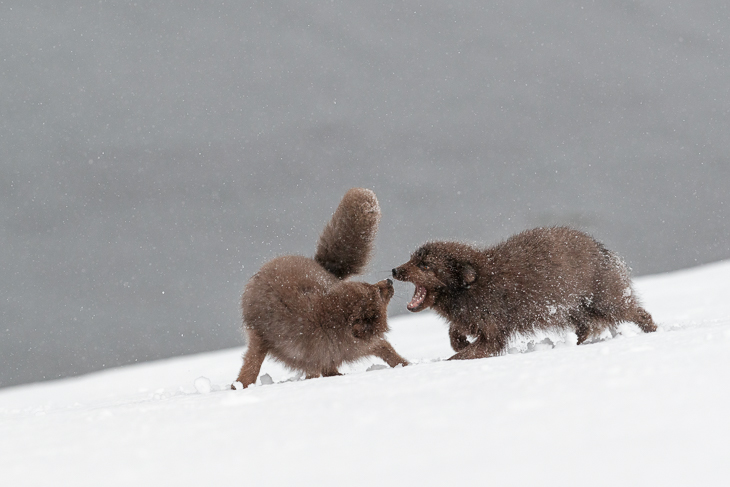
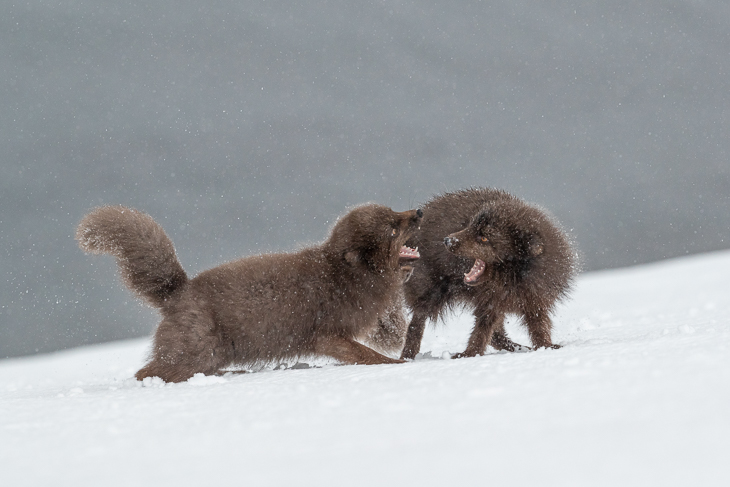
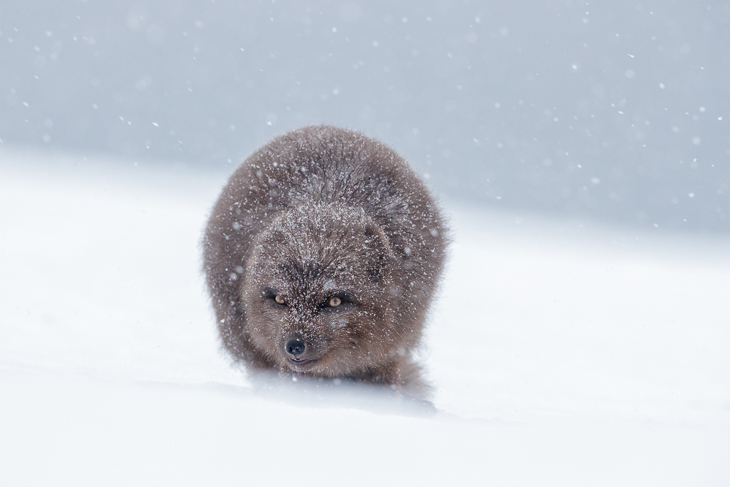
In May of 2017 Daniel Bergmann and l lead a new workshop to the north of Iceland specifically to photograph the Atlantic Puffin and other Arctic bird species. Iceland is one of the best places in the world to photograph Puffins and other Arctic birds in their natural environment and late May is the ideal time to ensure plenty of action in the colonies.Our plan was to focus the majority of our attention on Puffins; although we also planned to visit several different locations around Iceland to photograph different species. We had outstanding access to the Puffins living in burrows on the edge of sea cliffs during this workshop and we had timed our trip to ensure we were in the best locations at the best times to photograph these wonderful birds. There is a lot activity in the bird colonies in late May and early June and we were not disappointed with the sightings and displays.Our workshop took us to a number of different locations around Iceland including the bird cliffs at Latrabjarg in the West fjords as well as the rarely visited northernmost part of Iceland – Grimsey Island.  We also photographed at the Snaefellsness peninsula as well as several other lesser known wetland areas (for Red Throated Divers, Phalaropes and more). Our first stop after Snaefellsness was Flatey Island. Flatey Island  is a great location to photograph Black Guillemots, Snow Buntings, Puffins, Arctic Terns and other common Icelandic breeding birds. We spent one evening at the island and photographed at both sunrise and sunset. At this time of year we were blessed with midnight sun and as such we were able to spend a great deal of time in the field (although we had to dodge the odd rain shower at Flatey island). I was fortunate to see and photograph the very beautiful Mandarin duck whilst at Flatey; which was definitely a highlight of this stop for me.From Flatey Island and the ferry port at the northern side of Breidafjordur bay we journeyed north to Breidavik, where we were based for the next three nights. From there we had superb access out to the  magnificent seabird cliff Latrabjarg. This westernmost point of Europe is the home of millions of seabirds and is very well known for its Puffin colony. The cliffs are a spectacular location and rise 440m out of the sea and are approximately 14km long. We photographed many different bird species in this area and were also fortunate to encounter and photograph an Arctic fox on his evening patrol along the cliff edge.

From Breidavik we travelled to Dalvik to take the car-ferry out to Grimsey Island. This was my first time to Grimsey Island and I can say with a great degree of enthusiasm it was an incredible experience (I am itching to go back!) Grimsey Island is located just inside the Arctic circle and is approximately three and a half hours by car ferry from the northern most part of the mainland. This small island is home to literally thousands of Puffins, Razor bills, Black Guillemots and more. It offers an amazing array of sea cliffs with access from sea level to giant cliffs that soar more than 400 feet high. At this time of year the towering bird cliffs are perfectly aligned with the midnight sun and as such there are simply magnificent opportunities for both wildlife and landscape photography in golden light.In order to easily access the entire island we took our super jeep on the car ferry which enabled us access to all of the cliffs and landscape of this incredible island. Accomodation on Grimsey Island for our workshop was a small comfortable and clean guest house that was perfectly situated for our needs. Although accomodation options on the island are extremely limited the guest house is extremely well equipped and was ideal for our workshop. Grimsey Island is perhaps best known for its gigantic Puffin colonies; but there is also a fantastic landscape to photograph in just about every direction. Plunging sea cliffs, dramatic Arctic skies, spectacular basalt columns are all found in abundance. I was personally in awe of the landscape at Grimsey Island and found it thoroughly refreshing to be making photographs in an area so infrequently visited and photographed by tourists. In an era where Iceland is heavily touristed on the South coast it was blissful to be in the far north with a spectacular Island to ourselves for hours and hours of wildlife and landscape photography. During this workshop we saw and and photographed nearly fifty different species of birds. Our rarest sighting for the trip was the Sabines gull which we saw only briefly at Grimsey Island amongst a flock of black-legged Kitiwakes resting on the ocean (unfortunately none of us was quick enough to get a photograph). It was also fantastic to briefly encounter the Short-eared owl as well as the colourful Mandarin duck. Landscape opportunities were in abundance during our time at Grimsey Island and it was definitely an unexpected bonus to have such a fantastic landscape available.On our last day during our return to Reykjavik we visited some wetland areas to photograph nesting red-throated divers.This was a remarkable workshop that offered up some fabulous wildlife and landscape opportunities. As such,  Daniel and I have decided to return to Grimsey Island next year for a second workshop that focuses on both the birds of Iceland as well as the landscapes of this remarkable Island. We are currently finalising details, but if you would like to amongst the first to be notified once bookings are open you can register your interest now by dropping me an email at info@jholko.com

A Guide on How to Choose the Right Photographic Expedition to Antarctica

Over the last few months Extraordinary Vision magazine has published a series of articles I penned on how to choose the right photographic expedition to Antarctica to best suit your needs. I have subsequently had quite a few emails from photographers looking to travel to Antarctica who wanted to let me know how helpful they found the articles. In order to make it easy to access this series of articles in one place I have now added them as a single online PDF guide that can be downloaded from my website at www.jholko.com and directly as a PDF Guide. Happy Polar travels!

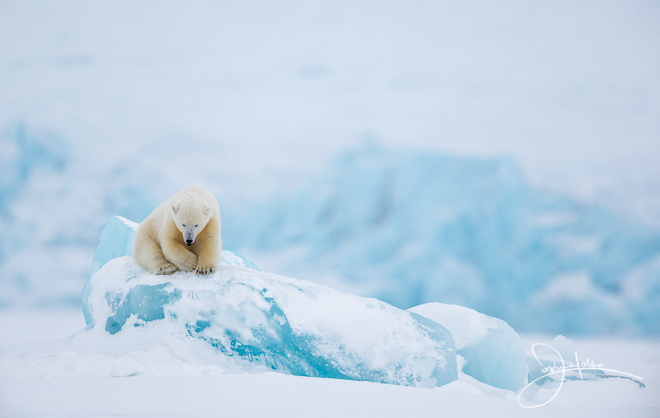
Polar Bears of Svalbard Expedition 2017 – SOLD OUT

My next expedition to the Arctic for Polar Bears this July is now sold out – thank you to all those who are joining me this year for our journey into the pack ice under the midnight sun in search of the King of the Arctic. We are looking forward to Polar Bears, Arctic Fox, Reindeer, Walrus, incredible Arctic landscapes and much more. Bookings and registrations are now open for the 2018 expedition (the expedition is already 50% sold out and places are already very limited). If you would like more information please visit the workshops page on my website at www.jholko.com