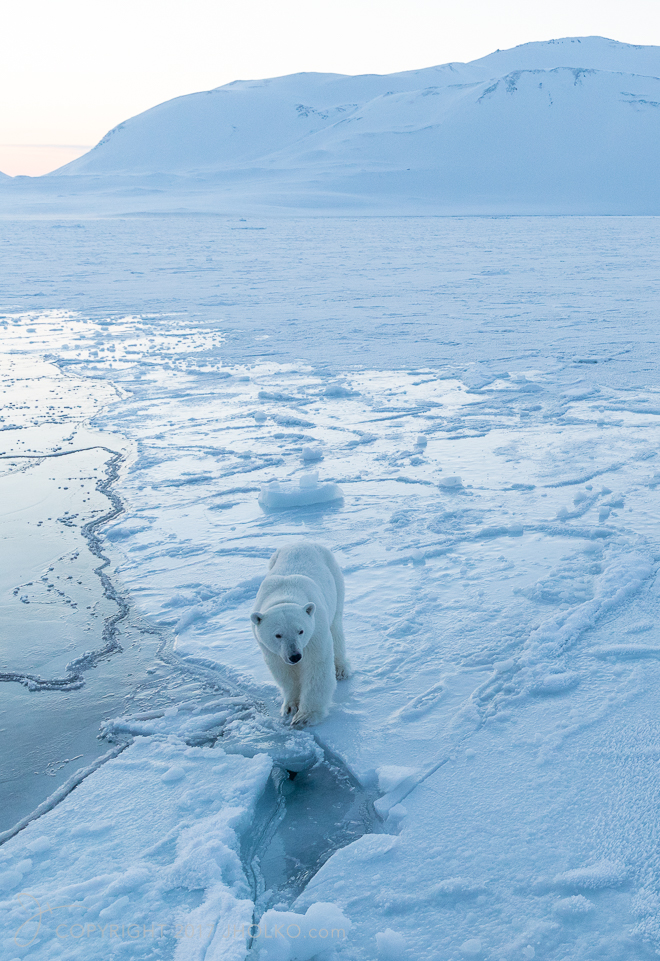
In late March 2017 I lead a new ship based expedition to Svalbard in Winter to photograph the wildlife and arctic landscapes of this remote archipelago in a winter setting. The primary reason for choosing late March was at this time of the year (and at this latitude of nearly 80º North) the sun is very low in the sky all day and thus there is hours of golden light available for photography. Dawn and Twilight light at this time of year typically last three or more hours and even at midday the sun is still very low in the sky. This situation provides hours and hours of superb light for photography. There is also something about the quality of light in winter at this latitude that translates very well into photographs. The light is soft and ethereal and often has wonderful pink and blue pastel shades not found at other times of the year. This combination of light, snow and ice is simply unmatched in my experience.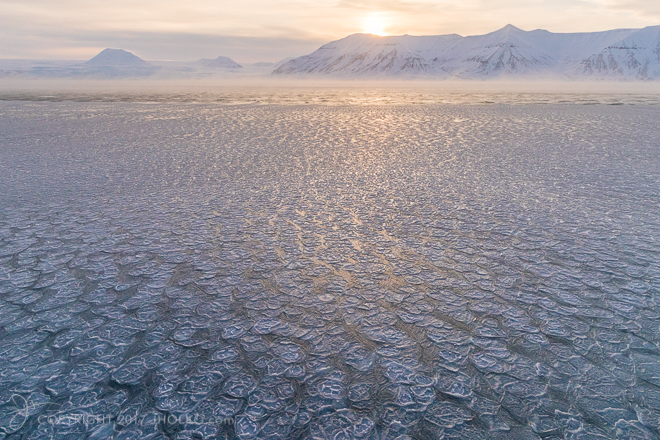 This expedition was for just twelve photographers and utilised the same ice-hardened expedition class ship I have been using for Polar Bear photography over recent years. On this expedition we encountered three individual Polar Bears including a courting male and female and a third unwelcome male who was chased off after a late night fight. We spent approximately two and a half days photographing these bears while we were parked in the pack ice. On one occasion early in the morning they approached within just a few feet of the boat. On others they were between one hundred and four hundred metres away on the frozen sea ice. The opportunity to watch them interact was extraordinary and this encounter rates as one of the best I have witnessed from a behaviour standpoint.
 Temperatures during our expedition ranged between -10º celsius and -30º Celsius plus wind chill factor. Our coldest day was around -50º Celsius with a 20+ knot wind and air temperature of -28º celsius. I can tell you from experience that these sort of temperatures are quite demanding on body and camera. However, the wonderful thing about ship based expeditions such as this is its easy to walk back inside the ship (where its around plus 20º degrees celsius) and warm up with a hot drink. Being outside and making photographs in these sort of temperatures does require some thought and planning in terms of both equipment and clothing but if you are properly prepared its quite possible to spend very long periods of time out on deck making photographs.
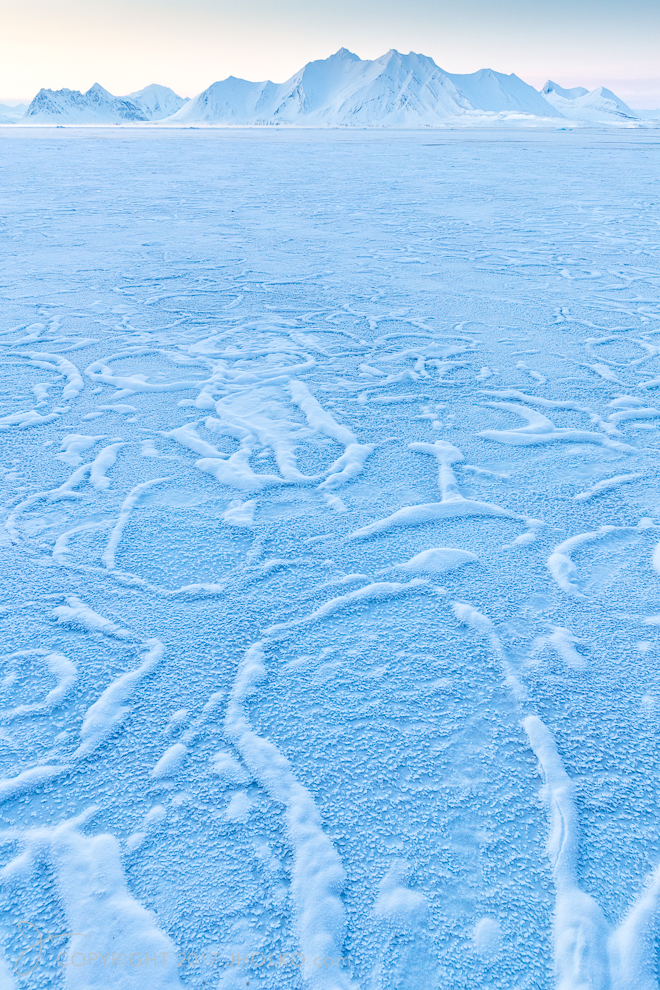
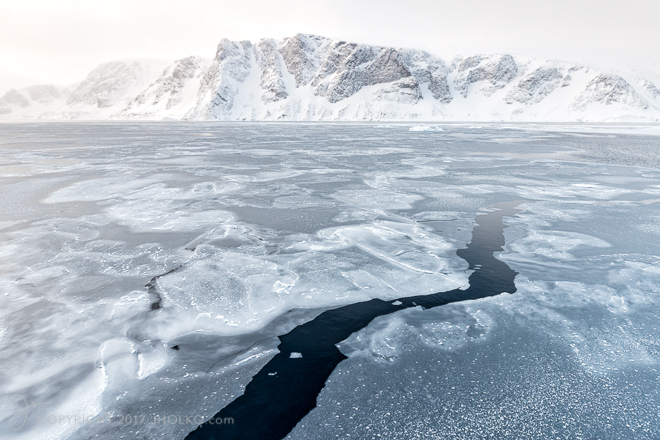 The landscape opportunities in Svalbard in winter rate as the very best I have ever experienced (even better than Antarctica). The formation of new sea ice is nothing short of spectacular and set against a back drop of snow covered peaks and glaciers with sea smoke billowing off the open areas of ocean and you quite literally have one of Natures most dramatic and breathtaking scenes.
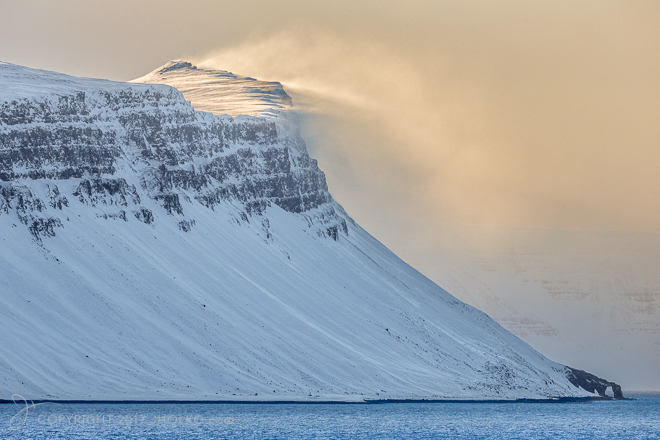
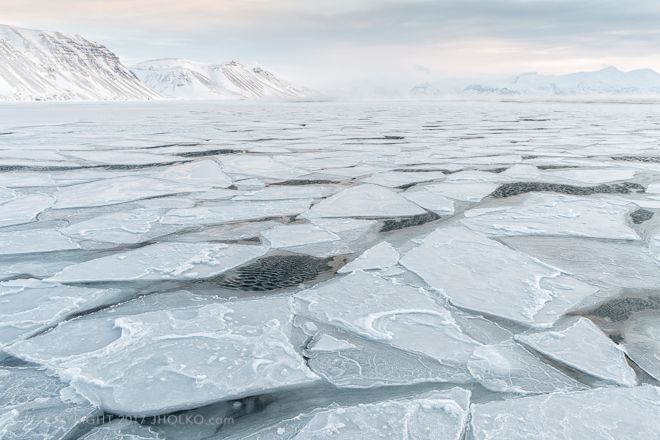 The sea smoke phenomena is caused by super cold air passing over the much warmer ocean water (although the ocean is only just above freezing the air temperature can as low as -30º Celsius). The smoke adds a wonderfully dramatic element and really elevates the interest and mystery in the landscape.
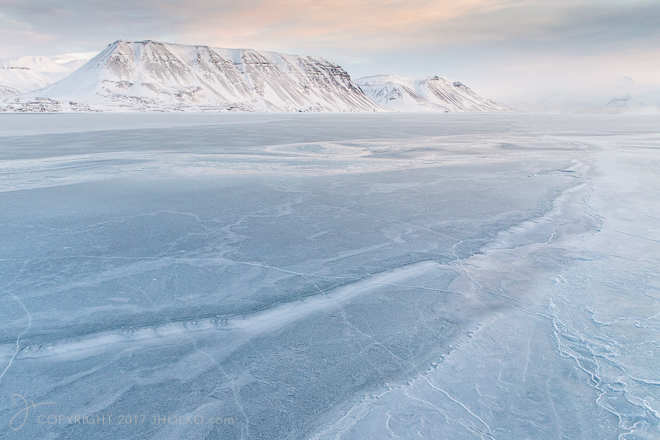 One of the great pleasures of ship based photography is that the scene is constantly changing as the boat moves slowly through the ice filled fjords. Opportunities for photographs are everywhere and part of the experience is watching the incredible landscape roll past. I particularly enjoy this sort of landscape photography as no two images are ever the same.
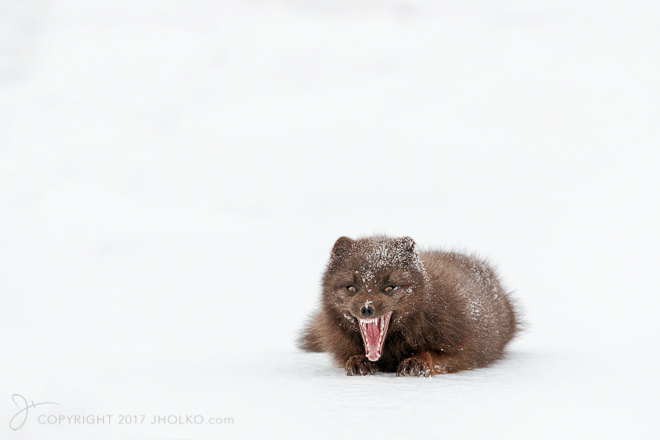
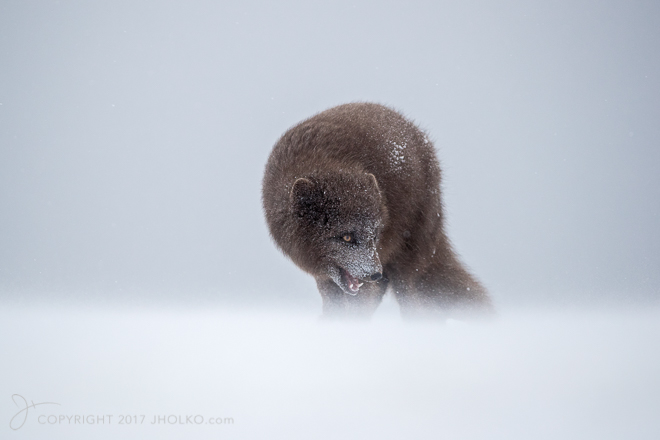
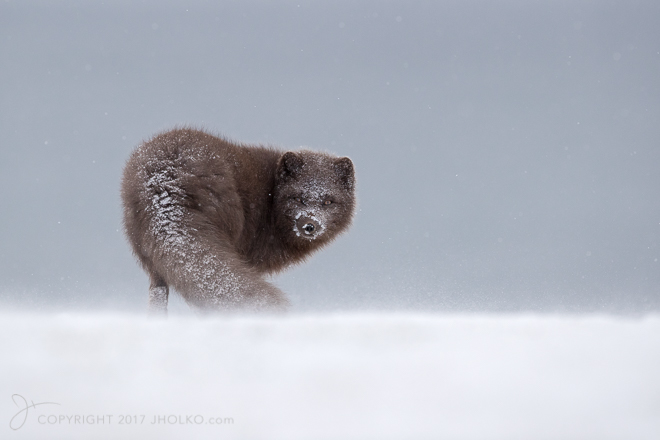
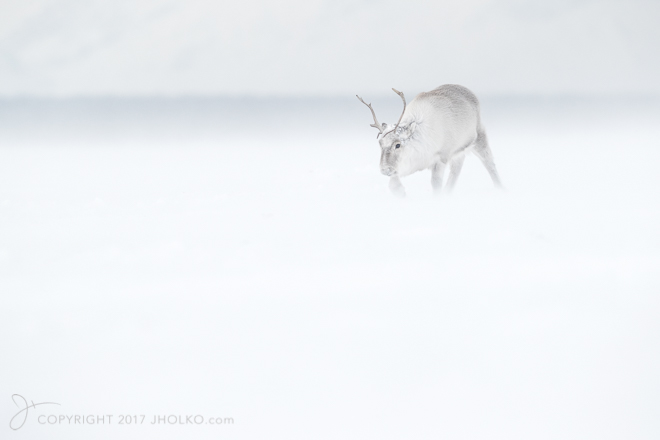
 During the expedition we also saw and photographed Reindeer, Arctic Fox, Walrus on sea ice as well as sea birds such as Fulmars and Gulls. The opportunity to photograph Walrus on sea ice is a wonderful addition in winter as they are normally found either in the water or on land in summer. Walrus can be somewhat skittish on sea ice but we were able to manoeuvre quite close on several occasions for some wonderful photographs.
 Svalbard (and the Arctic in general) in winter is not for the faint of heart. With temperatures well below freezing it can be challenging to both person and equipment. However, the rewards for those brave enough to take on the challenge are absolutely extraordinary and not to be missed. In my own personal opinion Svalbard in Winter offers the most extraordinary opportunities for dramatic landscape imagery I have had the good fortune to experience. It is quite literally breathtaking.
If you are interested in travelling to the Arctic and photographing the incredible landscapes and wildlife of the Svalbard archipelago in a winter setting I will be repeating this expedition in late March next year (March 26th – April 3rd 2018). Late March offers us the best opportunity for wonderful light over the dramatic winter landscape. Due to initial registrations and bookings places are already extremely limited. If you would like more information or a detailed itinerary please just drop me an email.
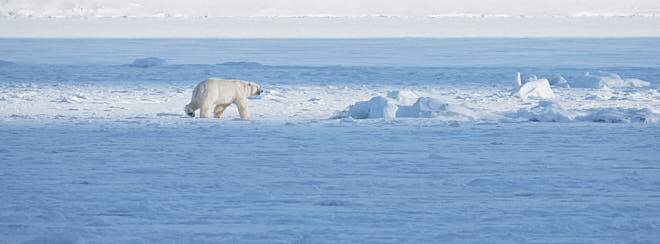 This was my first sighting of Polar Bear. Our keen eyed guides saw them from quite a distance and maneuverer the ship to our encounter. These two, a large male and small female stayed near the Origo for 48 hours, at which time we had to leave, because the ice was closing in behind us.
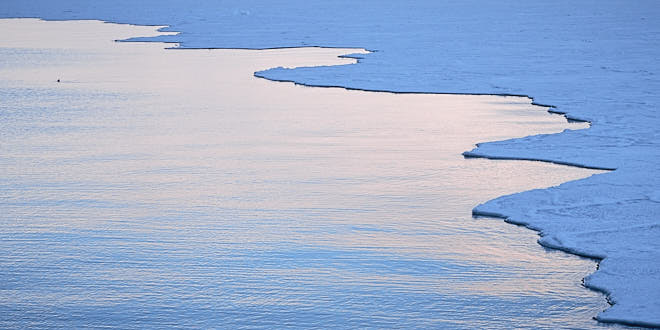 The Convergence of ice and open water dusk.
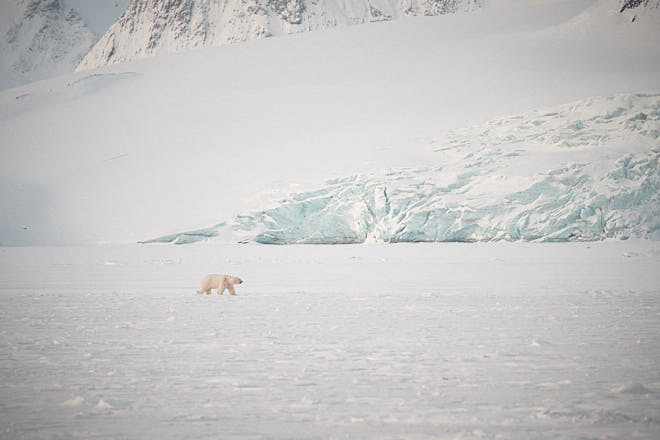 Another male shows-up in the vicinity of the male and female we have been watching for 12+ hours. This interloping male show signs of a fight with blood streaks on his shoulder and under jaw
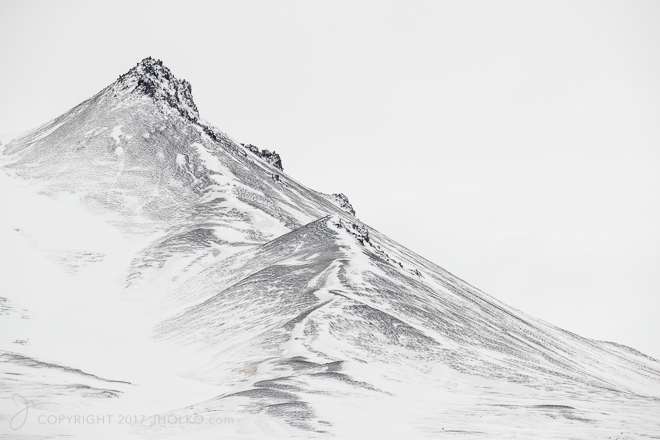
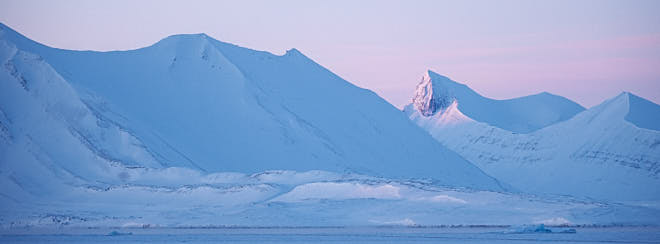 Late evening light on snow covered mountain. What photographers refer to a the “blue hour”, that time before sun rise and after sunset when the sky glows with color, was not an hour long… but more like 2+ hours long . By the end of our trip in the first week of April, it never really got dark. At 2AM, you could easily see.
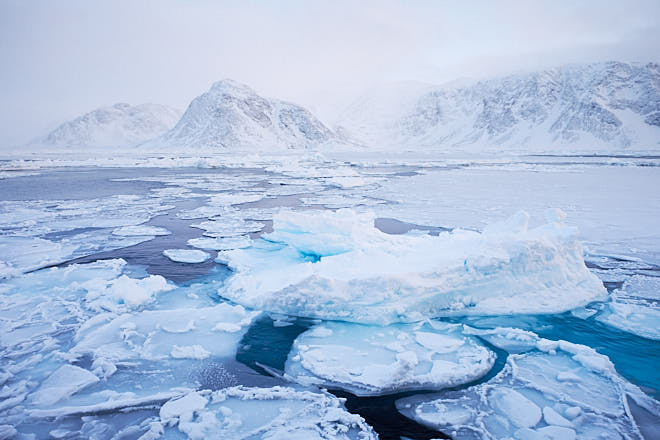 The formation of sea ice.
 Our Ship, M.S Origo parked in the ice for the night. To see more of John’s photographs from the expedition please visit his
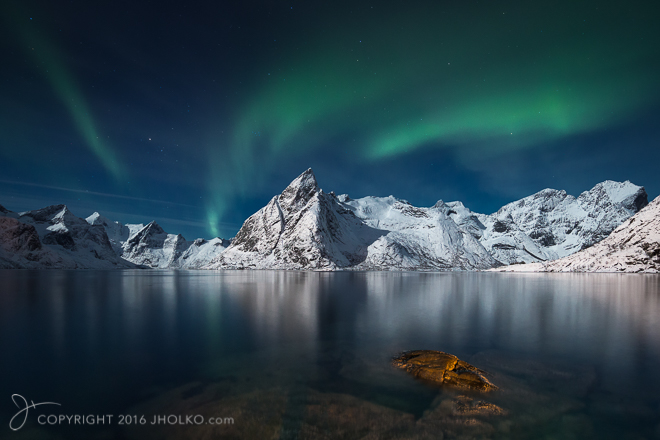
 The Lofoten Islands are approximately 100 miles north of the Arctic Circle, west of Norway. Lofoten’s natural beauty, with incredible mountains and magnificent fjords offers our small, and intimate group (maximum six participants plus leaders – only 3 places remaining before it will be sold out) a chance to explore these remarkable and unique landscapes and seascapes. The breathtaking village of Reine on the island of Moskenesoya will be our base for six nights situated in some of the most picturesque mountain scenery rising precipitously out of the fjords. Reine has often been described as one of the most beautiful places on earth. If we are lucky and blessed with clear skies, we will be able to witness the Aurora Borealis and the magic of the Northern Lights as they flicker across the night skies. Besides the incredible wealth of photographic locations in the vicinity of Reine, we will use the local Fjordskyss ferry service to Vinstad and to the tiny hamlet of Kjerkfjorden, both of which are surrounded by towering granite mountains. Our private transportation will allow to access some of the iconic beaches near Leknes which might be covered in snow.
 Our home away from home while on Lofoten and in Reine, will be a quaint and venerable traditional house (built in 1906) which makes it a very cosy, but basic place that we will have all to ourselves. All guests of the house share one bathroom. Additionally, we will also have the use of a Rorbu, a style of housing historically associated with seamen now converted into homely accommodations complete with private bathroom and small kitchen. Our second base for two nights is Leknes where we will stay at a comfortable hotel. From here we can easily access the beautiful coastal beaches of Utaklieve, Haukland and Skagsanden.
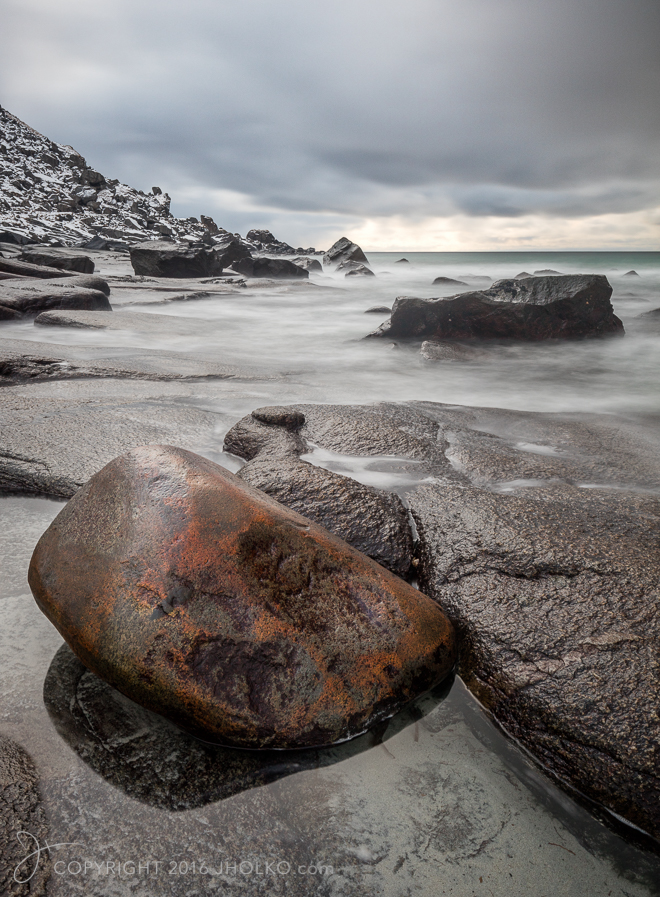
 Being surrounded by water Lofoten offers great opportunities for seascape photography at just about every turn and we plan to take advantage of this by visiting and photographing many different beaches and areas of coastline. Much of the coastline is rocky or dotted with large boulders (JCB’s – Otherwise known as Joe Cornish Boulders) which provides limitless opportunities for foreground interest. Many of the beaches are also very accessible and only a short walk from car parks or pull off areas. We plan to spend quite a lot time exploring and photographing various areas of coastline. In the right conditions, Lofoten in winter also has the added benefit of snow down to sea level for even more interest.
 It is worth noting that Lofoten isn’t just about landscape photography. During this workshop we will also take a private charter boat out to photograph White-Tailed Sea Eagles fishing off the coastline. The opportunity to photograph these remarkable raptors up close is not something to be missed.
 From the moment the workshop begins in Leknes, Lofoten until it ends 9 days later, all costs are included – transportation, food, drinks (excluding alcoholic beverages), and accommodation based on a single room per person. If you have special dietary requirements you will be accommodated – please be sure to advise when booking. Packed lunches will be taken in the eld and we suggest you bring a thermos ask for soup, coffee or tea.