The AIPP Australian Institute of Professional Photography has several upcoming events which will be well worth attending for those of you who may be in town in Melbourne, Victoria over the next couple of months. The first is a semi-regular event, usually held annually, known affectionately as The Decathlon. Its a fantastic event, and a huge amount fun. I spoke at the Decathlon a couple of years ago and am looking forward being a part of this event again this year. You don’t have to be a member of the AIPP to come to these events – all are welcome. A great way to keep up to date with all the Victorian events is via the AIPP Victoria State Blog.
We would love for you to join us at this very exciting event. There will be something for everyone as our 10 speakers share some fabulous tips and experiences. Our speakers for this event will be:
Darren Bennett
Johl Dunn
Joshua Holko
Peter Kalogris
Rochelle Morris
Vicki Papas
Steve Saporito
Kelly Vanyai
Anie Zanazanian
Yervant Zanazanian
Event Details: Date: Thursday January 22nd Where: Eleven 40 Gallery – 1140 Malvern Rd Malvern – Time: 6:30pm for a 7:00pm start. Drinks available for purchase separately on the night.
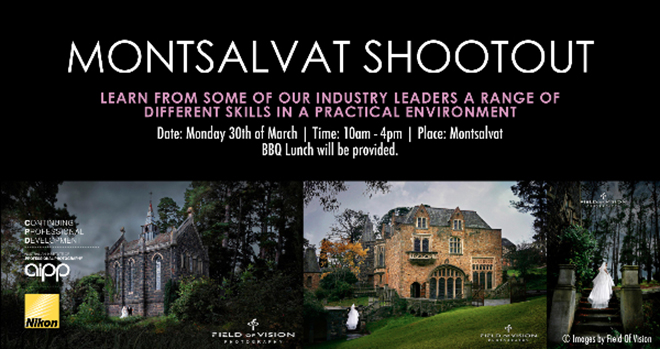
MONTSALVAT SHOOT OUT – 5 PHOTOGRAPHERS, 5 SEPERATE SPECIALITIES
Learn from some of our Industry Leaders a range of different skills in a practical environment.
Speakers will be:
Mandarine Montgomery – Fine Art
Lisa Saad – Commercial
Nick Ghionis – Wedding
Joshua Holko – Tilt shift Lens
Tony Knight – Video
Event Details: Montsalvat Shoot Out – Monday 30th of March 10 am – 4pm BBQ lunch included. Please let us know if you have any special dietary requirements.
We ask all attendees to bring their camera/s along. This event is a practical workshop where attendees will have the opportunity to learn and photograph alongside our presenters. Its a great way to learn new skills, tips and tricks on the fly.
As has become a tradition for me I like to do a “What’s in Store” post here on my blog for the coming year as well as reflect back, and wrap up the year that was. 2014 was a huge year for me both with destinations visited, sheer number of international miles travelled as well as competition results. 2014 also marked the year I finally visited Africa and completed the seven continents. I have no idea how many actual miles I covered in 2014 in total, how many aeroplanes I boarded, how many times I went through airport security or how many tens of hours I spent waiting around in airports for connecting flights, but it was a lot – an awful lot. I wish I was better at taking advantage of layover time to catch up on email and office work but the reality is I am usually in a semi-vegitative state from jet lag and in no fit state to focus on any actual work. The positive flip side being I have such a love and passion of photography in the Polar regions that I could not ever imagine doing anything else. Airport layovers are therefore nothing more than an unfortunate means to a much loved end. 2015 will certainly have its fair share of flights and layovers and I am trying to work through as much office work as possible in the next few days before I board the next plane.
Over the course of this year I published my favourite twelve photographs here on my blog. Please be sure to check them out and let me know what you thought. I don’t think I have an overall favourite this year, although I definitely have a soft spot for this photograph of the giant sand dune and ghost forest I photographed in Namibia early this year. To those of you who have emailed me asking if and when I will be offering a future Namibia workshop the answer is unfortunately not in 2015 as I have too many other commitments. However, I am tentatively planning a future workshop for early April 2016 and will have more to say on this at a later date.
In competition terms, 2014 was my biggest year yet and winning the 2014 Canon APPA Professional Science, Nature and Environment photographer of the year as well as the highest scoring print in this category was a massive honour and thrill that I am still buzzing from. To pick this award up after already winning the Science, Nature and Environment category at the Victorian State Awards as well as 2014 Epson Professional Creative Photographer of the Year, Highest Scoring Print of the Year and overall win for Epson 2014 Professional Victorian Photographer of the Year was just about the perfect result and I quite honestly couldn’t be more thrilled. It was all topped off with wining the 2014 Travel Photographer of the Year in the Wild and Vibrant category a couple of weeks ago; which was just about the perfect news to receive on returning from Antarctica. It was a fantastic year and I have been really humbled by the results – thank you.
Australian Professional Photography Awards: Science, Environment and Nature Category Winner 2014
2014 was also my biggest year yet for workshops and expeditions. The year kicked off with an ‘almost’ local two week New Zealand South Island workshop which included helicopter time over the spectacular southern Alps. We visited Milford Sound, Queenstown, Kaikoura, Mount Cook and a great many other off the beaten track locations during the workshop and were treated to some fantastic weather and light (Read the Trip Report). New Zealand is a country made for photography and it is always fantastic to return to this wonderful country. Below is a short snippet of raw video from the workshop.Daniel Bergmann and I then ran our annual Winter Iceland workshop (Read the Trip Report) that included destinations in both the north and south of the Island. Iceland in winter is an incredible experience and this workshop provided us with wonderful opportunities in a snow covered landscape. I then backed up Iceland in Winter by flying straight to Africa for two back-to-back Namibia overland Safaris (Read the Trip Reports). Namibia was a truly amazing experience and its ancient landscapes are ideally suited to the intrepid landscape photographer – even if it is hot!
After a short break, I then returned to Iceland for the Summer season and lead two back-to-back Ultimate Summer workshops that saw us circumnavigate the Island twice and photograph a great many of Iceland’s incredible locations (Read the Trip Report). I never tire of returning to Iceland and eagerly look forward to each return visit. The 2015 Iceland Highlands workshop is sold out, but I will soon be announcing the 2016 schedule for those of you who would like to get the drop on securing an early place. Just drop me an email to register your interest – no obligation at this point.
After Iceland I led a two week expedition that departed from Isafjord in the north of Iceland and sailed across the Denmark Strait to Greenland and Svalbard ‘The Jewels of the Arctic‘. During the expedition we explored and photographed many of Greenland’s incredible mountain lined fjords, rugged landscapes and arctic tundra slopes before we sailed across the Greenland sea to Svalbard (Read the Trip Report). Greenland has some of the most amazing geology of any place I have ever visited and in combination with gigantic icebergs it offers unique opportunities for photography.
In November I travelled to the Falkland Islands, South Georgia Island and Antarctica for a twenty one day expedition that saw us photographing in some of the world’s best locations for wildlife. We sailed from Ushuaia aboard our expedition ship stopping at several places in the Falklands along the way. We then spent several days in South Georgia before sailing to Antarctica. I have really been enjoying seeing the fantastic photographs being shared on social media taken by all who participated on this expedition – and although I suffered quite badly from sea sickness during this voyage it really was remarkable. I hope to post a trip report as well as more photographs over the coming weeks. In the meantime, this was a photograph I made at Grytviken in South Georgia Island of a very curious baby Elephant Seal. The photograph was taken with a Canon EOS 1DX with a 16-35mm F4L IS lens and an Aquatech Underwater Sport Housing with wide-angle dome port. My sincere thanks to Aquatech for their support with equipment for this expedition.
At the conclusion of this expedition I travelled with friends to the Argentinian side of Patagonia to spend some time hiking in the back country and relaxing before I led one final expedition for the year to the Antarctic Peninsula. This was the second time I have been to Patagonia; although it was the first time I have visited the Argentinian side. Last year I spent a week on the Chilean side of Patagonia and it was interesting to experience the difference between the two areas. In terms of sheer impact, I have to say I prefer the Argentinean side; although both are spectacular and both are equally exposed to ferocious winds. Patagonia is a wild place and you have never truly experienced the power and ferocity of Nature’s winds until you have travelled and hiked in this area of the world. I took the opportunity to put down my cameras whilst in Patagonia and although I made a few photographs I really took the opportunity to have some down time and just share the experience with good friends. I really needed time to recharge my batteries before the final Antarctic expedition and Patagonia was the perfect experience.
The final expedition to Antarctica proved about as perfect an experience as one could hope for in terms of weather. This was the first time I can recall visiting Antarctica and not loosing any time or landings due to wind and weather. Although I prefer moody, dark and overcast skies for my photography it was nice to see some blue sky and visit a few new locations during this trip. This photograph of the old whaling ship ‘The Governor’ was taken at Enterprise Island and is a good example of the kind of weather we experienced. This was the first time I have visited Enterprise Island but it will most certainly be on the hit list for future expeditions.All up I led a total of nine separate international workshops and expeditions in 2014 spread across more than ten countries (not including some local private workshops to the Great Ocean Road as well as one-on-one Print workshops). A brief count tallies up more than thirty international plane rides and more than thirty thousand exposures (wish they were all keepers!) and a lot more than thirty hours of lost sleep. It was a fantastic year and I just want to thank all of you who I was fortunate to meet, travel and photograph with throughout the year. It was real privilege to share in such remarkable destinations with so many fantastic photographers – thank you.
2015 is shaping up to be an even bigger year than 2014 in terms of both miles and locations and I am really excited about whats in store. In February I will lead a sold out trip to Yellowstone in Winter. Yellowstone in winter has long been on my wish list and I am very excited to be travelling to the USA again with such a small group of fantastic friends and photographers. We are looking forward to photographing Bison, Elk, incredible snow covered landscapes and with a little luck perhaps even Wolves and Lynx.
In March I will lead my annual Winter Aurora workshop to Iceland (Sold Out) with my good friend Daniel Bergmann. We have a slightly different itinerary in store to last year and will be visiting both the south east and south west coasts during this workshop. At the conclusion of this trip I am going to fly over to Svalbard and spend some time in the backcountry via snowmobile photographing Polar Bears and Arctic Fox in winter. I will then fly back to Iceland to continue my Arctic Fox project in the north of the country. I hope to share a lot more of this project over the coming year as I continue to assemble the images but you can get a preview on my website in the Arctic Fox Project.In May I am going to make the short hop across to the South Island of New Zealand to co-lead a Masterclass workshop with friend Phillip Bartlett. The South Island of New Zealand is breathtaking and was made for landscape and Nature photography. We have some really exciting locations lined up for this trip that include helicopter access into the remote back country. Click on the image below for a video preview of whats in store.
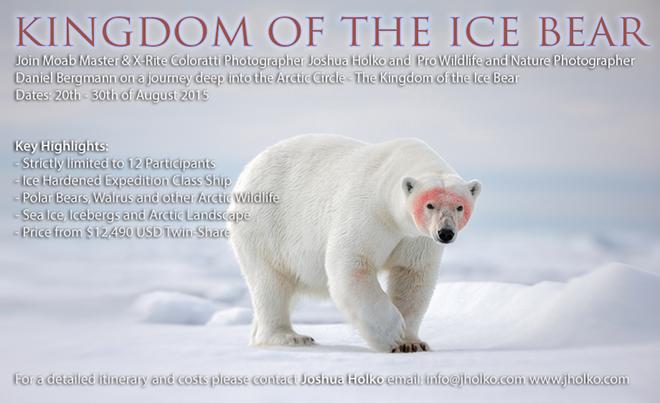
In July I will head back to Svalbard to lead my Wild Polar Bears expedition (Sold Out) from Longyearbyen up to the permanent pack ice. At the conclusion of this trip I am flying to Iceland where Daniel and I will lead our Iceland Highlands expedition (Sold Out). We both then return to Svalbard for our Kingdom of the Ice Bear expedition. Untitled Film Works will be joining us on this expedition and will be producing a short film of our experiences as we photograph the King of the Arctic. This will be the second film Untitled Film works will have shot and produced for me and I am looking forward to working with them again. You can watch the first Polar Photography Experience movie by clicking on the image below.In November I will travel to the Falkland Islands (our departure point) with Norwegian friend Ole Jorgen for a dedicated fifteen day photographic expedition to South Georgia Island. Unlike the expedition I led this year which also took in Antarctica this new expedition will focus solely on the wilds of South Georgia Island. We have secured a permit for a much longer stay than usual and will instead have ten full days of photography in this incredible location. We intend to explore many of the more rarely visited and out of the way locations as well as some of the major highlights. It is sure to be an absolute wildlife fiesta. There are currently only two places remaining on this expedition before it will be sold out. At the conclusion of the South Georgia expedition I will remain in the Falkland Islands for a one week extension to photograph at two of the worlds best hot spots for Birds – Sea Lion Island and Saunders Island. This will be a very small group of photographers and we will move between the islands via small charter plane. The Falklands is a world class location for photographing Albatross as well as King Penguins and Rock Hopper Penguins and I am looking forward to returning to this remarkable area.
I then have one final expedition to Antarctica for the year that will take me right through until Christmas and wrap up 2015. Its going to be a very busy and hectic year and I am keen to get make a start in Yellowstone in just a few weeks time.
In other projects, I am also aiming to finalise and publish my book ‘Extreme Latitude’ early next year. This long overdue project has been sitting ‘mostly’ finished on my hard drive for the last couple of years and it is time to pull it all together and complete it.
A final sneak peak into 2016 for those of you who have managed to read this far: I will be announcing at some stage next year a unique once in a lifetime expedition to travel deep into Antarctica via snow plane and snow mobile to live, camp and photograph with the mighty Emperor Penguins. The expedition will likely be early November 2016 and be strictly limited to a very small number of photographers. I will have more to say about this opportunity next year.
Lastly, I want to wish all of you a very safe and happy New Year and may 2015 be one of amazing light and experiences for all of you.
“Hi Josh, Back on land again in Ushuaia after 20 mind blowing days of amazing wildlife, amazing scenery, amazing seas etc etc in the Falklands, South Georgia and Antarctica. Still having trouble processing all the things I have seen and done. My thanks to you for providing an unforgettable photographic experience, for all your assistance and companionship.” Garry Smith
After nearly two months of solid photography in South Georgia Island, Antarctica and Patagonia I am finally headed home later today in time for Christmas with my family. The last two months has been nothing short of a phenomenal experience that was as always a sheer pleasure to share with so many like minded and passionate photographers.
I am currently in Puerto Williams in Chile having just docked a couple of hours ago after returning from my last Antarctica expedition of the year. We were fortunate to have a relatively mild Drake crossing on the return which was a pleasant and welcome surprise. Another pleasant surprise has been I just learnt that I have won the 2014 Travel Photographer of the Year Award for the Wild and Vibrant Category. The winning photograph was shot last year in Svalbard.
I admit to being pretty shattered at this point having existed on little sleep over this last two months. With so much exposure to the midnight sun so far south my body clock is a bit of a mess. The one benefit of this state of exhaustion is that I am likely to at least catch up on some sleep on the long haul flights home. I quite honestly have no idea when I will get a chance to process some of the photographs I have made during this time away as my time at home is very limited before I next head overseas. In the meantime, I am very much looking forward to walking in my front door, seeing my family and spending Christmas with my kids.
If you have been following along on my blog you will know that I will only be home for a two weeks before I will head back to South America and Antarctica for a scouting trip to photograph the mighty Emperor Penguins at the beginning of 2015. I am super excited about this new opportunity and am looking forward to heading deep into remote Antarctica where the Emperors make their home. The intention of this scouting trip is to spend a week camping and living on the sea ice with the Emperors in order to ensure everything is in place for a future small group photographic expedition in 2016. I will have more to say about this expedition soon. For now, if you are interested in a future expedition to visit, camp, photograph and live with Emperor Penguins you can drop me an email to express your interest – no obligation at this point.
Now, its time to head to the airport in Puerto Williams and start the long trek home. See you in Australia.
My friend Antony Watson and I recently finished up ten days trekking and photography in the back country of Patagonia and have spent the last few days in Ushuaia at the bottom of South America. I admit, that at this point South America is starting to feel like my home away from home and that my Spanish is now about as good as my Icelandic! Later today we depart on our final Antarctica expedition for the year to the Antarctic Peninsula where we hope to encounter more amazing icebergs, landscapes and polar wildlife. We have a ship full of keen and passionate photographers all eager to get underway and get some polar frames in the can. The enthusiasm of a ship full of photographers about to embark on an Antarctic odyssey is a fantastic energy resource and one can’t help but get swept up in the excitement. As expected Patagonia was a mixed bag of weather and light (or should I say wind, wind and more wind!). The scenery of this amazing location is breathtaking – the precipitous peaks, the plunging mountains and wild terrain is really phenomenal. Hiking through this terrain really puts a perspective on the sheer scope and scale of the geological uplift. I have personally found Patagonia a challenging place to photograph in the past and this trip was no different. The scenery really needs just the right combination of weather and light to really create great images. I have seen a lot of photography from Patagonia over the years and those images that really stand out for me are those that have captured the most dramatic weather and light. Patagonia remains for me one of those places that is dramatic to behold but photographically elusive. I am sure I have some good images from Patagonia, but I am not sure I have any definitive ones as yet. I need to look at my photographs with fresh eyes in a couple of months to really get a feel for what I did or did not accomplish. I took a laid back approach to my photography in Patagonia and was happy in many instances to simply take it in and leave the cameras in the bag. I did very much enjoy our long days of hiking through Patagonia and was very appreciative of the light weight 5D MKIII loaned to me by my good friend Martyn. The thought of schlepping one of my Canon EOS 1DX’s up some of those mountains would have in all likelihood seen me choose to stay at the bar. In fact, it is worth noting that the hiking was fairly arduous and I am not ashamed to admit I arrived at our campsite several evenings tired and sore. Hiking the back country of Patagonia with good friends was one of those life experiences you never forget and the memories from this trip will I hope stay with me forever. I hope to write more about our experiences in Patagonia over the coming months as my thoughts congeal from both our hiking and photographic experiences. Until then, its time to turn my attention again to Antarctica.
We will be sailing down the Beagle Channel in a few hours and making our way across the Drake Passage bound for Antarctica. No two Antarctic expeditions are ever the same and I am looking forward to seeing what this one has in store for us. As always we will chase the weather and light for the best possible photography opportunities. Sleep will as always be kept to an absolute minimum as we search for spectacular midnight sun polar light. This will be my final post for the next two weeks before we dock back in Ushuaia. Bon Voyage.


 All up I led a total of nine separate international workshops and expeditions in 2014 spread across more than ten countries (not including some local private workshops to the Great Ocean Road as well as one-on-one Print workshops). A brief count tallies up more than thirty international plane rides and more than thirty thousand exposures (wish they were all keepers!) and a lot more than thirty hours of lost sleep. It was a fantastic year and I just want to thank all of you who I was fortunate to meet, travel and photograph with throughout the year. It was real privilege to share in such remarkable destinations with so many fantastic photographers – thank you.
 In March I will lead my annual
  In May I am going to make the short hop across to the South Island of New Zealand to co-lead a

 In November I will travel to the Falkland Islands (our departure point) with Norwegian friend Ole Jorgen for a dedicated fifteen day photographic expedition to
 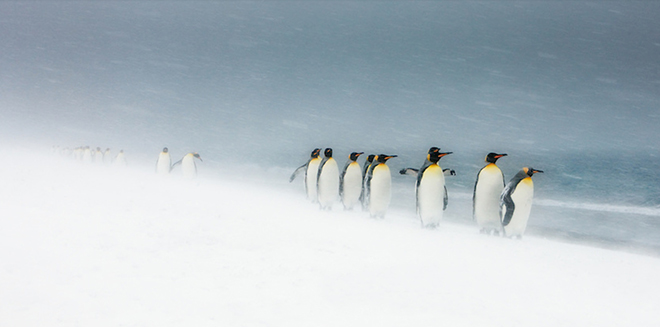 At the conclusion of the South Georgia expedition I will remain in the Falkland Islands for a one week extension to photograph at two of the worlds best hot spots for Birds – Sea Lion Island and Saunders Island. This will be a very small group of photographers and we will move between the islands via small charter plane. The Falklands is a world class location for photographing Albatross as well as King Penguins and Rock Hopper Penguins and I am looking forward to returning to this remarkable area.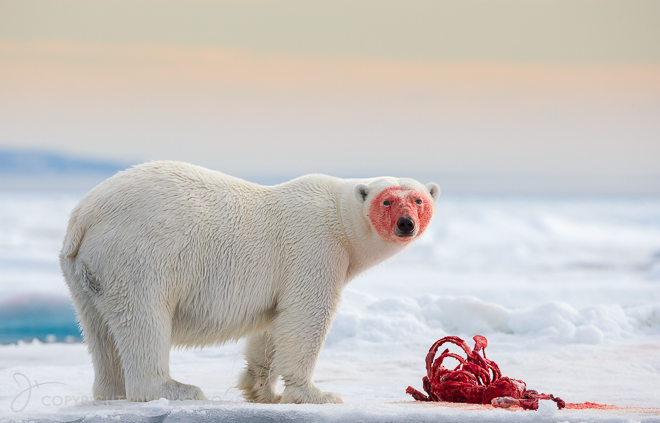
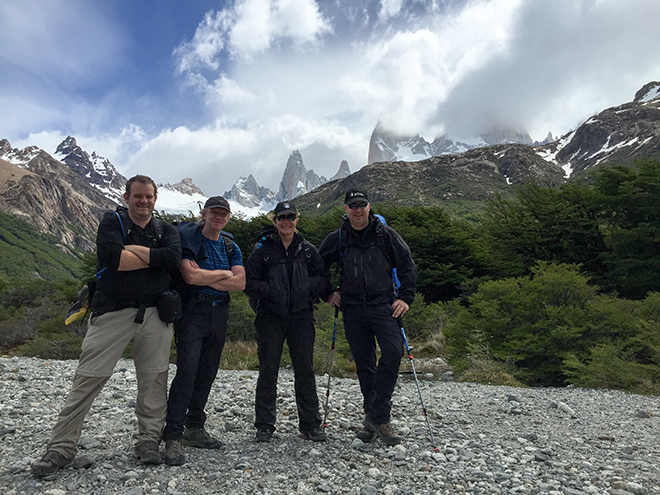 As expected Patagonia was a mixed bag of weather and light (or should I say wind, wind and more wind!). The scenery of this amazing location is breathtaking – the precipitous peaks, the plunging mountains and wild terrain is really phenomenal. Hiking through this terrain really puts a perspective on the sheer scope and scale of the geological uplift. I have personally found Patagonia a challenging place to photograph in the past and this trip was no different. The scenery really needs just the right combination of weather and light to really create great images. I have seen a lot of photography from Patagonia over the years and those images that really stand out for me are those that have captured the most dramatic weather and light. Patagonia remains for me one of those places that is dramatic to behold but photographically elusive. I am sure I have some good images from Patagonia, but I am not sure I have any definitive ones as yet. I need to look at my photographs with fresh eyes in a couple of months to really get a feel for what I did or did not accomplish. I took a laid back approach to my photography in Patagonia and was happy in many instances to simply take it in and leave the cameras in the bag. I did very much enjoy our long days of hiking through Patagonia and was very appreciative of the light weight 5D MKIII loaned to me by my good friend Martyn. The thought of schlepping one of my Canon EOS 1DX’s up some of those mountains would have in all likelihood seen me choose to stay at the bar. In fact, it is worth noting that the hiking was fairly arduous and I am not ashamed to admit I arrived at our campsite several evenings tired and sore. Hiking the back country of Patagonia with good friends was one of those life experiences you never forget and the memories from this trip will I hope stay with me forever. I hope to write more about our experiences in Patagonia over the coming months as my thoughts congeal from both our hiking and photographic experiences. Until then, its time to turn my attention again to Antarctica.
