If you are headed to Photo Plus in New York in October this year be sure to stop past and say hello to the good folks at the BenQ stand who will be giving away limited edition postcards of several of my images from Antarctica and Svalbard. As a teaser, one of the photographs was a finalist and was subsequently highly honoured in the recent Nature’s Best Photography awards (more info on this soon) and two others are finalists in the 2016 Australian Antarctica Photographer of the Year competition. Photo Plus is the biggest Photo Event in the USA and runs from October 20th to October 22nd. I will be attending Photo Plus for the first time this year (on the 21st and 22nd) and will be floating between the BenQ and Moab and Legion Paper stands. If you are around be sure to stop past and say hello!
Ultimate Puffins of Iceland 2017 Workshop Announcement
In late May next year (2017) I will be leading a brand new workshop with Daniel Bergmann that is dedicated to photography of the Atlantic Puffin and other birds of Iceland including Fulmars, Kittiwakes, Guillemots (Murres), Arctic Terns and Razorbills. Iceland is one of the best places in the world to photograph Puffins and other Arctic birds in their natural environment. We will visit a number of different locations during this workshop where we will have outstanding access to the Puffins living in burrows on the edge of sea cliffs. We have timed our 2017 workshop to ensure we are in the best locations at the best times to photograph these wonderful birds. We will have hours of golden light under the spectacular midnight sun – ideal conditions for photography of the Atlantic Puffin.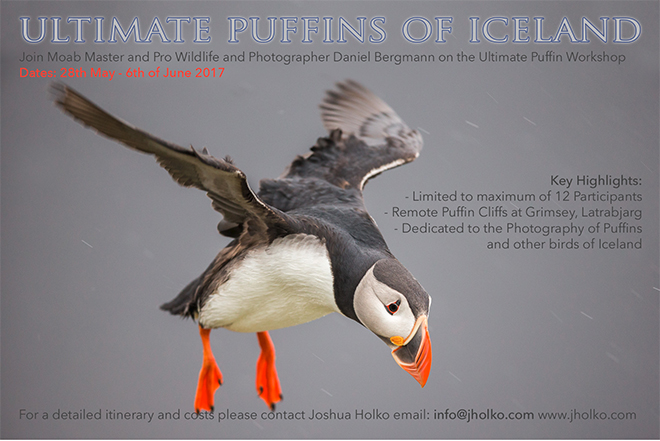 This photography workshop will last for 11 days (11 nights). We will be staying in good hotels and guest houses that are functional and clean. Breakfast, lunch and dinner are all included and will generally be held at the hotels where we are staying. However, this workshop is all about photography and we will be putting in long hours in the field in order to ensure we get the best possible light for photography. We may take food and drink with us into the field to ensure we are in the right locations get the best possible light.
  Itinerary: We start in the morning of May 27th in Reykjavik City and drive out to the Snaefellsnes peninsula. We’ll photograph birds and landscapes out at the edge of Snaefellsnes at Hellnar and Arnarstapi and will visit the iconic Mt. Kirkjufell. We’ll then overnight in the town of Stykkisholmur.
The following morning we’ll take the ferry that crosses the great bay of Breidafjordur. We’ll get off in the middle of the fjord at Flatey Island where we’ll spend one night. Flatey is renowned for its birdlife and birds on the island are unusually tame. This is a great location to photograph Black Guillemots, Snow Buntings, Puffins, Arctic Terns and other common Icelandic breeding birds.
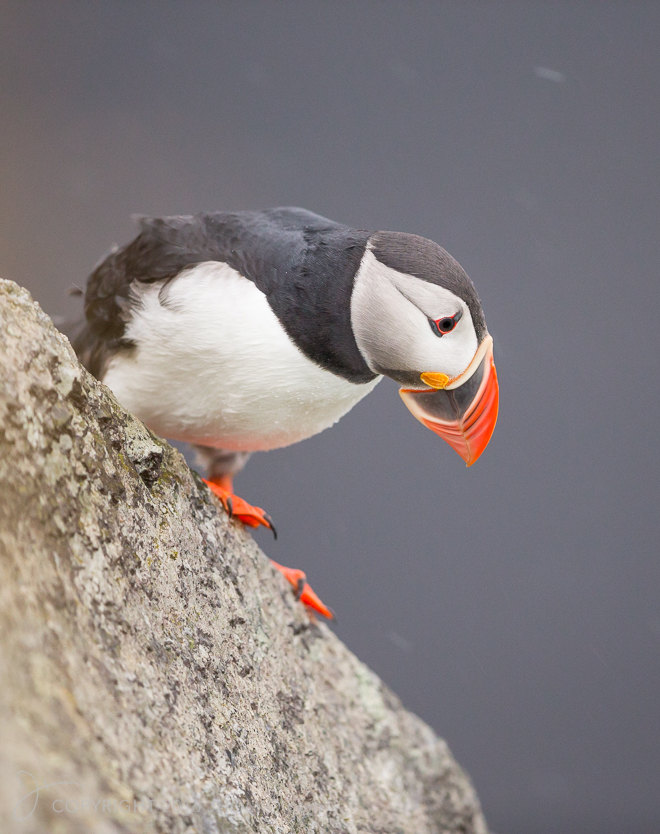
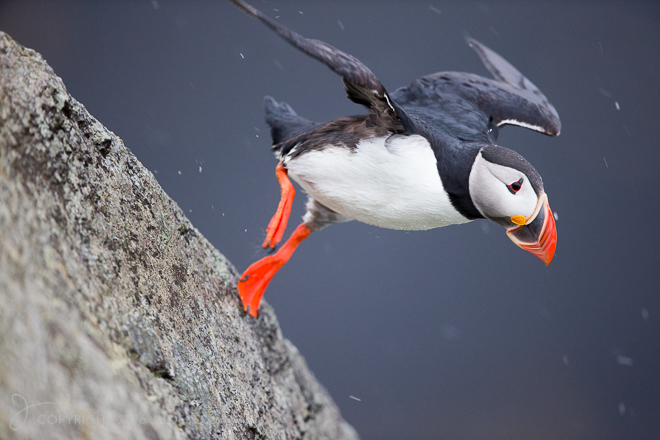 In the morning of May 29th we’ll get back on the ferry and finish the crossing. From the ferry port at the northern side of Breidafjordur bay we have couple of hours journey to Breidavik, where we’ll be based for the next three nights. From there it’s a 12km drive out to the magnificent seabird cliff Latrabjarg. This westernmost point of Europe is the home of millions of seabirds. It rises 440m out of the sea and is 14km long. The best locations for photography are within walking distance from the car park and we’ll have Fulmars and Kittiwakes soaring through the air, Guillemots (Murres) and Razorbills sitting on the cliff but it’s for the Puffins that we have come to Latrabjarg. Nowhere else are Puffins as tame. They can be photographed at close range, even with a wide-angle lens, and the cliff faces in a perfect direction for the setting sun. The Puffins can therefore be photographed in beautiful golden light or against the setting sun, creating wonderful silhouettes. As we are fast approaching the longest day of the year we have many hours of low light in the evening and early morning.
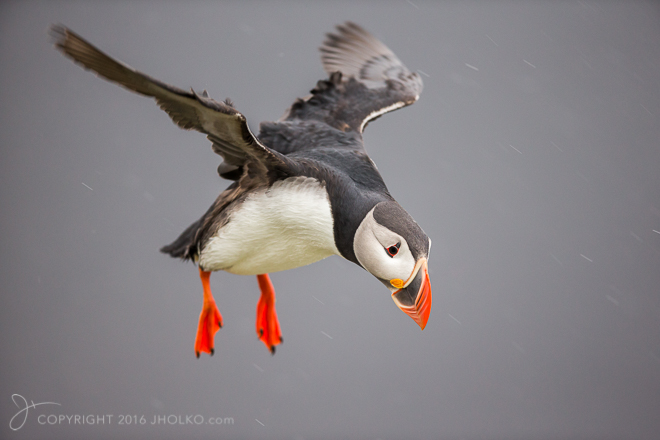 Closer to our accommodation in Breidavik we can venture out and photograph the birds in the area, such as Common Eider, Ringed Plover and possibly Ptarmigan. Arctic Foxes are frequently also seen in this part of the country and with luck we might find some arctic foxes to photograph during our time in this area.
 After our stay in the West Fjords we prepare for a long journey along the northern coast to the town of Dalvik. We’ll make a number of stops for photography on the way and will stay in Dalvik the night of June 1st so that we’ll be ready for the morning ferry to Grimsey Island on June 2nd. Grimsey is the northernmost inhabited Icelandic territory and the Arctic Circle runs through the island. The small island has about 85 inhabitants, is 5.3 square kilometres in size and has steep cliffs on almost every side, which makes it an ideal habitat for seabirds. During our three-day stay on the island we’ll continue to expand on our Puffin photography, now in a completely different environment that has a much larger population of Puffins than at Latrabjarg. Due to the remoteness of the island the accommodation is quite basic. The guesthouse offers comfortable full-board lodging but bathrooms are shared. Visiting Grimsey is a once in a lifetime adventure and its rich birdlife will keep us busy throughout the day and night.
 On June 5th we’ll depart Grimsey for the main land and drive back west along the scenic northern coast. We’ll overnight in Skagafjordur in the north, where we’ll have good opportunities for coastal landscapes and more of Iceland’s common birds, such as Whooper Swans. The Skagafjordur area is also known for its horse breeding and there are Icelandic horses almost everywhere.
On June 6th we’ll continue our westward journey with stops at iconic landscape locations such as Hvitserkur and Hraunfossar waterfalls. We’ll find ourselves in the town of Keflavik on the Reykjanes peninsula in the evening and will spend our last night there, close to the Kevlavik international airport. We’ll officially end our tour with dinner that evening and any flight can be taken out of Iceland on June 7th. If you are staying on in Iceland transportation will be provided for you back to the capital city of Reykjavik.
Daniel Bergmann and I will be providing extensive in the field photographic instruction throughout the workshop for all participants. We will be covering camera setup as well as techniques for how to photograph birds in their environment. In the evenings we will have informal discussions and critiques as well as post production demonstrations. This will be a very hands on workshop and it is our intention to provide very expansive instruction as required.
If you would like join us not his unique workshop you can register your interest by dropping me an email or by registering on my website at www.jholko.com Places are filled on a first come first served basis and once they are spoken for thats it.
The Highlands of Iceland 2016 Workshop Update
Yesterday Daniel Bergmann and I kicked off the first of two back-to-back workshops in the Highlands of Iceland. We are currently at our base of Hrauneyjar, where we’ll be located for the next three nights. From here we plan to explore the magnificent Fjallabak Nature reserve, which includes the Landmannalaugar area and other less known highland pearls, such as the Veidivotn region. We are particularly hopeful of some spectacular midnight sun light in the Landmannalaugar area as this region can be truly phenomenal when conditions co-operate. We will then ravel across the Sprengisandur route that crosses the interior of the island and and make our way to Lake Myvatn in the north, where we’ll spend the next three nights. Once there we’ll photograph the waterfalls of Skjalfandi river (Godafoss and Aldeyjarfoss), plus the Dettifoss and Selfoss waterfalls in Jokulsa river. We’ll also explore the geothermal areas close to Myvatn and if the weather allows, make an excursion to Askja, in the northen highlands, where we’ll be able to see and photograph Iceland’s latest lava field at Holurhraun, plus the Askja caldera itself.
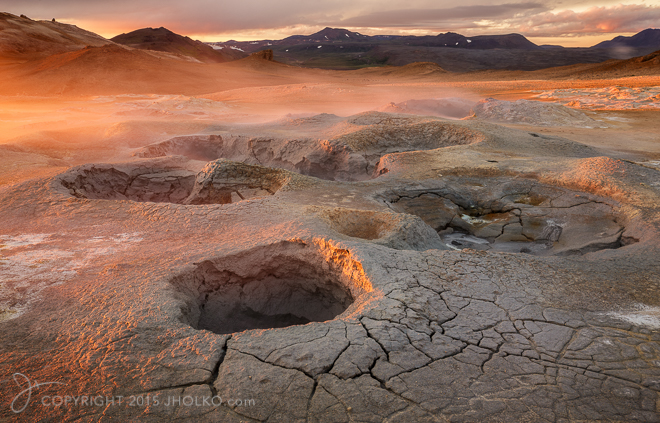 Once we have concluded our stay at Myvatn we’ll travel west along the northern coast and overnight near the Vatnsnes Peninsula. Hvitserkur sea stack will be one of our main subjects at Vatnsnes, along with other coastal features.
The following day we’ll travel to the Snaefellsnes Peninsula, where we’ll spend the last two days of our trip. At Snaefellsnes we’ll photograph the iconic Kirkjufell mountain and the spectacular coast at Arnarstapi and Hellnar, on the southern tip of the peninsula.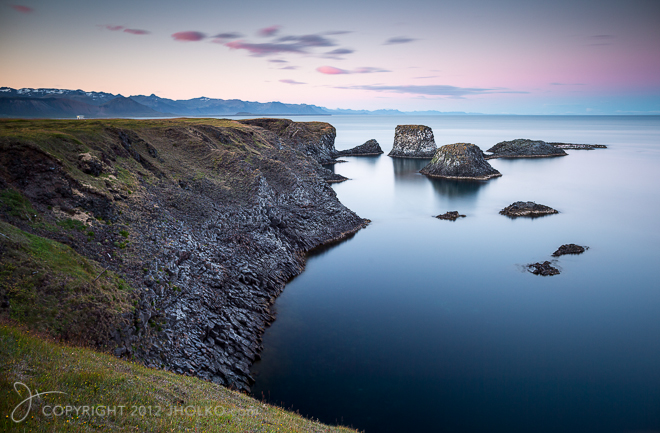 From Snaefellsnes there is a three hour journey back to the Keflavik international airport where we will conclude our trip on the 23rd of August. For now though its time to grab our gear and head out into the Highlands…
Australian Antarctic Photography Competition 2016 Finalist
Very pleased to receive news today that the two photographs I recently entered into the Australian Antarctic Photography Competition have been accepted as a finalist images and will be presented in the Bond Store at the Tasmanian Museum and Art Gallery from Friday 2 September to Sunday 18 September, 2016. I can’t yet share the finalist images, but the two photographs from Antarctica are two of my personal favourites – both taken in the Gerlach Strait. The exhibition is free to the public and opening hours are from 10 am to 4 pm daily except Mondays. Unfortunately, I will be able unable to attend this year due to my workshop commitments in Iceland, but if you swing past for a look please let me know what you thought.
Canon Collective Joins Photographers First Light South Georgia Antarctica
I am excited to announce today that Canon Australia and the Canon Collective have joined my photographic expedition to South Georgia Island and Antarctica this November. Full details of this expedition are available on my website HERE. There are now only a few places remaining before the expedition will be sold out. Full Press Release Below.
Canon Collective joins Photographers First Light in Antarctica for Ultimate Photography Event
Antarctic cruise specialists Aurora Expeditions have unveiled their brand new partnership with the Canon Collective – the social community of leading photography and camera brand, Canon Australia. The partnership will see the two companies align to bring travellers an exclusive Antarctic photography experience on an expedition to Antarctica and South Georgia this November.
The collaboration between Aurora Expeditions and the Canon Collective will provide the ultimate Antarctic photography experience for photographers of all levels. An on-board photography program will be delivered by award-winning professional polar photographer Joshua Holko and inspiring environmental photographer, Martyn Lucas.
Travellers can expect to develop their photography through a series of lectures and workshops as they sail through the stunning landscapes of Antarctica and South Georgia. Guides will assist in the field with camera skills, one-on-one tuition as well as assistance with editing and post-production skills.
Travellers will also be treated to the opportunity to trial a range of Canon’s photography equipment with support from two Canon Collective ambassadors, who will be on hand to teach and assist passengers more about the products as well as support the photography guides with tips and tricks for capturing the best photographs.
What can travellers expect to photograph on this amazing expedition? They’ll capture the early-season light as the days grow longer and skies change from blue to all shades of pink. Soaring seabirds will be photographed as they follow in the ship’s wake along with at least three species of penguin as they come ashore in the thousands for the short, intense summer.
From small inflatable crafts ‘Zodiacs’, passengers will cruise past and snap intricately-shaped icebergs and giant glaciers, piecing out of the snowy backdrop into the clear, icy waters. Daily shore landings offer opportunities to explore and capture the wildlife and landscapes most only dream of.
Whether you’re a professional photographer or just enjoy taking stunning holiday snapshots, this dedicated photography voyage will offer you the best experience to capture the unique beauty of Antarctica and South Georgia.
The 18-day Photographer’s First Light expedition featuring the Canon Collective departs Santiago, Chile with a flight to Stanley in the Falkland Islands on 19 November 2016, and ends in Punta Arenas, Chile on 6 December 2016. Prices start from US$14,300 per person and includes all on-board accommodation and meals, daily excursions, expert guides, photography workshops, and use of Canon’s latest equipment.
About Canon Collective
The Canon Collective is an inspired group whose mission is to help you do more with your photography than you ever thought possible. Our Canon photo ambassadors will share their knowledge and expertise to help you perfect your skills, no matter what your level. The Canon Collective attends a variety of major events from fashion to sports, all around Australia. The team also holds regular workshops and special events. Through the Canon Collective you’ll gain access to unique photographic experiences. Come along, meet new people, learn photography tips and tricks, improve your skills and take part in challenges. For more information visit www.canon.com.au/en-AU/Personal/imageSpectrum/Community/collective-home
Joshua Holko – 2015 Global Arctic Photographer of the Year.
Joshua Holko is a award-winning, full-time professional landscape, nature and wildlife photographer who specialises in photographing in extreme latitudes of the Polar Regions. A fully-accredited member of the Australian Institute of Professional Photographers (AIPP), Josh is also an awarded Master Photographer. With many accolades to his name, Josh is Australia’s first and only Moab Master Photographer and Printer by Moab and Legion Paper in the USA, and has also sat on the Victorian Council of the Australian Institute of Professional Photographers. More information www.jholko.com
Martyn Lucas
Martyn travels the world with his camera, with a particular interest in the Polar Regions. His recently published work and exhibitions highlight the Poles and focus on the environment and what is profoundly at stake in these regions. His aim is to make photographs that draw viewers into the now. Most people see the world in colour: lustrous, radiant, glossy and saturated… while the world of black and white offers the basics – light and shadow falling on various surfaces, beautiful, rich and inviting shadows, geometries, lines, shapes and bold designs. More information www.martynlucasphoto.com
 www.WILDNATUREPHOTOTRAVEL.com